Vesterrisør (Old Mandal)
Before it was Mandal, this town had a different name, one that hinted at a twin city further east.
Full story unlocks in the tour
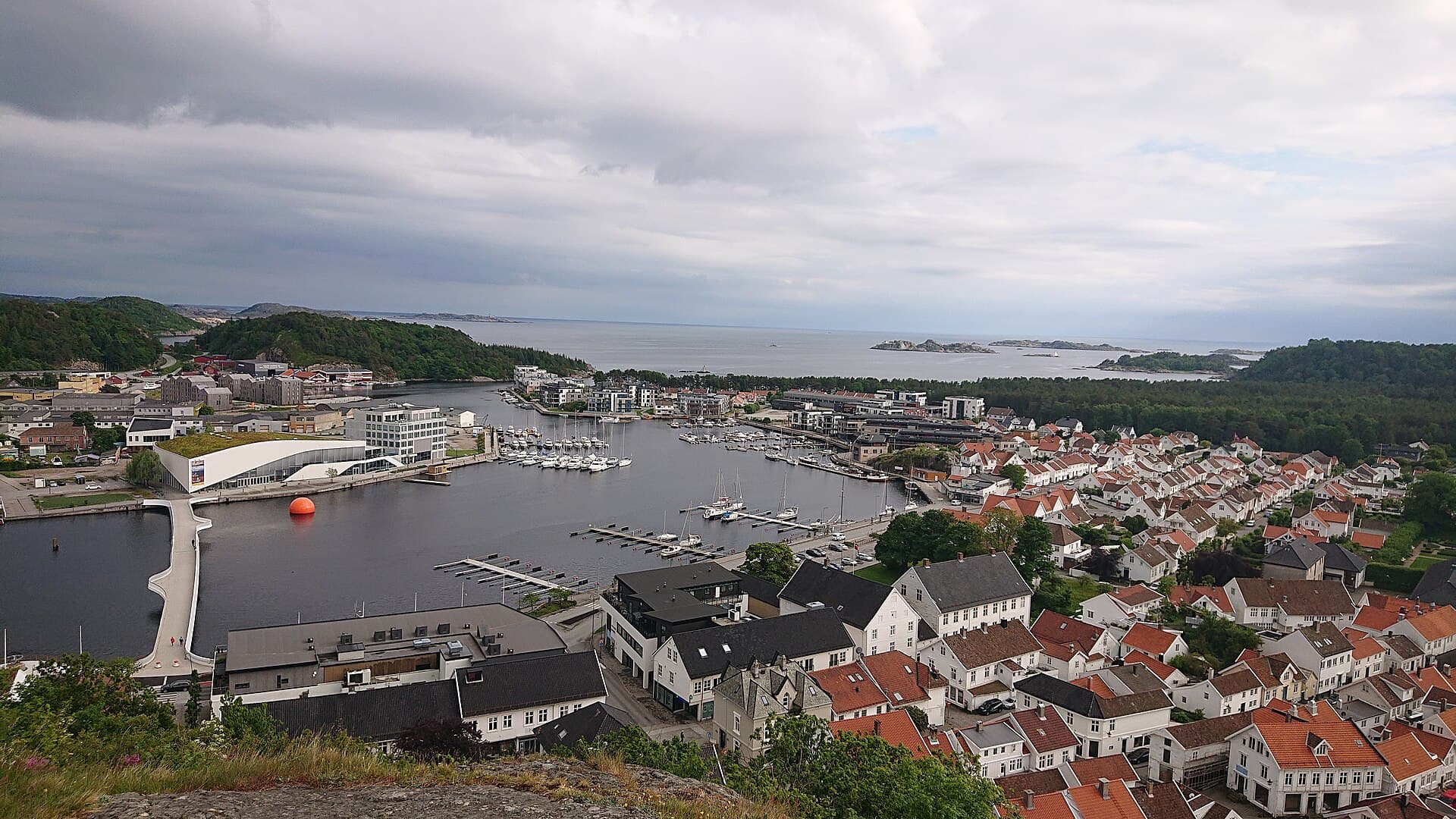 Yosh3000 / CC BY-SA 4.0, via Wikimedia Commons
Self-guided audio walking tour of Mandal — GPS route, offline playback, story-driven narration in 32 languages.
“Where white houses meet the sea, and art flows as freely as the salmon river.”
Not the postcards. The stories even locals don't know — whispered in your ear, right where they happened.
Before it was Mandal, this town had a different name, one that hinted at a twin city further east.
The river that carves through Mandal isn't just picturesque; it holds a secret that shaped the town's very identity and economy.
A short, steep climb to this viewpoint offers more than just panoramic scenery; it tells a poignant story of those who waited.
Discover every secret of Mandal
Every address, every reveal in full — in your ear, right where it happened.
You pick your stops. You walk. The voice reveals what the others miss.
Your self-guided audio tour of Mandal is ready — pick your landmarks, choose your language, and start the moment you arrive.
BuyLume has a built-in augmented-reality guide. Hold your phone up and its camera shows the street ahead of you, with a glowing arrow laid over the real view that always points to your next stop — no map to puzzle over, no wrong turns. Like everything in Lume, it works fully offline.
Mandal, Norway's southernmost town, is a captivating coastal settlement where the Mandalselva river embraces the sea. This appealing town in Agder county is instantly recognizable by its narrow, inviting streets lined with beautifully preserved white wooden houses, a signature architectural style of Southern Norway. It offers a more intimate and authentic Norwegian experience compared to larger cities, inviting visitors to slow down and embrace its relaxed, welcoming atmosphere.
Beyond its appealing aesthetics, Mandal is a place where natural splendor seamlessly blends with a meaningful cultural heritage. From the expansive sandy stretch of Sjøsanden beach to the historic town center, Mandal provides a delightful mix of outdoor adventures and artistic exploration. It's a destination that rewards curiosity, offering a chance to connect with local traditions and the stories embedded in every corner of this coastal haven.
The area around present-day Mandal remained largely undeveloped during the Middle Ages. Its origins trace back to the 1300s with the emergence of Vester-Risør, a trading post situated along the Skogsfjorden, just west of the current town. King Eric of Pomerania granted the town the right to trade salmon, a pivotal moment that cemented its early economic importance. By the 1500s, Vester-Risør had flourished into a bustling kjøpstad, making it the oldest market town in Vest-Agder.
The 1600s saw the town's name officially change to Mandal, derived from the Mandalen valley and river. Salmon fishing in the Mandalselva river and the thriving timber industry fueled significant growth throughout the 1700s. A devastating fire in 1810 destroyed the old church, leading to the completion of the impressive Mandal Church in 1821, a testament to the town's resilience and architectural ambition.
Mandal achieved full town status in 1921. The mid-20th century brought municipal mergers, significantly enlarging Mandal in 1964 with the inclusion of neighboring municipalities. Today, Mandal is not only a popular tourist destination, particularly known for its Sjøsanden beach, but also holds a remarkable reputation as a 'Town of Artists.' Despite its relatively small population, it has produced some of Norway's most significant artistic figures, including the renowned sculptor Gustav Vigeland and painters Adolph Tidemand and Amaldus Nielsen, whose works are celebrated at the Mandal Museum and Vigeland House.
Begin your exploration with a stroll through Mandal's old town, where narrow lanes wind past beautifully preserved white timber houses, offering a glimpse into its historic charm. A visit to Sjøsanden, an 800-meter-long sandy beach easily accessible from the town center, is perfect for a leisurely walk or a refreshing swim. It is within the larger Furulunden nature park, offering additional paths through pine forests.
For expansive views of the town, river, and sea, take the short, steep walk up to the Uranienborg viewpoint. In the town center, you'll find Mandal Church, an impressive empire-style structure and one of Norway's largest wooden churches. Delve into local art and history at the Mandal Museum and Vigeland House, which showcases works by local artists like Gustav Vigeland, Adolph Tidemand, and Amaldus Nielsen. Do not miss the Buen Kulturhus, Mandal's modern cultural hub, hosting various events and exhibitions. For a unique day trip, consider the historic Lindesnes Lighthouse, Norway's oldest lighthouse and southernmost point, approximately a 45-minute drive away.
The best time to visit Mandal is during the summer months, from June to August. This period offers the mildest weather, longer days, and ample sunshine, ideal for enjoying the beaches and outdoor activities. While summer is peak tourist season, the shoulder seasons (spring and fall) offer a quieter experience with fewer crowds, crisp air, and changing colors, though with potentially more unpredictable weather. Winter provides a cozy atmosphere for experiencing traditional Norwegian seaside life.
Mandal is easily accessible by car via the E39 highway, located about 45 minutes southwest of Kristiansand. Regular bus services connect Mandal to Kristiansand and other nearby towns. The nearest airport is Kristiansand Airport, Kjevik (KRS), about 57 km northeast, with scheduled flights to major European cities. Once in Mandal, the town center is compact and best explored on foot. For accommodation, options range from hotels like Mandal Hotel and Kjøbmandsgaarden Hotel to cabins, apartments, and campsites. Local cuisine features fresh seafood, with traditional dishes like raspeballer (potato dumplings) and klippfisk (dried and salted cod) being local specialties. The town is generally very safe, but standard precautions for belongings are always wise.
Mandal in Korean, in Chinese or in Hebrew — and 29 more languages, every stop narrated by a native voice. The widest language range of any self-guided audio tour.
Available in: