Hattem, Netherlandsarch / Public domain, via Wikimedia Commons
NL

Hattem

Self-guided audio walking tour of Hattem — GPS route, offline playback, story-driven narration in 32 languages.

Where medieval character meets artistic fancy on the Veluwe's edge.

The secrets of Hattem

Hattem, as no one tells it.

Not the postcards. The stories even locals don't know — whispered in your ear, right where they happened.

3 secrets below. Many more wait inside the tour.
Dikke Tinne Castle

Hattem once defended itself with a formidable castle, known as 'Dikke Tinne' (Thick Battlements). Its walls were so wide, they were the stoutest in all the Netherlands. Yet, a chilling secret resided within its towers.

Full story unlocks in the tour
The Haunted House (formerly part of Dikke Tinne Castle)

Even after the imposing Dikke Tinne Castle was largely dismantled, a portion of its fortified bailey complex endured, acquiring a reputation for spectral activity. Locals whisper of a ghostly inhabitant that still roams its grounds.

Full story unlocks in the tour
Dijkpoort

Hattem's last remaining medieval city gate, the Dijkpoort, stands as a testament to the town's defensive past. Observe its brickwork closely, and you will discern a distinct change in color near its apex.

Full story unlocks in the tour
The full tour

Discover every secret of Hattem

Every address, every reveal in full — in your ear, right where it happened.

Get the key to Hattem

You pick your stops. You walk. The voice reveals what the others miss.

Choose your time

How long do you have in Hattem?

Your self-guided audio tour of Hattem is ready — pick your landmarks, choose your language, and start the moment you arrive.

Buy
About Hattem

The story of Hattem

Hattem, a modest Hanseatic town in the eastern Netherlands, invites a journey through time. Positioned where the Veluwe forests meet the water meadows of the IJssel River, its medieval street plan, fortress walls, and historic monuments are remarkably preserved. This appealing town, granted city rights in 1299, interweaves centuries of events with a lively cultural atmosphere, making it an inviting destination for those seeking a tranquil retreat.

Beyond its historical heart, Hattem serves as a gateway to varied landscapes, from extensive forelands to the north, to woodlands in the southwest, and remnants of peat and heath moor in the southeast. Whether drawn to art, history, or the natural beauty of the Dutch countryside, Hattem promises a memorable and enriching experience. Its compact center is easily explored on foot or by bicycle, revealing historic churches, merchant dwellings, and inviting terraces where local specialties can be savored.

History

Medieval Foundations and Hanseatic Influence

Hattem's recorded events extend back to approximately 800 AD, with the earliest mention of two farmhouses being given to an abbey. The town's religious foundations were laid in 1176 when it became a parish, with its first chapel built on the 'Gaedsberg' or 'Gods-mountain' before the main church in the city center. Hattem formally received its city rights in 1299 from Reinoud I van Gelre, empowering it to govern itself and construct defenses. A fortified town plan was established around the existing 12th-century church tower, relocating both religious and legal centers to this new hub.

During the Middle Ages, while cities like Amsterdam and Rotterdam were still developing, the Hanseatic towns in the eastern Netherlands, including Hattem, thrived as powerful centers of commerce. The Hanseatic League, an alliance of merchants formed around 1150, facilitated free and secure trade, strengthening their position against feudal lords. Although Hattem's role in the League was not as prominent as larger trading cities like Kampen or Zwolle, its location on the IJssel River was vital for waterborne trade. Evidence suggests that bricks from Hattem were even traded across the water, potentially serving as valuable counterweights on merchant boats.

Fortifications and Artistic Inspiration

In 1401, Duke William of Guelders granted the Hoenwaard area to Hattem's citizens for animal grazing and brick production. A significant defensive structure, St. Lucia Castle, also called 'Dikke Tinne' (Thick Battlements) due to its exceptionally wide walls—seven meters in some places—was constructed around 1404. This castle played a strategic role on the border of Guelders and the opposing territory of Utrecht. Despite its might, the castle was eventually dismantled in 1778, with its bricks repurposed for new houses. Today, the outlines of its massive towers are etched into the pavement of Tinneplein Square, a visible reminder of its imposing past.

Hattem's beauty has long drawn artists, inspiring painters and illustrators to capture its essence. This artistic legacy is honored in its museums, displaying works by local talents and the imaginative creations of Anton Pieck. The town's well-preserved cityscape, with its medieval street patterns and historic buildings, continues to attract visitors seeking to immerse themselves in its tangible history.
What to see

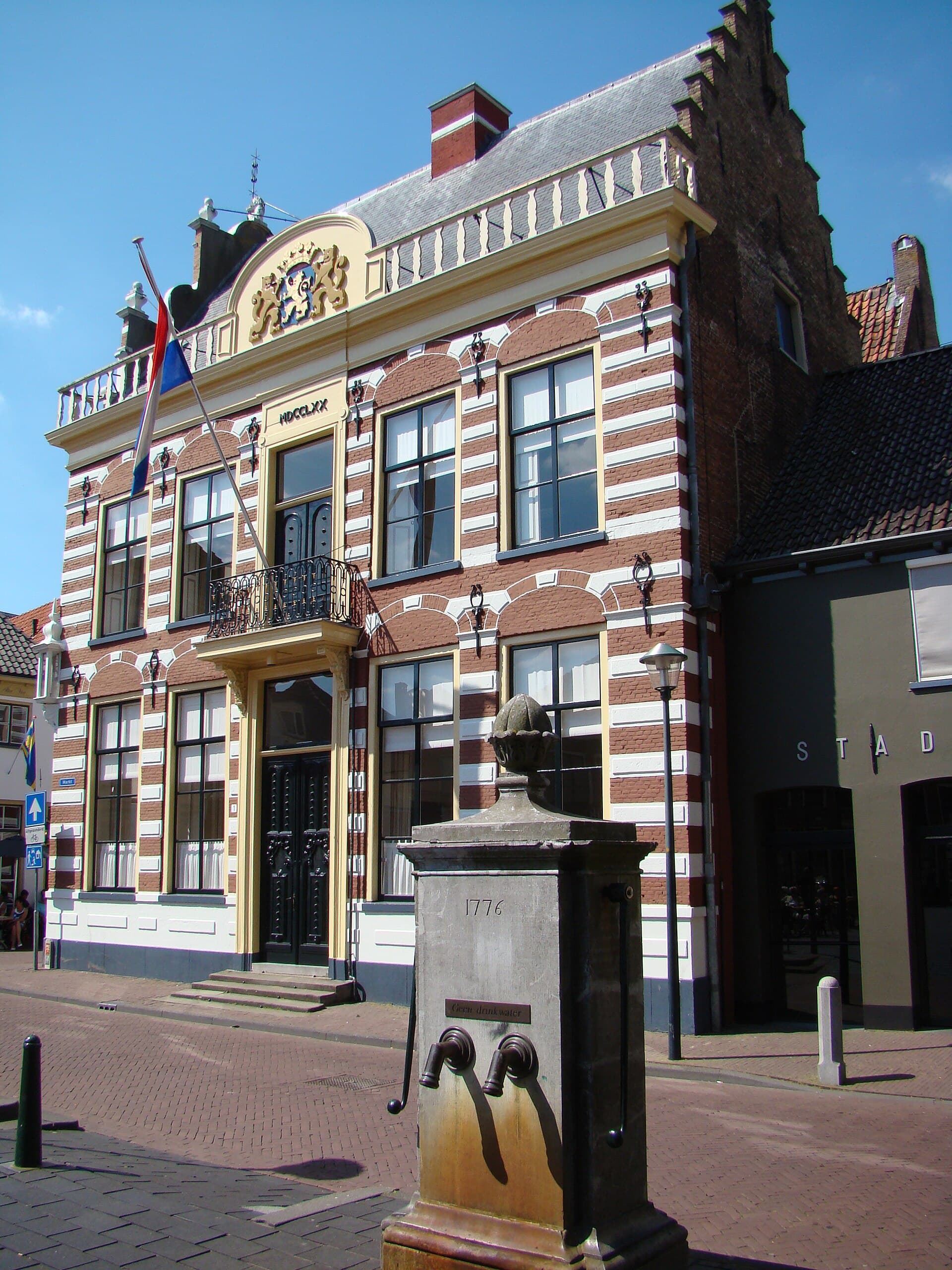
Begin your exploration at the Dijkpoort, Hattem's only surviving medieval city gate, dating to around 1400. Once a critical entry point, it now hosts arts and craft exhibitions. Wander through the historic center, where the medieval street pattern remains evident, leading to the Markt square with its 17th-century houses and Renaissance town hall. Observe the working water pump from 1776 in front of the town hall.

Hattem offers three distinctive museums. The Anton Pieck Museum celebrates the cherished Dutch illustrator, whose imaginative drawings inspired the Efteling theme park. The Voerman Museum explores Hattem's art and history, presenting works by landscape painter Jan Voerman and his son, alongside archaeological finds. For a hands-on experience, the Dutch Bakery Museum provides demonstrations, tastings, and activities for all ages.

Other notable sights include Molen De Fortuin, an octagonal windmill from 1816 that still operates on Saturdays, with a shop selling artisan bread and cake mixes on its ground floor. The Grand or Saint Andreas Church, with its 13th-century Romanesque tower and 15th-century Gothic additions, is also worth a visit. For those who appreciate the outdoors, Hattem lies at the edge of the Veluwe, one of the Netherlands' largest nature reserves, offering extensive cycling and hiking routes.

When to visit

The most pleasant time to visit Hattem for warm-weather activities is from late June to early September. During these months, the weather is mild, ideal for exploring museums, enjoying outdoor terraces, and taking riverside walks. Spring and autumn also offer agreeable conditions, with blooming flowers or colorful foliage adding to the town's appeal. While winter can be cold and wet, it is a quieter period, and smaller towns like Hattem may feel more subdued.

Practical

Hattem is readily accessible by road, with good connections from Zwolle, Apeldoorn, and the broader Gelderland region. From Zwolle station, one can take bus 203 to Hattem. Parking is available on the outskirts of the historic center, helping to maintain the town's tranquil atmosphere. The Euro (EUR) is the local currency, and cards are widely accepted. Dutch is the official language, but English is commonly spoken in areas frequented by visitors. Free Wi-Fi is often available in cafes and hotels. For a distinctive crossing to Zwolle, consider taking the pedestrian and bicycle ferry, 't Kleine Veer, which operates from April to October. Public restrooms are available at the City Hall and in shops displaying the 'Hoge Nood' emblem.

Good to know
What are Hattem's primary attractions?
Hattem's primary attractions include the Dijkpoort city gate, the Anton Pieck Museum, the Voerman Museum, the Dutch Bakery Museum, Molen De Fortuin windmill, and the Grand or Saint Andreas Church.
Is Hattem a suitable destination for families?
Yes, Hattem is a suitable destination for families. The Dutch Bakery Museum offers interactive experiences, and the town's parks and play areas, along with outdoor activities in the Veluwe, make it family-friendly.
How can I travel to Hattem?
Hattem is accessible by car via Highways A50 and A28. From Zwolle station, you can take bus 203. A pedestrian and bicycle ferry also links Hattem to Zwolle.
What outdoor pursuits are available in Hattem?
Hattem provides numerous outdoor pursuits, including walking, cycling, horseback riding, golf, and jeu de boules. The IJssel River offers opportunities for canoeing, boating, fishing, and birdwatching.
Are there any guided tours offered in Hattem?
Yes, city walks are offered from May to October on Wednesdays and Saturdays, commencing at the Tourist Information Point. Other days can be arranged upon request.
What local specialties should I sample in Hattem?
While specific dishes are not detailed, Hattem features inviting terraces and restaurants where you can savor local specialties, and Molen De Fortuin sells artisan bread and cake mixes.
On the map
Hattem
€9.90
No booking · activate anytime · 12h to walk it
Load on Wi-Fi, then walk offline — no roaming abroad
Get the key to Hattem