Rápidos de Imatrankoski
Antes de que la central hidroeléctrica domara los rápidos de Imatrankoski, su fuerza bruta cautivó a una audiencia inesperada.
La historia completa se desbloquea en el tour
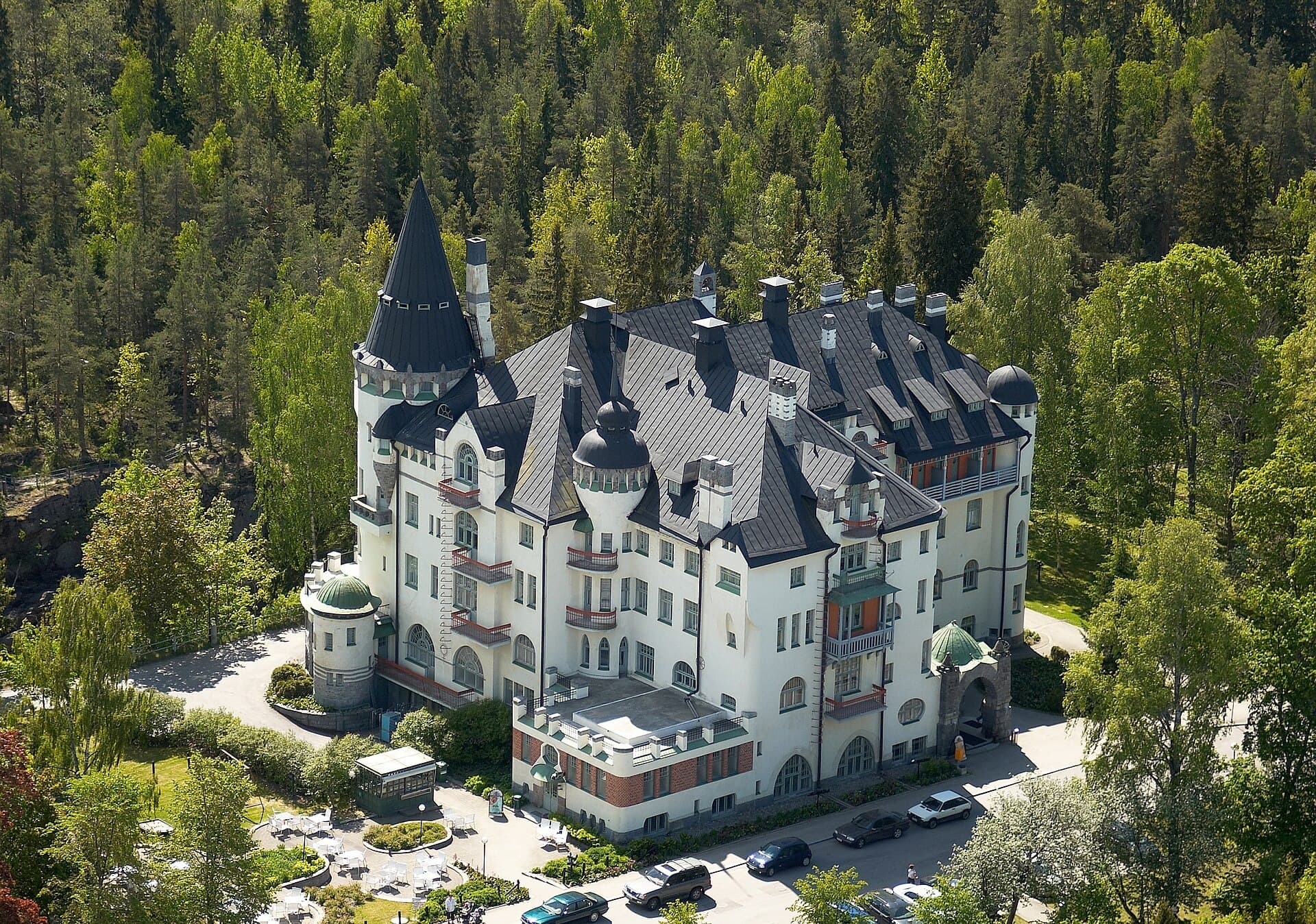 Imatrankoski / CC0, via Wikimedia Commons
Tour de audio autoguiado de Imatra — ruta GPS a pie, reproducción offline, narración en 32 idiomas.
“Donde las aguas indomables convergen con la grandeza Art Nouveau y el poder industrial.”
No las postales. Las historias que ni los locales conocen — al oído, justo donde ocurrieron.
Antes de que la central hidroeléctrica domara los rápidos de Imatrankoski, su fuerza bruta cautivó a una audiencia inesperada.
Este hotel con forma de castillo, una maravilla arquitectónica finlandesa, fue concebido con una clientela muy particular en mente.
Los residentes locales mantienen una tradición distintiva, bastante vigorizante, para ganarse verdaderamente sus credenciales de 'residente de Imatra'.
Descubre todos los secretos de Imatra
Cada dirección, cada revelación al completo — a tu oído, justo donde ocurrió.
Eliges tus paradas. Caminas. La voz te revela lo que los demás ignoran.


Tu tour de audioguía por Imatra te espera — elige tus lugares, tu idioma y empieza al llegar.
ComprarLume incluye una guía de realidad aumentada. Levanta el móvil y su cámara muestra la calle que tienes delante, con una flecha luminosa sobre la imagen real que siempre apunta a tu próxima parada — sin mapas que descifrar, sin giros equivocados. Como todo en Lume, funciona completamente sin conexión.
Imatra, una ciudad en Karelia del Sur, Finlandia, está definida por el caudaloso río Vuoksi y los dramáticos rápidos de Imatrankoski. Este singular fenómeno natural ha moldeado el carácter de la ciudad, atrayendo visitantes durante siglos y, en última instancia, impulsando su desarrollo industrial. Situada en el lago Saimaa y bordeando Rusia, Imatra presenta una fusión de esplendor natural, encanto arquitectónico y un palpable sentido del pasado.
Aunque establecida oficialmente en 1948 a partir de la consolidación de tres distritos industriales, los orígenes de Imatra se extienden a asentamientos de la Edad de Piedra. La ciudad ha evolucionado de un exclusivo centro turístico, que atraía a la aristocracia rusa en el siglo XIX, a un núcleo industrial, aprovechando la energía de los rápidos. Hoy, con una población de aproximadamente 24.000 habitantes, Imatra sigue cautivando con su mezcla de naturaleza salvaje y ofertas culturales.
El área de Imatra ha estado habitada desde la Edad de Piedra, con evidencia de asentamientos que datan de hace 5.000 a 6.000 años, íntimamente conectados con la formación del río Vuoksi y los rápidos de Imatrankoski. La primera mención escrita de Imatra aparece en las listas de impuestos de 1541, señalando la pesca de salmón en el Vuoksi. Durante siglos, las orillas del Vuoksi se utilizaron principalmente para la cría de peces en barriles y la pesca.
El momento crucial en la historia de Imatra como destino llegó en 1772, cuando la emperatriz Catalina la Grande de Rusia visitó para maravillarse con los poderosos rápidos de Imatrankoski. Esta visita es ampliamente reconocida por iniciar el turismo en Finlandia, transformando el área en un refugio de moda para la nobleza e inspirando a artistas y compositores como Jean Sibelius y Akseli Gallen-Kallela. En 1842, el zar Nicolás I de Rusia solidificó aún más el atractivo del área al ordenar la creación del Parque Kruununpuisto alrededor de los rápidos, convirtiéndolo en la primera reserva natural de Finlandia.
A finales del siglo XIX, el enfoque de Imatra comenzó a cambiar del turismo exclusivamente al desarrollo industrial. En la década de 1880 se establecieron plantas de procesamiento de madera, y a principios del siglo XX se construyó la central hidroeléctrica de Imatra, inaugurada oficialmente en 1929. Esto aprovechó el mismo poder que antes solo había atraído a espectadores, transformando Imatra en un centro energético e industrial vital. La acería de Imatra, por ejemplo, comenzó sus operaciones en 1915, estratégicamente ubicada para utilizar la electricidad de los rápidos.
La estructura administrativa moderna de Imatra se forjó después de la Guerra de Invierno. En 1948, la ciudad comercial de Imatra fue fundada oficialmente mediante la fusión de tres aglomeraciones industriales que anteriormente habían pertenecido a los municipios de Jääski, Ruokolahti y Joutseno. Esta consolidación fue necesaria ya que Finlandia cedió territorio a la Unión Soviética, y Jääski perdió una parte significativa de su tierra. La ciudad obtuvo su carta municipal en 1971, creciendo de centros fragmentados a la próspera ciudad que es hoy.
Los Rápidos de Imatrankoski siguen siendo la atracción más antigua y significativa de Imatra. Aunque ahora están controlados por una central hidroeléctrica, se organiza una espectacular exhibición diaria de rápidos durante los meses de verano. Junto a los rápidos se encuentra el Parque Kruununpuisto, la primera reserva natural de Finlandia, establecida en 1842, que ofrece senderos para caminar, miradores y formaciones rocosas distintivas.
Dominando los rápidos se alza el Imatran Valtionhotelli, un hotel-castillo Art Nouveau construido en 1903, que es un hito arquitectónico y ha sido reconocido como uno de los edificios más bellos de Finlandia. Para los interesados en la arquitectura, la Iglesia de las Tres Cruces (Kolmen ristin kirkko) en el distrito de Vuoksenniska es una obra notable del renombrado arquitecto finlandés Alvar Aalto, terminada en 1958.
Culture House Virta sirve como un centro neurálgico para las artes y la cultura, albergando el Museo de Arte de Imatra y el Museo de la Ciudad de Imatra. El Museo de Arte, fundado en 1951, presenta una sustancial colección de arte modernista finlandés y europeo del siglo XX, mientras que el Museo de la Ciudad profundiza en el pasado de la región, incluida su industrialización y turismo. Además, el Museo de Viviendas de Trabajadores Industriales ofrece una visión de las condiciones de vida de los primeros trabajadores industriales. Para los entusiastas del aire libre, el río Vuoksi ofrece pintorescas rutas para caminar y andar en bicicleta, y la región más amplia del lago Saimaa ofrece oportunidades para practicar piragüismo, paddleboard y paseos en barco.
El momento más agradable para visitar Imatra para actividades de clima cálido es desde finales de junio hasta mediados de agosto. Durante estos meses de verano, las temperaturas diurnas promedio oscilan entre 20°C y 23°C (68°F y 73°F), creando condiciones cómodas para la exploración. Si bien el verano experimenta la mayor cantidad de lluvia, generalmente llega en forma de lluvias ligeras o moderadas. La primavera (abril-mayo) y el otoño (septiembre-octubre) ofrecen un clima de transición con follaje cambiante, mientras que los inviernos (diciembre-marzo) son fríos y nevados, ideales para los deportes de invierno.
Imatra es accesible por varios medios de transporte. El aeropuerto más cercano es el Aeropuerto de Lappeenranta, que ofrece conexiones con Helsinki. La ciudad también está bien conectada por servicios de tren y autobús con otras ciudades finlandesas. El transporte público local dentro de Imatra es gestionado por el Grupo de Transporte Público de la Región de Lappeenranta, con autobuses que operan regularmente. La Estación Central de Imatra es un centro clave tanto para el transporte de pasajeros como de mercancías.
Las opciones de alojamiento van desde hoteles, incluido el histórico Imatran Valtionhotelli, hasta opciones más económicas. La proximidad de la ciudad a la frontera rusa significa que los viajeros rusos son una vista común, contribuyendo a la economía local. Imatra también es conocida por sus compras, con ventas libres de impuestos entre las más altas de Finlandia.
Imatra en coreano, en chino o en hebreo — y 29 idiomas más, cada parada narrada por una voz nativa. La mayor variedad de idiomas de cualquier audioguía autoguiada.
Disponible en: