Congo Square
Avant même que le jazz n'ait un nom, une autre forme d'expression spirituelle s'épanouissait ici, influençant les rythmes mêmes qui allaient définir un nouveau genre.
L'histoire complète se débloque dans le tour
 Chris Litherland / CC BY-SA 3.0, via Wikimedia Commons
Visite audio autoguidée de Jazz du Quartier Français — parcours GPS à pied, lecture hors ligne, narration en 32 langues.
“Là où le battement syncopé d'une ville est devenu le rythme du monde.”
Pas les cartes postales. Les histoires que même les habitants ignorent — soufflées à l'oreille, là où elles se sont passées.
Avant même que le jazz n'ait un nom, une autre forme d'expression spirituelle s'épanouissait ici, influençant les rythmes mêmes qui allaient définir un nouveau genre.
Ce bâtiment modeste a joué un rôle crucial pendant l'ère des droits civiques, non pas par des protestations, mais par le pouvoir de la musique.
Au-delà de sa façade grandiose, ce bâtiment historique abrite un morceau tangible de l'histoire du jazz ayant appartenu à une véritable légende.
Découvrez tous les secrets de Jazz du Quartier Français
Chaque adresse, chaque révélation en entier — dans ton oreille, là où elle s'est passée.
Tu choisis tes lieux. Tu marches. La voix te révèle ce que les autres ignorent.
Votre visite audioguidée de Jazz du Quartier Français vous attend — choisissez vos lieux, votre langue, et lancez-vous dès votre arrivée.
AcheterLume intègre un guide en réalité augmentée. Levez votre téléphone : sa caméra montre la rue devant vous, avec une flèche lumineuse posée sur l'image réelle qui pointe toujours vers votre prochain arrêt — aucune carte à déchiffrer, aucun mauvais virage. Comme tout dans Lume, ça fonctionne entièrement hors-ligne.
Plongez dans le pouls rythmique de la Nouvelle-Orléans, où chaque coin de rue résonne des échos d'un son révolutionnaire. Cette promenade audio autoguidée, « Le Jazz du Vieux Carré Français », vous invite à retracer les origines de la forme d'art musical la plus distinctive d'Amérique à travers les lieux mêmes où elle est née et a été nourrie. Des rythmes anciens de Congo Square aux avenues animées et remplies de cuivres, vous découvrirez les histoires, les luttes et les triomphes qui ont forgé le jazz dans la Crescent City.
Ceci n'est pas seulement une visite ; c'est une immersion dans l'âme de la Nouvelle-Orléans, un voyage qui révèle comment un mélange unique de cultures africaines, européennes et caribéennes a convergé pour créer un genre qui allait captiver le monde. Nous explorerons les extérieurs de lieux emblématiques, plongerons dans l'histoire derrière les merveilles architecturales de la ville et ressentirons l'esprit indéniable d'improvisation qui continue de définir cet endroit extraordinaire. Préparez-vous à être transporté à une époque où la musique était un langage de liberté, une célébration de la résilience et une force imparable d'innovation culturelle.
La prétention de la Nouvelle-Orléans d'être le berceau du jazz est enracinée dans sa tapisserie culturelle singulière, un mélange unique parmi les villes américaines. À la fin du XIXe et au début du XXe siècle, la ville était un creuset d'influences coloniales françaises et espagnoles, d'un héritage africain résilient et d'un afflux d'immigrants européens. Cet environnement unique a favorisé un engagement inégalé envers la musique et la danse, jetant les bases du jazz.
L'un des sites les plus importants de cette genèse musicale est Congo Square, situé dans ce qui est aujourd'hui le parc Louis Armstrong. Pendant une grande partie des XVIIIe et XIXe siècles, les personnes réduites en esclavage et les personnes de couleur libres s'y rassemblaient le dimanche. Ces rassemblements étaient cruciaux pour maintenir en vie les traditions musicales et de danse africaines en Amérique du Nord, avec des percussions et des danses incluant des styles comme la Bamboula, la Calinda et la Juba. Ces rythmes et expressions ont profondément influencé le développement des traditions musicales de la Nouvelle-Orléans, y compris le jazz.
Le paysage musical diversifié de la ville s'étendait au-delà de Congo Square. La Nouvelle-Orléans abritait le premier opéra d'Amérique du Nord, embrassant les traditions musicales européennes. Les bals formels, les sonorités latino-américaines et les fanfares militaires ont tous contribué au tissu sonore de la ville. La dynamique sociale unique, où les personnes de différentes races se mélangeaient plus librement que dans d'autres villes américaines malgré une ségrégation persistante, a encore alimenté cette évolution musicale.
À l'aube du XXe siècle, des figures comme Buddy Bolden, souvent crédité comme le premier musicien de jazz, ont commencé à former des groupes qui captivaient les foules lors des défilés de rue et des danses. Le quartier de Storyville, un quartier de prostitution légalisée de 1897 à 1917, a également joué un rôle, avec des maisons closes, des bars et des salles de danse offrant des lieux aux artistes de jazz. La fermeture de Storyville en 1917, cependant, a involontairement contribué à la diffusion du jazz à travers le pays, les musiciens cherchant des opportunités ailleurs.
aujourd'hui, des institutions comme Preservation Hall, fondé en 1961, continuent de défendre le jazz traditionnel de la Nouvelle-Orléans, offrant un espace crucial aux musiciens âgés et perpétuant cette forme d'art vitale. Le Musée du Jazz de la Nouvelle-Orléans, situé dans l'Ancienne Monnaie des États-Unis, protège davantage cet héritage, avec de vastes collections et expositions qui racontent l'histoire continue du jazz dans son berceau.
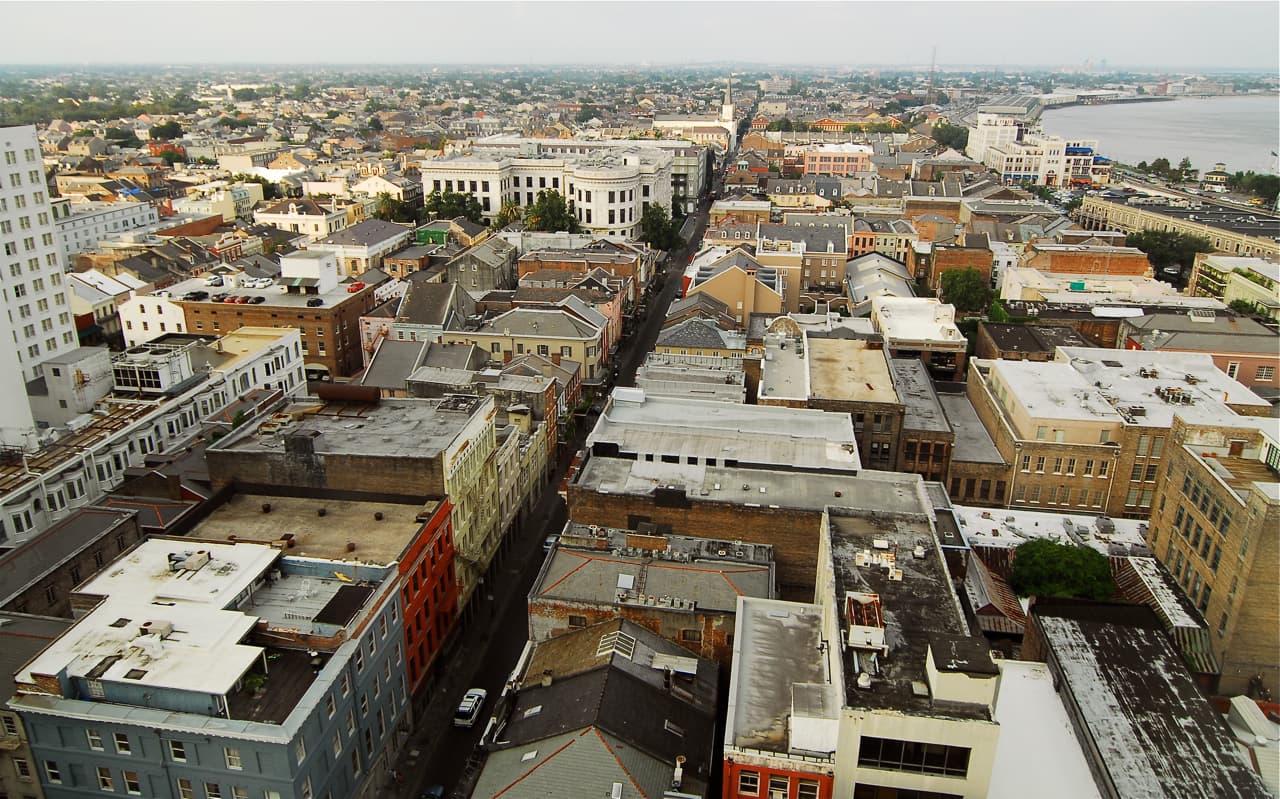
Votre voyage commence à Congo Square, un espace ouvert au sein du parc Louis Armstrong. Tenez-vous ici et imaginez les rassemblements animés du dimanche des personnes réduites en esclavage et des personnes de couleur libres, leurs tambours et leurs danses jetant les bases rythmiques du jazz. Ensuite, vous traverserez l'historique Vieux Carré Français, un quartier dont les façades à balcons ont été témoins de siècles d'évolution musicale. Admirez les ferronneries complexes et imaginez les sons qui s'échappaient autrefois des fenêtres ouvertes et des rues animées.
Continuez jusqu'à Jackson Square, un espace public central qui a longtemps été un point focal de la vie urbaine et une scène pour les artistes de rue. De là, une courte marche vous mènera à l'extérieur du Preservation Hall. Ce bâtiment modeste est une icône mondiale, dédiée à la préservation du jazz traditionnel de la Nouvelle-Orléans. Vous vous dirigerez ensuite vers Royal Street, connue pour ses galeries d'art et ses antiquaires, où les sons des musiciens de rue remplissent souvent l'air. Enfin, l'extérieur de l'Ancienne Monnaie des États-Unis, qui abrite le Musée du Jazz de la Nouvelle-Orléans, témoigne de l'héritage durable du jazz, abritant une vaste collection d'instruments et d'artefacts. Concluez votre visite sur Frenchmen Street, un centre animé de salles de concert où l'esprit du jazz continue de prospérer chaque nuit.
La Nouvelle-Orléans vous accueille toute l'année, mais pour les amateurs de jazz, le printemps (mars à mai) et l'automne (octobre à novembre) offrent l'équilibre idéal entre un temps agréable et de nombreux événements musicaux. Le printemps apporte le célèbre New Orleans Jazz & Heritage Festival (Jazz Fest) fin avril/début mai, et le French Quarter Festival gratuit début avril. L'automne offre des températures plus fraîches et des festivals comme le Voodoo Fest. Même en hiver, vous trouverez moins de foules et des scènes de jazz toujours animées, surtout sur Frenchmen Street.
Cette visite à pied couvre environ 2,4 kilomètres à travers les quartiers de Tremé et du Vieux Carré Français. Des chaussures de marche confortables sont fortement recommandées. Bien que le Vieux Carré soit généralement considéré comme sûr pendant la journée, il est conseillé d'être conscient de votre environnement, surtout la nuit, et d'éviter de marcher seul dans les rues mal éclairées. Envisagez de voyager en groupe après la tombée de la nuit. Les agents de sécurité publique patrouillent le centre-ville de la Nouvelle-Orléans et peuvent offrir des escortes SafeWalk dans leurs limites. Gardez les objets de valeur hors de vue et soyez attentif aux pickpockets dans les zones bondées. L'hydratation est essentielle, surtout pendant les mois les plus chauds. De nombreux établissements du Vieux Carré proposent de l'eau ou d'autres rafraîchissements. Bien que de nombreux lieux sur Frenchmen Street soient réservés aux plus de 21 ans, certains peuvent autoriser les clients plus jeunes jusqu'à une certaine heure ; il est préférable de vérifier auprès des clubs individuels.
Jazz du Quartier Français en coréen, en chinois ou en hébreu — et dans 29 autres langues, chaque étape narrée par une voix native. La plus large gamme de langues de tous les audioguides autoguidés.
Disponible en :