Cane River Lake
The serene Cane River Lake, central to Natchitoches, wasn't always so calm. It carries a dramatic past that shaped the very existence of the city.
Full story unlocks in the tour
 Wikilester1999 / CC BY-SA 4.0, via Wikimedia Commons
Self-guided audio walking tour of Natchitoches — GPS route, offline playback, story-driven narration in 32 languages.
“Where French colonial echoes meet Southern allure on a timeless river.”
Not the postcards. The stories even locals don't know — whispered in your ear, right where they happened.
The serene Cane River Lake, central to Natchitoches, wasn't always so calm. It carries a dramatic past that shaped the very existence of the city.
A short drive from Natchitoches reveals a state historic site with a surprising claim: it once served as the capital of an entirely different state.
Step into Louisiana's oldest general store and discover more than just goods; encounter a living piece of retail history.
Discover every secret of Natchitoches
Every address, every reveal in full — in your ear, right where it happened.
You pick your stops. You walk. The voice reveals what the others miss.

Your self-guided audio tour of Natchitoches is ready — pick your landmarks, choose your language, and start the moment you arrive.
BuyNatchitoches (pronounced Nack-a-tish) holds the distinction of being the oldest permanent European settlement in the Louisiana Purchase territory, founded by the French in 1714. This appealing city, situated along the tranquil Cane River Lake, offers a captivating blend of French, Spanish, African, American Indian, and Creole cultures, reflected in its architecture, cuisine, and traditions. Its 33-block National Historic Landmark District, with brick-lined streets and stately oak trees, transports visitors to a bygone era, recalling its past as a vital river port and cotton kingdom.
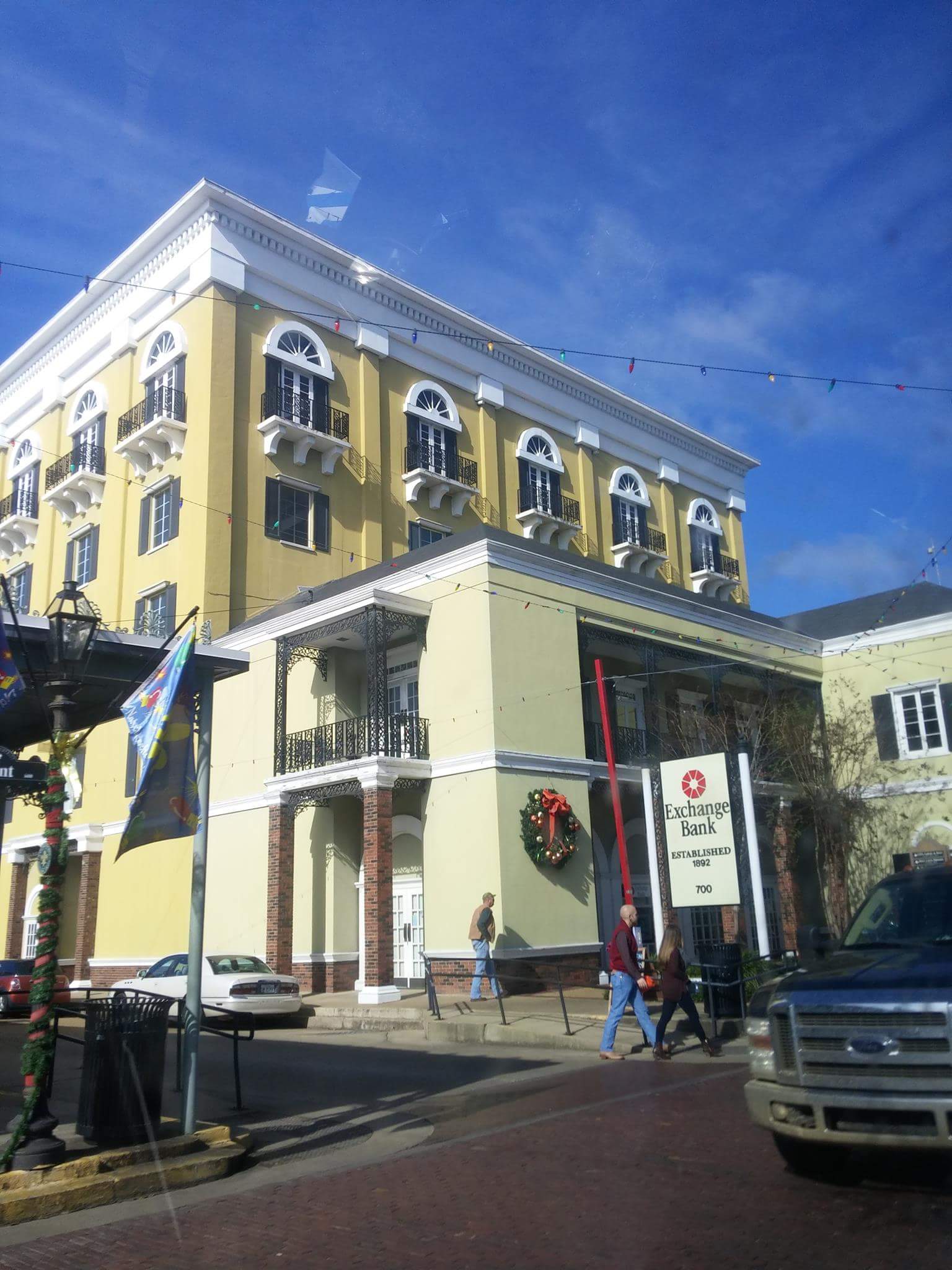
The city's unique heritage is palpable as you stroll along Front Street, where mercantile buildings and houses with intricate cast-iron galleries overlook the water. Natchitoches is not just a destination for those interested in history; it is also celebrated for its iconic meat pies and the brilliant annual Christmas Festival, which transforms the downtown into a festive wonderland. Whether exploring historic plantations, cruising the Cane River Lake, or simply savoring the local flavors, Natchitoches offers a distinctive Southern experience.
Natchitoches' story begins in 1714 when French explorer Louis Juchereau de St. Denis established a trading post on the banks of what was then the Red River. This strategic location was intended to foster trade with local Native American tribes and the Spanish colonies in Mexico. The settlement quickly grew, becoming the original French colony in Louisiana and the oldest permanent European settlement in the entire Louisiana Purchase territory.
The city's early development was heavily influenced by its position at the head of navigation on the Red River. River traffic had to transition to land transportation here due to a massive natural logjam known as the 'Great Raft,' which blocked further upstream passage. This made Natchitoches a crucial transfer point for trade goods, livestock, and raw materials like deer hides, salt, indigo, and tobacco, destined for New Orleans and beyond. Several overland highways, including the Natchez Trace and El Camino Real from Mexico, converged here, solidifying its role as a gateway for settlers heading to Texas.
Over time, the Red River shifted its course, leaving Natchitoches alongside an oxbow lake now known as Cane River Lake. Despite this change, the city continued to flourish, its prosperity evident in the grand mercantile buildings and elegant homes that line its historic district. The Cane River National Heritage Area, a 35-mile-long valley, supported a sophisticated Creole society, largely untouched by early 'American' influences. Today, the 33-block National Historic Landmark District, with over fifty centuries-old buildings, stands as a testament to Natchitoches' enduring historical significance and its rich multicultural legacy.
Begin your exploration in the National Historic Landmark District, a 33-block area along Cane River Lake. Wander the brick-lined Front Street, admiring the Queen Anne and Victorian architecture, and the cast-iron galleries overlooking the water. Do not miss Kaffie-Frederick General Mercantile, Louisiana's oldest general store, offering a unique shopping experience.
Take a guided walking tour of Front Street to delve into the region's history, or embark on a leisurely Cane River Queen riverboat cruise for a different perspective of the lake and its surroundings. For a deeper dive into local culture, visit the Louisiana Sports Hall of Fame & Northwest History Museum, where athletic achievements meet regional heritage.
Beyond the city center, explore the Cane River Creole National Historical Park and Melrose Plantation to understand the area's unique Creole heritage and plantation life. For nature enthusiasts, the nearby Kisatchie National Forest, Louisiana's only national forest, offers extensive outdoor activities and scenic beauty. And for film enthusiasts, a self-guided tour of the 'Steel Magnolias' filming locations provides a fun way to see the city.
The most favorable times to visit Natchitoches are during the spring (early April to early June) and fall (early September to late October). These seasons offer pleasant temperatures, ideal for exploring the historic district and enjoying outdoor activities. Summers (June to August) are hot and humid, with average highs around 94°F (34°C). Winters (December to February) are generally mild, with average lows around 40°F (4°C), and can be less crowded, except during the popular Christmas Festival.
Natchitoches is located in Central Louisiana, easily accessible off Interstate 49. The city's historic downtown is highly walkable, with many attractions, restaurants, and bed and breakfasts concentrated along Cane River Lake. Parking is available, and street parking is often free after 6:00 PM. For exploring beyond the immediate downtown, a car is recommended for visiting plantations and natural sites. Accommodations range from appealing bed and breakfasts in the historic district to larger hotels. Be sure to try the celebrated Natchitoches meat pies from local eateries like Lasyone's.
Natchitoches in Korean, in Chinese or in Hebrew — and 29 more languages, every stop narrated by a native voice. The widest language range of any self-guided audio tour.
Available in: