The Mboutou Family House
A seemingly ordinary house in the city center holds a key to Kaolack's foundational legends and a surprising marital alliance.
Full story unlocks in the tour
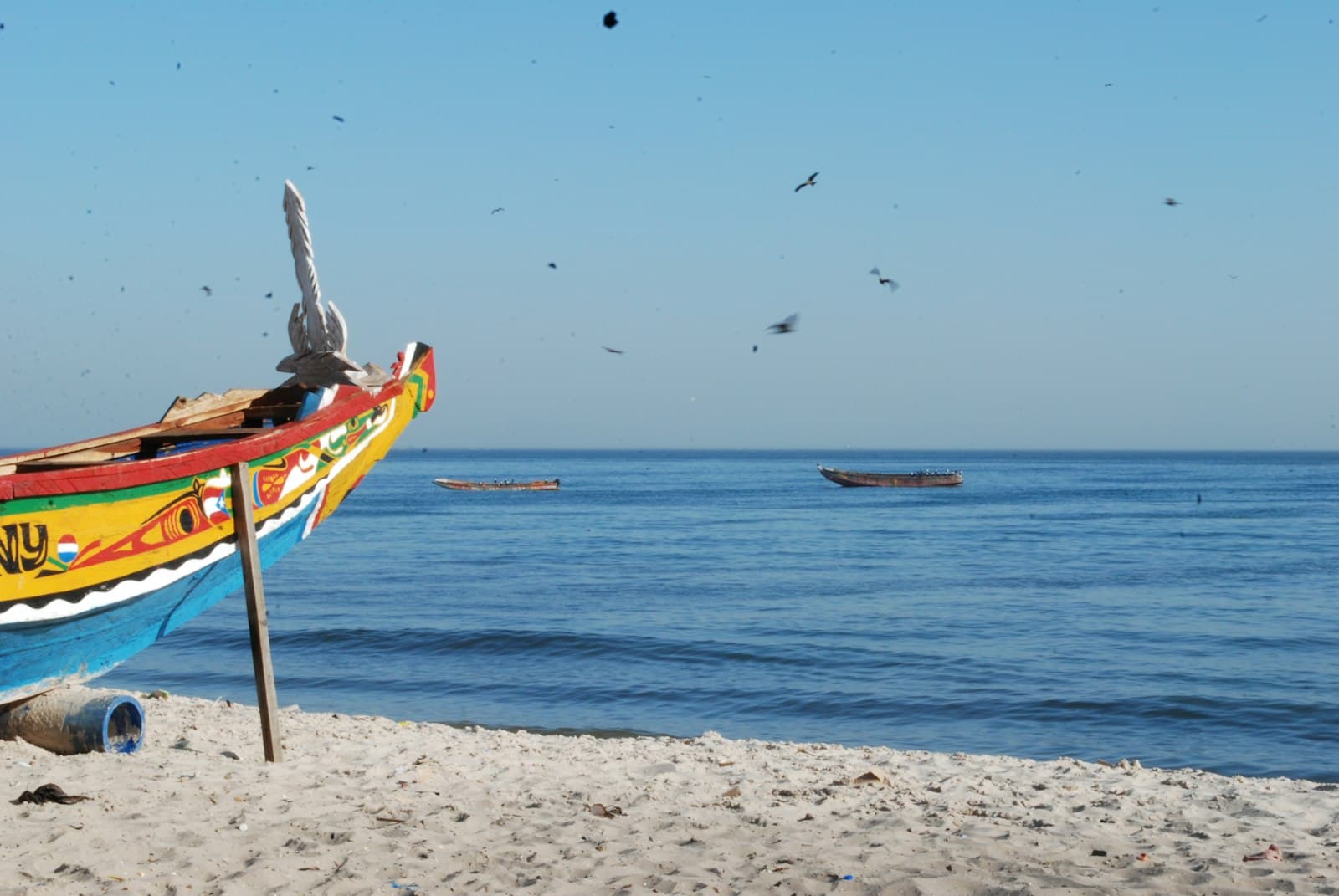 Photo: Cheikh Tidiane Ndiaye / Unsplash
Self-guided audio walking tour of Kaolack — GPS route, offline playback, story-driven narration in 32 languages.
“Where the Saloum River murmurs its ancient stories and the Grand Marché beats with the pulse of daily life.”
Not the postcards. The stories even locals don't know — whispered in your ear, right where they happened.
A seemingly ordinary house in the city center holds a key to Kaolack's foundational legends and a surprising marital alliance.
Beyond the city's main attractions, a legendary baobab tree stands as a living witness to the ancient capital of the Kingdom of Saloum.
Kaolack's strategic location on the Saloum River wasn't just for trade; it was once home to a unique traditional cult.
Discover every secret of Kaolack
Every address, every reveal in full — in your ear, right where it happened.
You pick your stops. You walk. The voice reveals what the others miss.
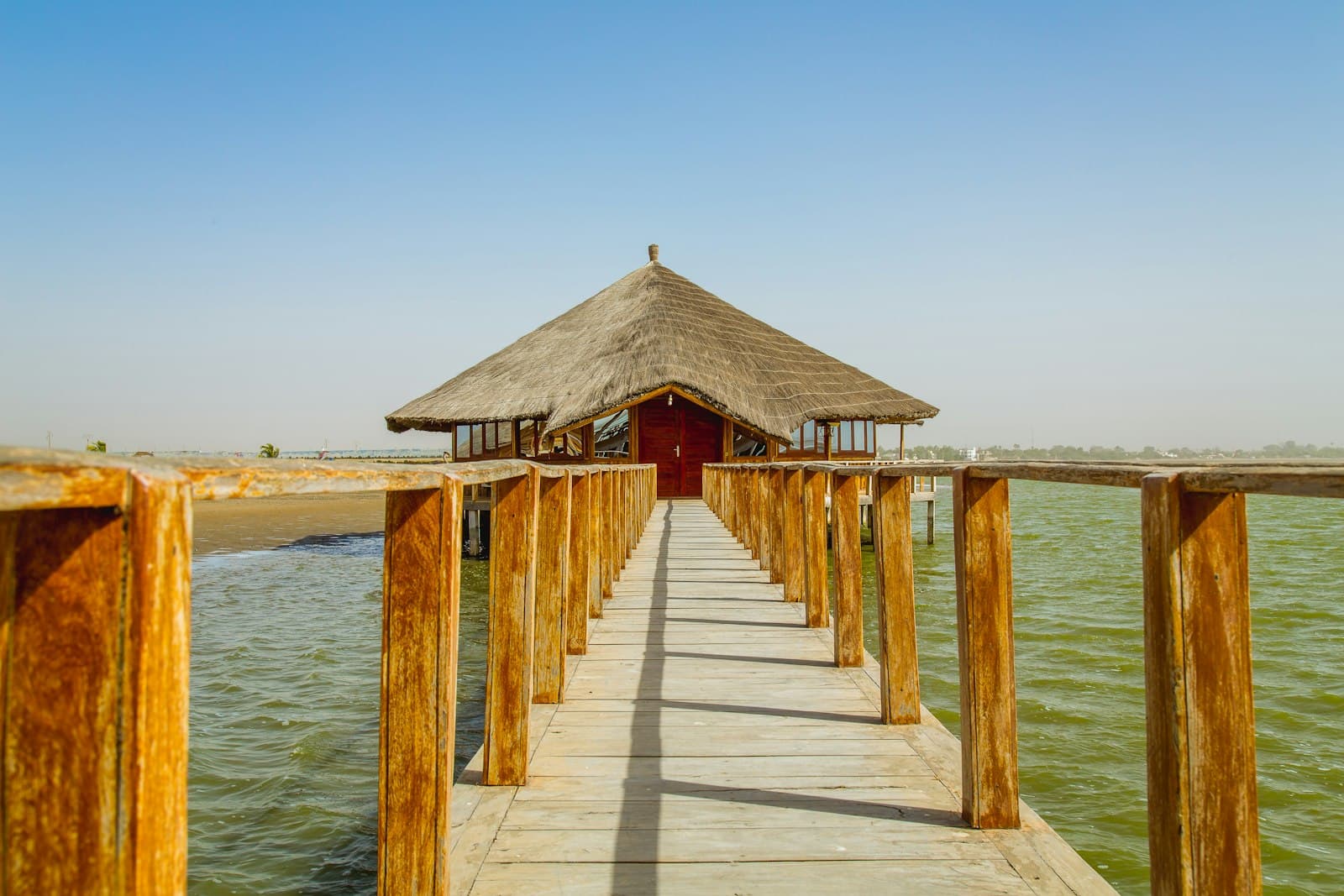


Your self-guided audio tour of Kaolack is ready — pick your landmarks, choose your language, and start the moment you arrive.
BuyLume has a built-in augmented-reality guide. Hold your phone up and its camera shows the street ahead of you, with a glowing arrow laid over the real view that always points to your next stop — no map to puzzle over, no wrong turns. Like everything in Lume, it works fully offline.
Kaolack, a city in west-central Senegal, pulses with the rhythm of commerce and spiritual devotion. Situated on the north bank of the Saloum River, approximately 190 kilometers southeast of Dakar, it serves as a vital economic and cultural crossroads. Often called the 'peanut capital' due to the extensive groundnut fields surrounding it, Kaolack is a major center for peanut processing and export, playing a key role in Senegal's economy.
The city's atmosphere blends the dynamism of a significant commercial hub with the charm of a provincial town. Its active Grand Marché, one of West Africa's largest, is a sensory experience of colorful textiles, aromatic spices, and local crafts, offering an authentic glimpse into Senegalese daily life. Beyond its commercial prowess, Kaolack is a profound spiritual center, particularly for the Tijaniyyah Sufi order, with its impressive mosques serving as both religious symbols and architectural landmarks.
## From Ancient Kingdom to Colonial Hub Kaolack's roots stretch back to the pre-colonial Kingdom of Saloum, a territory originally inhabited by the Serer people. For centuries, the nearby town of Kahone served as the region's political and historical heart. Kaolack itself began as a smaller settlement, possibly named after a local tree in the Serer language, located about 8 kilometers downriver from Kahone.
French interests in the Saloum River region grew in the early 19th century as they sought legitimate trade goods to replace the slave trade. By mid-century, peanut production had been introduced to the Kingdom of Saloum. The French established a fortified trading post on the riverfront at Kaolack, a more advantageous location for shipping than Kahone, and in 1860, they laid out the first grid of lots for what would become the city center, the 'Escale' neighborhood.
## The Peanut Boom and the Rise of Sufism The construction of a railway line in 1911, connecting the port to the Dakar-Niger line, dramatically transformed Kaolack. This infrastructure allowed for efficient transport of groundnuts from the interior to the river port, cementing Kaolack's status as the economic capital of the 'Groundnut Basin' and Senegal's second most important port after Dakar. The city's population boomed, rising from 5,600 in 1925 to 44,000 by 1934.
This period also saw Kaolack emerge as a significant spiritual center for the Tijaniyyah Sufi order. Allaaji Abdulaay Ñas opened a major 'zâwiyah' (lodge) in the Leona neighborhood in 1910. His son, Ibrayima Ñas, known as 'Baay' to his followers, further solidified Kaolack's religious importance by founding the Ibrahimiyya branch of the Tijaniyyah order in 1930 and establishing Medina Baye, now a major pilgrimage site.
Kaolack offers a rich array of cultural and commercial experiences. The Grand Marché is an essential visit, recognized as one of West Africa's largest and most active markets. Here, you can immerse yourself in the local culture, browse colorful textiles, handcrafted jewelry, aromatic spices, and fresh produce.
For a deeper dive into the city's spiritual heart, explore the impressive mosques, particularly the Leona Niassene mosque and the Grand Mosque of al-Ḥājj Ibrāhīm Niasse in Medina Baye, a major center for the Tijaniyyah Sufi order. These architectural landmarks are significant pilgrimage sites for believers across West Africa.
Beyond the urban activity, Kaolack's proximity to the Saloum Delta offers opportunities for nature enthusiasts. Take a boat trip on the Saloum River to explore the serene mangrove ecosystems and observe diverse bird species like vultures, herons, and kingfishers. While Kaolack itself lacks large state museums, the Alliance Française and the Regional Cultural Center regularly host art exhibitions and cultural events, providing a window into modern Senegalese art and local artists' works. You can also visit the Village Artisianal for a selection of arts and crafts.
The best time to visit Kaolack is during the dry season, which runs from November to May. During these months, temperatures are generally mild, and there is little to no rainfall, making it ideal for exploring the city and its surroundings. The warmest months are March, April, and May, with average daytime temperatures hovering around 36°C (97°F) and peaking at 39°C (103°F) in April. For cooler nights and lower humidity, aim for November to March. The rainy season, from June to October, brings heavy rainfall, higher humidity, and hotter temperatures, which can make travel less comfortable.
The local currency in Senegal is the West African CFA franc (XOF). While French is the official language, Wolof is widely spoken in Kaolack, along with Serer and Mandinka in the markets. It's advisable to carry identification with you at all times, as travelers are required by law to do so and may be subject to questioning by police.
Kaolack is a major transport hub, and you can reach most parts of Senegal within a day's travel. While Kaolack has a small airport (KLC), it sees minimal scheduled service. Most international travelers fly into Blaise Diagne International Airport (DSS) near Dakar, which is about 120 km from Kaolack, and then travel by car or bus, a journey of approximately 3 hours and 20 minutes. Taxis are the main mode of transport within the city. When visiting markets and crowded areas, be mindful of petty theft and pickpocketing. Respect local customs, including modest dress codes for both men and women, as Senegal is a predominantly Muslim country.
Kaolack in Korean, in Chinese or in Hebrew — and 29 more languages, every stop narrated by a native voice. The widest language range of any self-guided audio tour.
Available in: