Tambacounda Railway Station
This grand colonial-era station was once a vital artery, but its tracks fell silent for years. What brought it back to life?
Full story unlocks in the tour
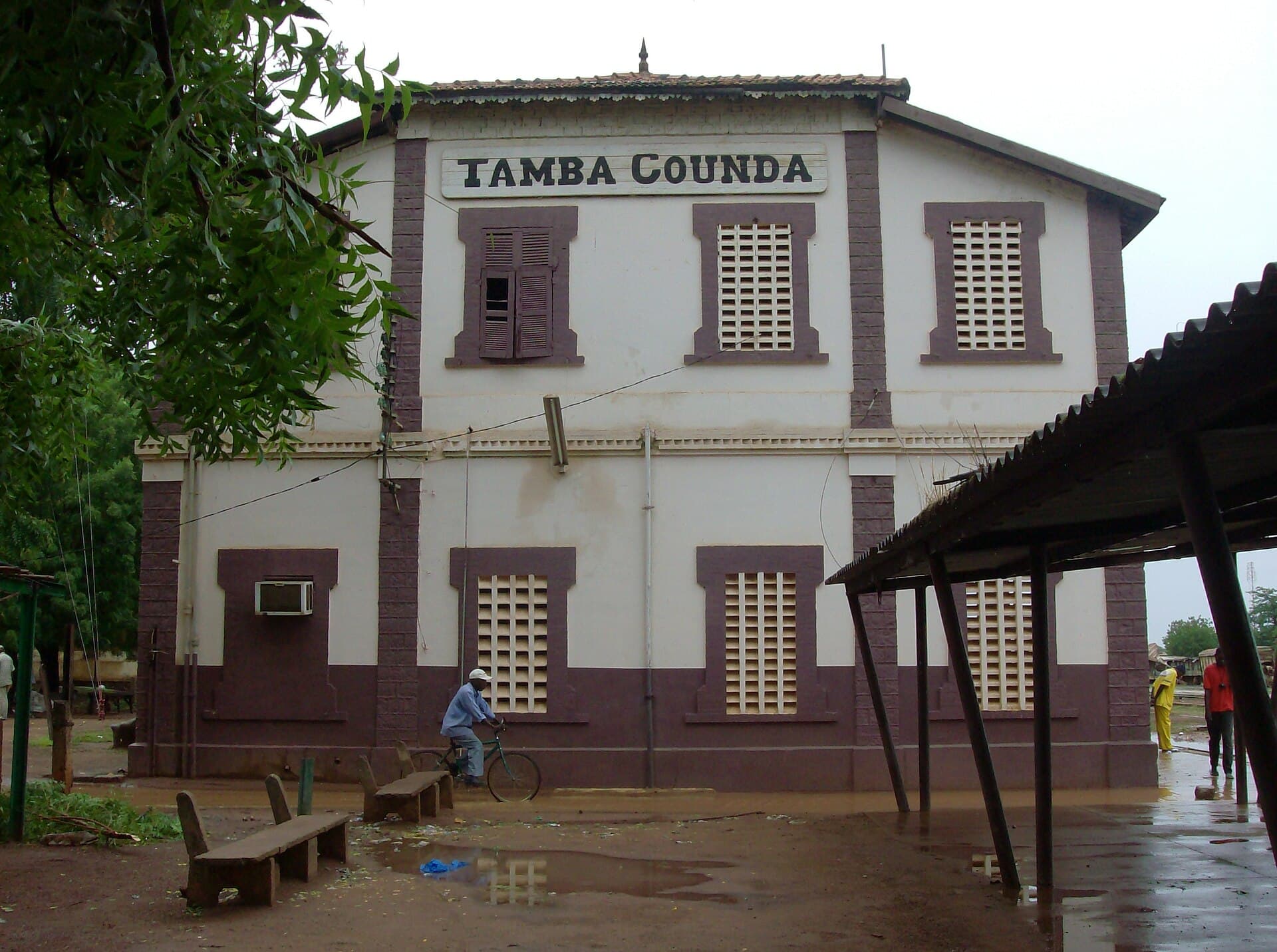 Niels Broekzitter https://www.flickr.com/photos/nbroekzitter86/3687404950 / CC BY 2.0, via Wikimedia Commons
Self-guided audio walking tour of Tambacounda — GPS route, offline playback, story-driven narration in 32 languages.
“Where the Sahel breathes stories, and the djembe's rhythm echoes through time.”
Not the postcards. The stories even locals don't know — whispered in your ear, right where they happened.
This grand colonial-era station was once a vital artery, but its tracks fell silent for years. What brought it back to life?
Beyond the lively stalls of produce and textiles, this market holds a secret for those seeking traditional remedies.
The largest region in Senegal, Tambacounda has a surprising historical connection to a powerful ancient empire.
Discover every secret of Tambacounda
Every address, every reveal in full — in your ear, right where it happened.
You pick your stops. You walk. The voice reveals what the others miss.

Your self-guided audio tour of Tambacounda is ready — pick your landmarks, choose your language, and start the moment you arrive.
BuyLume has a built-in augmented-reality guide. Hold your phone up and its camera shows the street ahead of you, with a glowing arrow laid over the real view that always points to your next stop — no map to puzzle over, no wrong turns. Like everything in Lume, it works fully offline.
Tambacounda, the largest city in eastern Senegal, serves as a bustling crossroads, approximately 400 kilometers southeast of Dakar. It is a place where the pulse of daily life beats strong, offering a blend of traditional and modern experiences. While not a typical tourist destination, its appeal lies in its authenticity and its role as a significant transport hub, connecting various regions of Senegal with neighboring Mali and Guinea.
The city is a lively convergence of cultures, reflecting the diverse ethnic fabric of Senegal. Originally settled by Mandinka people, it later saw an influx of Fula cattle herders and Wolof farmers, contributing to its rich cultural mix. Tambacounda also functions as a gateway to some of Senegal's most impressive natural landscapes, including the Niokolo-Koba National Park, a UNESCO World Heritage site.
## From Ancient Crossroads to Colonial Hub Tambacounda's history is deeply intertwined with its strategic geographical position. The region, once known as Sénégal Oriental, was part of the Mali Empire, underscoring its long-standing significance as a crossroads in West Africa. This historical role as a point of convergence for different cultures and traditions continues to shape its identity today.
In the mid-19th century, Tambacounda was a Mandinka town and a center for the peanut trade, particularly with the English. However, its trajectory shifted significantly with the arrival of French colonial powers. The town was attacked by Bundu in 1863, and the Kingdom of Wuli, which encompassed the area, became a French protectorate in 1888.
A pivotal moment in Tambacounda's development was the arrival of the Dakar–Bamako railway in 1913. This railway transformed the town into a major transport hub, facilitating trade and the more intensive cultivation of grains, peanuts, and cotton in the 1920s. French colonial authorities recognized and capitalized on its strategic location, establishing it as the administrative capital of a new cercle in 1919. Many buildings from this era, including the railway station, still retain their colonial architectural style, serving as tangible reminders of this period.
## A Legacy of Drumming and Resilience The cultural landscape of Tambacounda has also been shaped by significant migrations. The region is particularly known for its strong djembe drumming and dance traditions. This profound heritage was further enriched in the mid-20th century when respected djembe masters from Ségou, Mali, settled in Tambacounda, bringing with them their deep knowledge and secrets of the djembe.
Tambacounda also played a role in Senegal's independence movement in the mid-20th century, with local leaders advocating for self-governance. Today, the city continues to be an important agricultural center, known for its production of millet, sorghum, maize, and cotton. While its economy has lagged behind other regions, Tambacounda remains a vital economic, cultural, and tourist hub, especially as a gateway to eastern Senegal and its natural treasures.
Begin your exploration at the Marché Central de Tambacounda, a lively and authentic market where the air is thick with the scent of spices and fresh produce. It is a fantastic place to observe daily life, engage with local vendors, and discover traditional crafts, medicinal plants, and musical instruments like the djembe and kora.
Another significant landmark is the Tambacounda Railway Station, a colonial-era structure that speaks to the city's past as a vital transport hub. While passenger service was suspended for a period, efforts in 2024 aimed to restore this historic connection. Nearby, the Sacred Well of Tambacounda in the Pont du Mamacounda district offers a glimpse into local spiritual beliefs and legends, where residents honor a residing genie with rituals and prayers.
For those interested in local artistry, the Village Artisanal de Tambacounda, established in 1956, is one of Senegal's oldest craft villages. Here, you can find unique souvenirs, including masks, sculptures, jewelry, paintings, and hand-dyed textiles.
Beyond the city, Niokolo-Koba National Park, a UNESCO World Heritage site, is a compelling destination for nature enthusiasts. Just a couple of hours away, it is home to diverse wildlife such as elephants, hippos, and various bird species. The dry season (November to April) offers the best opportunities for wildlife observation. While the city itself does not have a plethora of traditional tourist attractions, its role as a cultural crossroads and a base for exploring the surrounding natural beauty makes it a compelling stop.
The most favorable time to visit Tambacounda is during the dry season, which spans from November to May. During these months, you can anticipate clear skies and minimal rain, making outdoor activities and exploration more comfortable. Daytime temperatures during the dry season typically range from 30-35°C (86-95°F), cooling to a pleasant 18-22°C (64-72°F) at night. The hottest period is generally from March to May, just before the rainy season begins. The wet season, from June to October, brings heavy rains, higher humidity, and hotter temperatures, often reaching 35-40°C (95-104°F), which can make travel and exploration challenging due to muddy conditions and disrupted transport.
Tambacounda is generally considered safe, but it is prudent to exercise increased caution due to street crime, particularly in crowded areas like markets and around the bus station. Avoid displaying signs of wealth and remain aware of your surroundings. For transportation within the city, local taxis are available; always agree on a fare before commencing your journey. Bush taxis and sept-place taxis are common for inter-city travel, but be aware that armed banditry can occur on some roadways, especially at night. While English is not widely spoken, learning some basic French or Wolof phrases will greatly enhance your interactions with locals.
Senegal is a predominantly Muslim country, and while generally tolerant, modesty in dress is appreciated, particularly in rural areas and religious sites. Women are not typically required to cover their heads in most areas, but a scarf can be useful for sun protection or when visiting sacred locations. Carry a valid ID at all times, as you may be subject to questioning by police. For health, ensure you have a Yellow Fever vaccination certificate, and consider other recommended vaccinations and anti-malarial medication. Insect repellent is highly recommended due to mosquitoes.
Tambacounda in Korean, in Chinese or in Hebrew — and 29 more languages, every stop narrated by a native voice. The widest language range of any self-guided audio tour.
Available in: