Uma Maheshwar Temple
The Uma Maheshwar Temple, a prominent landmark, once stood taller than it does today.
Full story unlocks in the tour
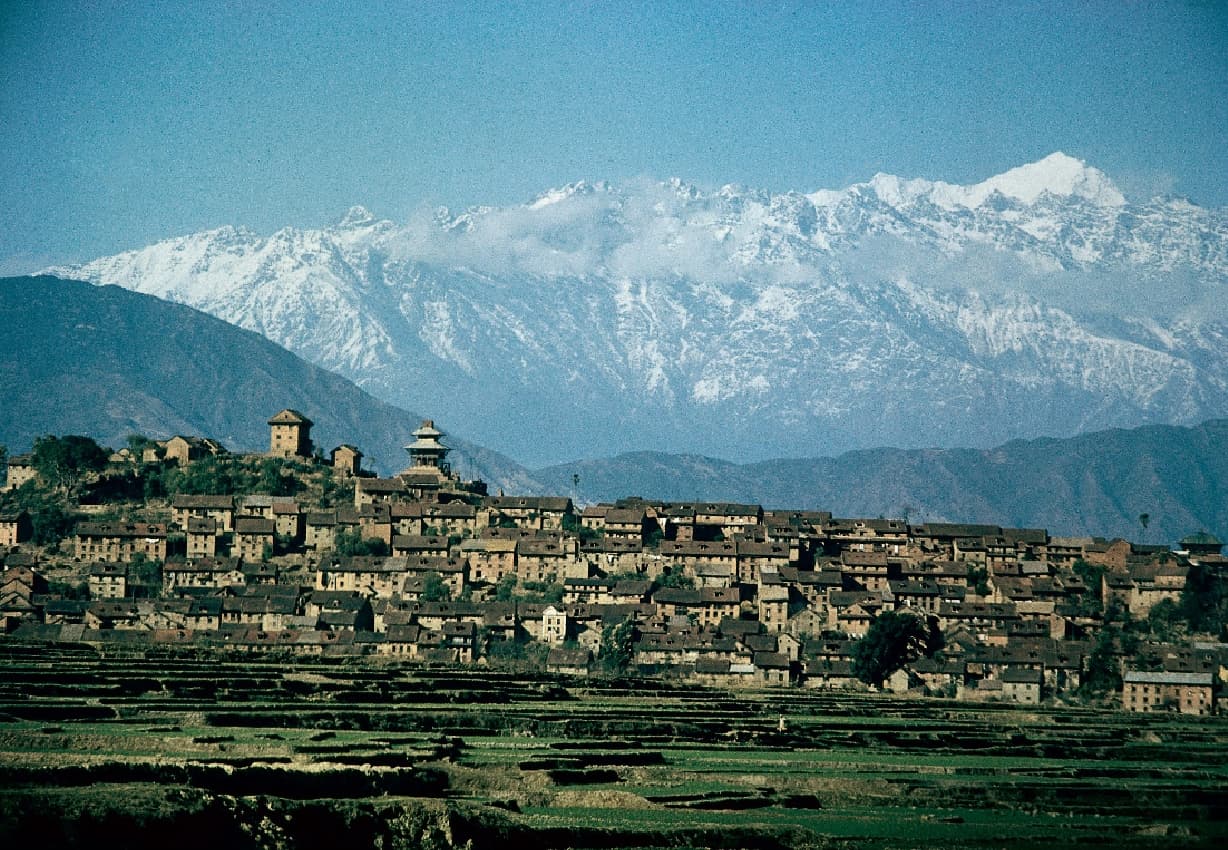 Etter Studio / CC BY 2.0, via Wikimedia Commons
Self-guided audio walking tour of Kirtipur — GPS route, offline playback, story-driven narration in 32 languages.
“Where ancient defiance echoes through cobbled lanes.”
Not the postcards. The stories even locals don't know — whispered in your ear, right where they happened.
The Uma Maheshwar Temple, a prominent landmark, once stood taller than it does today.
The formidable Bagh Bhairab Temple holds a chilling reminder of Kirtipur's defiance.
The very name 'Kirtipur' carries a tale of heroism, possibly inspired by a forgotten figure.
Discover every secret of Kirtipur
Every address, every reveal in full — in your ear, right where it happened.
You pick your stops. You walk. The voice reveals what the others miss.


Your self-guided audio tour of Kirtipur is ready — pick your landmarks, choose your language, and start the moment you arrive.
BuyLume has a built-in augmented-reality guide. Hold your phone up and its camera shows the street ahead of you, with a glowing arrow laid over the real view that always points to your next stop — no map to puzzle over, no wrong turns. Like everything in Lume, it works fully offline.
Situated on a rocky hill just southwest of Kathmandu, Kirtipur is an ancient Newar town that stands as a living testament to Nepal's cultural and historical fabric. Its name, meaning 'city of glory,' aptly reflects its storied past and the enduring spirit of its inhabitants. Far from the bustling energy of Kathmandu, Kirtipur offers a quieter, more authentic glimpse into traditional Newari life, with its narrow, winding streets, traditional red-brick houses, and intricately carved wooden architecture.
Designated as a tentative UNESCO World Heritage site in 2008, Kirtipur is a repository of ancient temples, shrines, and cultural practices that have been preserved over centuries. It's a place where history isn't just in museums but is woven into the daily rhythm of life, from its lively festivals to its distinct culinary traditions. Whether one seeks expansive views of the Kathmandu Valley, a deeper understanding of Newar heritage, or simply a peaceful escape, Kirtipur offers a unique and enriching experience.
## Early Foundations and Malla Rule Kirtipur's history stretches back to 1099 A.D., when it was founded by Sada Shiva Deva during the Gopal dynasty. It later flourished under the Lichhavi and Malla dynasties, with the Mallas responsible for constructing its fortification walls and establishing the city's concentric planning. For centuries, Kirtipur was an important part of the Kathmandu Valley, at various times falling under the rule of both the Kathmandu and Patan kingdoms.
## The Battle of Kirtipur and Gorkhali Conquest The town gained significant historical prominence during the 18th century as a formidable stronghold against the invading Gorkhali forces of King Prithvi Narayan Shah, who sought to unify Nepal. Kirtipur famously resisted the Gorkha army three times, inflicting heavy losses, including the death of the king's favorite general, Kalu Pandey, during the first assault, and the blinding of his brother, Surpratap, in the second. It was only on his third attempt in 1767, reportedly through trickery and the defection of a nobleman, that King Prithvi Narayan Shah finally conquered Kirtipur. The aftermath of this conquest is a dark chapter in Kirtipur's history, with the king ordering the brutal mutilation of many of the town's adult male inhabitants as an act of revenge for their fierce resistance.
## A Center of Resistance and Culture Despite this tragic past, Kirtipur has consistently demonstrated resilience. In 2006, it became a focal point for an uprising against the monarchy in Nepal, highlighting its enduring spirit of defiance. Today, Kirtipur remains a thriving center of Newar culture, known for its well-preserved traditional architecture, distinctive festivals, and strong community identity. It is also home to Tribhuvan University, Nepal's oldest and largest university, blending ancient heritage with contemporary academic life.
Kirtipur offers a captivating journey through its well-preserved ancient core. Begin your exploration at the Bagh Bhairab Temple, a lively red structure dedicated to the formidable deity Bhairab in his tiger form. The temple courtyard is considered Kirtipur's finest, filled with shrines and unique architectural details, and notably displays captured Gorkha weapons on its roof.
Ascend to the Uma Maheshwar Temple, situated at the highest point of Kirtipur Hill. This three-storied pagoda-style temple, dedicated to Lord Shiva and Goddess Parvati, offers expansive views of the Kathmandu Valley and the northern Himalayan range, including peaks like Langtang and Ganesh Himal.
Wander through the narrow, winding streets to discover the Chilancho Stupa (also known as Chilancho Vihara), a distinctive Buddhist monument built in 1515. Its ancient inscriptions and serene atmosphere provide a glimpse into the town's Buddhist heritage.
Do not overlook Dev Pukku, Kirtipur's main water source, which is surrounded by a lively local market and the Narayan Temple. For a unique architectural experience, visit Shri Kirti Vihara, the only Thai-style temple in Nepal outside of Lumbini, a Theravada Buddhist monastery built in 1975.
Beyond the main temples, explore the Kirtipur Durbar / Old Town Core with its traditional brick houses and intricately carved wooden windows. For a deeper dive into the town's past, the Kirtipur Museum offers exhibits on the Battle of Kirtipur. You can also seek out the Suspension Bridge in the Tinthana/Chandragiri area for scenic views.
The most favorable times to visit Kirtipur are during the autumn (September to November) and spring (March to May) seasons. During these months, the weather is mild with clear skies, offering expansive views of the Kathmandu Valley and the Himalayan peaks. Spring brings lively blooms and pleasant temperatures, while autumn provides dry, clear conditions ideal for exploration. Winter (December to February) can be cooler but offers clear skies and fewer crowds. The monsoon season (June to August) brings heavy rains, which can make travel difficult and obscure mountain views.
Kirtipur is easily accessible, located just 5 to 10 kilometers southwest of Kathmandu. The most convenient way to reach it is by taxi or ride-sharing service, taking approximately 15-20 minutes from central Kathmandu or Thamel. Local buses are also available from Kathmandu's Ratna Park area, offering a more budget-friendly option with a journey of about 25-30 minutes. A half-day trip is generally sufficient to explore Kirtipur's main attractions.
While Kirtipur has limited accommodation options within its historic core, a few local homestays and guesthouses offer an authentic experience. More extensive lodging, from budget to luxury, can be found in nearby Kathmandu. There is an entrance fee of 100 NPR for foreigners, though this is sometimes only collected if the ticket office is open. When visiting cultural sites, dress modestly and ask for permission before taking photos of people or private property. Tap water is generally not safe for direct consumption; bottled water is widely available.
Kirtipur in Korean, in Chinese or in Hebrew — and 29 more languages, every stop narrated by a native voice. The widest language range of any self-guided audio tour.
Available in: