Patan Durbar Square
Imagine a royal courtyard where a king's dream literally shaped a masterpiece.
Full story unlocks in the tour
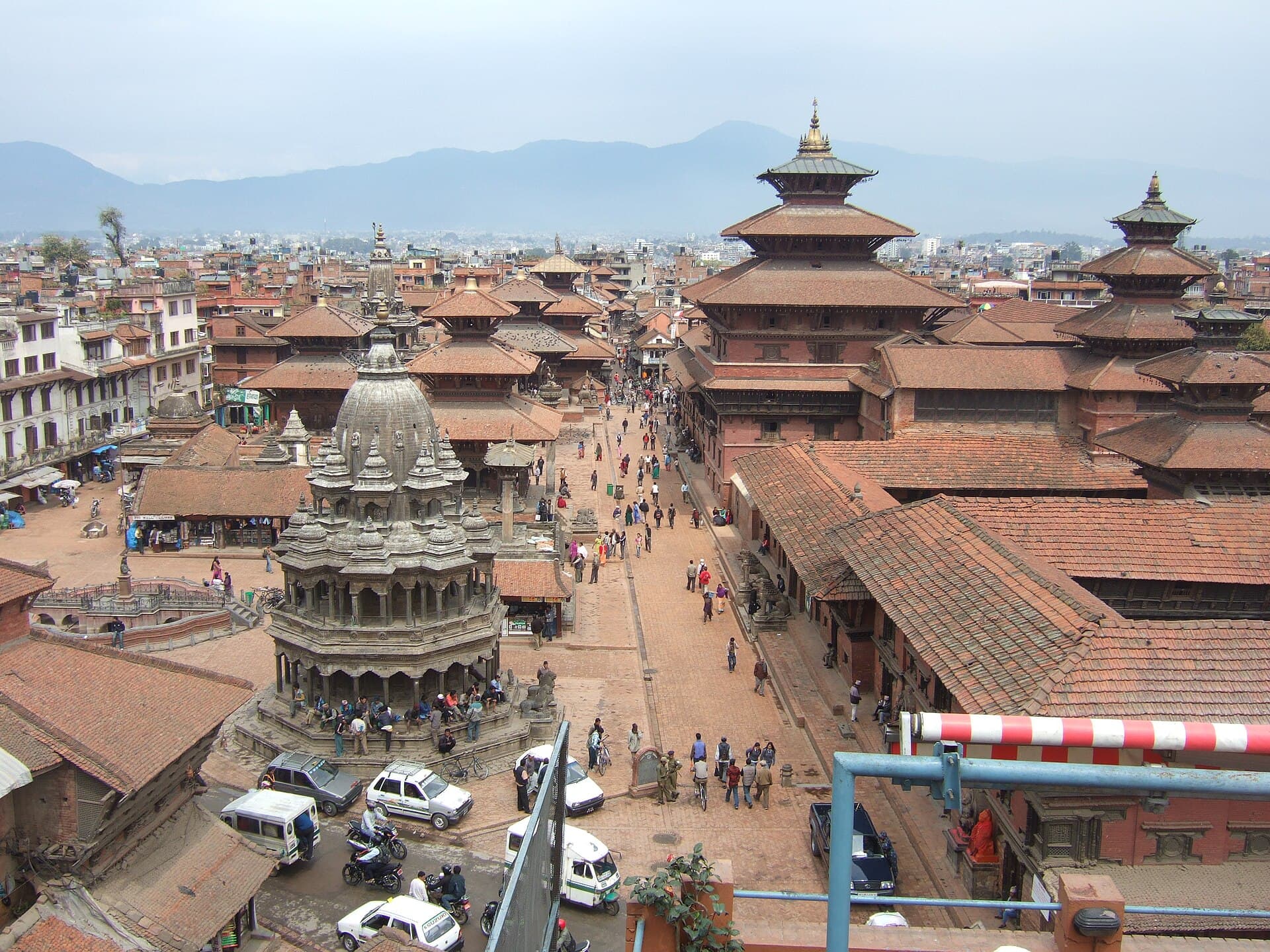 Clemensmarabu / CC BY-SA 3.0, via Wikimedia Commons
Self-guided audio walking tour of Patan — GPS route, offline playback, story-driven narration in 32 languages.
“Where ancient artistry breathes in every brick and whispered tale.”
Not the postcards. The stories even locals don't know — whispered in your ear, right where they happened.
Imagine a royal courtyard where a king's dream literally shaped a masterpiece.
This shimmering monastery is guarded by an unlikely, small creature, and holds a secret duel.
A temple adorned with thousands of Buddhas, yet its construction was a multi-generational endeavor marked by divine intervention.
Discover every secret of Patan
Every address, every reveal in full — in your ear, right where it happened.
You pick your stops. You walk. The voice reveals what the others miss.


Your self-guided audio tour of Patan is ready — pick your landmarks, choose your language, and start the moment you arrive.
BuyPatan, also known as Lalitpur, or the 'Beautiful City,' is a historic urban center in the Kathmandu Valley, just south of Kathmandu across the Bagmati River. Recognized as a UNESCO World Heritage Site, Patan feels like a living museum, celebrated for its ancient architecture, intricate stone and metalwork, and traditional craftsmanship. It offers a more serene, authentic cultural experience compared to its bustling neighbor, Kathmandu, with its narrow streets, ancient temples, and peaceful courtyards recounting stories of Nepal's enduring artistic heritage.
The city is a focal point of Newari culture, where age-old traditions remain woven into daily life. Visitors can observe local artisans creating bronze statues, carving wood, painting Thangka art, and crafting handmade items using skills passed down through generations. Patan's allure lies in its harmonious blend of Hindu and Buddhist influences, evident in its many temples and shrines.
## From Ancient Origins to Malla Grandeur Patan's history stretches back to the 3rd century BC, with the Kirat dynasty credited with its founding. Early settlements were laid, and the city, then known as Lalitpur, began to grow. Emperor Ashoka, a prominent Buddhist ruler from India, is believed to have visited Patan around 250 BC, erecting five stupas that still mark important Buddhist sites and are said to have shaped the city in the form of the Buddhist Dharma Chakra, or Wheel of Righteousness.
The Licchavi dynasty, in the 6th century AD, further expanded Patan, and historical records indicate a harmonious coexistence of Hinduism and Buddhism during this period. The city also grew into a busy trading hub. However, it was during the Malla Dynasty, primarily between the 14th and 18th centuries, that Patan truly blossomed as a center of art and architecture.
King Siddhi Narsingh Malla, in the 17th century, was instrumental in building many of Patan Durbar Square's main structures, including the iconic Krishna Mandir. His son, Srinivasa Sukriti, continued this legacy, adding more temples and palaces, solidifying the square's status as the royal home. The Newari craftsmanship, particularly in wood and stone carvings, reached incredible levels of detail during this era, a legacy still visible throughout the city.
While the Malla reign ended in the 18th century with the unification of Nepal by Prithvi Narayan Shah, Patan managed to retain its distinct artistic and cultural character. Despite damage from the 2015 earthquake, significant restoration efforts have ensured that much of Patan's historical grandeur remains preserved, allowing visitors to experience a living history.
Patan offers a wealth of sights, primarily centered around its UNESCO-listed Durbar Square. Here, you'll find an unparalleled concentration of Newar architecture, with intricately carved temples, royal courtyards, and ancient palaces. Key highlights include the Krishna Mandir, a masterpiece of 17th-century stone architecture, and the Patan Museum, housed within the Royal Palace, showcasing an extensive collection of Buddhist and Hindu artifacts.
Just a short walk from the main square is the Golden Temple (Hiranya Varna Mahavihar), a shimmering Buddhist monastery known for its gilded facade, intricate carvings, and serene atmosphere. Do not miss the Mahabouddha Temple, also known as the 'Temple of a Thousand Buddhas,' distinguished by its terracotta bricks, each bearing a Buddha image. Beyond the major landmarks, Patan's true essence lies in its courtyards (bahals) and narrow alleys, where you can observe local artisans at work, discover small shrines, and experience the city's daily life.
The optimal time to visit Patan is during the autumn months of October and November, and the spring months of March to May. During autumn, post-monsoon skies are clear, offering expansive views and pleasant temperatures ranging from 10°C to 25°C. This is also a festive period, with major celebrations like Dashain and Tihar. Spring brings blooming flowers, comfortable temperatures (7°C to 23°C), and festivals like Holi and Nepali New Year. While winter (December-February) offers clear skies and fewer crowds, nights can be cold. The summer monsoon season (June-September) is generally less ideal due to warm, wet weather and muddy roads.
Patan is easily accessible from Kathmandu, located just a short distance across the Bagmati River. You can reach it by taxi (around 20-30 minutes from Thamel, 600+ rupees), local bus from Ratna Park, or even a 90-minute walk. The official currency is the Nepalese Rupee (NPR); while credit cards are accepted in major tourist areas, cash is often preferred in smaller establishments. Most foreign nationals require a visa to enter Nepal, which can often be obtained on arrival at the airport.
An entry fee of NPR 1000 for foreigners (NPR 250 for SAARC nationals) is required for Patan Durbar Square, and holding onto your ticket is essential as it may be checked. This fee contributes to ongoing restoration efforts. It's advisable to visit early in the morning (8-10 AM) for softer light and fewer crowds. When entering temples and monasteries, remember to remove leather items and shoes, and be respectful of ongoing religious practices. Tourist police are available in Patan for safety and security.
Patan in Korean, in Chinese or in Hebrew — and 29 more languages, every stop narrated by a native voice. The widest language range of any self-guided audio tour.
Available in: