Fort Concordia
Centuries ago, a European fort in Kupang served not merely as a military outpost, but as a strategic maneuver in a grander global contest.
Full story unlocks in the tour
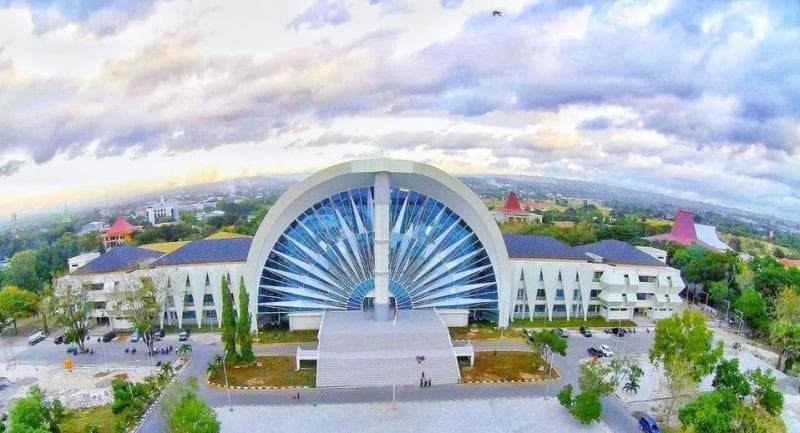 Government of East Nusa Tenggara / Public domain, via Wikimedia Commons
Self-guided audio walking tour of Kupang — GPS route, offline playback, story-driven narration in 32 languages.
“Where ancient trade routes meet the rhythms of island life.”
Not the postcards. The stories even locals don't know — whispered in your ear, right where they happened.
Centuries ago, a European fort in Kupang served not merely as a military outpost, but as a strategic maneuver in a grander global contest.
Much of Kupang's colonial past vanished, not through the passage of years, but during a global conflict.
Before its modern incarnation, Kupang's airstrip played a pivotal role in the pioneering era of long-distance aviation.
Discover every secret of Kupang
Every address, every reveal in full — in your ear, right where it happened.
You pick your stops. You walk. The voice reveals what the others miss.


Your self-guided audio tour of Kupang is ready — pick your landmarks, choose your language, and start the moment you arrive.
BuyLume has a built-in augmented-reality guide. Hold your phone up and its camera shows the street ahead of you, with a glowing arrow laid over the real view that always points to your next stop — no map to puzzle over, no wrong turns. Like everything in Lume, it works fully offline.
Kupang, the capital of Indonesia's East Nusa Tenggara province, is a bustling port city situated on the southwestern tip of Timor Island. Often considered a transit point for voyagers bound for the serene islands of Rote or Alor, Kupang itself unfolds as a compelling blend of historical resonance, lively local existence, and unexpected natural allure. It stands as Timor's largest city, serving as a vital administrative, economic, and logistical nexus for the region.
Stepping into Kupang means encountering a city that is both unvarnished and authentic, a refreshing contrast to more heavily touristed Indonesian locales. Here, the echoes of Portuguese and Dutch colonial eras intertwine with indigenous cultures, crafting a distinctive blend of traditions and a welcoming ambiance. From its animated markets to its tranquil coastal expanses, Kupang invites a deeper exploration beyond its reputation as a mere stopover, revealing a spirit forged by centuries of commerce, contention, and fortitude.
## A Confluence of Empires and Commerce Kupang's unfolding story is a rich fabric woven from indigenous origins, colonial aspirations, and global conflicts. The area was originally overseen by the Helong tribe, who claimed descent from the island of Seram in the Maluku archipelago. Its strategic position on the southwestern tip of Timor Island, offering command over shipping lanes and access to fresh water from the Koinino River, rendered it a coveted prize for European powers.
### Portuguese and Dutch Contention The 15th century witnessed Timor emerge as a significant center for the profitable sandalwood trade, drawing Javanese and Portuguese merchants. The Dutch East India Company (VOC) arrived in 1613, challenging Portuguese supremacy and establishing a garrison after conquering a Portuguese fort. By 1653, the Dutch had solidified their presence with the construction of Fort Concordia, which became their primary base in the struggle against the Portuguese for control of Timor. This period saw Kupang evolve into a convergence of European, Chinese, and local cultures, its economy largely dictated by the VOC's trade interests.
### British Interludes and Dutch Consolidation In the late 18th and early 19th centuries, Kupang endured British assaults and occupations during the Napoleonic Wars, with the town suffering extensive damage. However, it was eventually returned to Dutch control in 1816. The early 19th century saw Jacobus Arnoldus Hazaart oversee Dutch Timor as Resident, managing affairs with considerable autonomy. The Dutch further extended their influence over wide areas of western and central Timor after decisively defeating the Topasses (a Portuguese mestizo group) in 1749.
### World War II and Independence The first half of the 20th century brought renewed strategic importance to Kupang as a crucial refueling point for early commercial flights between Europe and Australia. However, this also rendered it a target during World War II. From 1942 to 1945, Japanese forces occupied Kupang, and much of its Old Town was destroyed by Allied bombing. The Japanese occupation was a somber period, marked by forced labor and the tragic exploitation of women as "comfort women." Following the war, Kupang became an arena for the Indonesian revolution, eventually being annexed into the United States of Indonesia in 1949 and then becoming part of the Republic of Indonesia in 1950.
### Modern Era In 1958, Kupang was designated the administrative capital of the new province of East Nusa Tenggara, cementing its role as a key city in eastern Indonesia. The city also played a significant part during the Timorese conflict (1975-1999), serving as a base for the Indonesian armed forces and a hub for refugees. Today, Kupang continues to develop as a major transport, economic, and educational center, while striving to safeguard its rich cultural and historical heritage.
Kupang presents a variety of sights that reveal its distinctive character. Begin your exploration at the Museum of East Nusa Tenggara, where displays of traditional crafts, textiles, and artifacts offer insight into the diverse ethnic groups and histories of the region. For a refreshing escape, journey to Gua Kristal (Crystal Cave), a subterranean cavern featuring a crystalline freshwater pool, a favored local spot approximately 30 minutes from the city center.
Those who appreciate nature will find Oenesu Waterfall appealing, a multi-tiered cascade where swimming is possible in natural pools after an hour's drive through jungles and rice paddies. For a more relaxed coastal experience, Lasiana Beach offers soft sands and gentle waves, ideal for swimming or simply unwinding, particularly beautiful as the sun descends. Another excellent location for sunset views is Oesapa Beach.
Immerse yourself in local life at Pasar Inpres, an animated market where the scent of fresh seafood permeates the air and local crafts await discovery. Do not miss the opportunity to explore the remnants of Kupang's colonial past, including fragments of Dutch architecture and the Old Prison in the Air Mata district, constructed from coral stone blocks sourced from the Savu Sea.
The ideal time to visit Kupang is during the dry season, which generally extends from April to November. This period offers consistently clear skies, abundant sunshine, and minimal rainfall, making it perfect for exploring the city and its surrounding natural attractions. Sea conditions are also typically calm during these months, excellent for water activities and inter-island journeys to places like Rote, Semau, and Alor. While Kupang maintains warmth throughout the year, the wet season from December to March brings heavier rains that can affect travel plans.
The official currency in Kupang, and across Indonesia, is the Indonesian Rupiah (IDR). While some larger hotels and contemporary restaurants accept credit cards, cash is primarily used, especially for local markets, street food, and public transportation like bemos. ATMs are available in the city center, but it is prudent to carry smaller denominations.
For navigating the city, bemos (minibuses) offer a lively local experience, recognized for their unique decorations and spirited music. Ride-hailing applications such as Grab and Gojek are also widely available for convenient car and motorbike taxis. For longer distances or greater flexibility, consider renting a scooter.
Kupang locals are known for their warmth. When interacting, always use your right hand for greetings, handing over money or food, as the left is considered unclean. Modest attire is appreciated, particularly when visiting places of worship or local villages. Sundays are observed with reverence by the predominantly Christian population, so many businesses may be closed or operate with reduced hours.
Kupang in Korean, in Chinese or in Hebrew — and 29 more languages, every stop narrated by a native voice. The widest language range of any self-guided audio tour.
Available in: