Tomohon Traditional Market
Tomohon's market gained international notoriety for its 'extreme' offerings. While some practices have ceased, a deeper look reveals a shift in local traditions.
Full story unlocks in the tour
 SunDawn / CC BY-SA 4.0, via Wikimedia Commons
Self-guided audio walking tour of Tomohon — GPS route, offline playback, story-driven narration in 32 languages.
“Where volcanoes breathe, flowers bloom, and ancient stories linger.”
Not the postcards. The stories even locals don't know — whispered in your ear, right where they happened.
Tomohon's market gained international notoriety for its 'extreme' offerings. While some practices have ceased, a deeper look reveals a shift in local traditions.
This volcanic lake near Tomohon is famous for its shifting colors, but the reason behind this spectacle is more than just pretty reflections.
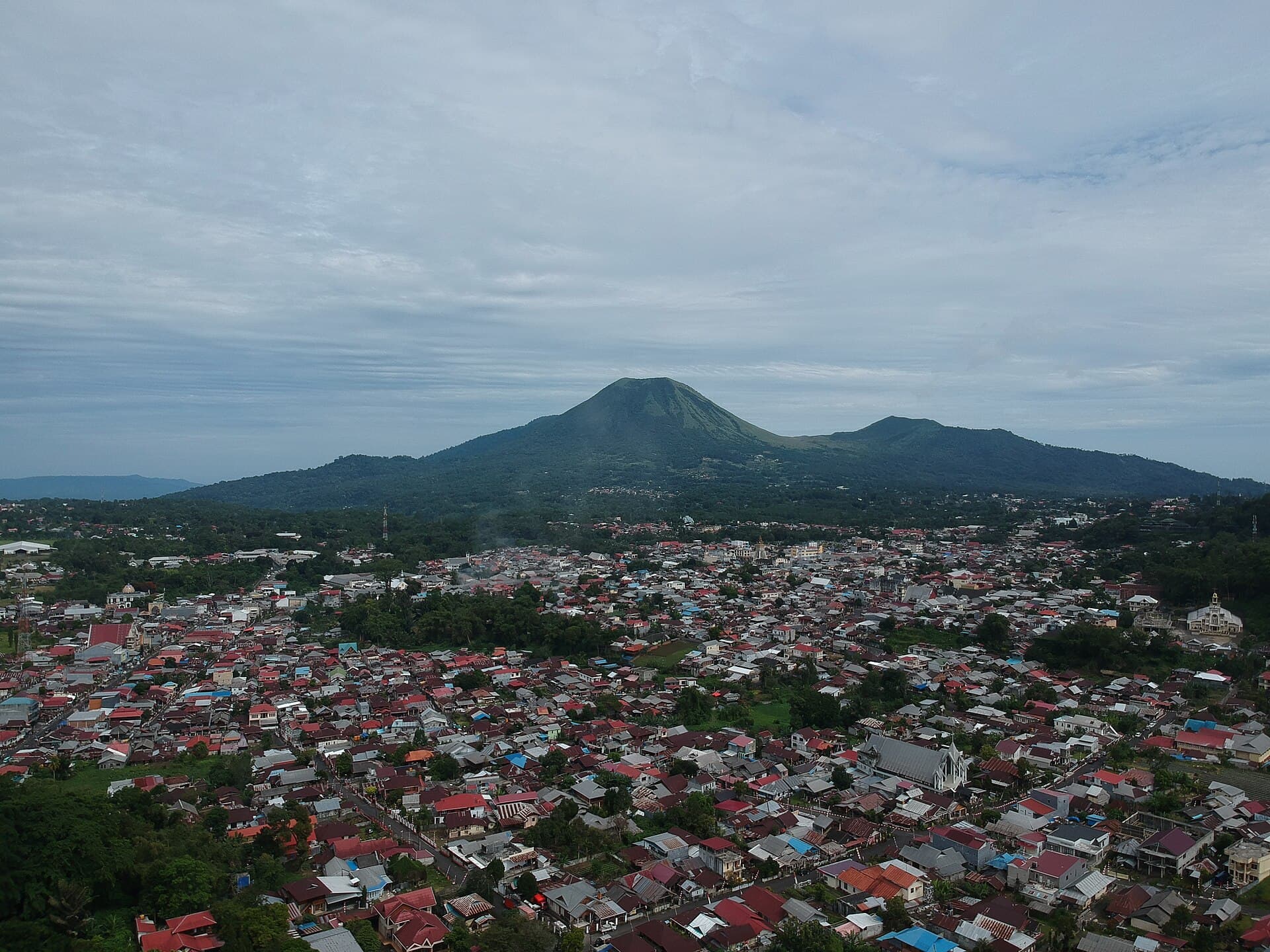
Tomohon is flanked by two active volcanoes, Mount Lokon and Mount Mahawu. Mount Lokon, while a prominent landmark, holds a specific geological secret about its true summit.
Discover every secret of Tomohon
Every address, every reveal in full — in your ear, right where it happened.
You pick your stops. You walk. The voice reveals what the others miss.


Your self-guided audio tour of Tomohon is ready — pick your landmarks, choose your language, and start the moment you arrive.
BuyLume has a built-in augmented-reality guide. Hold your phone up and its camera shows the street ahead of you, with a glowing arrow laid over the real view that always points to your next stop — no map to puzzle over, no wrong turns. Like everything in Lume, it works fully offline.
Tomohon, a city in the cool highlands of North Sulawesi, Indonesia, offers a refreshing escape from the tropical heat. Positioned at an altitude of 700 to 1000 meters above sea level, it is flanked by two active volcanoes, Mount Lokon and Mount Mahawu, which contribute to its fertile volcanic soil and dramatic landscapes. Known as the 'City of Flowers' (Kota Bunga), Tomohon is celebrated for its flower farms and the annual Tomohon International Flower Festival.
Beyond its floral beauty, Tomohon is a gateway to diverse natural attractions, from the color-shifting Lake Linow to numerous waterfalls and hot springs. The city provides a unique blend of adventure, nature, and local culture, making it a destination for those seeking authentic Indonesian experiences. Its cooler climate and panoramic views make it an ideal base for outdoor enthusiasts and culture seekers alike.
## The Volcanic Heart of Minahasa Tomohon's history is deeply intertwined with its dramatic volcanic landscape. The city rests in the heart of the Minahasa lands, a region shaped by ancient volcanic activity. The presence of Mount Lokon and Mount Mahawu, both active stratovolcanoes, has not only defined the topography but also enriched the soil, making the area exceptionally fertile for agriculture, particularly for flowers, fruits, and vegetables.
## From Regency to City Status For much of its history, Tomohon was part of the Minahasa Regency. However, on August 4, 2003, Tomohon officially separated from the regency to become an autonomous city. This transition marked a new era of development and a stronger focus on promoting its unique natural and cultural assets. Since gaining city status, Tomohon has steadily developed its industries, with tourism playing an increasingly significant role.
## The Rise of the City of Flowers The moniker 'Kota Bunga' or 'City of Flowers' is a relatively recent, yet deeply embraced, aspect of Tomohon's identity. The tradition of flower cultivation has long been a part of local life, but its prominence as a city-wide identity and tourist attraction gained significant momentum with the inception of the Tomohon International Flower Festival (TIFF). The festival, which began as a local flower parade in 2006, evolved into an international event by 2008 and has been an annual fixture since 2015, drawing participants and visitors from across Indonesia and beyond. This festival not only showcases the region's floricultural prowess but also highlights its arts and cultural heritage.
## A Place of Enduring Traditions Beyond its natural beauty and floral fame, Tomohon is a place where Minahasan culture thrives. The local community largely adheres to Christian beliefs, a notable characteristic in a country with a Muslim majority. This unique spiritual landscape is complemented by the enduring practice of 'Mapalus,' a Minahasan tradition of mutual cooperation and community support, which fosters a strong sense of unity among residents. These cultural elements, combined with its natural environment, make Tomohon a captivating destination for those seeking to understand the heart of North Sulawesi.
Begin your exploration with a visit to Lake Linow, a geothermal volcanic lake renowned for its mesmerizing ability to change colors throughout the day, shifting from blue to green to brownish-yellow due to its sulfur content. While swimming is not advised, the surrounding cafes offer a perfect vantage point for enjoying the views and the distinct sulfuric aroma.
For a taste of local life, immerse yourself in the Tomohon Traditional Market. This bustling hub offers fresh produce, spices, and local delicacies. While it was once infamous for its 'extreme' offerings, significant changes have been made to ban the sale and slaughter of dogs and cats.
Adventure seekers should consider a hike up Mount Mahawu, an accessible volcano offering views of Tomohon and the surrounding Minahasa Highlands. The crater rim walk is particularly rewarding on clear mornings. For a more challenging trek, Mount Lokon, one of Indonesia's most active volcanoes, presents volcanic scenery, though it's crucial to check current access and safety conditions before attempting the hike.
Finally, explore Tomohon's reputation as the 'City of Flowers' by visiting its numerous flower farms and nurseries. These gardens, particularly lively during blossom season, offer a colorful display of chrysanthemums, dahlias, lilies, and roses, and are especially a highlight during the annual Tomohon International Flower Festival.
The best time to visit Tomohon is during the dry season, which typically runs from April to June and then again from October to early December. During these months, temperatures are pleasant, hovering between 70°F and 80°F, and trails are generally dry and accessible for hiking. This period offers the clearest views of the volcanoes and surrounding landscapes. The rainy season, from November to March, brings heavy rainfall and cooler temperatures, which can lead to muddy trails and potential closures for outdoor activities. If you're interested in the Tomohon International Flower Festival, it is usually held in August.
Tomohon is approximately 25 kilometers (about 1 hour's drive) south of Manado, the capital of North Sulawesi. You can reach Tomohon by taxi, rented car, or public transportation like a bus or minivan from Manado. For getting around Tomohon itself, local taxis or ride-hailing apps like Grab are available. Renting a scooter can also be a good option for exploring the surrounding areas if you're comfortable with it. Accommodation in Tomohon is generally budget-friendly, with options often found near the central market area. While Tomohon is generally considered safe for solo female travelers, it's always wise to stay near well-lit areas at night and use reliable transport. Expect to spend around $10 for a local meal at the market.
Tomohon in Korean, in Chinese or in Hebrew — and 29 more languages, every stop narrated by a native voice. The widest language range of any self-guided audio tour.
Available in: