La disparition de l'industrie perlière
La Paz fut jadis un centre mondial de perles magnifiques, attirant des chercheurs de fortune du monde entier. Qu'est-ce qui a mis fin à cette ère scintillante ?
L'histoire complète se débloque dans le tour
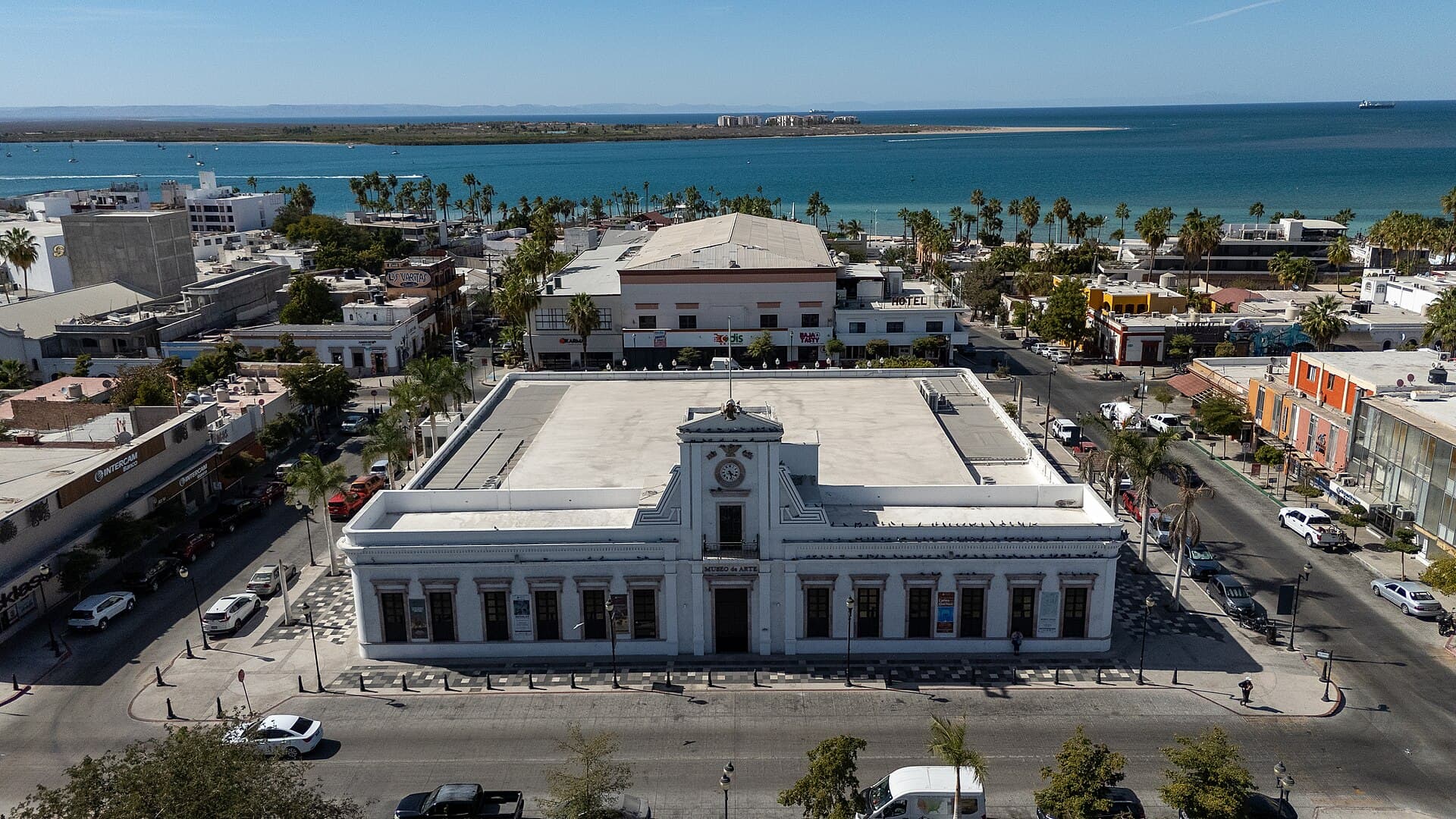 ProtoplasmaKid / CC BY-SA 4.0, via Wikimedia Commons
Visite audio autoguidée de La Paz — parcours GPS à pied, lecture hors ligne, narration en 32 langues.
“Là où le désert aride épouse la mer tranquille, invitant à la contemplation et à la découverte marine.”
Pas les cartes postales. Les histoires que même les habitants ignorent — soufflées à l'oreille, là où elles se sont passées.
La Paz fut jadis un centre mondial de perles magnifiques, attirant des chercheurs de fortune du monde entier. Qu'est-ce qui a mis fin à cette ère scintillante ?
Une colline surplombant le Malecón porte un nom dérivé d'une légende locale d'amour tragique et de trois crânes.
Entre deux plages populaires se trouve une crique isolée que la plupart des visiteurs ne rencontrent jamais.
Découvrez tous les secrets de La Paz
Chaque adresse, chaque révélation en entier — dans ton oreille, là où elle s'est passée.
Tu choisis tes lieux. Tu marches. La voix te révèle ce que les autres ignorent.


Votre visite audioguidée de La Paz vous attend — choisissez vos lieux, votre langue, et lancez-vous dès votre arrivée.
AcheterLa Paz, capitale de la Basse-Californie du Sud, offre une évasion sereine où le paysage désertique aride converge de manière spectaculaire avec les eaux tranquilles et turquoises de la mer de Cortez. Souvent décrite comme l'« Aquarium du Monde » par Jacques Cousteau, cette ville côtière est un havre pour la vie marine et les amateurs de plein air. Contrairement aux stations balnéaires animées plus au sud, La Paz conserve un charme mexicain authentique et décontracté, invitant les visiteurs à ralentir et à s'immerger dans sa beauté naturelle et son tissu culturel.
La promenade du front de mer de la ville, connue sous le nom de Malecón, est le cœur animé de La Paz, ornée de sculptures, de restaurants et de boutiques, et offrant des couchers de soleil spectaculaires sur la baie. Au-delà des limites de la ville, un monde d'aventure vous attend, des plages immaculées et peu profondes comme Balandra aux îles protégées regorgeant d'une faune diversifiée. La Paz est une destination qui mêle intrigue historique et merveilles naturelles inégalées, promettant une expérience à la fois paisible et profondément engageante.
Que vous soyez attiré par l'attrait de nager avec les requins-baleines, d'explorer des criques isolées ou simplement de savourer des fruits de mer frais au bord de la mer, La Paz offre une expérience unique et inoubliable en Basse-Californie. C'est un endroit où les rythmes de la vie sont dictés par les marées et le soleil, offrant un aperçu authentique de l'âme de cette remarquable péninsule.
L'histoire de La Paz remonte à des milliers d'années, la région étant d'abord habitée par des tribus indigènes nomades telles que les Pericúes, les Guaycuras et les Cochimíes. Ces communautés vivaient en harmonie avec le désert et la mer, laissant derrière elles un héritage de peintures rupestres et d'artefacts qui témoignent de leur lien profond avec le monde naturel.
Le contact européen a commencé en 1534 avec le navigateur espagnol Fortún Jiménez, suivi peu après par Hernán Cortés en 1535, qui a nommé la baie Bahía de la Santa Cruz. Les premières tentatives de colonisation par les Espagnols ont été largement infructueuses en raison des conditions désertiques difficiles, de l'isolement et de la résistance des populations indigènes. Ce n'est qu'en 1596 que Sebastián Vizcaíno est arrivé, renommant la zone « La Paz » (signifiant « La Paix ») en raison de l'accueil initialement calme des indigènes. Cependant, cette paix fut éphémère et des conflits surgirent bientôt.
Les missionnaires jésuites ont établi une présence plus permanente à la fin du XVIIe siècle, fondant la Mission de Nuestra Señora del Pilar de La Paz en 1720. Bien que la mission elle-même ait été de courte durée, elle a marqué une étape cruciale dans l'établissement progressif de la région. La Paz s'est progressivement développée en un modeste port, vital pour l'approvisionnement des missions et la liaison du continent avec la péninsule de Baja.
Le XIXe siècle a inauguré un âge d'or pour La Paz, propulsé par l'industrie lucrative de la pêche aux perles. Le golfe de Californie est devenu mondialement réputé pour ses perles exquises, attirant des marchands, des investisseurs et des aventuriers du monde entier. Cette industrie a constitué l'épine dorsale économique de la ville, contribuant à sa richesse et à ses légendes. Cependant, cette ère scintillante a pris fin dans les années 1930 en raison de la surexploitation et d'une maladie dévastatrice qui a anéanti les bancs d'huîtres.
Au-delà de sa renommée perlière, La Paz a également connu d'importants développements politiques. En 1829, après qu'un violent ouragan ait détruit Loreto, l'ancienne capitale régionale, La Paz a été désignée nouvelle capitale de la Basse-Californie. Cela a consolidé son statut de centre administratif et politique, un titre qu'elle détient aujourd'hui pour l'État de Basse-Californie du Sud, officiellement créé en 1974.
Le milieu du XXe siècle a apporté de nouvelles infrastructures, notamment l'achèvement de l'autoroute trans-péninsulaire et d'un aéroport international dans les années 1970, qui ont ouvert La Paz à une nouvelle ère de tourisme. Contrairement à de nombreuses destinations de villégiature, La Paz a consciemment maintenu son identité décontractée, en se concentrant sur la durabilité, la communauté et le tourisme basé sur la nature. Aujourd'hui, elle mêle son passé historique à un esprit moderne et éco-responsable, offrant un mélange unique d'expériences culturelles et d'aventures marines de classe mondiale.
Le Malecón est le cœur animé de La Paz, une promenade pittoresque en bord de mer qui s'étend sur des kilomètres. Flânez ou faites du vélo le long de celle-ci, en admirant les nombreuses sculptures qui jalonnent le chemin, en profitant de la brise marine et en vous arrêtant dans l'un des nombreux restaurants ou cafés. Le soir, elle s'anime avec les habitants et les visiteurs.
À quelques minutes en voiture de la ville, la plage de Balandra est souvent célébrée comme l'une des plus belles du Mexique, connue pour ses eaux turquoises incroyablement peu profondes et sa formation distinctive du « Rocher Champignon ». C'est une zone naturelle protégée, idéale pour se baigner, faire du kayak ou simplement se détendre sur le sable blanc et doux.
Pour une rencontre marine inoubliable, faites une excursion en bateau à Isla Espíritu Santo, une île protégée par l'UNESCO. Ici, vous pouvez faire de la plongée avec les lions de mer joueurs à Los Islotes, explorer des plages privées et être témoin de l'incroyable biodiversité qui a conduit Jacques Cousteau à appeler la mer de Cortez l'« Aquarium du Monde ».
Plongez dans le passé de la ville au Musée d'anthropologie et d'histoire de la Basse-Californie du Sud, situé près de la place de la Constitution. Il offre un aperçu des cultures indigènes de la région, des premières explorations et du développement de La Paz. Explorez le Centro Histórico autour du Jardín Velasco, où vous trouverez la Catedral de Nuestra Señora de La Paz et des œuvres d'art de rue colorées.
Pour un autre type d'aventure, dirigez-vous vers la péninsule de Mogote de l'autre côté de la baie, où les paysages désertiques rencontrent des dunes de sable spectaculaires. Des activités comme le sandboard offrent une façon exaltante de découvrir cet environnement unique.
La période idéale pour visiter La Paz pour un temps agréable et des rencontres avec la vie marine est généralement de novembre à avril. Pendant ces mois, les températures sont douces et agréables, allant de 15°C à 24°C (60°F à 75°F). Cette période coïncide également avec les meilleures opportunités d'observation des requins-baleines (d'octobre à mai, avec un pic de décembre à mars) et des lions de mer (de septembre à mai, avec un pic de janvier à avril).
Bien que l'été (de mai à octobre) apporte des températures plus chaudes, atteignant souvent 29-35°C (85-95°F) ou plus, la mer de Cortez est à son plus chaud, ce qui la rend idéale pour la plongée avec tuba et l'exploration sous-marine. Cependant, c'est aussi la saison des ouragans, avec la plus forte probabilité d'août à octobre. Pour ceux qui recherchent des eaux chaudes et moins de monde, octobre et novembre sont souvent recommandés comme un bon compromis.
La Paz est desservie par l'aéroport international Manuel Márquez de León (LAP), avec des vols quotidiens depuis les principales villes mexicaines. Alternativement, de nombreux voyageurs atterrissent à l'aéroport international de Los Cabos (SJD), qui offre plus de correspondances internationales, puis prennent un bus ou une navette de 2 à 2,5 heures pour La Paz. Louer une voiture offre la plus grande flexibilité pour explorer les nombreuses plages de la région et faire des excursions d'une journée, bien que les taxis et les services de covoiturage soient disponibles.
Dans la ville, les principales zones touristiques sont assez accessibles à pied. Pour de plus longues distances, les bus publics et les « collectivos » (vans partagés) sont des options, bien que les collectivos soient souvent plus rapides mais moins organisés que les bus. Les taxis sont également facilement disponibles. Bien que les dollars américains soient souvent acceptés, il est conseillé d'utiliser des pesos mexicains, et les cartes de crédit sont largement utilisées. La Paz est considérée comme une ville très sûre, avec une atmosphère détendue. N'oubliez pas de vous hydrater, surtout pendant les mois les plus chauds, et envisagez de réserver votre hébergement et vos excursions à l'avance pendant la haute saison (hiver).
La Paz en coréen, en chinois ou en hébreu — et dans 29 autres langues, chaque étape narrée par une voix native. La plus large gamme de langues de tous les audioguides autoguidés.
Disponible en :