Plaza del Mercado de Lanckorona
La distintiva inclinación de la plaza del mercado de Lanckorona no es meramente un pintoresco detalle arquitectónico.
La historia completa se desbloquea en el tour
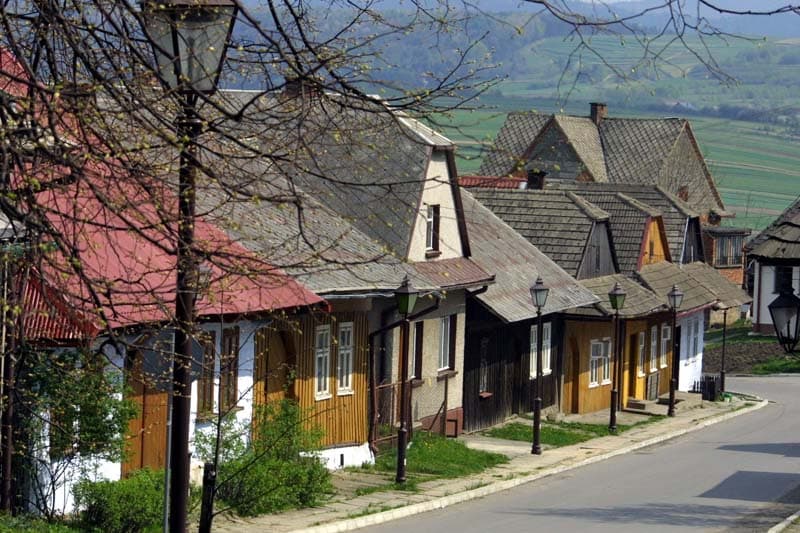 mzopw = mzopw / CC BY-SA 3.0, via Wikimedia Commons
Tour de audio autoguiado de Lanckorona — ruta GPS a pie, reproducción offline, narración en 32 idiomas.
“Donde los ángeles se demoran y la historia respira en aleros de madera.”
No las postales. Las historias que ni los locales conocen — al oído, justo donde ocurrieron.
La distintiva inclinación de la plaza del mercado de Lanckorona no es meramente un pintoresco detalle arquitectónico.
Entre las casas de madera del siglo XIX, un edificio en particular se erige como testimonio de resiliencia contra un incendio devastador.
Las ruinas del castillo en la montaña Lanckorońska guardan un sorprendente vínculo con un momento crucial de la historia polaca y con un héroe americano.
Descubre todos los secretos de Lanckorona
Cada dirección, cada revelación al completo — a tu oído, justo donde ocurrió.
Eliges tus paradas. Caminas. La voz te revela lo que los demás ignoran.


Tu tour de audioguía por Lanckorona te espera — elige tus lugares, tu idioma y empieza al llegar.
ComprarLume incluye una guía de realidad aumentada. Levanta el móvil y su cámara muestra la calle que tienes delante, con una flecha luminosa sobre la imagen real que siempre apunta a tu próxima parada — sin mapas que descifrar, sin giros equivocados. Como todo en Lume, funciona completamente sin conexión.
Situada en las laderas de la montaña Lanckorońska, aproximadamente a 40 kilómetros al suroeste de Cracovia, se encuentra Lanckorona, un pueblo a menudo descrito como el más cautivador de Polonia. Es un lugar donde el ritmo de vida parece ralentizarse, invitando a los visitantes a pasear por su inclinada plaza del mercado y admirar las distintivas casas de madera del siglo XIX que la enmarcan. Estas casas con soportales, con sus tejados de tejas y porches con balaustradas de celosía, forman un museo al aire libre viviente, un testimonio de la arquitectura tradicional de la Pequeña Polonia.
Más allá de su atractivo visual, Lanckorona es conocida como la 'Ciudad de los Ángeles', una designación que surgió en el período de entreguerras como un refugio para artistas e intelectuales que buscaban inspiración en su tranquilo entorno montañoso. El pueblo ofrece una mezcla singular de historia, belleza natural y una palpable sensación de serenidad, lo que lo convierte en un escape convincente del ajetreo de la vida urbana.
## De Fortaleza Real a Retiro Artístico La narrativa de Lanckorona comienza a mediados del siglo XIV, alrededor de 1336, cuando el rey Casimiro el Grande estableció tanto un castillo en la cima de la montaña como una ciudad en su base. El nombre mismo, derivado del alemán 'Landeskrone' que significa 'corona del país', refleja su importancia estratégica como coto de caza real y una fortificación que salvaguardaba las rutas comerciales a Cracovia. El rey otorgó a la ciudad el Derecho de Magdeburgo y privilegios comerciales significativos, a la par de Cracovia.
El castillo y la ciudad soportaron una historia tumultuosa, cambiando de manos repetidamente a través de varios conflictos, incluidas las guerras husitas y las invasiones suecas del siglo XVII, conocidas como el Diluvio. Un período particularmente significativo fue la Confederación de Bar (1768-1772), una resistencia armada contra la influencia rusa. Lanckorona se convirtió en un bastión crucial para los Confederados. En 1769, Kazimierz Pułaski, futuro general de la Guerra de Independencia de los Estados Unidos, logró una victoria contra un ejército ruso aquí. Sin embargo, los Confederados sufrieron una derrota decisiva en la Batalla de Lanckorona en 1771 al pie de la colina del castillo, principalmente debido a un ataque sorpresa de las fuerzas rusas lideradas por Alexander Suvorov. Tras las particiones de Polonia, las autoridades austriacas desmantelaron el castillo en 1884, concluyendo su función militar.
La ciudad se enfrentó a otra catástrofe en 1868 cuando un gran incendio consumió casi todos sus edificios de madera. La posterior reconstrucción, sin embargo, preservó el plan urbano medieval mientras reemplazaba las estructuras quemadas con las distintivas casas de madera con soportales que definen Lanckorona hoy. Durante el período de entreguerras, Lanckorona se transformó en un balneario de verano favorito, atrayendo a artistas, escritores y políticos como Józef Piłsudski e Ignacy Mościcki, quienes buscaban su atmósfera serena. Aunque la Segunda Guerra Mundial interrumpió este período de florecimiento artístico, el pueblo ha conservado su singular encanto y continúa atrayendo a visitantes que buscan su mezcla de historia y belleza pintoresca.
Comience su exploración en la Plaza del Mercado de Lanckorona, un espacio verdaderamente singular que se inclina con una pendiente de casi el 10%, rodeado por una colección notablemente consistente de casas de madera con soportales del siglo XIX. Estas estructuras, parte de la Ruta de la Arquitectura de Madera de Małopolska, no son piezas de museo, sino hogares habitados, que ofrecen atisbos de generaciones de vida local. En la plaza, observe el pozo de piedra con letras de Marek Grechuta y la escultura 'El Corazón de un Ángel' de Enrico Muscetra.
Una corta caminata ascendente desde la plaza del mercado conduce a la Iglesia Parroquial de San Juan Bautista, establecida por Casimiro el Grande en el siglo XIV, que presenta un altar de finales del Renacimiento. Continúe pasando la iglesia hasta las evocadoras ruinas del Castillo de Lanckorona en la cima de la montaña. Aunque en su mayoría son fragmentos, las ruinas ofrecen una vista panorámica imponente que, en días despejados, puede extenderse hasta Cracovia, Kalwaria Zebrzydowska e incluso los Montes Tatras. Asegúrese de visitar el Museo Regional Profesor Antoni Krajewski, ubicado en uno de los pocos edificios que sobrevivieron al incendio de 1868, que ofrece información sobre la historia y la cultura local.
Para aquellos que buscan una conexión más profunda con la naturaleza, Lanckorona ofrece varios senderos, incluyendo el romántico Callejón de los Susurros Silenciosos y el Callejón de los Amantes. A solo tres kilómetros de distancia, el sitio Patrimonio de la Humanidad de la UNESCO de Kalwaria Zebrzydowska, un Santuario Mariano-Pasionista, ofrece una experiencia complementaria con su impresionante arquitectura barroca y sus caminos espirituales.
La época más agradable para visitar Lanckorona para actividades al aire libre en general es desde finales de junio hasta finales de agosto, cuando el clima es confortable y despejado. El pueblo es accesible durante todo el año, y las casas de madera lucen particularmente hermosas bajo un manto de nieve durante el invierno. La primavera (mayo-junio) y el otoño (septiembre-octubre) ofrecen un clima agradable para explorar, con menos multitudes. Diciembre trae el festival 'Anioł w Miasteczku' (Ángel en el Pueblo), un punto culminante invernal que presenta una feria de ángeles, talleres y conciertos.
Lanckorona se encuentra aproximadamente a 30-40 kilómetros al suroeste de Cracovia. En coche, el trayecto dura unos 40 minutos, con un pintoresco acercamiento que pasa por Kalwaria Zebrzydowska. Las opciones de transporte público incluyen un autobús desde la estación de autobuses MDA de Cracovia a Kalwaria Zebrzydowska, luego una conexión local a Lanckorona, lo que lleva aproximadamente una hora. También hay trenes desde Cracovia Główny a la estación de Kalwaria Zebrzydowska Lanckorona, seguidos de una caminata de 15 minutos o un taxi hasta el pueblo. Una vez en Lanckorona, el centro del pueblo es fácilmente navegable a pie. Las opciones de alojamiento van desde acogedoras casas de huéspedes hasta hoteles boutique, con varias opciones muy bien valoradas disponibles en el pueblo y sus alrededores.
Lanckorona en coreano, en chino o en hebreo — y 29 idiomas más, cada parada narrada por una voz nativa. La mayor variedad de idiomas de cualquier audioguía autoguiada.
Disponible en: