Market Square (Rynek)
The cobblestones beneath your feet in Stary Sącz's Market Square hold a secret about their origin, connecting this mountain town to a distant, majestic range.
Full story unlocks in the tour
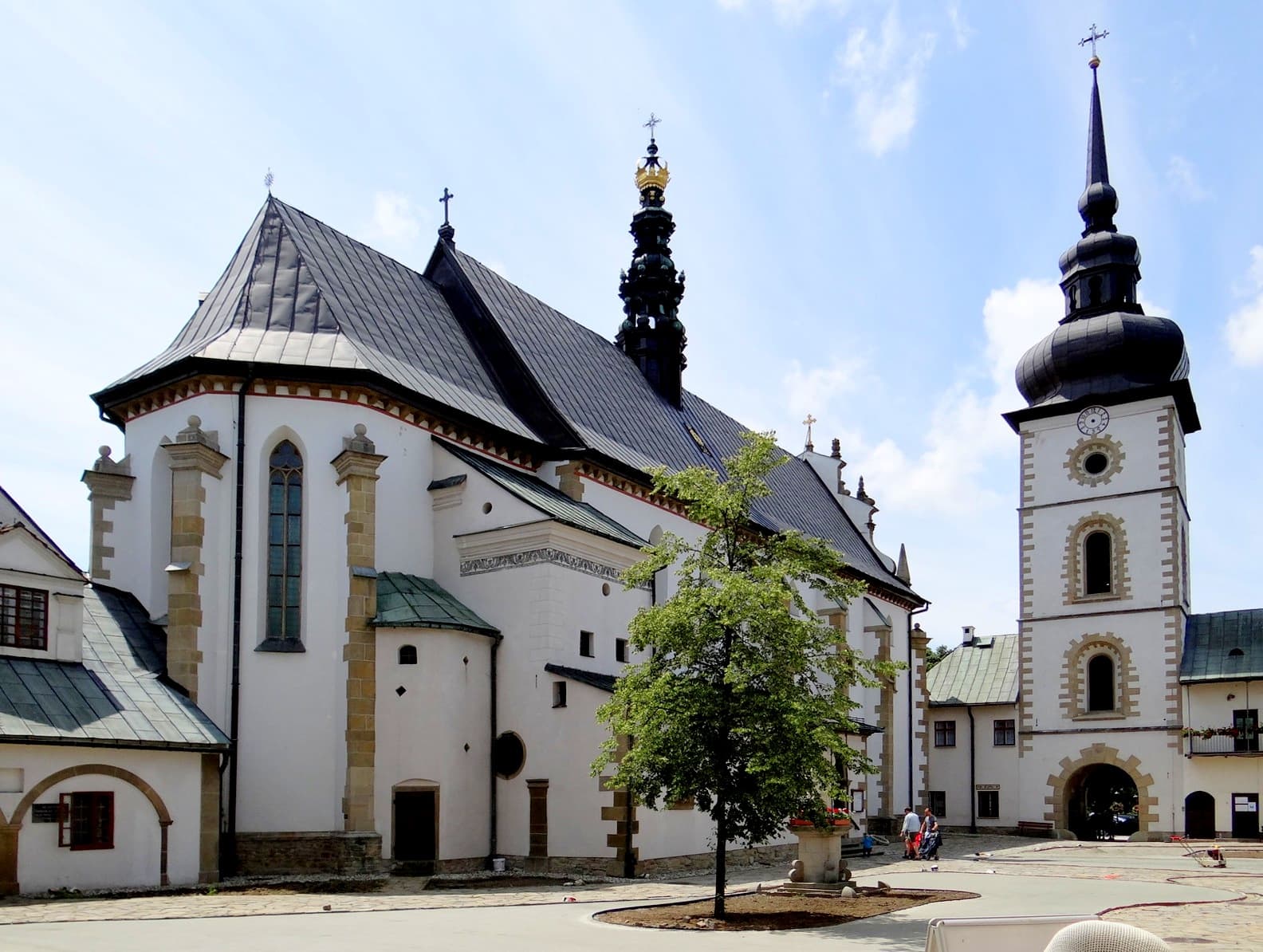 Gorofil / CC BY-SA 4.0, via Wikimedia Commons
Self-guided audio walking tour of Stary Sącz — GPS route, offline playback, story-driven narration in 32 languages.
“Where medieval echoes meet mountain whispers.”
Not the postcards. The stories even locals don't know — whispered in your ear, right where they happened.
The cobblestones beneath your feet in Stary Sącz's Market Square hold a secret about their origin, connecting this mountain town to a distant, majestic range.
Within the walls of the Poor Clares Monastery, a remarkable historical detail reveals the enduring virtue of its founder, Saint Kinga.
The grand Papal Altar, built for a historic visit, was intended to be temporary, but a surprising local sentiment ensured its permanent place.
Discover every secret of Stary Sącz
Every address, every reveal in full — in your ear, right where it happened.
You pick your stops. You walk. The voice reveals what the others miss.


Your self-guided audio tour of Stary Sącz is ready — pick your landmarks, choose your language, and start the moment you arrive.
BuyLume has a built-in augmented-reality guide. Hold your phone up and its camera shows the street ahead of you, with a glowing arrow laid over the real view that always points to your next stop — no map to puzzle over, no wrong turns. Like everything in Lume, it works fully offline.
Stary Sącz, a captivating town in Lesser Poland Voivodeship, offers a journey back in time. Situated in the Sądecka Valley, where the Dunajec and Poprad rivers meet, this ancient settlement stands as a testament to centuries of history and enduring Polish spirit. Its well-preserved medieval urban layout, granted Magdeburg rights in the 13th century, invites exploration of its winding ways and historic architecture.
The town is deeply intertwined with the legacy of Saint Kinga, a Hungarian princess and Polish duchess who founded the revered Poor Clares Monastery here in 1280. Stary Sącz is not merely a collection of old buildings; it is a living narrative, where every alleyway and courtyard seems to hold a story. From its spiritual heart in the monastery to the lively Market Square, Stary Sącz captivates visitors with its unique blend of cultural heritage and natural splendor, surrounded by the foothills of the Beskid Mountains.
The history of Stary Sącz dates back to the Early Middle Ages, with some attributing its origins to the time of Bolesław the Brave in the 11th century. However, the pivotal moment arrived in 1257 when Duchess Kinga of Hungary, wife of Duke Bolesław V the Chaste, received the land of Sącz from her husband. This is widely considered the town's founding date. Kinga, a figure of immense historical and religious importance, established a Convent of the Poor Clares in 1280, becoming a nun there herself after her husband's death. Almost concurrently, a Franciscan order was also established by the Duchess on the opposite slope of the Sącz hill.
Stary Sącz's advantageous location on a busy trade route to Hungary, part of the ancient Amber Road, fostered its early development. In 1358, the town was granted Magdeburg rights, a privilege confirmed by King Casimir III the Great, further solidifying its economic growth. Despite its prosperity, Stary Sącz faced numerous challenges, including devastating fires, floods, plagues, and wars. The most significant fire in 1795 nearly destroyed the entire town, including its original Town Hall.
The 18th century saw Stary Sącz fall under Austrian occupation after the partitions of Poland. During this period, efforts were made to replace wooden structures with more durable brick buildings. The 19th century brought the construction of a railway line in 1876, further connecting Stary Sącz to the wider region. In 1999, the town experienced a momentous event when Pope John Paul II visited, attracting a crowd of 600,000 people for a mass dedicated to St. Kinga, who was canonized on this very occasion. Today, Stary Sącz is recognized as a Historic Monument of Poland, celebrated for its unique medieval architecture and cultural heritage.
Begin your exploration in the Market Square (Rynek), a medieval square with well-preserved architecture. Notice the unique cobblestones underfoot. While the original Town Hall is gone, the surrounding historic houses, like the Raczków Annex, offer glimpses into the town's past through their hallway paintings. Just a short walk away is the Poor Clares Monastery, founded by Saint Kinga. While it is a cloistered monastery, its Gothic church, dedicated to the Holy Trinity and St. Clare, is open to visitors and displays beautiful Baroque polychromes and a valuable 17th-century pulpit. Adjacent to the monastery, seek out St. Kinga's Spring, a site of local legend and purported miraculous healings.
Do not miss the Papal Altar, a striking wooden structure commemorating Pope John Paul II's 1999 visit, which now houses a museum dedicated to the event. Nearby, the Szekler Gate stands as a symbol of Polish-Hungarian friendship. For those who appreciate nature, the Forest Pier (Leśne Molo) on Miejska Góra offers a unique treetop walk with scenic views and even a suspended hammock. Another natural highlight is the Bobrowisko Nature Enclave, located at the confluence of the Dunajec and Poprad rivers, offering footbridges and observation points for wildlife viewing. For panoramic vistas of the Beskid Sądecki and Poprad valley, venture to the Ślimak Observation Platform in Wola Krogulecka, a spiral-shaped viewpoint just outside town. Finally, delve into local history at the Regional Museum (Muzeum Regionalne im. Seweryna Udzieli), housed in the historic 'Dom na Dołkach' on the Market Square.
The best time to visit Stary Sącz for warm-weather activities and festivals is from late June to late August, when average daily high temperatures are above 67°F (19°C) and skies are clearest. July is the warmest month, with an average high of 74°F (23°C). Summer months also offer numerous cultural events and festivals. Autumn provides splendid foliage and a more tranquil atmosphere, though packing layers is always advisable due to unpredictable weather. Winters are freezing and snowy, with January being the coldest month, averaging 24°F (-4°C).
Stary Sącz is a compact and walkable town, making it easy to explore most attractions on foot. For those wishing to venture further into the picturesque surrounding countryside, many accommodations offer bike rentals. The nearest major airport is in Krakow, with convenient train or bus connections to Stary Sącz. If driving, parking is available, particularly around the Market Square and on streets leading to the center, with free parking often available on weekends.
Accommodation options range from cozy guesthouses to comfortable hotels, catering to various budgets, including family-friendly establishments. While English might not be widely spoken in all local establishments, the warmth of Polish hospitality is ever-present. Consider downloading the free 'Stary Sącz i Lewocza' audio guide application for practical information and descriptions of attractions. For dining, the town offers traditional Polish cuisine, with regional dishes available at local inns.
Stary Sącz in Korean, in Chinese or in Hebrew — and 29 more languages, every stop narrated by a native voice. The widest language range of any self-guided audio tour.
Available in: