Tour de Navarre
This imposing tower, part of Langres' formidable defenses, holds a surprising secret within its thick walls.
Full story unlocks in the tour
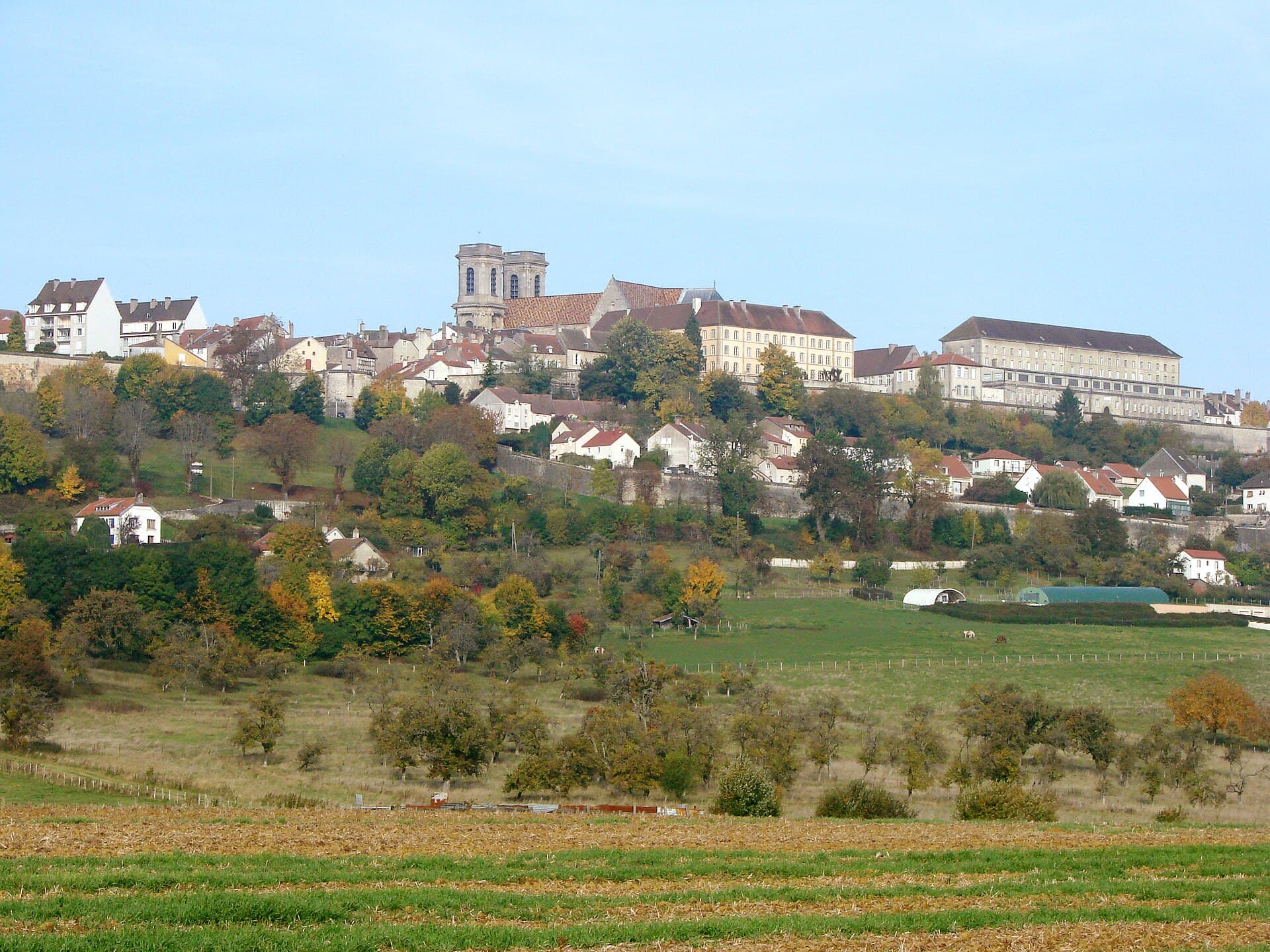
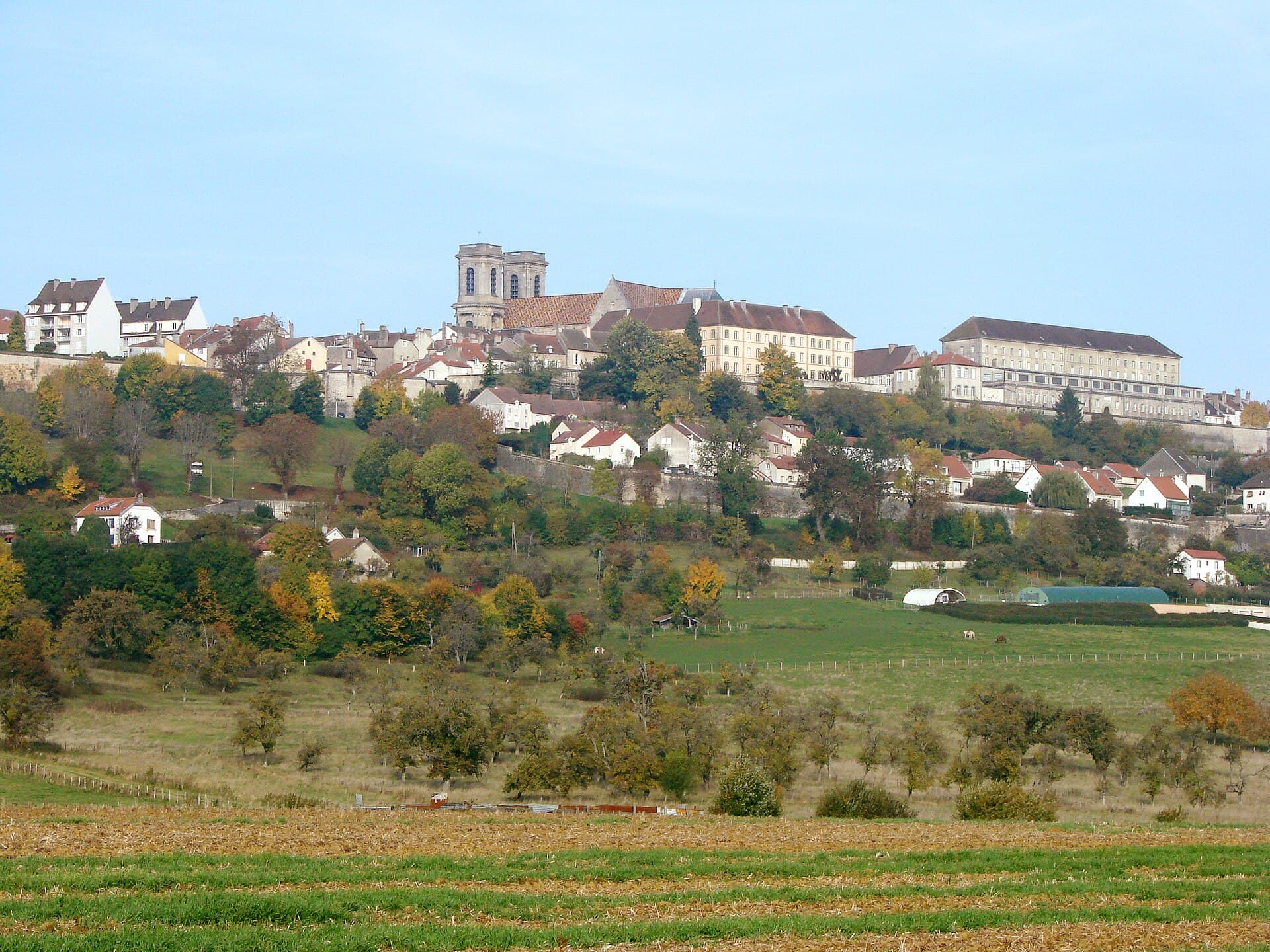 Vassil / Public domain, via Wikimedia Commons
Self-guided audio walking tour of Langres — GPS route, offline playback, story-driven narration in 32 languages.
“Langres: Where ancient ramparts meet Enlightenment thought.”
Not the postcards. The stories even locals don't know — whispered in your ear, right where they happened.
This imposing tower, part of Langres' formidable defenses, holds a surprising secret within its thick walls.
Langres cheese, with its distinctive concave top, invites a unique local tradition that involves a bit of bubbly.
One of Langres' ancient gates, the Porte des Moulins, carries a rather blunt message for any unwelcome visitors from centuries past.
Discover every secret of Langres
Every address, every reveal in full — in your ear, right where it happened.
You pick your stops. You walk. The voice reveals what the others miss.
Your self-guided audio tour of Langres is ready — pick your landmarks, choose your language, and start the moment you arrive.
BuyLume has a built-in augmented-reality guide. Hold your phone up and its camera shows the street ahead of you, with a glowing arrow laid over the real view that always points to your next stop — no map to puzzle over, no wrong turns. Like everything in Lume, it works fully offline.
Langres, a fortified town in northeastern France, stands majestically on a limestone promontory, offering sweeping views of the surrounding valleys and lakes. This ancient settlement, with roots stretching back to the Gallic tribe of the Lingones, has preserved its architectural and historical treasures through centuries, earning it the designation of a 'City of Art and History.' Its most striking feature is the extensive circuit of ramparts, a 3.5-kilometer (2.2-mile) path that encircles the old town, punctuated by medieval towers and monumental gates.
The town's strategic location, approximately 466 meters (1,529 feet) above sea level, made it a formidable stronghold that was never conquered throughout its long military history. Langres is also celebrated as the birthplace of Denis Diderot, the influential Enlightenment philosopher and co-editor of the Encyclopédie, whose legacy is honored throughout the town. From its Gallo-Roman origins to its powerful medieval bishopric and later as a royal fortress, Langres offers a tangible journey through time, inviting visitors to explore its well-preserved streets, impressive fortifications, and enduring cultural heritage.
Langres' history begins with the Lingones, a Celtic tribe who made this hilltop their capital. During Julius Caesar's conquest of Gaul, the Lingones allied with the Romans, a strategic move that saw Caesar's legions wintering in their territory. This alliance led to the rapid Romanization of the tribe, and the town became known as Andemantunnum, an important Gallo-Roman center at the crossroads of twelve Roman roads. The first ramparts were constructed in the 3rd century as the Roman Empire's power waned, and the town faced threats from 'barbarians.'
Following the Roman period, Langres prospered in the Middle Ages, partly due to the growing political influence of its bishops. The Bishopric of Langres, one of France's oldest, was founded in the 2nd century and by the Frankish period, it encompassed a vast diocese covering much of modern Champagne, Burgundy, and Franche-Comté. From the 12th to the 18th centuries, the Bishops of Langres held the prestigious titles of Dukes and Peers of France. The turbulent 14th and 15th centuries saw the town further strengthen its defenses, giving the old city its distinctive fortified character.
The Renaissance brought renewed prosperity to Langres, leading to the construction of numerous civil, religious, and military buildings that still stand today. The town's fortifications continued to be modernized and extended, with notable additions like the Tour de Navarre, a 20-meter (66-foot) round Renaissance structure with walls 7 meters (23 feet) thick, designed to impress and deter invaders. In the 19th century, a 'Vauban' citadel was added, further solidifying its reputation as a formidable fortress. Langres also holds a significant place in the Age of Enlightenment as the birthplace of Denis Diderot (1713–1784), the philosopher and chief editor of the Encyclopédie. His legacy is preserved and celebrated in the town, particularly at the Maison des Lumières Denis Diderot.
Remarkably, Langres has never been captured throughout its extensive military history. Its strategic position on a promontory, combined with its continually updated and extended ramparts, proved to be an impregnable defense. This history of resilience has left Langres with an authentic old town, largely untouched by war damage, allowing its centuries-old buildings and fortifications to remain remarkably preserved.
Begin your exploration with a walk along the city's ramparts, a 3.5-kilometer (2.2-mile) circuit offering panoramic views of the surrounding countryside, including the Langres plateau, the four artificial lakes, and even the distant Vosges Mountains on a clear day. You can choose to walk, cycle, or take a tourist train along the ramparts. Do not miss the Tour de Navarre, a unique Renaissance tower with impressive 7-meter-thick walls, and the nearby Tour d'Orval, which features a spiral ramp designed for moving artillery.
Explore the historic center, a maze of narrow, winding streets. Visit the Cathédrale Saint-Mammès, a 12th-century edifice that blends Burgundian Romanesque and early Gothic styles, with an 18th-century neoclassical facade. Inside, admire the historic tapestries and the Renaissance Sainte-Croix chapel. Discover the Maison des Lumières Denis Diderot, the only museum in France dedicated to the philosopher, where you can see an original set of his Encyclopédie. The Museum of Art and History of Langres houses archaeological finds from Gallo-Roman times, including a 2nd-century Bacchus mosaic, alongside collections of paintings and sculptures. For a taste of local life, wander through Place Diderot, featuring a statue of the famous native son.
The most pleasant time to visit Langres is during the months of May, June, July, August, and September, when the weather is generally mild. Daytime temperatures during this period typically range between 20°C and 26°C (68°F and 79°F). While these months offer optimal conditions for outdoor activities, be prepared for some rainfall. July is often the sunniest month, with around 8.6 hours of daily sunshine. For warm-weather activities, late June to early September is considered the best time.
Langres is situated in the Haute-Marne department of the Grand Est region, approximately 294 kilometers (183 miles) from Paris. The town is easily accessible by car, and there are free parking areas available. A free funicular lift can transport visitors between the lower parking areas and the hilltop town. Once in Langres, the historic center is best explored on foot, allowing you to wander through its winding streets and along the ramparts. A tourist train also offers a guided tour of the ramparts with commentary.
For accommodation, consider staying within the walled city to fully experience its character. Options include the historic Hotel de la Poste or the Belvédère des Remparts, which offers panoramic views. Langres is known for its local specialty, Fromage de Langres, a soft, washed-rind cow's milk cheese with a distinctive concave top. You can sample this regional cheese at local shops and markets. The local currency is the Euro (€).
Langres in Korean, in Chinese or in Hebrew — and 29 more languages, every stop narrated by a native voice. The widest language range of any self-guided audio tour.
Available in: