Origin of the Name 'Las Tablas'
The town's name, 'Las Tablas' (The Boards), isn't merely a label. It recounts a dramatic escape and a testament to human ingenuity.
Full story unlocks in the tour
 Joy Nuñez / CC BY-SA 4.0, via Wikimedia Commons
Self-guided audio walking tour of Las Tablas — GPS route, offline playback, story-driven narration in 32 languages.
“Where Panama's folklore isn't just remembered, it's lived.”
Not the postcards. The stories even locals don't know — whispered in your ear, right where they happened.
The town's name, 'Las Tablas' (The Boards), isn't merely a label. It recounts a dramatic escape and a testament to human ingenuity.
Las Tablas' Carnival is legendary, but beneath the surface of elaborate parades lies a deep-seated, centuries-old rivalry that divides the town.
The patron saint of Las Tablas, Santa Librada, has a particularly miraculous origin story involving a repeated disappearance.
Discover every secret of Las Tablas
Every address, every reveal in full — in your ear, right where it happened.
You pick your stops. You walk. The voice reveals what the others miss.
Your self-guided audio tour of Las Tablas is ready — pick your landmarks, choose your language, and start the moment you arrive.
BuyLume has a built-in augmented-reality guide. Hold your phone up and its camera shows the street ahead of you, with a glowing arrow laid over the real view that always points to your next stop — no map to puzzle over, no wrong turns. Like everything in Lume, it works fully offline.
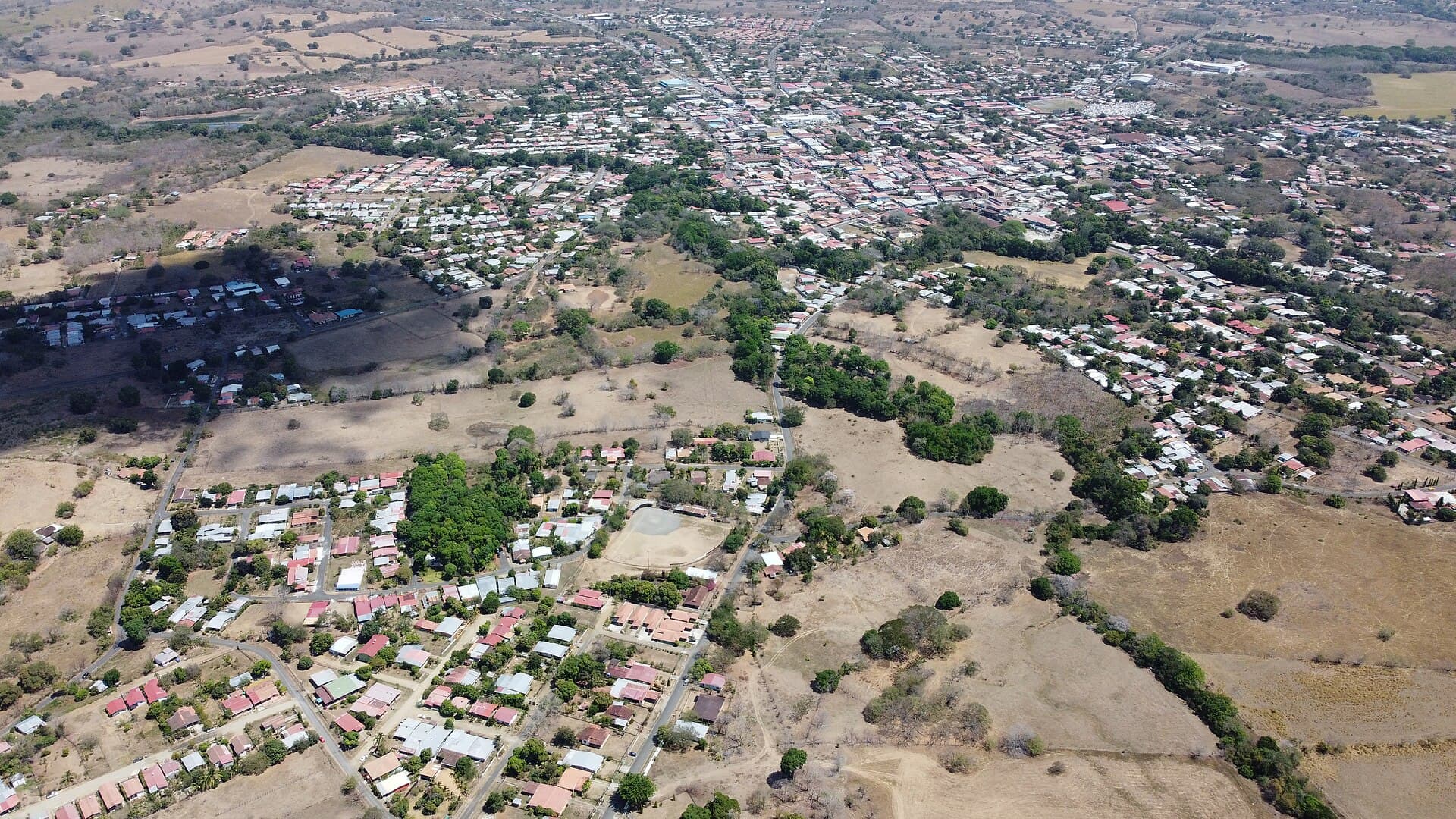
Las Tablas, the capital of Los Santos Province on Panama's Azuero Peninsula, is widely considered the cultural heartland of the nation. This animated town, with a population of around 9,255, is a living museum of Panamanian folklore, where traditions are not just preserved but actively celebrated. From its colonial architecture to its rhythmic folk music, Las Tablas offers a deep dive into the country's heritage.
While it maintains a quiet, traditional allure for much of the year, Las Tablas transforms into a spectacular epicenter of Panamanian identity during its world-renowned festivals, especially Carnival. This is a place where community pride and cultural expression are woven into the fabric of daily life, offering visitors an authentic glimpse into rural Panama's slower rhythm.
Las Tablas was founded on July 19, 1671, by a group of Spaniards fleeing the English pirate Henry Morgan's plundering of Nuestra Señora de la Asunción in Panama City. Oral accounts suggest a strong wind pushed their ship towards the Los Santos coast, where they disembarked. The town's unique name, 'Las Tablas' (The Boards), originates from this event; the settlers used planks from their shipwrecked vessel to construct their first homes.
Upon their arrival, the Spaniards encountered the village of La Ermita de la Santa Cruz, where an altar venerated La Santa Cruz, La Divina Pastora, and San Isidro Labrador. The newcomers wished to place their patron saint, Santa Librada, on this altar, but the existing devotees refused, sparking a rivalry that has persisted through generations and is most famously expressed in the town's Carnival celebrations.
Another significant legend associated with the town's early days involves the Mensabé River. During the Spanish landing, a golden image of the Virgin Mary accidentally fell into the river. The local tribe's chief, Mensabé, attempted to retrieve it but drowned, leading the Spanish to name the river in his honor.
Over centuries, Las Tablas developed into an important regional center, blending Indigenous, Spanish, and local traditions to forge a unique cultural identity. This identity is evident in its music, food, architecture, and festivals. The town is recognized as a national center for Panamanian folk art, music, gastronomy, and literature.
Las Tablas is also notable as the birthplace of Belisario Porras, a prominent figure in Panamanian history who served as president for three terms. His former home now stands as a museum, preserving artifacts and memorabilia from his life, including his presidential band.
Begin your exploration of Las Tablas at Parque Belisario Porras, the central plaza that serves as the town's animating heart. Here, you can observe local life unfold, perhaps even enjoying a shoeshine alongside residents.
Dominating one corner of the park is the Iglesia Santa Librada, a Baroque-style church dating back to 1789. Although much of its original structure was damaged in a 1950 fire, portions of the initial pulpit, walls, and altar remain. This active Catholic church is a spiritual and cultural symbol for the community, and its music often spills out onto the plaza.
Opposite the central plaza, the Museo Belisario Porras offers a glimpse into the life of Panama's three-time president, Belisario Porras. Housed in his former residence, the museum displays personal objects, presidential regalia, and photographs, providing insight into his significant contributions to the country's development.
To delve deeper into the town's most famous event, visit the Carnival Museum. This small cultural center highlights Las Tablas' Carnival history, showcasing costumes, traditional masks, and videos of past parades, explaining how this fierce competition shapes local identity year-round.
Beyond the town center, Las Tablas serves as a gateway to the natural beauty of the Azuero Peninsula. Playa El Uverito, a tranquil beach, is a short drive away, offering a serene escape and beautiful sunsets. Other nearby beaches include Playa El Jobo, Playa El Estero, Playa Las Comadres, and the more remote Playa La Colorada, often deserted for those seeking solitude.
For nature enthusiasts, the Isla Iguana Wildlife Refuge in Los Santos Province is a sanctuary of diverse wildlife and striking beaches, accessible from Las Tablas.
Do not miss the opportunity to explore local markets, where artisans sell handcrafted hats and curios, and you can experience the daily commerce and authentic flavors of the region.
The best time to visit Las Tablas is during the dry season, which runs from December to April. January typically offers the most comfortable weather for exploring. This period coincides with the town's most famous celebration, Carnival, which usually falls in February or March. The Festival Nacional de la Pollera takes place in July, celebrating Panama's national dress. August brings the Festival de la Mejorana, an animated celebration of folk music, dance, and traditional crafts. While the dry season is peak tourist time, the wet season (May to November) offers lush green landscapes and a quieter pace, though with more rain.
Las Tablas is approximately a 4-hour drive from Panama City along the well-maintained Pan-American Highway. Direct buses from Panama City's Albrook Terminal to Las Tablas are available hourly and cost around $10-$13, with the journey taking about 5 hours. From neighboring Chitré, frequent regional minibuses cover the 30-40 minute trip for a few dollars.
Within Las Tablas, the town is relatively compact and walkable, especially around the central plaza. For exploring further afield to beaches or nearby towns, taxis are readily available. Renting a car offers flexibility, but be aware that secondary roads can be rougher.
While Spanish is the primary language, basic English may be understood in hospitality settings. It's advisable to carry cash for small purchases and market stalls, as credit cards are not universally accepted. ATMs are available near the central plaza. Tipping 10% for good service in restaurants is customary.
Las Tablas in Korean, in Chinese or in Hebrew — and 29 more languages, every stop narrated by a native voice. The widest language range of any self-guided audio tour.
Available in: