Palazzo delle Paure
This formidable edifice, now an art and mountaineering museum, once instilled apprehension in Lecco's populace.
Full story unlocks in the tour
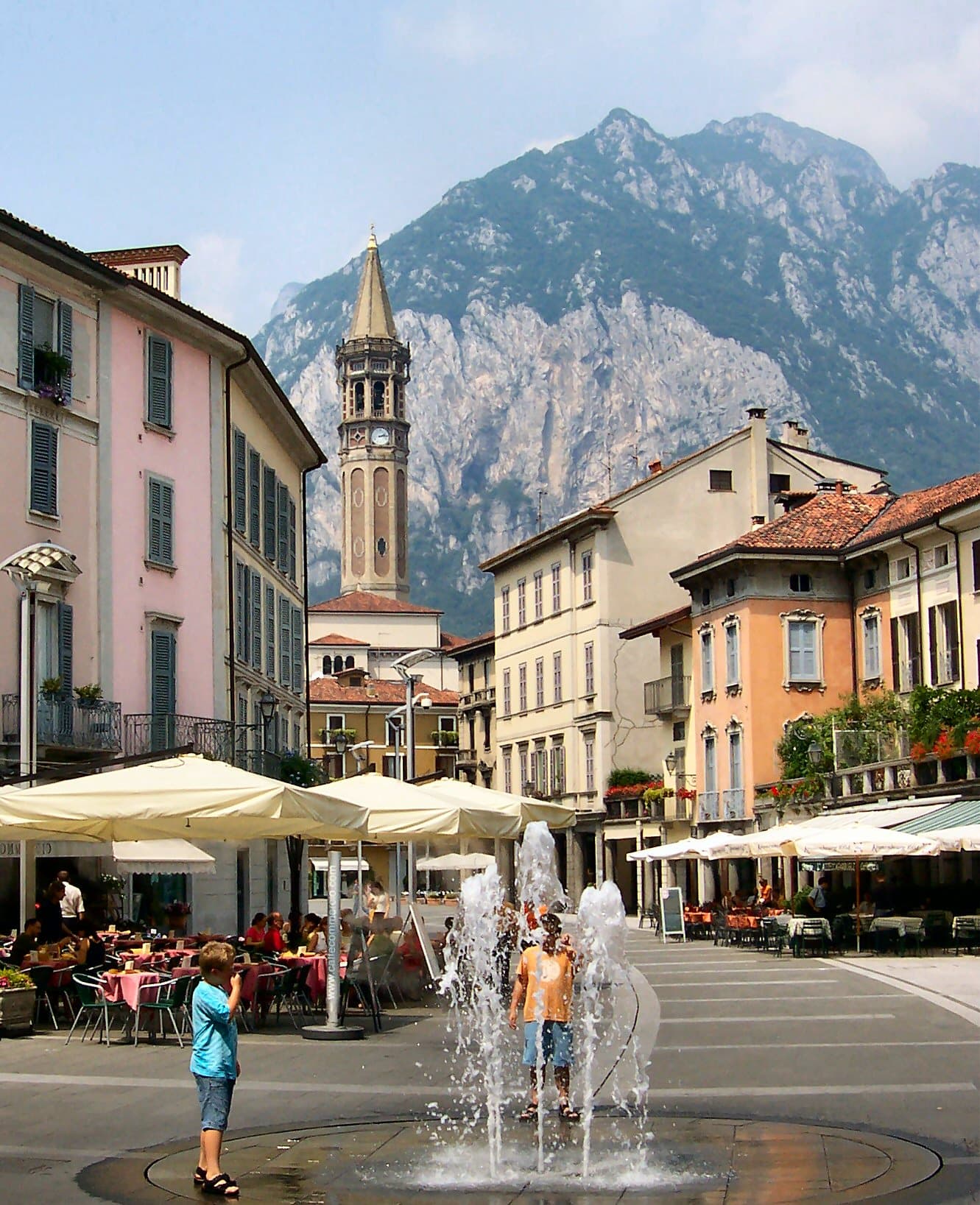 Marco Bonavoglia / CC BY-SA 3.0, via Wikimedia Commons
Self-guided audio walking tour of Lecco — GPS route, offline playback, story-driven narration in 32 languages.
“Where alpine majesty embraces the lake's expanse, and literature finds enduring resonance.”
Not the postcards. The stories even locals don't know — whispered in your ear, right where they happened.
This formidable edifice, now an art and mountaineering museum, once instilled apprehension in Lecco's populace.
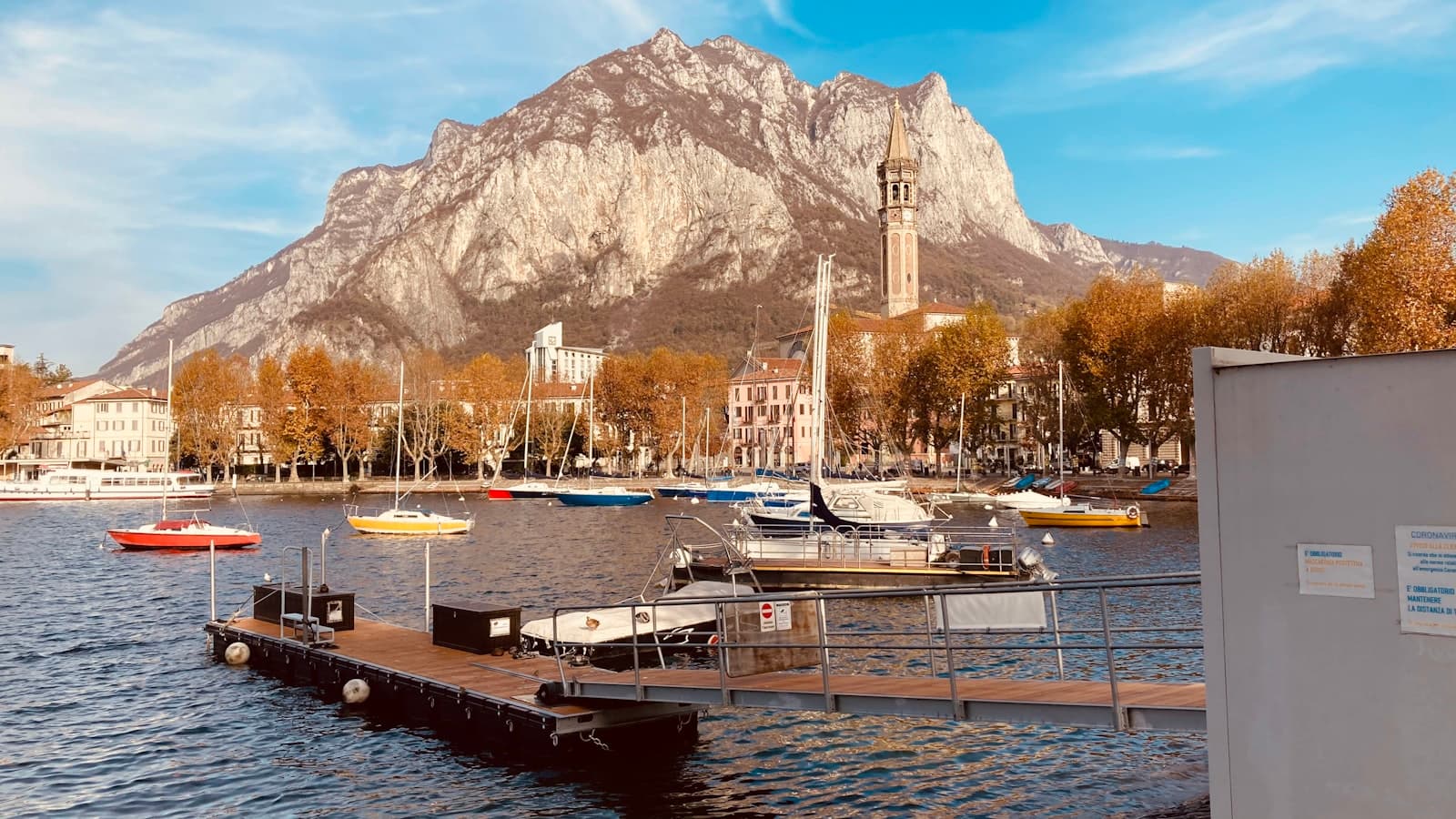
Lecco's distinctive bell tower, affectionately known as 'Il Matitone,' conceals a surprisingly elevated secret.
This appealing fishing village, immortalized in prose, maintains a quiet custom that links it to the lake's past.
Discover every secret of Lecco
Every address, every reveal in full — in your ear, right where it happened.
You pick your stops. You walk. The voice reveals what the others miss.

Your self-guided audio tour of Lecco is ready — pick your landmarks, choose your language, and start the moment you arrive.
BuyLume has a built-in augmented-reality guide. Hold your phone up and its camera shows the street ahead of you, with a glowing arrow laid over the real view that always points to your next stop — no map to puzzle over, no wrong turns. Like everything in Lume, it works fully offline.
Lecco, a city in Lombardy, Northern Italy, rests at the southeastern edge of Lake Como, where the lake narrows into the River Adda. Surrounded by the Bergamo Alps to the north and east, Lecco presents a distinctive fusion of lakeside serenity and mountainous ruggedness. While often overshadowed by its more renowned neighbors, Lecco delivers a less congested and more authentic Italian encounter, making it a cherished escape for Milanese residents.
The city is profoundly interwoven with Italian literature, serving as the dramatic backdrop for Alessandro Manzoni's celebrated 19th-century novel, The Betrothed (I Promessi Sposi). This literary connection is honored throughout Lecco, with various locations and a museum dedicated to the author and his masterwork. Beyond its literary legacy, Lecco is recognized as "the Iron City" due to its significant history in the steel industry, which has been active since the 12th century.
Lecco's landscape provides ample opportunities for outdoor pursuits, from gentle walks along the lakeside promenade to demanding ascents in the surrounding mountains. Its advantageous position, approximately 50 kilometers (31 miles) north of Milan, ensures easy access by car or train, serving as an entry point to the varied landscapes of Lake Como and the nearby mountains.
The earliest evidence of human habitation in the province of Lecco dates back approximately 62,000 years, with discoveries attributed to Neanderthal man in the Valle del Curone. Around 1000 B.C., Gauls and Celts arrived in the area for commerce, with the name "Lecco" possibly deriving from old Celtic words like "Lech" or "Loch," meaning "lake." The Romans later adapted the name to "Leucum."
During the Early Middle Ages, Lecco evolved as a fortified system, strategically important for its position as a central point for routes connecting Lombardy with territories beyond the Alps. This made the region a frequent arena for conflicts and decisive engagements. Around 960, Lecco came under the authority of the Archbishop of Milan. For a considerable period, the name Lecco encompassed the entire area between the lake and Valsassina, with different parts specializing in various trades.
In 1117, Lecco aligned with Milan in a ten-year conflict against several villages around Lake Como. After Como's defeat in 1125, Lecco found itself caught in disputes between powerful Milanese families, the Visconti and Torriani. Despite a destructive directive by Matthew I Visconti in 1296, Lecco was rebuilt and re-conquered by Azzone Visconti, who also commissioned the construction of the prominent Azzone Visconti Bridge between 1336 and 1338. For a long time, Lecco operated as a small, self-governing entity within the larger Duchy of Milan.
With the decline of the Duchy of Milan, Lecco passed under Spanish rule, and under Charles V, it was transformed into a military stronghold. This period, like much of Milanese territory, endured plagues and famines, vividly recounted by Alessandro Manzoni in The Betrothed. In 1714, Lombardy came under Habsburg Austrian control. The 19th century witnessed Lecco's growth, with neoclassical palaces and arcades constructed under Austrian administration. It became a cultural center, with the Scapigliati, a group of Milanese writers, frequently visiting Maggianico. Lecco played a significant role in the Lombard Risorgimento, and on June 22, 1848, it was granted city status, though it was briefly demoted before regaining the title in 1859 after the Second War of Independence.
Following the unification of Italy, Lecco established itself as a major industrial center, particularly recognized for its steel industries, earning it the designation "the Iron City." In 1992, Lecco was elevated to the status of a province.
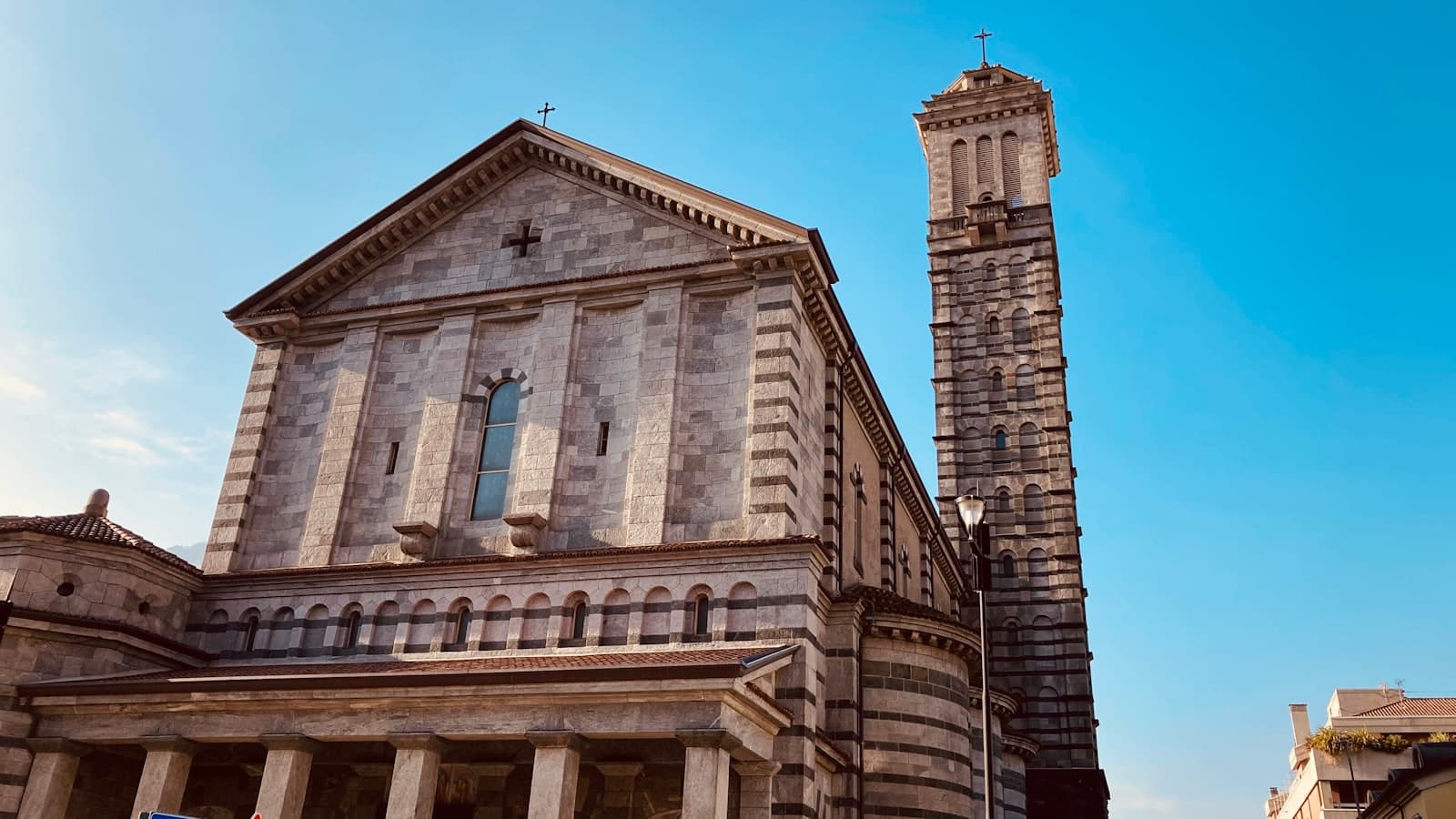
Begin your exploration in the historic center, where the neoclassical architecture of Giuseppe Bovara blends with elements of the fortified village. The Basilica di San Nicolò, with its distinctive neo-Gothic octagonal bell tower, known as "Il Matitone" (the big pencil), stands as a prominent landmark. Ascending the bell tower, one of the tallest in Europe, provides sweeping views of the city, mountains, and Lake Como.
Walk along the Lungolago di Lecco, a pedestrian promenade that traces the shoreline of Lake Como, offering views of the encompassing mountains. The Azzone Visconti Bridge, also known as Ponte Vecchio (Old Bridge), is another symbol of the city, constructed in the 14th century.
For literary enthusiasts, follow the Manzoni Itinerary, visiting locations that inspired Alessandro Manzoni's The Betrothed. This includes Villa Manzoni, the author's family residence, now a civic museum and art gallery. The appealing fishing village of Pescarenico, the only district explicitly mentioned in the novel, retains its original character with narrow lanes and a small harbor.
Further historical insights can be found at the Viscontea Tower, the sole remaining section of the ancient castle fortress, which now houses the Museum of the Mountain and Alpinism. The Palazzo Belgiojoso hosts the Civic Archaeological Museum, Natural History Museum, and Planetarium, offering diverse collections. For art lovers, the Palazzo delle Paure (Palace of Fears) serves as a museum with temporary exhibitions and a modern and contemporary art section.
For those who enjoy the outdoors, a cable car ride to Piani d'Erna offers a panoramic terrace with views of the city and Monte Resegone, providing opportunities for hiking and winter sports.
The most pleasant times to visit Lecco are during spring and early summer, specifically from mid-April to mid-June, and also in September. During these periods, temperatures are mild, ranging from the low to mid-20s Celsius (mid-60s to low 70s Fahrenheit). While summer (June to August) can be warm to hot, with temperatures reaching the high 20s or low 30s Celsius, lake breezes help to moderate the heat. Afternoon or evening thunderstorms are common in May and throughout the summer. Expect abundant precipitation from May to August due to these thunderstorms, and in October and November due to autumn rains. For warm-weather activities, mid-June to mid-September is ideal.
Lecco is conveniently situated approximately 50 kilometers (31 miles) north of Milan and can be reached by car or train in about an hour. From Bergamo, it's about a 40-minute train journey. If you are coming from Como, the R18 Como-Molteno-Lecco regional train line or C140 bus route takes just over an hour. During the summer season, ferry services are available from Bellagio.
The city center is largely a pedestrian area, making walking the ideal way to explore. The Lungolago di Lecco, a pedestrian and bike path, extends along the lakefront. Public transportation within the city and to nearby towns is well-connected through train and bus routes. Lecco is a major railway hub with five lines extending from its station. For medical needs, the Ospedale Alessandro Manzoni is located on Via dell'Eremo, 9.
Lecco in Korean, in Chinese or in Hebrew — and 29 more languages, every stop narrated by a native voice. The widest language range of any self-guided audio tour.
Available in: