Lumut's Name Origin
The town's very name speaks of a verdant past, a natural abundance that once characterized its shores.
Full story unlocks in the tour
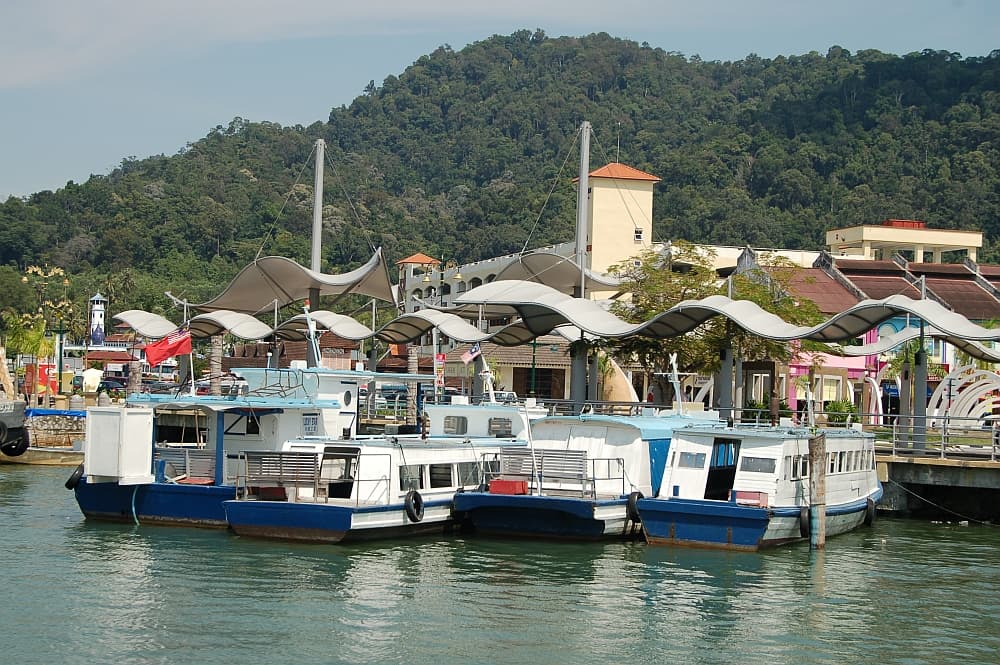 Malekhanif at ms.wikipedia / Public domain, via Wikimedia Commons
Self-guided audio walking tour of Lumut — GPS route, offline playback, story-driven narration in 32 languages.
“Where the sea's murmurs meet the rustle of moss, Lumut is a coastal revelation.”
Not the postcards. The stories even locals don't know — whispered in your ear, right where they happened.
The town's very name speaks of a verdant past, a natural abundance that once characterized its shores.
Beneath Lumut's calm exterior lies a strategic core, a testament to Malaysia's maritime strength.
A small hill in Lumut bears an unusual name and a surprising connection to British maritime history.
Discover every secret of Lumut
Every address, every reveal in full — in your ear, right where it happened.
You pick your stops. You walk. The voice reveals what the others miss.


Your self-guided audio tour of Lumut is ready — pick your landmarks, choose your language, and start the moment you arrive.
BuyLume has a built-in augmented-reality guide. Hold your phone up and its camera shows the street ahead of you, with a glowing arrow laid over the real view that always points to your next stop — no map to puzzle over, no wrong turns. Like everything in Lume, it works fully offline.
Lumut, a charming coastal town in the Manjung District of Perak, Malaysia, serves as the primary passage to the tranquil Pangkor Island. Once a quiet fishing village, Lumut has grown into a significant maritime center, proudly hosting the Royal Malaysian Navy's headquarters and Boustead, the nation's largest naval shipbuilder.
The town's name, derived from the Malay word for moss or seaweed, hints at its lush, natural origins. Today, Lumut offers a relaxed waterfront, fresh seafood, and a distinctive blend of naval heritage and coastal allure, making it a rewarding stop for travelers exploring Malaysia's west coast.
The story of Lumut begins with its very name, derived from the Malay word for 'moss' or 'seaweed' (lumut), reflecting a time when its beaches were abundant with such verdant growth. Before it was known as Lumut, the area bore the name Tanah Merah, or 'Red Earth,' a nod to the reddish, damp, mossy soils that characterized its estuary.
In its early days, Lumut was a modest fishing village, a calm settlement where life revolved around the sea. The development of Lumut can be traced back to the 1800s, with vendors establishing portable handicrafts and shops, and houses beginning to line its streets. The town played a crucial role in the region's economy, serving as a transport hub for valuable resources. Tin and lumber from as far away as Kinta were brought to Lumut, often transported by elephants and sampans, highlighting the traditional methods of trade and travel that once defined the area.
A significant turning point in Lumut's history came with the Pangkor Treaty of 1874, an agreement that saw Lumut temporarily become part of the British Straits Settlements. This period of British influence lasted until 1935 when it was returned to the state of Perak. The mid-20th century marked a profound transformation for Lumut. The Royal Malaysian Navy established its home base here in the 1980s, fundamentally changing the town's character from a quiet fishing village to a strategic naval town. This development was further bolstered by the presence of Boustead, Malaysia's largest naval shipbuilder, cementing Lumut's importance in the nation's maritime industry.
The 1990s saw another wave of development with the power plant project in Teluk Rubiah, attracting expatriates and leading to the opening of new restaurants and cafes that still operate today. While many younger residents have since migrated to larger cities for job opportunities, Lumut maintains its unique identity, balancing its naval significance with its role as a charming coastal getaway and the primary passage to Pangkor Island.
Begin your exploration at the Lumut Waterfront, a thoughtfully landscaped promenade with a maritime theme. It's an ideal spot for leisurely strolls, enjoying the sea breeze, and capturing memorable sunset views. From here, you can also catch a ferry to Pangkor Island, a popular destination known for its pristine beaches and lively marine life, or the more contemporary Marina Island.
For a dose of local culture and history, visit the Masjid Al-Adly, a prominent Sunni mosque near the waterfront, and the Kong Hock Keong Temple Lumut, a main Chinese temple, both notable landmarks showcasing the town's religious diversity. Do not miss the Lumut Mural Street Art along Pegawai Street, an alley alive with colorful artworks perfect for an impromptu photoshoot.
Nature lovers should explore the City Mangrove Park (Taman Paya Bakau Bandar), a serene destination offering an immersive experience into the region's unique mangrove ecosystem. For a unique historical curiosity, seek out Adams Bluff, a small hill with an unusual name and a trigonometry station marker engraved with the name of a British survey ship, 'H.M.S. Iroquois'. The RAHMAT Maritime Museum offers further insights into Malaysia's naval heritage.
Just a short drive away, Teluk Batik Beach provides clean waters and sandy shores for relaxation and water sports. While in the vicinity, consider a trip to Sitiawan to visit the impressive Tua Pek Kong Temple, a century-old temple adorned with numerous deity and animal statues, including a distinctive dragon tunnel.
Lumut experiences a tropical monsoon climate, meaning it is generally hot and humid year-round with tropical rain showers. The best times to visit for warm-weather activities and beach/pool enjoyment are from mid-June to mid-August and from late December to early March. These periods generally offer clearer skies and less rainfall. The wettest months are typically from August to April, with November seeing the highest average rainfall. To avoid the heaviest monsoon season on the west coast, which runs from April to October, consider visiting during the drier months.
Lumut is easily accessible by bus from major Malaysian cities like Kuala Lumpur and Ipoh, with the bus terminal conveniently located within a 5-minute walk of the jetty. Driving is also an option, taking approximately 2 hours 54 minutes from Kuala Lumpur. For those flying, the nearest airport is Sultan Azlan Shah Airport in Ipoh, about 64 km away, from which you can take a taxi or bus.
Navigating Lumut itself is best done by walking or renting a scooter, as the town is compact and flat. Taxis are available for longer distances or airport transfers. Ferries to Pangkor Island depart regularly from the Lumut Jetty, taking about 30-45 minutes. Booking ferry tickets in advance, especially during weekends and public holidays, is recommended. Lumut is generally considered safe for solo female travelers. Expect to spend around $50-70 USD per day for a mid-range comfort level, covering lodging, meals, and local transport.
Lumut in Korean, in Chinese or in Hebrew — and 29 more languages, every stop narrated by a native voice. The widest language range of any self-guided audio tour.
Available in: