Mukah's Name Origin
The name 'Mukah' sounds like the Malay word for 'face,' but the story behind it is more intriguing than a simple translation.
Full story unlocks in the tour
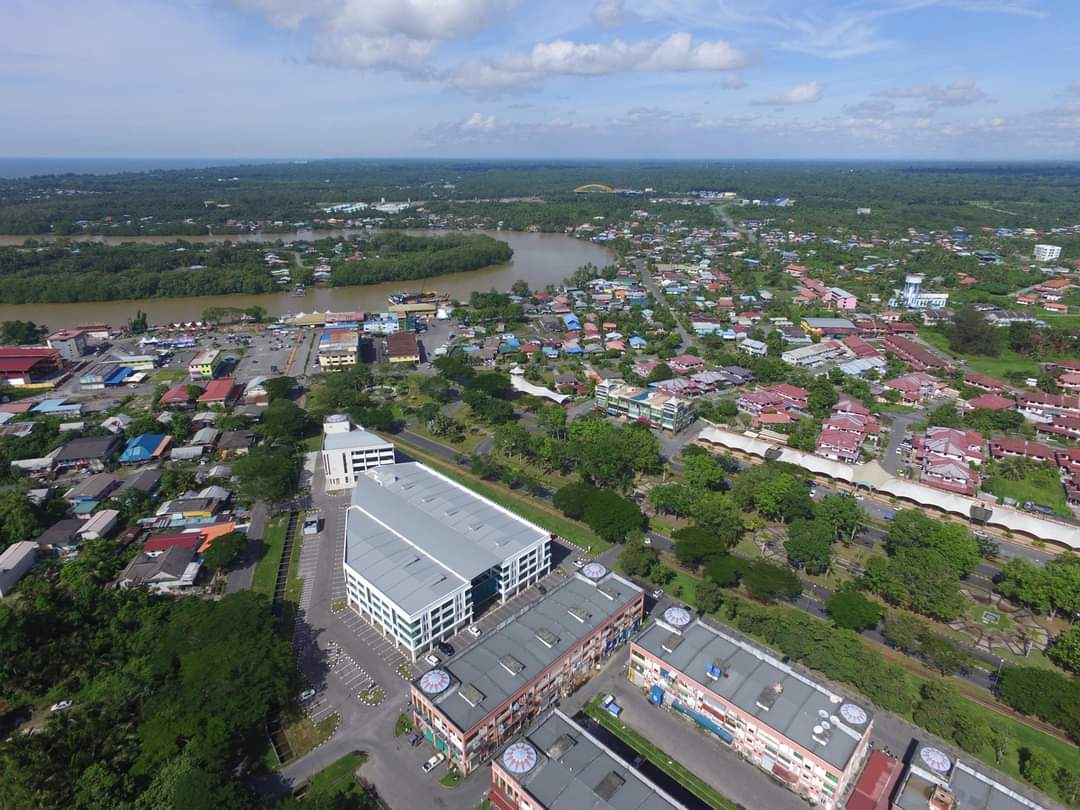 Steve130295 / CC BY-SA 4.0, via Wikimedia Commons
Self-guided audio walking tour of Mukah — GPS route, offline playback, story-driven narration in 32 languages.
“Where ancient sago palms meet the South China Sea, and Melanau traditions flourish.”
Not the postcards. The stories even locals don't know — whispered in your ear, right where they happened.
The name 'Mukah' sounds like the Malay word for 'face,' but the story behind it is more intriguing than a simple translation.
Scattered in certain parts of the Mukah region are towering wooden structures that hold a profound secret about ancient Melanau aristocracy.
The dome of Mukah's most prominent mosque isn't just a beautiful architectural feature; it's a subtle nod to a deeply ingrained local cultural symbol.
Discover every secret of Mukah
Every address, every reveal in full — in your ear, right where it happened.
You pick your stops. You walk. The voice reveals what the others miss.

Your self-guided audio tour of Mukah is ready — pick your landmarks, choose your language, and start the moment you arrive.
BuyLume has a built-in augmented-reality guide. Hold your phone up and its camera shows the street ahead of you, with a glowing arrow laid over the real view that always points to your next stop — no map to puzzle over, no wrong turns. Like everything in Lume, it works fully offline.
Mukah, a serene coastal town in central Sarawak, Malaysia, offers a captivating immersion into the heartland of the Melanau people. With a population of approximately 28,000, it maintains a peaceful, small-town ambiance that stands in gentle contrast to the energy of larger urban centers. Situated near the mouth of the Mukah River and facing the South China Sea, the town's identity is deeply intertwined with its golden beaches, extensive sago palm plantations, and the ancient maritime traditions of its indigenous inhabitants.
Travelers are drawn to Mukah to experience the authentic Melanau lifestyle, explore a profound cultural heritage, and savor unique local flavors. It's a destination where the rhythm of life is set by the river and the sea, offering a distinctive and memorable journey for those seeking to uncover the lesser-known treasures of Borneo.
Mukah's history is deeply rooted in antiquity, inextricably linked to the indigenous Melanau people who have inhabited Sarawak's coastal regions for centuries. While its exact founding date remains elusive, the town organically grew from fishing villages and settlements at the mouth of the Mukah River. Early historical chronicles mention this territory as part of the Brunei Sultanate's dominions, known even then as an important trading port on the South China Sea, primarily for its sago.
In 1861, Mukah was officially ceded to the 'White Rajah' James Brooke, becoming part of the Kingdom of Sarawak. The 1860s saw the construction of a fort to protect trade and strengthen the new dynasty's administrative power. During World War II, Japanese forces occupied the city in 1941, temporarily halting sago exports, before its liberation by Australian troops in 1945 and transfer to British military administration. In 1946, Mukah became part of the British Crown Colony of Sarawak, eventually joining the newly formed Federation of Malaysia in 1963. A significant milestone occurred on March 1, 2002, when Mukah was officially proclaimed the 10th Administrative Division of Sarawak, initiating a period of modernization.
The economy of early Mukah revolved entirely around the river and the sea. The Melanau were renowned as skilled fishermen, boatmen, and sago processors, with the sago palm serving as the 'Tree of Life,' providing both sustenance and building materials. This strong connection to sago production earned Mukah the moniker 'The Sago Capital of Sarawak.' Beyond its economic significance, Mukah is also known as 'The Melanau Heartland,' a testament to the fact that the Melanau people constitute the majority of its population. Their animistic beliefs, closely tied to nature and the sea, shaped early cultural life, with traditions like the annual Kaul Festival still echoing in the region's modern rhythm.
Begin your exploration at the Mukah Waterfront (Jalan Pantai), offering serene coastal views, especially at sunset. A short stroll leads to the Masjid Setia Raja, a mosque celebrated for its unique architecture, featuring a conical roof inspired by the traditional Melanau 'Terendak' hat. Nearby, the Old Sago Factory Chimney (Jalan Sago) stands as a historical marker of Mukah's past as a sago production hub.
For a deep dive into Melanau culture, visit the Lamin Dana Cultural Lodge in Kampung Tellian. This traditional Melanau longhouse functions as a living museum, offering insights into their architecture, crafts, and stories. Consider a river cruise along the Tellian River to witness traditional Melanau villages and perhaps spot ancient 'Jerunai' burial poles. The Mukah Market (Pasar Tamu) is a lively hub where you can experience local life, find fresh seafood, and sample traditional sago snacks and delicacies like Umai (raw fish salad) and Si'et (sago worms). Do not overlook Pantai Kala Dana/Blue Lagoon, a popular beach for relaxation and where the annual Kaul Festival is held. For a quiet escape into nature, Taman Tanjung Pedada offers a mangrove forest with a wooden walkway, perfect for observing local wildlife.
Mukah experiences a humid tropical climate with consistent warm temperatures averaging +26°C to +28°C year-round. While it's always warm, the year can be broadly divided into wetter and relatively drier periods. The best time to visit Mukah is generally during the dry season, from March to September, when the weather is more predictable and suitable for outdoor activities and exploration. Humidity is lower during this time, allowing for more comfortable journeys. Key cultural events like the Gawai Dayak Festival in June and the Mukah Food Festival in August often take place during this period. Although November to February is the rainy season, Mukah still holds its allure with lush greenery, but be prepared for occasional downpours.
Mukah is a small town, and the currency is the Malaysian Ringgit (MYR). While larger establishments may accept credit cards, cash is essential for daily transactions at markets and smaller eateries. Public transportation within Mukah is limited; taxis, private cars, or rental motorcycles are the primary modes of getting around, especially for attractions outside the town center. Ride-hailing services can be sporadic, so arranging transport through your accommodation or with a local taxi driver is advisable. Mukah Airport (MKM) is conveniently located just 2.3 km from the town center, with short taxi rides available upon arrival. When visiting villages or religious sites, it's customary to dress modestly and ask permission before taking photographs of people. Mobile network coverage is generally available, and Wi-Fi can be found in hotels and cafes.
Mukah in Korean, in Chinese or in Hebrew — and 29 more languages, every stop narrated by a native voice. The widest language range of any self-guided audio tour.
Available in: