Plaza de la Pescadería Vieja
Before refrigeration, a specific architectural feature in Muros allowed fish to be kept fresh, even on warm days.
Full story unlocks in the tour
 L. Miguel Bugallo Sánchez / CC BY-SA 4.0, via Wikimedia Commons
Self-guided audio walking tour of Muros — GPS route, offline playback, story-driven narration in 32 languages.
“Where granite arches meet the Atlantic, and the sea tells its oldest stories.”
Not the postcards. The stories even locals don't know — whispered in your ear, right where they happened.
Before refrigeration, a specific architectural feature in Muros allowed fish to be kept fresh, even on warm days.
A unique mill at the town's entrance harnesses an unexpected power source.
Just a short distance from Muros, a peculiar annual race involves vehicles with no engines.
Discover every secret of Muros
Every address, every reveal in full — in your ear, right where it happened.
You pick your stops. You walk. The voice reveals what the others miss.


Your self-guided audio tour of Muros is ready — pick your landmarks, choose your language, and start the moment you arrive.
BuyLume has a built-in augmented-reality guide. Hold your phone up and its camera shows the street ahead of you, with a glowing arrow laid over the real view that always points to your next stop — no map to puzzle over, no wrong turns. Like everything in Lume, it works fully offline.
Muros, a coastal town in the province of A Coruña, Galicia, offers a blend of natural beauty, an ancient old town, and a serene atmosphere. It provides an escape from more conventional tourist routes, known for its port, traditional architecture, and proximity to other Galician destinations. The town is situated at the northern entrance of the Muros y Noia ria, a bay on the Galician coast. Its old town, declared a Property of Cultural Interest and a Historic-Artistic Monumental Site in 1970, retains its original urban layout and architectural heritage.
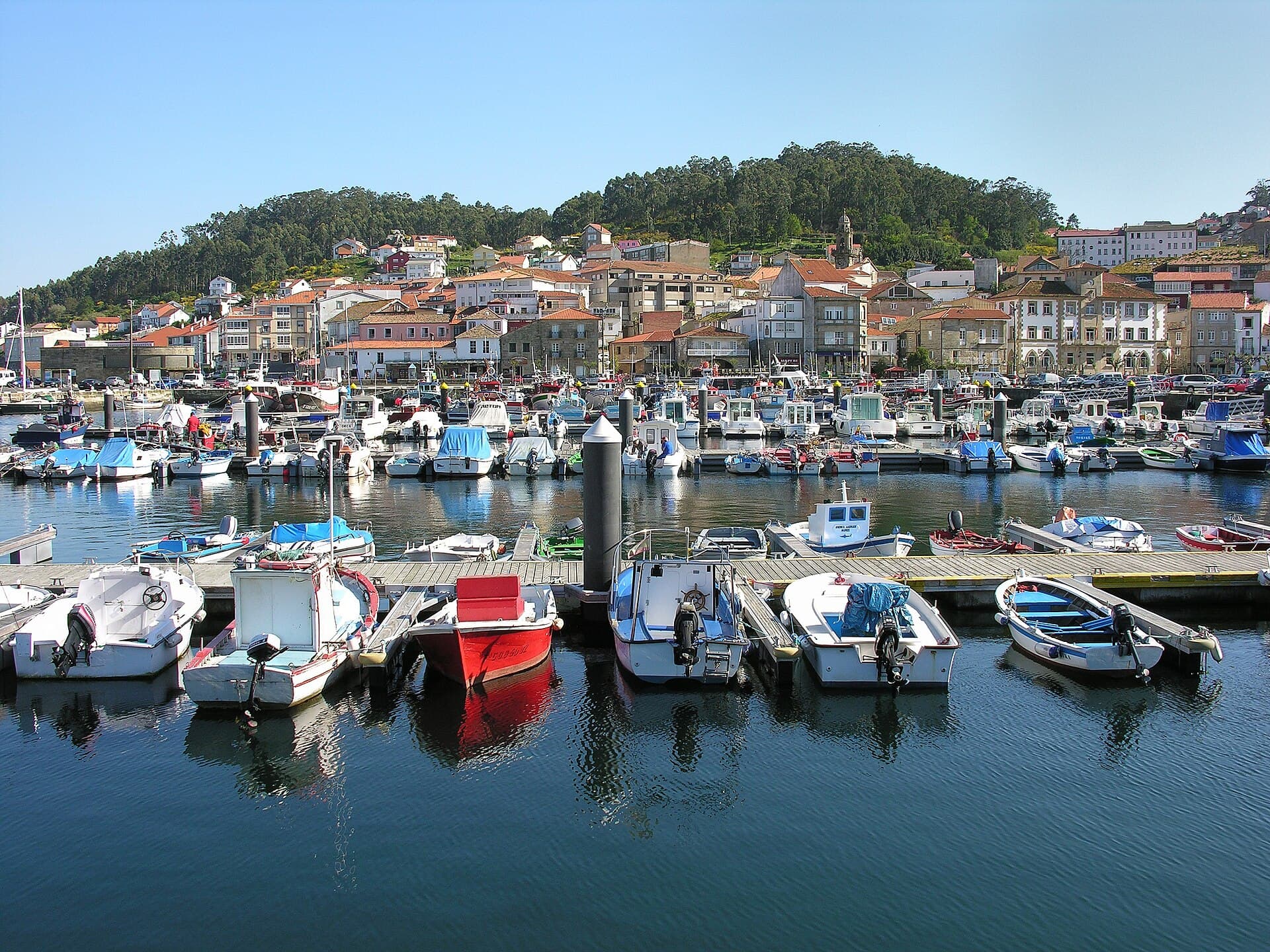
The town's identity is deeply intertwined with the sea, with a working fishing port that still sees vessels coming and going. The waterfront promenade offers views of the harbor and the colorful buildings climbing the hillside. Muros is a place where the past is visible in its stone houses with wooden balconies and slate roofs, and the rhythm of daily life is still influenced by the tides and the fishing industry.
The earliest records of the Ría de Muros e Noia region do not precisely identify its first inhabitants, though Roman sources mention localities that are difficult to pinpoint. Muros, then known as Puebla del Muro, first appeared in writing in 1286 when King Sancho IV granted privileges to encourage fishing and related activities. This marked Muros as an important Galician port in the Middle Ages, a status it maintained for generations.
In 1298, control of the town, originally Crown property, transferred to the Archbishop of Santiago de Compostela. This shift further solidified Muros's standing as a strategic port for both commerce and fishing. The sardine fishery, in particular, became the economic backbone of the entire area, with Muros sardines gaining renown even in distant ports like Barcelona.
Its strategic location made Muros a target for Norman and Muslim pirates. To counter these threats, the Archbishopric constructed the town's first wall in the early 14th century, enclosing a small area from the present-day Town Hall to the Collegiate Church grounds and extending to the shore. By the 16th century, these defenses were expanded with new ramparts and a more fortified castle. Despite these efforts, the port faced attacks, including one by French pirates in 1544.
Over subsequent centuries, Muros endured challenging times marked by pestilence, famine, and naval attacks, leading to a decline in its population. By the early 17th century, its 1,000 residents had dwindled to 600, and even fewer in the 18th century. The town also suffered significant destruction during the French invasion in 1809, with invading troops razing much of the walled town during an attempted insurrection.
The 18th century saw a shift towards accelerated industrialization with the arrival of Catalan entrepreneurs who introduced new fishing and salting techniques. This led to the establishment of numerous salting factories in and around the estuary, boosting the local economy. However, this industrial model also led to the displacement of small-time fishermen by larger fleets. By the early 20th century, overfishing severely depleted sardine stocks, causing an economic crisis and prompting emigration. While the port remains an economic engine, its role has evolved. Today, Muros is recognized for its well-preserved marine architecture, characterized by arcaded granite houses where fishermen once worked and stored their gear.
Begin your exploration in the Historic Centre of Muros, an exemplary display of Galician maritime architecture. Wander through its narrow, cobbled streets, observing the traditional stone houses with wooden balconies and slate roofs. The arcaded ground floors, where fishermen once mended nets and salted fish, are a distinctive feature. Do not miss the Plaza de la Pescadería Vieja, once the town's commercial heart, featuring a stone fountain and local taverns.
The Church of San Pedro de Muros, an imposing Romanesque church dating from the 13th century, stands within the historic quarter, surrounded by remnants of medieval walls. Its plaza includes a stone cross and a Baroque bell tower. Another notable religious site is the Shrine of the Virgen del Camino, a Gothic-style sanctuary from the mid-16th century.
For a glimpse into the town's industrial past, visit the Muíño de Maré do Pozo do Chacón, a restored 19th-century tide mill that now serves as a cultural and exhibition center. The Lariño Lighthouse, built in 1921, offers wide views of the Atlantic and nearby beaches. For outdoor enthusiasts, Mount Louro, a 241-meter-high mountain, provides hiking opportunities and views of the Muros and Noia estuary.
Muros also includes several beaches. Praia do Castelo is the closest to the town center, while Praia de San Francisco is a popular and lively option. For a more secluded experience, seek out Praia de Area Triga, known for its clear waters and surrounding pine forests.
The best time to visit Muros for warm-weather activities is from late June to early September. During these months, Muros experiences pleasant weather with average temperatures ranging from 19°C to 24°C (66°F to 75°F). July is typically the clearest month, with approximately 8.2 hours of sunshine per day and the least amount of rain. The water temperature is also warmest from July to early October, averaging above 17°C (62°F).
While the summer offers ideal conditions for sightseeing and beaches, Muros can also be visited in the cooler months. From October to January, the area experiences a distinct rainy season. However, even in winter, cloudless and bright days are possible, offering a chance to experience the dramatic "Costa da Morte" (Coast of Death) with its powerful Atlantic waves, lighthouses, and solitary beaches.
Muros is located approximately 71 kilometers (44 miles) from Santiago de Compostela. Renting a car in Santiago is a convenient option for exploring Muros and the surrounding region, offering autonomy for your itinerary.
For dining, Muros is known for its seafood. The Plaza de la Pescadería Vella and the promenade offer numerous bars and taverns serving Galician octopus, Padron peppers, squid, and fresh sardines. Local restaurants specialize in traditional Galician cuisine, with fresh fish and shellfish from the ría. Consider trying the local bread, handmade in wood-fired ovens, which is excellent for accompanying dishes.
Throughout the year, Muros and the nearby town of Louro host several festivals. The Feast of San Pedro in June is Muros's largest annual festival. In July, the Fiesta of the Virgin del Carmen, the patron saint of fishermen, is celebrated with religious significance and a procession at sea. In the village of Esteiro, the Grand Prix de Carrilanas takes place on the third weekend of July, featuring races of engine-less wooden vehicles.
Muros in Korean, in Chinese or in Hebrew — and 29 more languages, every stop narrated by a native voice. The widest language range of any self-guided audio tour.
Available in: