La Estatua de Rolando en el Antiguo Ayuntamiento
La estatua de Rolando de Nordhausen, símbolo de la libertad cívica, presenta una elección de material inusual para su época.
La historia completa se desbloquea en el tour
 Vincent Eisfeld / CC BY-SA 4.0, via Wikimedia Commons
Tour de audio autoguiado de Nordhausen — ruta GPS a pie, reproducción offline, narración en 32 idiomas.
“Donde las montañas del Harz se encuentran con siglos de historia, y la tradición fluye como grano destilado.”
No las postales. Las historias que ni los locales conocen — al oído, justo donde ocurrieron.
La estatua de Rolando de Nordhausen, símbolo de la libertad cívica, presenta una elección de material inusual para su época.
El carácter distintivo del Nordhäuser Doppelkorn podría deberse menos al centeno y más a una legendaria y traviesa influencia.
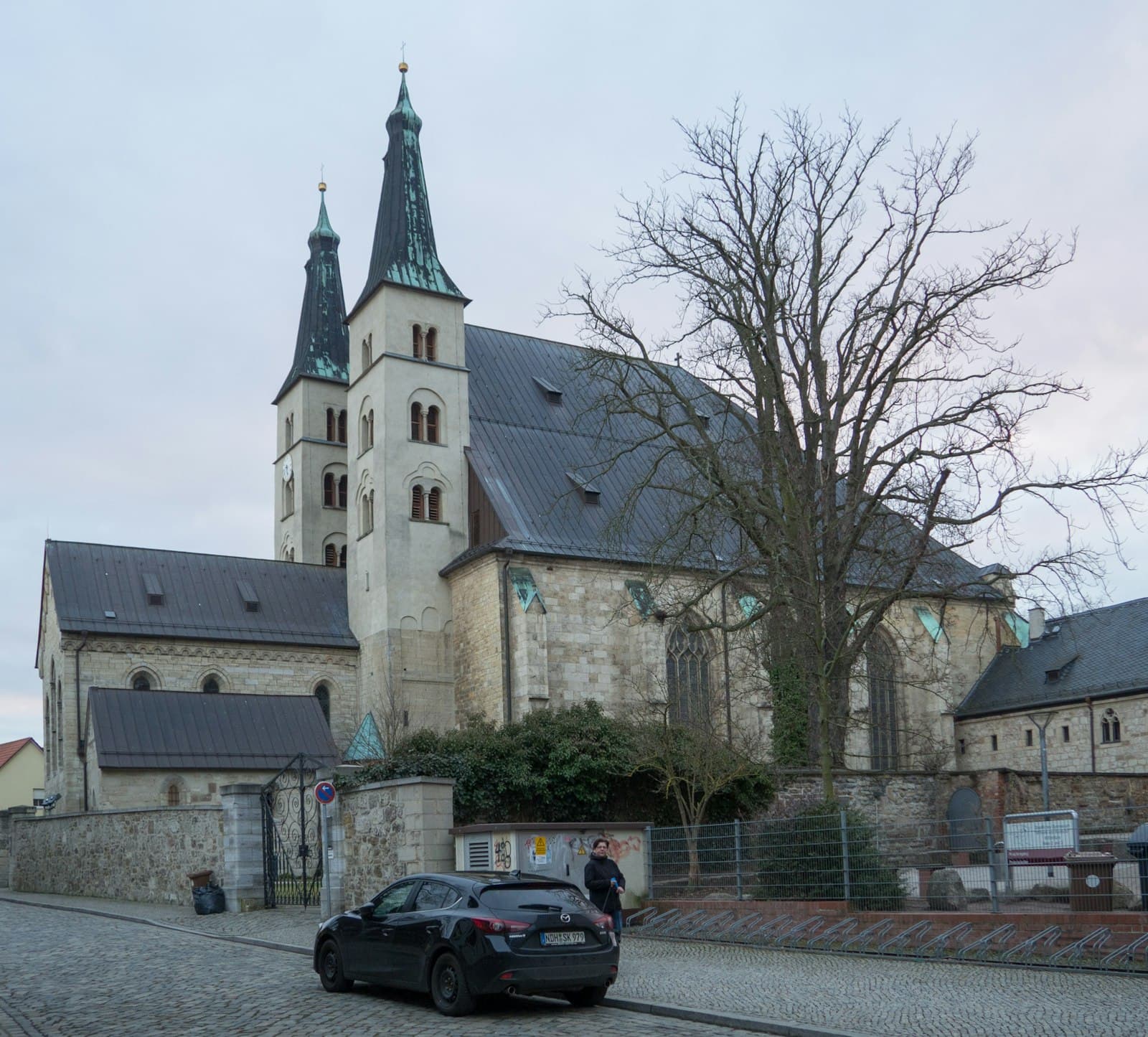
Una de las iglesias más antiguas de Nordhausen revela un detalle arquitectónico sorprendentemente ausente para su período.
Descubre todos los secretos de Nordhausen
Cada dirección, cada revelación al completo — a tu oído, justo donde ocurrió.
Eliges tus paradas. Caminas. La voz te revela lo que los demás ignoran.
Tu tour de audioguía por Nordhausen te espera — elige tus lugares, tu idioma y empieza al llegar.
ComprarLume incluye una guía de realidad aumentada. Levanta el móvil y su cámara muestra la calle que tienes delante, con una flecha luminosa sobre la imagen real que siempre apunta a tu próxima parada — sin mapas que descifrar, sin giros equivocados. Como todo en Lume, funciona completamente sin conexión.
Nordhausen, una ciudad en Turingia, Alemania, se asienta a orillas del río Zorge en el extremo sur de las montañas del Harz, dentro de la fértil extensión conocida como Goldene Aue, o 'llanura dorada'. Con una historia documentada que se remonta al año 927, Nordhausen fue un centro fundamental en Alemania central durante la Edad Media.
Hoy, Nordhausen es reconocida como el corazón económico y cultural del norte de Turingia y sirve como puerta de entrada a las montañas del Harz. La ciudad fusiona con gracia su perdurable pasado, visible en sus estructuras históricas y museos, con un presente vibrante que ofrece diversas actividades culturales, compras y aventuras al aire libre. Los visitantes pueden explorar el paisaje kárstico circundante, disfrutar de los lagos de Nordhausen o emprender un viaje en los ferrocarriles de vía estrecha del Harz hacia las pintorescas montañas del Harz.
Nordhausen fue documentada por primera vez en 927 como el sitio de un castillo real. A principios del siglo XIII, se transformó en una ciudad imperial libre, lo que le otorgó un autogobierno republicano e independiente dentro del Sacro Imperio Romano Germánico. Esta autonomía, junto con su comercio de larga distancia, fomentó la prosperidad y la influencia, estableciendo a Nordhausen como la tercera ciudad más grande de Turingia para el año 1500, con una población de aproximadamente 8.000 habitantes.
La ciudad abrazó la Reforma Protestante en 1522. Sin embargo, su independencia concluyó en 1802 cuando fue absorbida por Prusia. A mediados del siglo XIX comenzó la industrialización, impulsada por la construcción de ferrocarriles que conectaron Nordhausen con los principales mercados. Industrias como el tabaco de mascar, las bebidas alcohólicas, el papel y los textiles prosperaron. A finales del siglo XIX se desarrollaron ferrocarriles de vía estrecha a través de las montañas del Harz, con la red completa operativa en 1899.
A principios del siglo XX, Nordhausen se convirtió en un centro para las industrias de ingeniería y armamento. Esta capacidad industrial la vinculó trágicamente con la Segunda Guerra Mundial, durante la cual el gobierno nazi alemán estableció el campo de concentración de Mittelbau-Dora en las cercanías. Alrededor de 60.000 trabajadores forzados, incluidos prisioneros de guerra e individuos de territorios ocupados, fueron explotados en la industria armamentística, y aproximadamente 20.000 sucumbieron a las condiciones inhumanas. En abril de 1945, los bombardeos aliados devastaron la mayor parte de la ciudad, resultando en 8.800 víctimas.
Después de la guerra, Nordhausen pasó a formar parte de Alemania Oriental en 1949. Los esfuerzos de reconstrucción durante las décadas de 1950 y 1960 adoptaron un estilo arquitectónico moderno, y solo el Ayuntamiento, la Catedral y la Iglesia de San Blas fueron reconstruidos como monumentos históricos. El levantamiento de 1953 en Alemania Oriental vio a Nordhausen como un punto focal debido a las difíciles condiciones de vida y la insatisfacción generalizada. Después de la reunificación alemana en 1990, Nordhausen se integró en el recreado estado de Turingia.
Comience su exploración en la Estatua de Rolando, una figura de madera del siglo XVII situada en la esquina suroeste del Antiguo Ayuntamiento. Encarna la libertad cívica y la jurisdicción. La Dom zum Heiligen Kreuz (Catedral de la Santa Cruz) es otro punto de referencia significativo. Originalmente fundada como una iglesia colegiata de mujeres en 961, más tarde se transformó en una iglesia colegiata para canónigos en 1220. La catedral muestra elementos románicos en sus torres inferiores, cripta y claustro, con una nave gótica tardía. En su interior, puede descubrir un valioso coro gótico tallado a mano y figuras de donantes.
Para un viaje al patrimonio industrial de Nordhausen, visite la Destilería Tradicional Echter Nordhäuser. La destilación de aguardiente de grano se ha practicado aquí desde 1507, y el museo ofrece información sobre sus 500 años de evolución, concluyendo con una degustación. El Flohburg/Nordhausen-Museum ofrece una visión completa de la historia, geología, arqueología e historia natural de la ciudad dentro de una de las casas de entramado de madera más antiguas de Nordhausen. El Museum Tabakspeicher, un antiguo almacén de tabaco, exhibe la historia de la artesanía, el comercio y la industria en Nordhausen. Para los entusiastas del arte, la Kunsthaus Meyenburg, una villa Art Nouveau, alberga exposiciones de arte temporales y encuentros culturales.
Una visita profunda y esencial es el memorial del campo de concentración de Mittelbau-Dora, ubicado al noroeste de la ciudad. Presenta una exposición sobre el campo de concentración nazi y sirve como memorial a sus 20.000 víctimas. Finalmente, experimente los Ferrocarriles de Vía Estrecha del Harz, que parten de la estación de Nordhausen para un viaje panorámico a las montañas del Harz, incluyendo excursiones al Brocken, el pico más alto del norte de Alemania.
El momento ideal para visitar Nordhausen para actividades de clima cálido abarca desde finales de junio hasta principios de septiembre. Durante estos meses, la ciudad experimenta un clima agradable con temperaturas máximas diarias promedio que oscilan entre 19°C y 23°C (67°F y 73°F). Julio es típicamente el mes más cálido, con una máxima promedio de 23°C (73°F) y aproximadamente 7.5 horas de sol al día. Si bien julio también puede ser el mes más húmedo, con un promedio de 2.1 pulgadas de precipitación, las condiciones generales siguen siendo favorables para la exploración. Para aquellos que prefieren menos multitudes, principios de verano y octubre también pueden ser opciones atractivas.
Nordhausen es accesible en tren, con trenes regionales expresos y locales que la conectan con ciudades como Halle, Kassel, Heiligenstadt, Erfurt y Göttingen. La estación principal de tren es Nordhausen, con una estación secundaria en Nordhausen-Salza. La ciudad también opera un sistema de tranvías, uno de los más pequeños de Alemania, que incluye una línea interurbana que se extiende hasta Ilfeld utilizando las vías de los Ferrocarriles de Vía Estrecha del Harz. Esta distintiva línea de tranvía cuenta con motores híbridos diésel-eléctricos. El sistema de tarifas se basa en zonas, con viajes individuales que cuestan entre 1,60 € y 3,70 € dependiendo del número de zonas.
Para aquellos que llegan en avión, el aeropuerto de Leipzig-Halle (LEJ) al este o el aeropuerto de Frankfurt (FRA) al suroeste son las opciones más convenientes, ambos ofreciendo conexiones de tren. Dentro de Nordhausen, la Oficina de Información Turística, ubicada en la plaza central del mercado, ofrece asesoramiento experto sobre atracciones, alojamiento y eventos locales. También proporcionan información que se extiende a la región más amplia del Harz.
Nordhausen en coreano, en chino o en hebreo — y 29 idiomas más, cada parada narrada por una voz nativa. La mayor variedad de idiomas de cualquier audioguía autoguiada.
Disponible en: