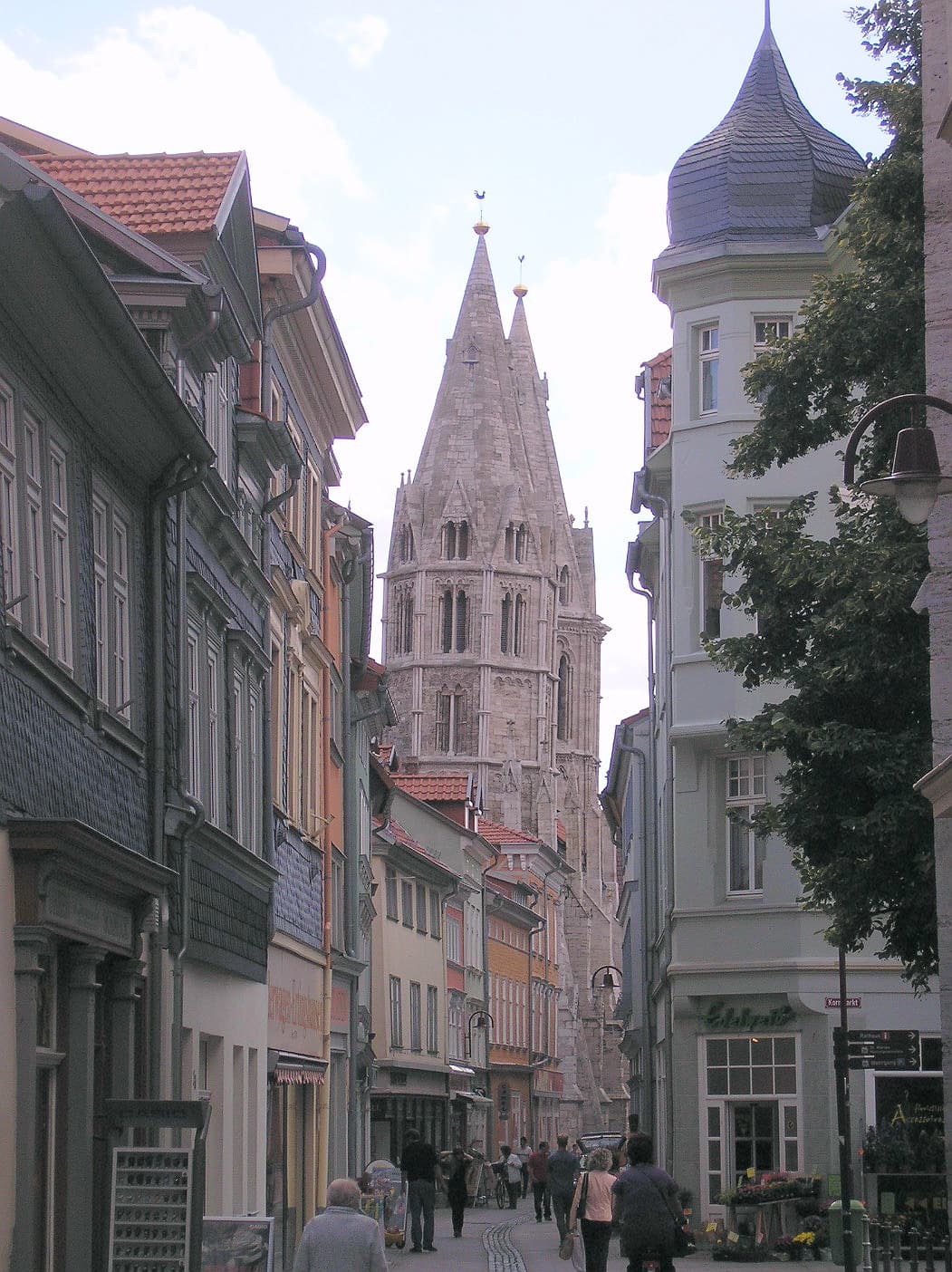
Église Divi Blasii
Avant sa renommée durable, un jeune Johann Sebastian Bach a laissé son empreinte sur cette église.
L'histoire complète se débloque dans le tour
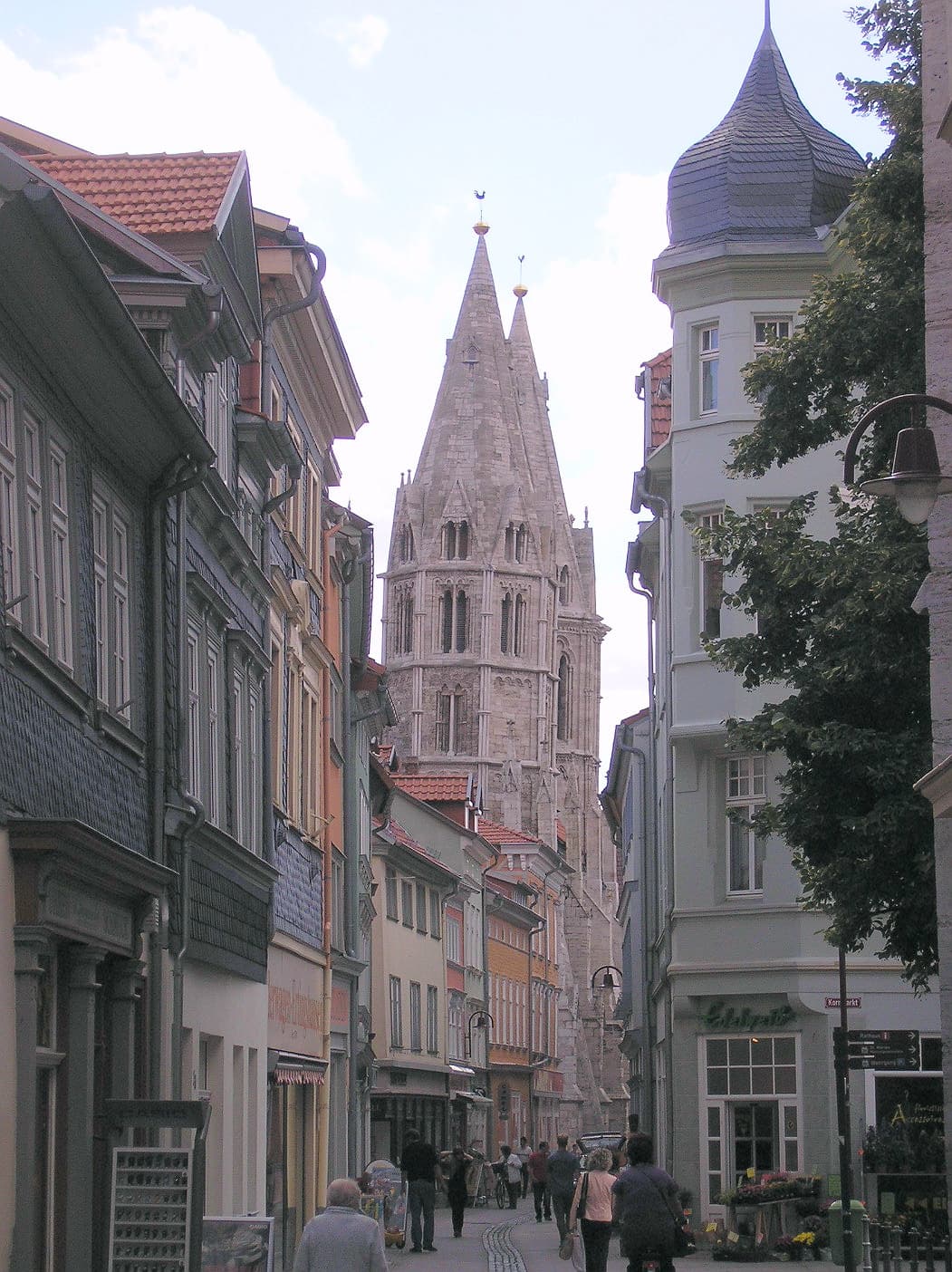 Michael Sander / CC BY-SA 3.0, via Wikimedia Commons
Visite audio autoguidée de Mühlhausen — parcours GPS à pied, lecture hors ligne, narration en 32 langues.
“Là où les murs anciens gardent les souvenirs de réformateurs, de compositeurs et d'une grandeur passée.”
Pas les cartes postales. Les histoires que même les habitants ignorent — soufflées à l'oreille, là où elles se sont passées.
Avant sa renommée durable, un jeune Johann Sebastian Bach a laissé son empreinte sur cette église.
L'ancien surnom de la ville, « mulhusia turrita », suggère des défenses bien plus étendues que ce qui subsiste aujourd'hui.
Cette imposante église gothique fut autrefois la tribune d'une figure radicale qui défia l'autorité.
Découvrez tous les secrets de Mühlhausen
Chaque adresse, chaque révélation en entier — dans ton oreille, là où elle s'est passée.
Tu choisis tes lieux. Tu marches. La voix te révèle ce que les autres ignorent.
Votre visite audioguidée de Mühlhausen vous attend — choisissez vos lieux, votre langue, et lancez-vous dès votre arrivée.
AcheterLume intègre un guide en réalité augmentée. Levez votre téléphone : sa caméra montre la rue devant vous, avec une flèche lumineuse posée sur l'image réelle qui pointe toujours vers votre prochain arrêt — aucune carte à déchiffrer, aucun mauvais virage. Comme tout dans Lume, ça fonctionne entièrement hors-ligne.
Mühlhausen, une ville au cœur de la Thuringe allemande, offre un voyage tangible au Moyen Âge. Considérée comme l'une des villes les plus attrayantes du centre de l'Allemagne, son histoire remonte à 967. Avec l'un des plus grands centres-villes médiévaux encore intacts d'Allemagne, Mühlhausen présente onze églises gothiques et un système de fortification presque complet.
Située à seulement 5 kilomètres au nord du centre géographique de l'Allemagne, les anciennes ruelles et les bâtiments historiques de Mühlhausen évoquent une sensation de retour dans le temps, souvent sans les foules des destinations plus célèbres. Le passé profond de la ville, de son statut de Ville Libre Impériale à ses liens avec des figures historiques importantes comme Johann Sebastian Bach et Thomas Müntzer, en fait une destination fascinante pour ceux qui recherchent un patrimoine allemand authentique.
Les origines de Mühlhausen remontent à 967, date de sa première mention par Otton II, roi allemand et empereur du Saint-Empire romain germanique. Au milieu du XIIIe siècle, elle était devenue une Freie Reichsstadt, une ville indépendante et autonome du Saint-Empire. Ce statut permit à Mühlhausen de contrôler une zone substantielle d'environ 220 kilomètres carrés, englobant 19 villages régionaux. La prospérité de la ville à la fin du Moyen Âge fut alimentée par le commerce à longue distance, notamment des textiles et du pastel, ce qui l'amena à rejoindre la Ligue hanséatique en 1286. En 1500, avec une population de 10 000 habitants, Mühlhausen était l'une des plus grandes villes d'Allemagne, dépassant même Berlin en taille à l'époque, témoignant de son influence économique.
La ville joua un rôle central pendant la Réforme et la guerre des Paysans allemands (1524-1525). Elle devint un centre pour le mouvement de réforme populaire, notamment associée au théologien radical Thomas Müntzer, qui prêcha à l'église Sainte-Marie. L'implication de Müntzer fit de Mühlhausen un point focal de la guerre des Paysans, et il fut finalement exécuté en dehors des murs de la ville après la bataille de Frankenhausen. Suite à ces événements tumultueux, Mühlhausen fut temporairement privée de ses privilèges mais retrouva son indépendance sous le Saint-Empire romain germanique en 1548.
Une autre figure historique importante, Johann Sebastian Bach, fut organiste de la ville à l'église Divi Blasii de 1707 à 1708. Son séjour à Mühlhausen fut productif, incluant la composition de la cantate « Gott ist mein König » pour le conseil municipal nouvellement élu. Les fortifications médiévales de la ville, dont 2,2 kilomètres de murs préservés et des tours comme la Frauentor (Porte des Femmes) et la Rabenturm (Tour du Corbeau), restent des rappels durables de sa longue et souvent dramatique histoire.
Mühlhausen offre une richesse de sites historiques, principalement accessibles à pied à l'intérieur des vieux murs de la ville. Les remparts médiévaux eux-mêmes sont un point fort, avec 2,2 kilomètres préservés, y compris la Frauentor (Porte des Femmes) et la Rabenturm (Tour du Corbeau), qui offre des vues panoramiques depuis sa plateforme de 34 mètres de haut.
La ville est remarquable pour ses onze églises gothiques. L'église Divi Blasii, datant du XIIIe siècle, est particulièrement importante car Johann Sebastian Bach y fut organiste de 1707 à 1708. L'église Sainte-Marie, une église-halle gothique à cinq nefs, domine l'horizon et fut le lieu où Thomas Müntzer prêcha pendant la guerre des Paysans. L'Hôtel de Ville Historique, avec un bâtiment central gothique de 1270, abrite les Archives de la Ville Impériale et présente des peintures gothiques dans sa salle du conseil.
Pour ceux qui s'intéressent à l'histoire locale, plusieurs musées offrent des aperçus plus approfondis. Le Müntzergedenkstätte à l'intérieur de l'église Sainte-Marie est dédié à Thomas Müntzer, tandis que le Bauernkriegsmuseum (Musée de la Guerre des Paysans) est situé dans l'église du Marché au Blé. La Museumsgalerie dans l'église de la Toussaint présente l'art thuringien. Au-delà du cœur historique, le lac de plaisance Schwanenteich offre une évasion paisible, à environ 15 minutes à pied de la vieille ville.
La période idéale pour visiter Mühlhausen pour les activités de plein air s'étend de fin juin à début septembre, avec un pic la première semaine d'août, lorsque le temps est le plus agréable avec des journées claires et sans pluie et des températures comprises entre 18°C et 27°C. Juillet est généralement le mois le plus clair et le plus chaud, avec des maximales diurnes moyennes autour de 23-24°C et des minimales autour de 13°C. La ville connaît des étés chauds et des hivers froids. Bien que juin, juillet et août offrent le temps le plus confortable, la ville accueille également la plus grande foire urbaine d'Allemagne pendant dix jours fin août, remplissant les rues de festivités.
Mühlhausen se découvre facilement à pied, la plupart des attractions étant concentrées à l'intérieur des remparts médiévaux. Pour un aperçu plus large, un « tram » touristique circule toutes les heures (sauf en hiver) depuis le parking Blobach, à l'extérieur de la Frauentor, offrant une agréable promenade à travers la ville. La ville est accessible en train depuis Göttingen ou Erfurt, la gare étant à environ 15 minutes à pied du centre de la vieille ville. L'office de tourisme local, situé à Ratsstraße 20, offre une gamme de services, y compris des visites guidées, une aide à l'hébergement et des informations sur les événements locaux. Ils peuvent également organiser des démonstrations d'orgue à l'église Divi Blasii et des visites de la tour à Sainte-Marie. Mühlhausen est également un bon endroit pour faire du shopping, avec des boutiques familiales proposant des produits uniques aux côtés de chaînes allemandes bien connues, notamment sur le Steinweg et la Linsenstraße.
Mühlhausen en coréen, en chinois ou en hébreu — et dans 29 autres langues, chaque étape narrée par une voix native. La plus large gamme de langues de tous les audioguides autoguidés.
Disponible en :