Paradiskullen ski jump
From an industrial heartland to a city known for extreme sports, Örnsköldsvik features a remarkable landmark visible from nearly anywhere in the city center.
Full story unlocks in the tour
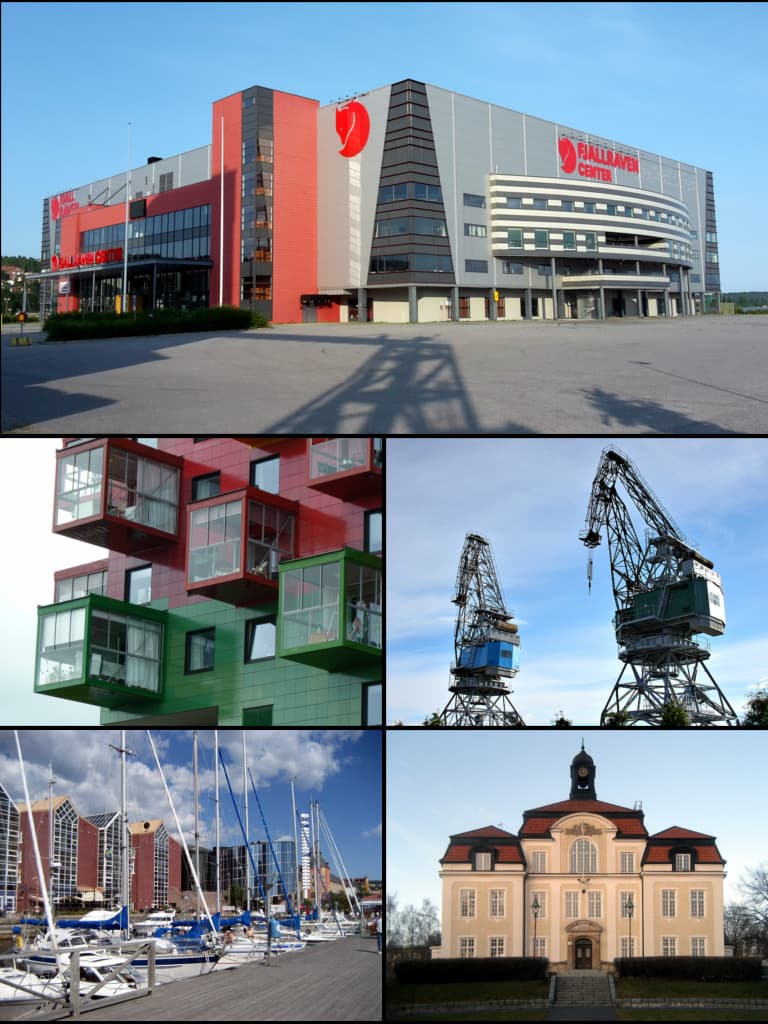 Montage by Moralist / cc by-sa 4.0, via Wikimedia Commons
Self-guided audio walking tour of Örnsköldsvik — GPS route, offline playback, story-driven narration in 32 languages.
“Where the High Coast meets the unexpected.”
Not the postcards. The stories even locals don't know — whispered in your ear, right where they happened.
From an industrial heartland to a city known for extreme sports, Örnsköldsvik features a remarkable landmark visible from nearly anywhere in the city center.
A global outdoor brand, recognized by its fox emblem, began its journey in a remarkably modest setting within this northern Swedish city.
The very ground beneath Örnsköldsvik is steadily rising, altering the landscape at an astonishing pace.
Discover every secret of Örnsköldsvik
Every address, every reveal in full — in your ear, right where it happened.
You pick your stops. You walk. The voice reveals what the others miss.

Your self-guided audio tour of Örnsköldsvik is ready — pick your landmarks, choose your language, and start the moment you arrive.
BuyLume has a built-in augmented-reality guide. Hold your phone up and its camera shows the street ahead of you, with a glowing arrow laid over the real view that always points to your next stop — no map to puzzle over, no wrong turns. Like everything in Lume, it works fully offline.
Örnsköldsvik, often affectionately shortened to 'Ö-vik' by those who live there, is a coastal city in Sweden's Västernorrland County, where urban rhythms find harmony with dramatic natural beauty. Situated on the Gulf of Bothnia, it acts as a primary entry point to the UNESCO World Heritage site of the High Coast (Höga Kusten), celebrated for its unique geology and continuous land uplift. The city center itself possesses a distinctive character, embraced by mountains and the sea, offering sweeping views from nearly every vantage point.
With a population of around 33,000 residents, Örnsköldsvik maintains a welcoming, small-town atmosphere while providing the conveniences expected of a larger city. It is a place where deep forests meet sparkling sea bays and archipelago islands, providing year-round opportunities for outdoor pursuits, from summer hiking and paddling to winter skiing and ice skating. Beyond its natural appeal, Örnsköldsvik is recognized for its enduring industrial heritage, particularly in pulp and paper, and its flourishing export industries.
This city is a study in contrasts, blending its industrial roots with a dedication to environmental sustainability and a surprising ardor for ice hockey. It is a destination that beckons visitors to explore its singular history, enjoy its lively cultural scene, and immerse themselves in the profound landscapes of the High Coast.
## From Ancient Traces to Modern Industry Evidence of human activity in the Örnsköldsvik area dates back to the Nordic Bronze Age, with a reconstructed Roman Iron Age village called Gene Fornby just beyond the town, offering a window into its ancient past. However, Örnsköldsvik itself is a relatively young city. It was officially established as a köping (a Swedish market town) in 1842, separating from the Själevad parish, and was granted city status in 1894.
The city's name is distinctive, as it is one of the few in Sweden not derived from royalty. It honors Per Abraham Örnsköld, the governor of Västernorrland County from 1762 to 1769, who played a significant role in advancing agriculture and industry in the Ångermanland province. The surname 'Örnsköld' literally translates to 'Eagle Shield,' lending the city's name the meaning 'Örnsköld's Bay.'
## Industrial Growth and Sporting Prowess The late 19th century witnessed Örnsköldsvik's economy flourish with the industrialization of the forestry sector. Steam sawmills and pulp mills replaced artisanal production, transforming the city into a major center for the export of timber and paper pulp. Significant industrial ventures like Mo och Domsjö (MoDo), now Holmen, and Hägglund & Söner (Hägglunds), a heavy industrial company, emerged in the surrounding villages and remain vital to the city's economy today.
Beyond industry, Örnsköldsvik has forged a considerable identity in the realm of sports, particularly ice hockey. It is often referred to as 'The Hockey Factory' due to its impressive record of producing world-class players, including numerous NHL stars such as Peter Forsberg and the Sedin twins. The local club, MoDo Hockey, established in 1921, has secured Swedish championships and is a source of immense local pride.
## A City of Firsts and Natural Wonders Örnsköldsvik holds a special place in sports history as the host of the inaugural Winter Paralympic Games in 1976, showcasing its advanced sports infrastructure and dedication to inclusivity. The city also features the iconic Paradiskullen ski jump, constructed in 1961, which serves as a visible landmark and a testament to its sporting tradition.
In 2000, the singular natural landscape of the High Coast, with Örnsköldsvik as its entry point, was recognized on the UNESCO World Heritage List. This acknowledgment significantly boosted the region's tourist appeal, drawing attention to its dramatic land uplift and striking coastal scenery. The city continues to evolve, balancing its industrial heritage with a focus on environmental sustainability, even serving as a 'testbed' for ethanol-powered cars.
Örnsköldsvik presents a fusion of natural marvels and urban attractions. Begin with the High Coast (Höga Kusten), a UNESCO World Heritage site, for dramatic landscapes, walking paths, and expansive views. Consider an ascent up Varvsberget or Åsberget for sweeping panoramas of the city, harbor, and archipelago.
For a singular historical perspective, visit Gene Fornby, a reconstructed Roman Iron Age village. In the city center, the Paradiskullen ski jump stands as an emblematic landmark, visible from many points. For family enjoyment or repose, Paradisbadet (Paradiset Water Park) offers adventure pools and a spa, including one of Europe's longest water slides.
Explore the Örnsköldsvik Museum and Art Gallery to delve into the region's cultural heritage. Embark on a boat excursion to the picturesque islands of the archipelago, such as Ulvön or Trysunda, known for their well-preserved fishing villages. Do not miss the High Coast Art Valley for an outdoor cultural experience. If you seek adventure, explore the Slåttdalsskrevan gorge in Skuleskogen National Park.
Örnsköldsvik experiences distinct seasons, each offering a different appeal. The most favorable time to visit for warm-weather activities is from early July to mid-August, when average daily high temperatures hover around 20°C (68°F) and daylight hours are extended. This period is ideal for exploring the High Coast, discovering the archipelago, and engaging in outdoor recreation.
Winters are cold and snow-covered, with average temperatures around -6°C (21°F) in January and February, making it perfect for winter sports like skiing and ice hockey. Spring (May) and autumn (September) are transitional, offering milder temperatures and beautiful scenery as nature awakens or changes color.
Örnsköldsvik is readily accessible. By air, Örnsköldsvik Airport (OER) provides daily flights to and from Stockholm Arlanda Airport. Larger airports in Umeå or Sundsvall are also options, followed by bus or train connections. By train, the high-speed Bothnia Line links Örnsköldsvik to Umeå and other parts of the Swedish railway network. While a central railway station is not directly within the city, trains to nearby hubs like Umeå or Kramfors (60 km away) are common. By bus, the European route E4 traverses downtown Örnsköldsvik, offering excellent connections, including coastal lines from Haparanda to Stockholm and cross-country routes to Östersund.
Within the city, the center is compact and easily walkable. For exploring surrounding areas, local buses or a rental car are recommended. Most local residents speak excellent English, so communication should be straightforward. Tap water is of superior quality and safe to drink. Remember that Swedes value order, so be prepared to wait in line or take a ticket where customary.
Örnsköldsvik in Korean, in Chinese or in Hebrew — and 29 more languages, every stop narrated by a native voice. The widest language range of any self-guided audio tour.
Available in: