Plaza Mayor de Piteå (Rådhustorget)
Piteå guarda un secreto arquitectónico distintivo en su plaza mayor, una característica que comparte con solo otra ciudad en toda Suecia.
La historia completa se desbloquea en el tour
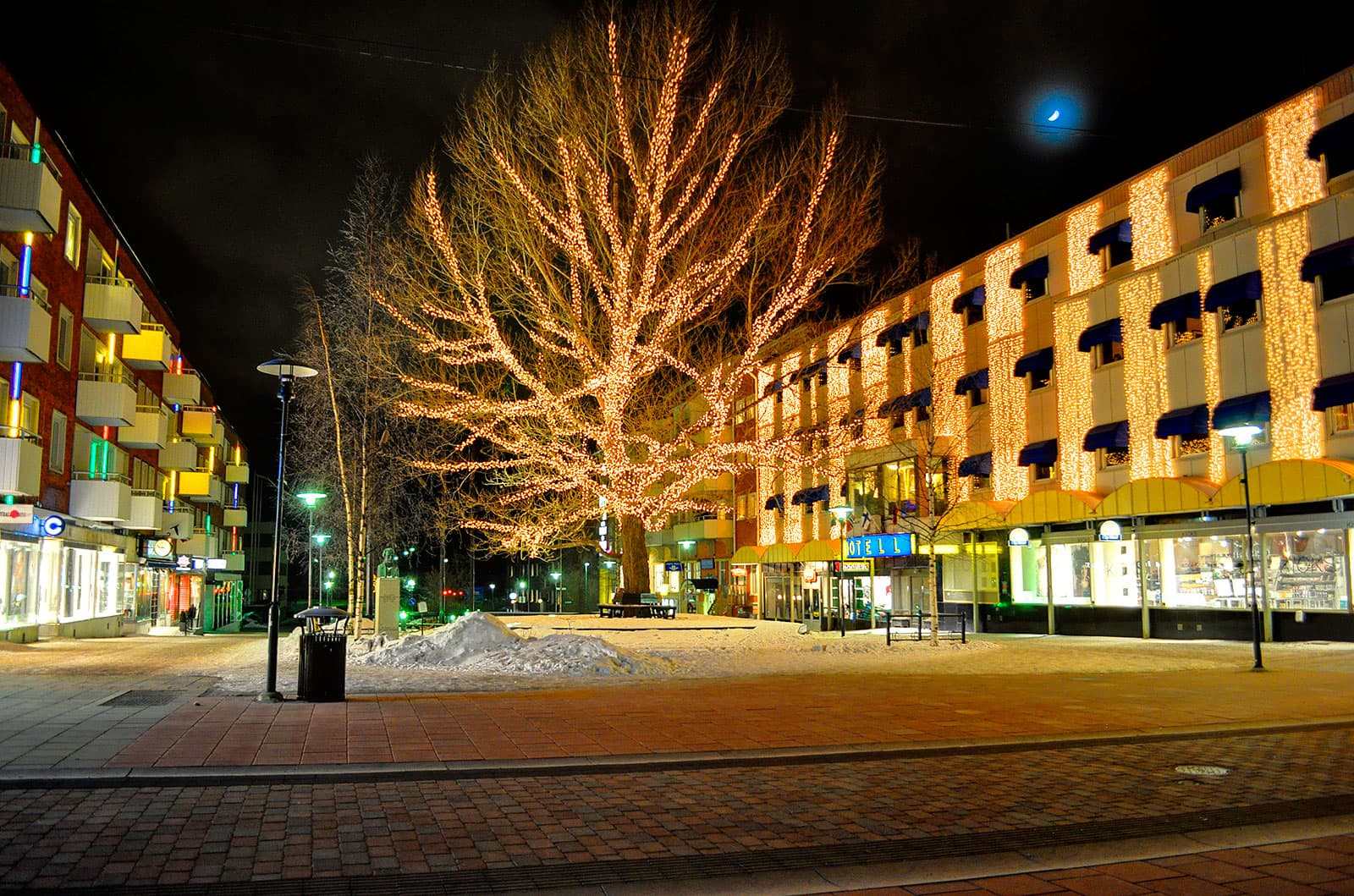 Jonas N / CC BY-SA 2.0, via Wikimedia Commons
Tour de audio autoguiado de Piteå — ruta GPS a pie, reproducción offline, narración en 32 idiomas.
“Donde la tierra se eleva y la historia respira a través de la brisa costera.”
No las postales. Las historias que ni los locales conocen — al oído, justo donde ocurrieron.
Piteå guarda un secreto arquitectónico distintivo en su plaza mayor, una característica que comparte con solo otra ciudad en toda Suecia.
Esta iglesia de madera ha desafiado las probabilidades no una, sino dos veces, manteniéndose en pie cuando el resto de la ciudad fue consumida por las llamas.
Imagina un pueblo construido no solo para el culto, sino para pernoctar, una tradición que ayudó a difundir el cristianismo en el remoto norte.
Descubre todos los secretos de Piteå
Cada dirección, cada revelación al completo — a tu oído, justo donde ocurrió.
Eliges tus paradas. Caminas. La voz te revela lo que los demás ignoran.


Tu tour de audioguía por Piteå te espera — elige tus lugares, tu idioma y empieza al llegar.
ComprarLume incluye una guía de realidad aumentada. Levanta el móvil y su cámara muestra la calle que tienes delante, con una flecha luminosa sobre la imagen real que siempre apunta a tu próxima parada — sin mapas que descifrar, sin giros equivocados. Como todo en Lume, funciona completamente sin conexión.
Piteå, conocida cariñosamente como 'Pite' por los lugareños, es una ciudad costera en el condado de Norrbotten, en el norte de Suecia, donde el río Pite se encuentra con la bahía de Botnia. Situada aproximadamente a 900 kilómetros al norte de Estocolmo y a 100 kilómetros al sur del Círculo Polar Ártico, ofrece una mezcla distintiva de naturaleza costera, un animado centro urbano y un tranquilo archipiélago. Este atractivo destino, con una población de alrededor de 23.326 habitantes, es un lugar favorito para los suecos, especialmente en verano, cuando los largos días y las temperaturas suaves invitan a la exploración.
La zona central de la ciudad se asienta en Häggholmen, una pequeña isla que se está convirtiendo gradualmente en parte del continente debido al continuo rebote post-glacial, un fenómeno que hace que la tierra se eleve aproximadamente 9 milímetros al año. Piteå cautiva a los visitantes con sus distintas estaciones, ofreciendo desde playas bañadas por el sol y aventuras en el archipiélago bajo el Sol de Medianoche en verano, hasta paisajes cubiertos de nieve y las fascinantes Auroras Boreales en invierno. Su profunda historia, sus tradiciones particulares y su proximidad tanto al mar como a extensos bosques la convierten en una parada cautivadora en la Laponia sueca.
Ya sea que le atraiga su histórica plaza mayor, el sereno archipiélago con sus 550 islas, o el activo Pite Havsbad, Piteå promete una experiencia memorable. La ciudad sirve como centro para la transición industrial sostenible, aprovechando su puerto costero y apoyando la innovación en tecnologías renovables, incluido el parque eólico terrestre más grande de Europa en sus cercanías.
La historia de Piteå comienza mucho antes de su fundación oficial, con evidencia de asentamientos que datan del siglo XI y su primera mención escrita como 'Pitu' en una carta de 1335, refiriéndose al río Pite. La ciudad fue establecida oficialmente por el rey Gustavo II Adolfo en 1620, recibiendo sus derechos de ciudad en 1621, con el objetivo estratégico de crear un centro comercial en el norte de Suecia. Inicialmente, el asentamiento se encontraba al norte de su ubicación actual, en Öjebyn, que se convirtió en la localidad central de la parroquia de Pite en el siglo XV.
La ciudad enfrentó desafíos tempranos, incluido un devastador incendio en julio de 1666 que arrasó todo el asentamiento. Después de esto, Piteå fue reconstruida en Häggholmen, la pequeña isla que forma el moderno centro de la ciudad, con su plan urbano del siglo XVII aún evidente hoy en día. Sin embargo, la adversidad golpeó de nuevo en 1721 cuando soldados rusos atacaron y quemaron la nueva ciudad durante la Gran Guerra del Norte, dejando solo la histórica iglesia de madera en pie. Esta resiliencia frente a la destrucción subraya la fragilidad de los asentamientos dependientes de la madera en la región.
A lo largo del siglo XVIII, Piteå prosperó económicamente a través de la extracción de recursos, convirtiéndose en un centro de exportación clave para bienes como alquitrán, mantequilla, pescado y pieles de animales, que se enviaban a Estocolmo. El siglo XIX trajo una mayor industrialización, particularmente en el sector forestal, con el establecimiento de aserraderos en Bergsviken (1858), Munksund (1861) y Storfors (1871). Esto impulsó el crecimiento de la población, especialmente después de que se abriera una línea ferroviaria que conectaba Piteå con Älvsbyn en 1911, facilitando el comercio y el desarrollo. Piteå también tuvo la distinción de ser la ciudad residencial del condado de Norrbotten hasta 1856.
En la historia más reciente, la reforma municipal de 1971 fusionó Piteå con las parroquias rurales circundantes, formando el moderno Municipio de Piteå. Hoy en día, si bien la silvicultura sigue siendo importante, la economía local se ha diversificado, con un énfasis creciente en iniciativas de energía verde como el parque eólico de Markbygden, un testimonio de la evolución y adaptabilidad continuas de Piteå.
Comience su exploración en el compacto centro de Piteå, donde los tradicionales edificios de madera rojos y amarillos bordean las calles. La Plaza Mayor (Rådhustorget) conserva su diseño del siglo XVII, una plaza 'cerrada' única rodeada de edificios, una característica que comparte con solo otra ciudad en Suecia. Aquí encontrará el Ayuntamiento, que también alberga el Museo de Piteå, que ofrece información sobre la historia regional y el patrimonio costero.
Un corto paseo conduce a la Iglesia de Piteå, la iglesia de madera más antigua que se conserva en Norrland, un testimonio del espíritu perdurable de la ciudad, habiendo sobrevivido a múltiples incendios. Para una inmersión más profunda en la vida histórica, aventúrese al Pueblo Iglesia de Öjebyn, a unos 6 km al noroeste del centro. Este pueblo iglesia bien conservado, uno de los más grandes del país, presenta hileras de encantadoras cabañas de madera alrededor de una iglesia central, que una vez proporcionaron alojamiento a los fieles que viajaban desde lejos.
Más allá de la ciudad, el Archipiélago de Piteå llama con sus 550 islas, ofreciendo playas de arena, reservas naturales y oportunidades para paseos en barco, kayak o simplemente relajarse junto a las aguas salobres. Durante el verano, Pite Havsbad, a menudo llamado la 'Riviera Nórdica', es un popular balneario con una larga playa de arena, spa y diversas actividades. En invierno, el mar congelado se transforma en el Piteå Ice Arena, un lugar único al aire libre para patinar sobre hielo, esquiar y usar trineos de patada. Para los amantes de la naturaleza, el Sendero Solander ofrece caminatas a lo largo del paisaje costero, y el Bosque de Aventura Urbana ofrece senderos accesibles y oportunidades para la observación de aves cerca de la ciudad.
Piteå ofrece atractivos distintos durante todo el año, lo que la convierte en un destino para todas las estaciones. Para actividades de clima cálido, la mejor época para visitar es desde principios de julio hasta mediados de agosto, cuando las temperaturas máximas diarias promedio superan los 15°C (60°F). Julio es típicamente el mes más cálido, con máximas alrededor de los 20°C (68°F), ideal para disfrutar del archipiélago, las playas y el Sol de Medianoche.
El invierno, de diciembre a marzo, transforma Piteå en un paraíso invernal nevado, perfecto para experimentar las Auroras Boreales, paseos en trineo de perros, esquí y patinaje sobre hielo en el mar congelado. Diciembre ofrece una atmósfera mágica con la nieve reflejando los tonos crepusculares. El otoño, con sus colores vivos y días nítidos, es excelente para la observación de estrellas y el senderismo. La primavera da vida a la naturaleza con días más brillantes y nuevas experiencias.
Viajar a Piteå es sencillo, con excelentes conexiones por aire, tren, autocar y coche. Aunque Piteå no tiene su propio aeropuerto, el Aeropuerto de Luleå Kallax (LLA) está a solo 45 minutos en autobús, con rutas directas que circulan varias veces al día. También puede llegar a Piteå en coche, con las principales rutas que la conectan con otras partes de Suecia.
Una vez en Piteå, navegar es fácil, especialmente en la zona central, que es apta para peatones y ciclistas. Los autobuses eléctricos proporcionan transporte público, y para aquellos que prefieren conducir, hay salidas convenientes desde la autopista. Mapas y folletos están disponibles en el Centro de Turismo de Piteå, ubicado en la antigua fábrica de cerveza de vapor en el corazón de la ciudad, donde también puede encontrar consejos sobre atracciones, actividades y eventos locales. Hay Wi-Fi gratuito disponible en el centro de la ciudad. Se requieren discos de estacionamiento en algunos aparcamientos municipales fuera del centro de la ciudad.
Piteå en coreano, en chino o en hebreo — y 29 idiomas más, cada parada narrada por una voz nativa. La mayor variedad de idiomas de cualquier audioguía autoguiada.
Disponible en: