El Reloj Monumental de Pachuca
The city's iconic clock tower, a symbol of independence, holds a chilling secret whispered among the old mining families.
Full story unlocks in the tour
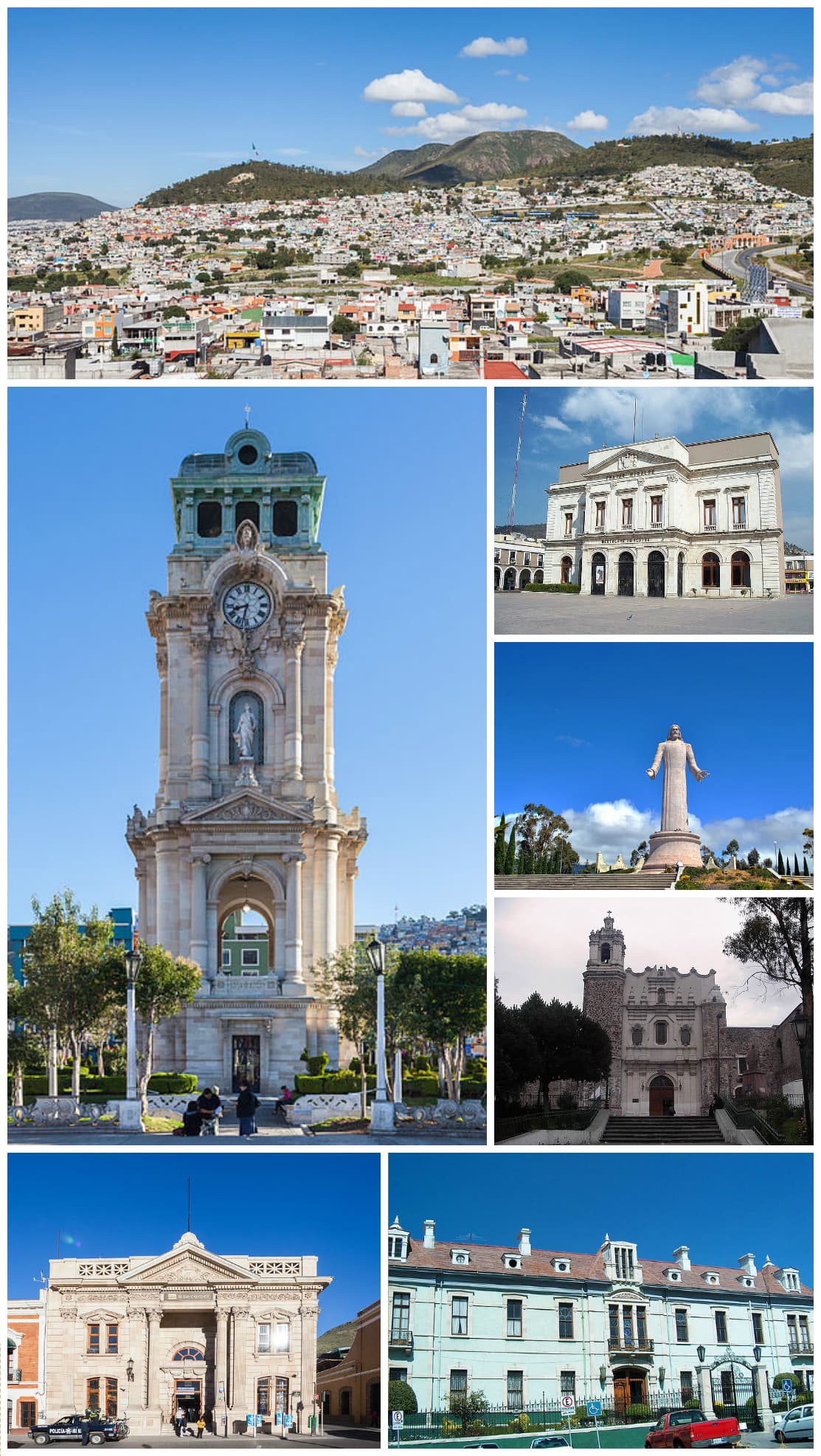 Microstar / CC BY-SA 4.0, via Wikimedia Commons
Self-guided audio walking tour of Pachuca — GPS route, offline playback, story-driven narration in 32 languages.
“Where Mexican spirit meets Cornish grit, high in the breezy mountains.”
Not the postcards. The stories even locals don't know — whispered in your ear, right where they happened.
The city's iconic clock tower, a symbol of independence, holds a chilling secret whispered among the old mining families.
Beyond the iconic clock, an unexpected culinary tradition links this Mexican city to a distant European country.
Pachuca is considered the birthplace of Mexico's most popular sport, but its origins are rooted in an unlikely cultural exchange.
Discover every secret of Pachuca
Every address, every reveal in full — in your ear, right where it happened.
You pick your stops. You walk. The voice reveals what the others miss.

Your self-guided audio tour of Pachuca is ready — pick your landmarks, choose your language, and start the moment you arrive.
BuyLume has a built-in augmented-reality guide. Hold your phone up and its camera shows the street ahead of you, with a glowing arrow laid over the real view that always points to your next stop — no map to puzzle over, no wrong turns. Like everything in Lume, it works fully offline.
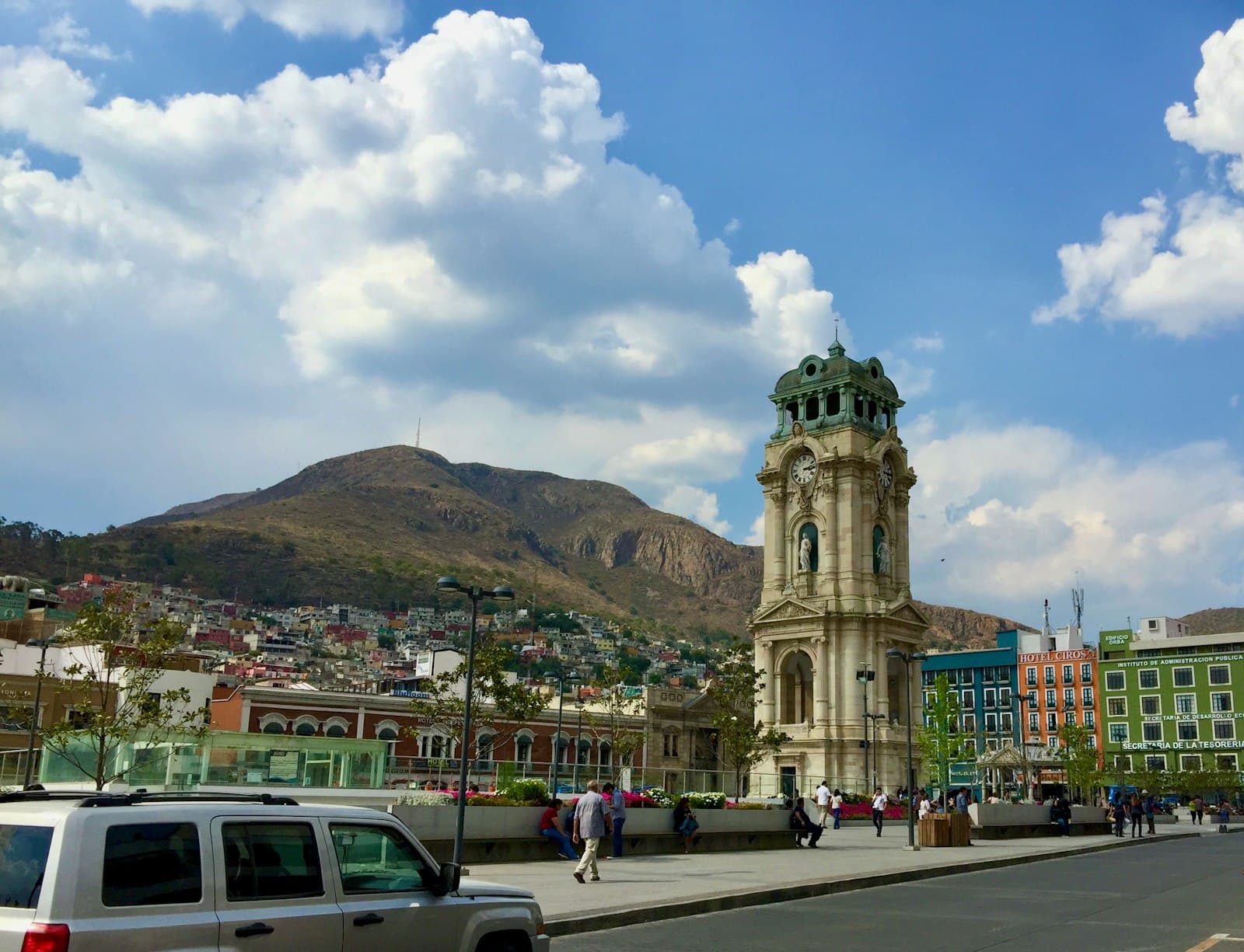
Pachuca de Soto, often simply called Pachuca, serves as the capital of the Mexican state of Hidalgo. Situated about 90 kilometers (56 miles) north of Mexico City, this city rests at an elevation of nearly 8,000 feet above sea level, granting it a cool climate and its famous nickname, "La Bella Airosa" (The Windy Beauty), due to the strong winds that sweep through its canyons. Once a pivotal silver mining hub, Pachuca's landscape and culture are deeply intertwined with its geological past and an unexpected European influence.
The city offers a singular blend of Mexican heritage and Cornish traditions, a legacy of the 19th-century miners who emigrated from Cornwall, England. This cultural fusion is evident in its architecture, cuisine, and even the origins of Mexico's most cherished sport, soccer. From its iconic clock tower, reminiscent of London's Big Ben, to expressive murals and a compelling mining museum, Pachuca invites visitors to uncover layers of history and discover an identity unlike anywhere else in Mexico.
The history of Pachuca extends into antiquity, with evidence of human habitation in the Sierra de Pachuca dating as far back as 12,000 BCE, marked by primitive obsidian mines and stone tools. The region was later influenced by the Teotihuacan civilization between 200 and 850 AD, followed by the Chichimecas, who called the area Njunthé. The Aztecs eventually conquered the region around 1438, establishing control over a settlement they called Pachoacan.
The Spanish arrived in 1528, and by 1534, Pachuca was one of the first settlements in New Spain. The discovery of abundant silver deposits in the mid-16th century by Alonso Rodríguez de Salgado transformed the area's economy from agriculture to mining, leading to a rapid population increase. Bartolomé de Medina further revolutionized silver extraction in the 16th century by perfecting the 'patio process' in Pachuca.
The Mexican War of Independence in the early 19th century left the mining industry in disarray. To revitalize it, British investors brought in Cornish miners and advanced technology around 1824. These miners and their families, numbering around 3,500 by 1827, left an indelible mark on Pachuca and the nearby town of Real del Monte, introducing traditions that are still visible today. They brought with them their distinct architecture, their love for soccer (which many believe originated in Pachuca), and their beloved 'pasties,' which evolved into the local 'pastes.'
Mining remained central to Pachuca's economy until the mid-20th century, when a downturn prompted a shift towards industry and the revitalization of the Universidad Autónoma de Hidalgo. Today, while mining is a smaller fraction of the economy, the city has embraced its singular heritage. Modern attractions like the International Soccer Hall of Fame and the expansive Macromural de Pachuca reflect a dynamic city that honors its past while looking to the future.
Begin your exploration at the Reloj Monumental de Pachuca, the city's iconic clock tower in Independence Square, a neoclassical marvel commemorating Mexican independence with chimes that echo London's Big Ben. Nearby, admire Casa Rule, the former home and business headquarters of a prominent Cornish miner.
Delve into Pachuca's mining legacy at the Museo de Minería (Mining Museum), housed in an ornate 19th-century building. For a deeper understanding of the Cornish influence, visit the Panteón Inglés (English Cemetery) in nearby Real del Monte. Sports enthusiasts will find the International Soccer Hall of Fame compelling, an eye-catching structure designed like a giant soccer ball, celebrating the sport's origins in Pachuca.
Experience the city's art scene with the Macromural de Pachuca (Macromural de Palmitas), a massive community mural transforming a hillside neighborhood into a colorful canvas. For a spiritual and artistic experience, visit La Parroquia de la Asunción de María, Hidalgo's oldest church, to see its intriguing 'Mural de los Angeles.' Remember to sample the local 'pastes,' a delicious legacy of the Cornish miners.
The best time to visit Pachuca is during the dry season, from November to April, when the weather is pleasant and local festivals often occur. For warm-weather activities, early April to early June offers ideal conditions. While summers (June to September) bring tropical rains, these are typically brief showers, offering a refreshing break. Pachuca's high altitude keeps it relatively cool year-round, but expect strong winds, especially in the mornings and evenings, earning it the nickname "La Bella Airosa."
Pachuca is about a 1.5 to 2-hour drive or bus ride from Mexico City. If flying into Mexico City International Airport (MEX), shuttle buses to Pachuca are available and take 1 to 2 hours. Once in Pachuca, taxis and local 'combi' buses are plentiful and affordable for getting around the city. Ride-share apps like Uber do not operate in Pachuca or Real del Monte. The local currency is the Mexican Peso (MXN). While credit cards are accepted in many places, it's wise to carry some cash. Pachuca sits at a high altitude (around 8,000 feet), so be prepared for cooler temperatures and potential wind.
Pachuca in Korean, in Chinese or in Hebrew — and 29 more languages, every stop narrated by a native voice. The widest language range of any self-guided audio tour.
Available in: