Museo di Arte Contemporanea Sotto Sale (MACSS)
En las profundidades de Petralia Soprana, aguarda un mundo esculpido por la naturaleza y el ingenio humano.
La historia completa se desbloquea en el tour
 Azotoliquido / CC BY-SA 3.0, via Wikimedia Commons
Tour de audio autoguiado de Petralia Soprana — ruta GPS a pie, reproducción offline, narración en 32 idiomas.
“Donde las piedras milenarias cuentan sus historias y las vistas se extienden hasta la cima del Etna.”
No las postales. Las historias que ni los locales conocen — al oído, justo donde ocurrieron.
En las profundidades de Petralia Soprana, aguarda un mundo esculpido por la naturaleza y el ingenio humano.
Examine de cerca la entrada de la iglesia principal; podría observar un aspecto inusual de su construcción.
Entre las típicas casas adosadas, una perteneció a un pintor local con una notable experiencia en tiempos de guerra.
Descubre todos los secretos de Petralia Soprana
Cada dirección, cada revelación al completo — a tu oído, justo donde ocurrió.
Eliges tus paradas. Caminas. La voz te revela lo que los demás ignoran.
Tu tour de audioguía por Petralia Soprana te espera — elige tus lugares, tu idioma y empieza al llegar.
ComprarLume incluye una guía de realidad aumentada. Levanta el móvil y su cámara muestra la calle que tienes delante, con una flecha luminosa sobre la imagen real que siempre apunta a tu próxima parada — sin mapas que descifrar, sin giros equivocados. Como todo en Lume, funciona completamente sin conexión.
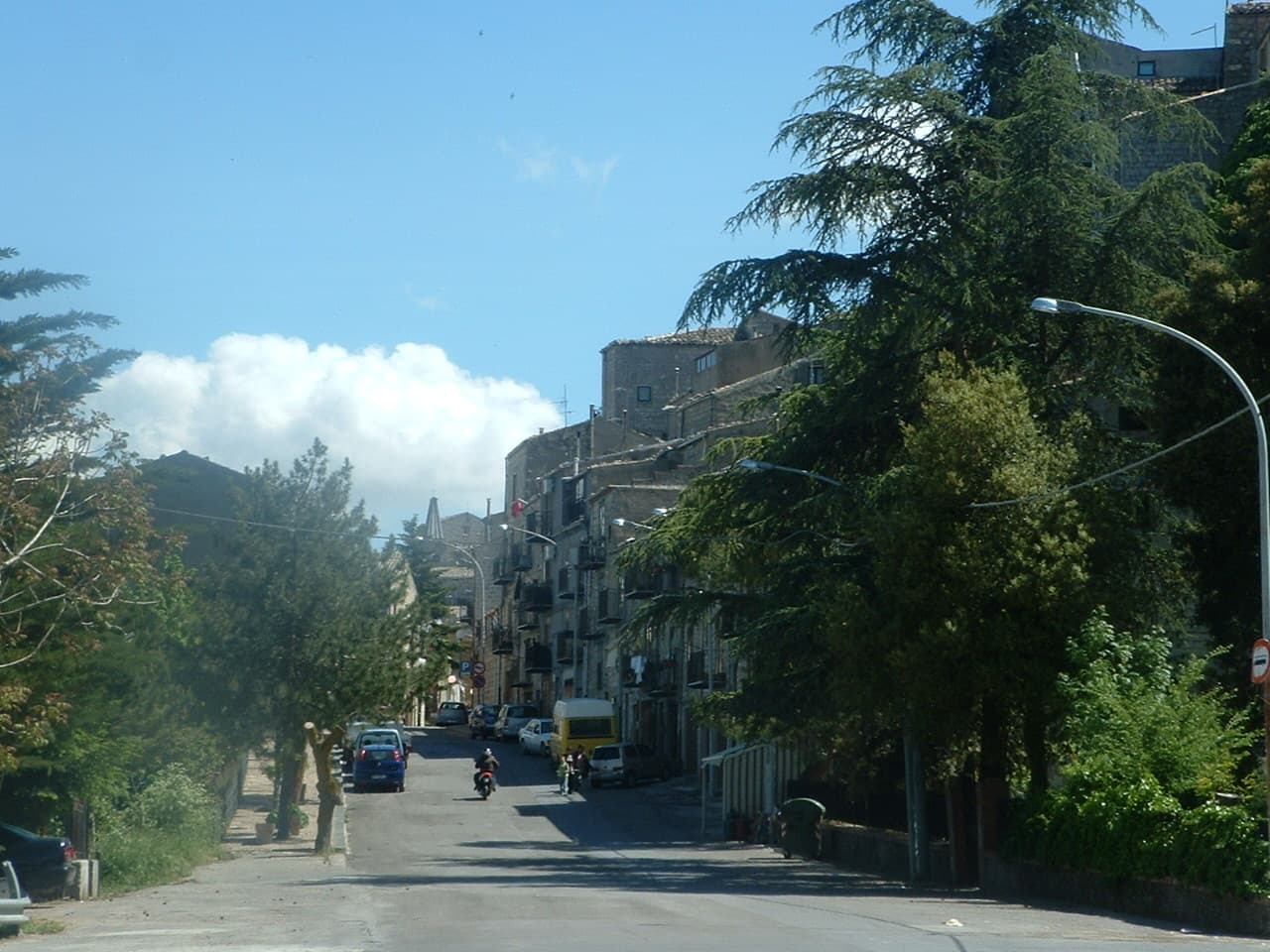
Situado en lo alto de las montañas Madonie, en el centro de Sicilia, Petralia Soprana es un pueblo que se siente suspendido entre una historia perdurable y el cielo abierto y expansivo. Reconocido como uno de "I borghi più belli d'Italia" (Los pueblos más bellos de Italia) y galardonado con el "Borgo dei Borghi" en 2018, ofrece un auténtico viaje al corazón de Sicilia. Sus casas de piedra color miel, sus intrincadas callejuelas y sus balcones cubiertos de flores evocan un carácter casi alpino, mientras que sus miradores panorámicos se extienden a través de profundos valles hasta la grandiosa cima, a menudo nevada, del monte Etna.
Esta "montaña de autor", como a veces se la conoce, se erige como un testimonio vivo de siglos de diversas culturas que han dejado su huella duradera. Desde sus antiguos orígenes sicanos hasta sus transformaciones árabes y normandas, Petralia Soprana te invita a bajar el ritmo, saborear sus auténticos sabores y explorar una rica variedad de arte, tradición y una notable belleza natural dentro del Parque Natural Regional de las Madonie.
La historia de Petralia Soprana comienza con el pueblo sicano, quienes se cree que establecieron el antiguo asentamiento de Petra. Su posición estratégica en las montañas Madonie la convirtió en un lugar de considerable importancia, particularmente durante el dominio griego y cartaginés. Bajo los romanos, Petra floreció como una fuente vital de grano, suministrando grandes cantidades al Imperio Romano.
Con la conquista árabe, la ciudad fue renombrada Batraliah, un nombre derivado de las palabras árabes 'Batra' (piedra) y 'liah' (alta), reflejando su terreno elevado y pedregoso. Este período vio un avance económico significativo, impulsado por innovaciones agrícolas y un floreciente comercio. En 1063, después de un período de resistencia, el Conde Roger conquistó la ciudad, iniciando el dominio normando. Fueron los normandos quienes fortalecieron las murallas de la ciudad y construyeron un castillo, cuyos restos aún son visibles hoy. También renombraron la ciudad Petra Heliae, o 'piedra de Elías'.
Para el siglo XIII, el asentamiento original se había dividido en dos comunidades distintas: Petralia Soprana (superior) y Petralia Sottana (inferior), una distinción formalmente registrada en 1258. Petralia Soprana siguió siendo una ciudad feudal durante siglos, pasando por las manos de influyentes familias como los Ventimiglia, Cardona, Moncada y Álvarez-Ferrandina, hasta que la abolición del feudalismo anunció el amanecer de las estructuras sociales y políticas modernas. Hoy en día, el pueblo conserva notablemente su tejido urbano medieval, con calles estrechas y empedradas, iglesias históricas y palacios aristocráticos que insinúan su pasado legendario.
Comience su exploración en la Piazza Duomo, dominada por la Chiesa Madre dei Santi Pietro e Paolo. Esta iglesia gótico-catalana, con sus distintivos campanarios normando y del siglo XVIII, contiene un crucifijo de madera intrincadamente tallado por Frate Umile da Petralia y el órgano más grande de las Madonie de 1780. Cerca, el Oratorio delle Anime Purganti presenta un gran campanario, y la barroca Fontana dei Quattro Cannoli en Piazza dei Quattro Cannoli fue una vez la única fuente de agua del pueblo.
Ascienda a la Piazza Loreto, la parte más alta del pueblo y probablemente el sitio de antiguas fortificaciones. Aquí, encontrará la Chiesa di Santa Maria di Loreto con su fachada simétrica y chapiteles de mayólica. Desde el mirador de Loreto, también conocido como 'u castru', disfrute de vistas panorámicas que abarcan el Monte Etna, Enna, Caltanissetta y el valle del río Imera. Asegúrese de visitar la Chiesa del Santissimo Salvatore, única en las Madonie por su plano helenístico, que se cree construida sobre una antigua mezquita.
Para una experiencia verdaderamente distintiva, aventúrese a la aldea de Raffo para visitar el Museo di Arte Contemporanea Sotto Sale (MACSS), ubicado dentro de una mina de sal activa. Este museo subterráneo exhibe esculturas talladas directamente en sal gema, ofreciendo una fusión de arte y maravilla geológica. Observe el Palazzo Pottino Marchesi di Irosa, Palazzo Vigneri y Palazzo Sabatini-Salvia, ejemplos de la arquitectura aristocrática del pueblo. Los restos de un acueducto romano a las afueras del pueblo también dan testimonio de su antiguo pasado.
Petralia Soprana presenta encantos distintos durante todo el año. La primavera y el otoño ofrecen temperaturas ideales para hacer senderismo y explorar la belleza natural del Parque Natural Regional de las Madonie. El verano es animado con festivales tradicionales, como la Fiesta de los Santos Pedro y Pablo en junio y el Festival de la Sal en agosto, y la elevada altitud del pueblo proporciona temperaturas más frescas que las zonas costeras. Para actividades de clima cálido, se recomienda de mediados de julio a finales de agosto. El invierno trae paisajes cubiertos de nieve, ofreciendo un tipo diferente de belleza.
Petralia Soprana se explora mejor a pie, lo que le permite pasear por sus calles estrechas y empedradas y descubrir sus numerosos tesoros arquitectónicos y naturales. Aunque el pueblo es relativamente pequeño, se necesitan zapatos cómodos para caminar por su terreno montañoso. El transporte público dentro de la región de las Madonie puede ser limitado, por lo que alquilar un coche ofrece la mayor flexibilidad para explorar el parque natural circundante y los pueblos vecinos. El Museo di Arte Contemporanea Sotto Sale tiene horarios de apertura específicos, generalmente los sábados y principalmente durante los meses de verano, y las reservas son esenciales. Es aconsejable consultar su sitio web o contactarlos con antelación para conocer los horarios actuales y reservar su visita. La cocina local presenta platos tradicionales sicilianos, a menudo utilizando ingredientes de las montañas Madonie, incluidos quesos locales como la 'tuma'.
Petralia Soprana en coreano, en chino o en hebreo — y 29 idiomas más, cada parada narrada por una voz nativa. La mayor variedad de idiomas de cualquier audioguía autoguiada.
Disponible en: