Plan di Malgustà, Mount Raut
Deep in the Val Colvera, a secluded plateau on Mount Raut was once the alleged meeting place for a different kind of gathering.
Full story unlocks in the tour
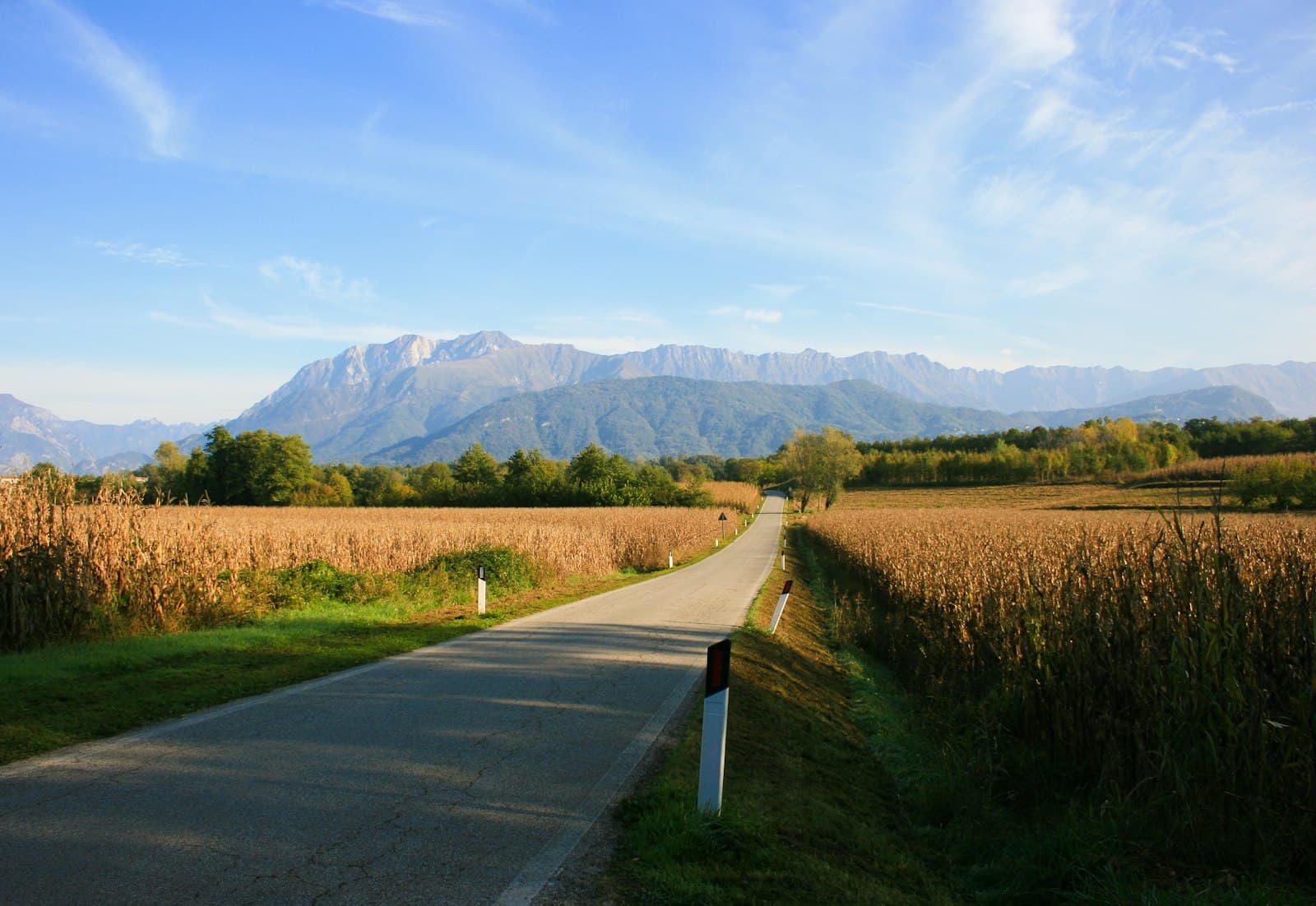 Photo: Tommaso Urli / Unsplash
Self-guided audio walking tour of Poffabro — GPS route, offline playback, story-driven narration in 32 languages.
“Where stone murmurs ancient narratives and timbered balconies shelter mountain confidences.”
Not the postcards. The stories even locals don't know — whispered in your ear, right where they happened.
Deep in the Val Colvera, a secluded plateau on Mount Raut was once the alleged meeting place for a different kind of gathering.
The distinctive wooden balconies adorning Poffabro's stone houses served more than an aesthetic purpose.
The name 'Poffabro' is not merely a pleasant sound; it offers a clue about the village's medieval origins.
Discover every secret of Poffabro
Every address, every reveal in full — in your ear, right where it happened.
You pick your stops. You walk. The voice reveals what the others miss.

Your self-guided audio tour of Poffabro is ready — pick your landmarks, choose your language, and start the moment you arrive.
BuyLume has a built-in augmented-reality guide. Hold your phone up and its camera shows the street ahead of you, with a glowing arrow laid over the real view that always points to your next stop — no map to puzzle over, no wrong turns. Like everything in Lume, it works fully offline.
Poffabro, a captivating village in Italy's Friuli-Venezia Giulia region, stands as a living testament to the harmonious coexistence between human ingenuity and rugged nature. Recognized as one of Italy's 'most beautiful villages,' it rests peacefully in the Val Colvera, at the foothills of the Friulian Dolomites. The village is a remarkable open-air museum, where every stone and timber recounts a story of centuries past.
Its distinctive architecture, characterized by rough-cut stone houses with deep wooden balconies and narrow, winding pathways, evokes a timeless charm. These buildings, often three or four stories high, are gathered closely, creating intimate courtyards and offering glimpses into a bygone era. Poffabro's allure is particularly pronounced in winter, when its quiet pathways and traditional structures take on a fairytale-like quality, seemingly encased in a snow globe.
The Val Colvera, the verdant valley embracing Poffabro, carries a history of human activity stretching back to Roman times. An ancient Roman road, vital for connecting the military colony of Julia Concordia with the northern Alps, once traversed the valley at the base of Monte Ràut. While traces of these early settlements exist, the first concrete evidence of Poffabro itself emerges from the archives of the Bishop of Concordia, where the parish of Poffabro was cataloged as early as the 11th century.
The village's very name offers a glimpse into its medieval past. Documents from 1339 and 1357 refer to it as 'Prafabrorum' or 'Pratum Fabri,' Latin for 'blacksmiths' meadow.' This suggests that a blacksmith's workshop, akin to those in the renowned 'city of knives' Maniago, once operated on the slopes of Mount Raut. During the late Middle Ages and early modern period, the villages and hamlets of the Val Colvera began to develop their characteristic architectural style: stone and wood houses arranged in long rows or around enclosed courtyards, accessed through arched entrances.
The 17th century brought a dramatic, albeit ultimately inconclusive, chapter to Poffabro's history. Between 1648 and 1650, the Holy Inquisition from Venice launched an investigation into alleged witchcraft in the valley. A young resident, Mattia di Bernardone, claimed his grandmother transported him on a flying goat to the Plan di Malgustà on Mount Raut, where witches from Poffabro and Frisanco supposedly held demonic sabbaths. The ensuing 'witch hunt,' involving numerous depositions, eventually faded when the Venetian authorities shifted their focus to a larger case in Pordenone.
Despite such dramatic interludes, life in Val Colvera largely continued in the manner of a mountain community. The region experienced a period of population growth in the early 18th century, with Poffabro and its 'comunello' of Casasola reaching a thousand inhabitants. However, the opening of the 'Bus di Colvera' road in 1888, while facilitating trade, also ushered in a period of significant emigration to Europe and the Americas, leading to a partial abandonment of the villages. Today, Poffabro's enduring appeal and well-preserved architecture have earned it a place among Italy's most beautiful villages, a testament to its profound history and resilient spirit.
Poffabro invites exploration on foot, as its narrow, stone-paved pathways are often impassable by car, preserving its tranquil, timeless atmosphere. The Centro Storico di Poffabro is the main attraction, a captivating maze of stone houses with wooden balconies, arcaded courtyards, and charming details like carved pillars and stone arches.
At the heart of the village lies the Piazza Principale, a small social hub edged with traditional houses and stone archways, offering benches to sit and admire the mountain backdrop. Dominating the square is the Chiesa Parrocchiale di San Nicolò Vescovo, a 17th-century church with a simple exterior that belies an elegant interior featuring wooden altars, paintings, and intricate local craftsmanship. Throughout the village, Scorci Panoramici (panoramic views) emerge unexpectedly, revealing striking contrasts between the rustic architecture and the expansive vistas of the Friulian Dolomites and surrounding forested hills. Keep an eye out for craft and artisan workshops, where local woodworking, weaving, and traditional crafts are showcased, often with artisans demonstrating their techniques.
Poffabro offers distinct charms throughout the year. Spring and summer are ideal for exploring the mountain setting and hiking trails, with flowers spilling from balconies in warmer months. Autumn provides beautiful scenery with colorful foliage. However, Poffabro is particularly renowned for its 'Poffabro, presepe fra i presepi' event, which runs from mid-December to mid-January. During this time, the entire village transforms into a magical display of hundreds of nativity scenes, making it a truly enchanting winter destination.
Poffabro is a small village, part of the municipality of Frisanco, with a population of about 180 residents in the village itself. It sits at an elevation of 510 meters above sea level. A half-day visit is generally sufficient to explore the historic center and enjoy the mountain views. If you plan to hike or attend seasonal events, a full day is recommended.
Reaching Poffabro is best done by car, approximately 45 minutes from Pordenone via the SS464 and local mountain roads. The nearest train station is Maniago, about 20 minutes away by car, with regional services connecting to Udine and Venice. While a small tourist information office exists, and some locals may speak English, it is always helpful to have some basic Italian phrases. There are a few local artisans selling wood crafts and traditional velvet slippers. You can also sample local specialties like Frico (fried cheese) and cured meats at the village restaurant.
Poffabro in Korean, in Chinese or in Hebrew — and 29 more languages, every stop narrated by a native voice. The widest language range of any self-guided audio tour.
Available in: