Wok's Tower
Prudnik's oldest monument isn't just a tower; it's a defiant survivor with a unique legal loophole in its past.
Full story unlocks in the tour
 Wlodek k1 / CC BY-SA 3.0, via Wikimedia Commons
Self-guided audio walking tour of Prudnik — GPS route, offline playback, story-driven narration in 32 languages.
“Where medieval echoes meet industrial whispers in the Opawskie Mountains.”
Not the postcards. The stories even locals don't know — whispered in your ear, right where they happened.
Prudnik's oldest monument isn't just a tower; it's a defiant survivor with a unique legal loophole in its past.
The heart of Prudnik has been rebuilt more times than one might imagine, each reconstruction erasing scars of conflict.
This industrial site holds a somber secret from World War II, a grim chapter often overlooked.
Discover every secret of Prudnik
Every address, every reveal in full — in your ear, right where it happened.
You pick your stops. You walk. The voice reveals what the others miss.

Your self-guided audio tour of Prudnik is ready — pick your landmarks, choose your language, and start the moment you arrive.
BuyLume has a built-in augmented-reality guide. Hold your phone up and its camera shows the street ahead of you, with a glowing arrow laid over the real view that always points to your next stop — no map to puzzle over, no wrong turns. Like everything in Lume, it works fully offline.
Prudnik, a town in southern Poland's Opole Voivodeship, finds its place at the confluence of the Prudnik and Złoty Potok rivers, situated between the Opawskie Mountains and the Prudnik Depression. With roots reaching back to the 13th century, Prudnik has experienced a complex sequence of Polish, Bohemian, Habsburg, Prussian, and German influences, each leaving an indelible mark on its character. It is a place where medieval fortifications stand alongside reminders of a once-thriving industrial past, now embracing a slower pace of life as a member of the Cittaslow International network.
Historically recognized for its textile and shoe-making traditions, Prudnik was once home to one of Europe's largest towel manufacturers. Today, it offers a compelling blend of historical exploration and natural beauty, serving as a gateway to the Opawskie Mountains and a center for the Euroregion Praděd, fostering cross-border cooperation with the Czech Republic. From its ancient tower to its inviting market square, Prudnik invites visitors to uncover layers of history and experience a unique Silesian charm.
## From Bohemian Stronghold to Industrial Hub Prudnik's story begins in the mid-13th century, founded between 1255 and 1259 by the Czech knight Vok of Rosenberg, who established the Wogendrüssel castle. This strategic stronghold, controlling a vital trade route between Wrocław and Vienna, quickly became the northernmost outpost of the Kingdom of Bohemia. In 1279, Vok's son, Henry I of Rosenberg, granted Prudnik Magdeburg rights, solidifying its status as a town.
Throughout the Middle Ages, Prudnik's allegiance shifted. It became part of the Duchy of Opole in Upper Silesia in 1337, remaining under Polish Piast rule until 1532, when it was incorporated into the Austrian-ruled Bohemian Crown. The town faced significant challenges, including a devastating plague in 1373 that led to a remarkable act of collective rebuilding, and destruction during the Hussite wars in 1428. Despite these setbacks, Prudnik flourished as a royal city under the Polish-Lithuanian House of Vasa in the 17th century, becoming a major center for linen production, exporting goods to the Netherlands, and hosting the Silesian Sejms.
## Prussian Rule and Industrial Growth In 1742, Prudnik became part of Prussia, a consequence of the Silesian Wars. This period marked a significant transformation, as Prudnik evolved into a major center for cloth and shoe manufacturing, with the first textile factories appearing in the 1820s. The town's Jewish community played a crucial role in this industrial expansion, with figures like Samuel Fränkel establishing textile factories that gained European renown.
## World Wars and Modern Poland The 20th century brought immense upheaval. Prudnik remained part of Germany after Poland regained independence in 1918, and Adolf Hitler even visited in 1938. During World War II, the town endured the horrors of forced labor camps, including a subcamp of Auschwitz, and was a site for 'death marches' of prisoners. The Red Army captured Prudnik in March 1945, and after the war, the town was reincorporated into Poland, its German inhabitants largely displaced. In the post-war era, Prudnik continued its industrial legacy, notably with the Frotex company, a major towel manufacturer, and witnessed acts of resistance against the communist regime, such as the 1980 Frotex strike. Today, Prudnik is a town that cherishes its layered past while looking towards a future focused on quality of life, as evidenced by its membership in the Cittaslow International organization.
Begin your exploration at the Market Square (Rynek), the town's historical heart, featuring the 18th-century Town Hall, a Baroque fountain, and the Marian column. A short walk will lead you to Wok's Tower (Wieża Woka), the sole surviving remnant of the 13th-century castle and Prudnik's oldest monument, offering expansive views from its 41-meter height. Nearby, you'll find the Museum of Prudnik Region (Muzeum Ziemi Prudnickiej), housed in the Arsenal, which delves into the town's history, archaeology, local crafts, and even features an exhibition dedicated to cyclist Stanisław Szozda.
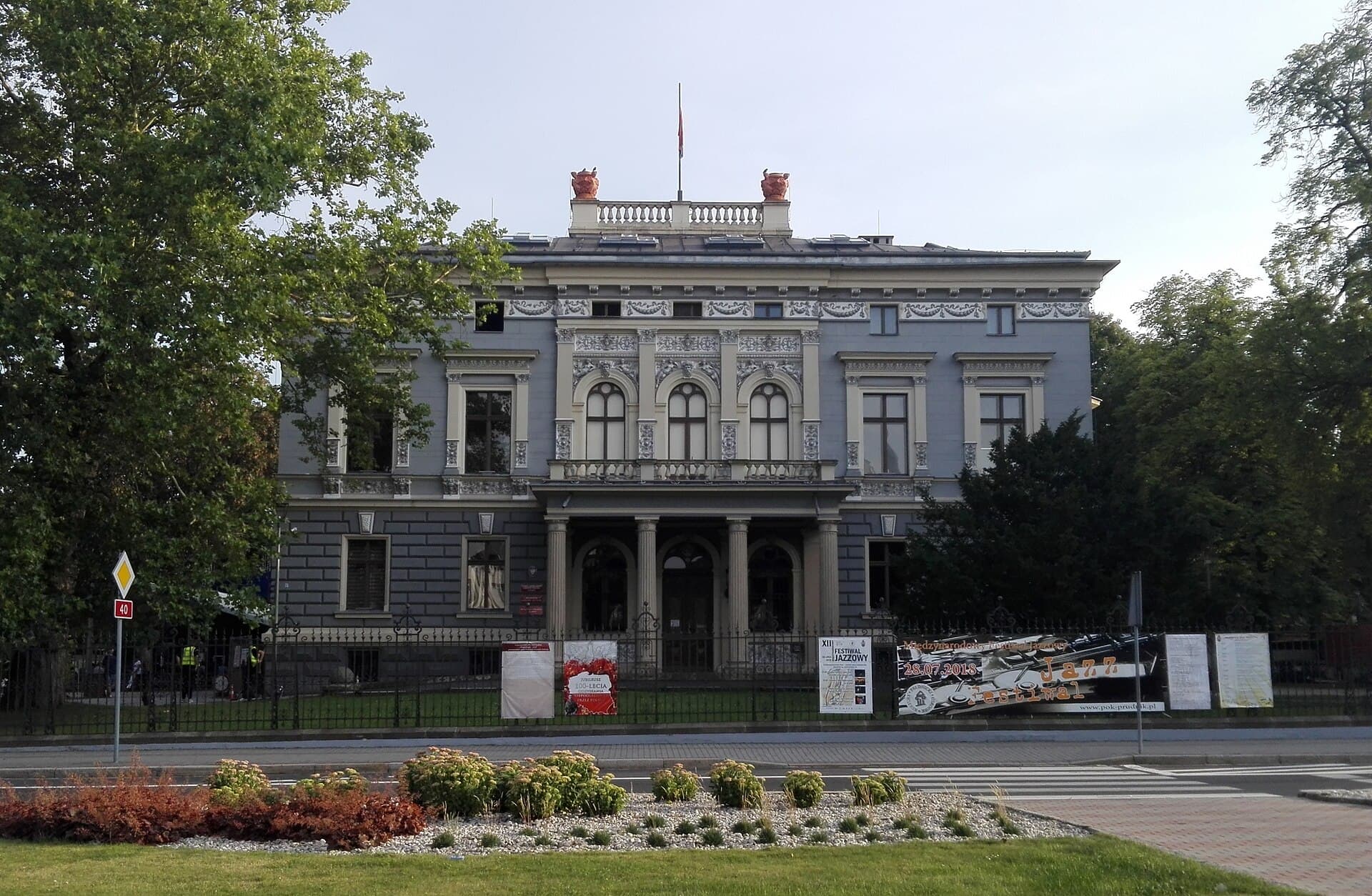
Wander through the Town Park (Park Miejski), established in 1880, where you can find a decorative arbor and a replica of the Diana of Versailles statue. Architectural highlights include the Baroque St. Michael the Archangel Church, dating back to 1612, and the Saints Peter and Paul Church. Do not overlook Fränkel's Villa, an exquisite example of a Jewish industrialist's home. For a deeper historical reflection, visit the Jewish Cemetery on Kolejowa Street, which contains historical gravestones and a memorial to Auschwitz prisoners. Just outside the center, the Sanctuary of St. Joseph (Sanktuarium św. Józefa), located in the Franciscan monastery, holds significance as the former place of imprisonment for Cardinal Stefan Wyszyński. The Lower Gate (Brama Dolna), a Gothic tower from 1481, is another surviving piece of the medieval town walls.
The most agreeable time to visit Prudnik for pleasant weather and outdoor activities is from late June to late August, when temperatures are comfortable, averaging around 74°F (23°C) in July. These summer months also offer the clearest skies. If you prefer fewer crowds and milder temperatures, late spring (May-June) and early autumn (September-October) are also excellent choices, often referred to as the 'Golden Polish Autumn' for its scenic beauty. While winters are cold and snowy, December offers a festive atmosphere with Christmas markets.
Prudnik is located in the Opole Voivodeship, near the Czech border. The nearest international airports are in Katowice and Wrocław. You can reach Prudnik by train via the 137 Katowice-Legnica railway line, with connections from Kędzierzyn-Koźle taking approximately an hour. The town is also easily accessible by car from nearby cities like Opole, Kędzierzyn-Koźle, Głuchołazy, and Nysa. Prudnik is a member of Cittaslow International, promoting a slower pace of life and local traditions. The official currency is the Polish Złoty (PLN). Many shops and restaurants accept card payments, but it is advisable to carry some cash for smaller establishments. Public transportation within the town is available, and exploring the compact center on foot is highly recommended. For tourist information, a 4-star tourist information center is located within the modern School Youth Hostel.
Prudnik in Korean, in Chinese or in Hebrew — and 29 more languages, every stop narrated by a native voice. The widest language range of any self-guided audio tour.
Available in: