The Old Whaler's Church
This distinguished Sag Harbor landmark, with its distinct Egyptian Revival architecture, conceals a history beyond its grand facade.
Full story unlocks in the tour
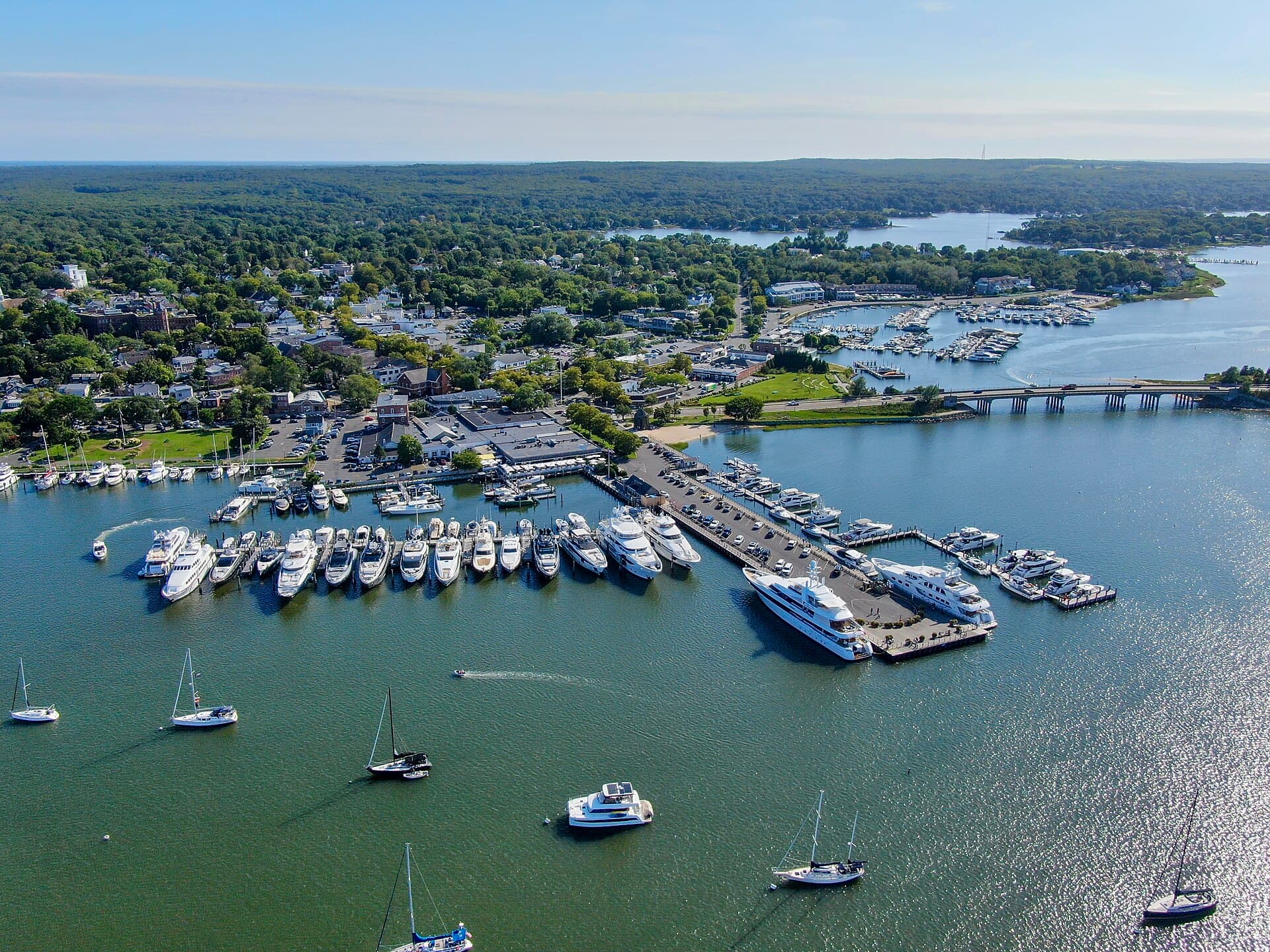 Hayden Soloviev / CC BY 4.0, via Wikimedia Commons
Self-guided audio walking tour of Sag Harbor — GPS route, offline playback, story-driven narration in 32 languages.
“Where the echoes of whaling ships meet the quiet hum of literary life, a village with stories etched into every corner.”
Not the postcards. The stories even locals don't know — whispered in your ear, right where they happened.
This distinguished Sag Harbor landmark, with its distinct Egyptian Revival architecture, conceals a history beyond its grand facade.
Sag Harbor's curving main thoroughfare is more than a pleasing design; it speaks to the village's marshy beginnings.
This venerable church in the Eastville neighborhood played a vital, concealed role in American history.
Discover every secret of Sag Harbor
Every address, every reveal in full — in your ear, right where it happened.
You pick your stops. You walk. The voice reveals what the others miss.

Your self-guided audio tour of Sag Harbor is ready — pick your landmarks, choose your language, and start the moment you arrive.
BuyLume has a built-in augmented-reality guide. Hold your phone up and its camera shows the street ahead of you, with a glowing arrow laid over the real view that always points to your next stop — no map to puzzle over, no wrong turns. Like everything in Lume, it works fully offline.
Sag Harbor, an incorporated village on eastern Long Island, New York, gracefully crosses the boundaries of Southampton and East Hampton. This evocative village, home to 2,772 residents as of the 2020 census, grew from a working port on Gardiners Bay. Its entire business district is recognized as the historic Sag Harbor Village District on the National Register of Historic Places.
Beyond its waterfront, Sag Harbor is a place where layers of human experience are visibly present, from its genesis as a busy whaling port to its later evolution into a summer retreat for the prosperous. The village offers a singular blend of maritime heritage, artistic community, and a relaxed atmosphere, often considered the 'Un-Hamptons' for its absence of sprawling estates and a more authentic, lived-in character.
## From Algonquin Roots to a Global Port Sag Harbor's narrative commences with the Algonquin people, who originally named the area 'Weg-wag-onuch,' signifying 'the land or place at the end of the hill.' The designation 'Sag Harbor' itself is thought to derive from 'sagabon,' the Algonquian term for a tuber cultivated by the local Pequot people, which was among the first crops dispatched to England by early colonists. English settlers arrived between 1707 and 1730, drawn by the natural, deep-water harbor.
By the mid-18th century, Sag Harbor's advantageous location made it a flourishing port. It swiftly became a significant international nexus and whaling center, even surpassing New York City in the tonnage of square-rigged vessels engaged in commerce by 1789. On July 31, 1789, Sag Harbor was declared the first official port of entry to the United States, preceding New York City by a day, and housed Long Island's first custom house. This era brought a varied population of mariners, craftspeople, and merchants, contributing to a multicultural community that included African Americans, Creoles, and Shinnecock Indians.
## Revolutionary War and the Golden Age of Whaling During the American Revolutionary War, Sag Harbor was occupied by British forces for seven years. It was the location of Meigs' Raid in 1777, where American forces attacked a British stronghold. After the conflict, the village re-established itself, and the period from 1816 to 1847 is often referred to as the 'Golden Age of Whaling.' Sag Harbor grew into one of the country's largest whaling ports, comparable to Nantucket and New Bedford. Whaling was a profitable but perilous enterprise, with ships undertaking voyages lasting years to gather whale oil, primarily utilized for illumination. The industry's peak year was 1847, with 32 arrivals bringing in substantial quantities of sperm and right whale oil and whale bone.
## Decline of Whaling and a New Identity As whaling receded in the mid-19th century, Sag Harbor underwent a transformation. The Long Island Rail Road's arrival in 1870 brought visitors and summer residents, reshaping the village into a favored destination. Sag Harbor also developed a strong connection to literature, attracting distinguished writers such as James Fenimore Cooper, John Steinbeck, Joseph Heller, E.L. Doctorow, Kurt Vonnegut, and Colson Whitehead. Today, the village continues to evolve, safeguarding its historic architecture while embracing its role as a cultural and artistic center on Long Island.
Begin your exploration at the Sag Harbor Whaling & Historical Museum, situated within a grand Greek Revival mansion constructed in 1845 by a successful whaler. It displays the largest collection of whaling equipment in New York State, including harpoons, try pots, and scrimshaw. Close by, the Custom House, Long Island's first, offers a window into early American mercantile life. A brief walk will lead you to the Old Whaler's Church, an impressive Egyptian Revival edifice dating from 1844.
Walk along Long Wharf, which has welcomed merchant ships for centuries and remains a cherished spot for fishing and watching the sun set. For those with an interest in literature, visit the former residence of Nobel and Pulitzer Prize-winning author John Steinbeck, where he composed The Winter of Our Discontent. The Annie Cooper Boyd House, home to the Sag Harbor Historical Society, presents a rich collection of artifacts. Nature enthusiasts can explore Mashashimuet Park or the nearby Elizabeth Alexandra Morton National Wildlife Refuge for walking and observing wildlife. Consider visiting the Cedar Point Lighthouse for a scenic outlook and a pleasant autumn walk.
The ideal time to experience Sag Harbor for warm-weather activities extends from mid-June to late September. June offers extended daylight, agreeable temperatures (mid-60s to mid-70s°F), and manageable crowds. September and October are also excellent, with fewer visitors, comfortable temperatures, and brilliant autumn foliage. While July and August are peak season with lively energy, they also bring increased prices and larger crowds, so reserving accommodations in advance is crucial.
Sag Harbor is approximately 100 miles from New York City, a journey that typically takes around 2 hours and 15 minutes by car, though traffic can be dense during peak season. There is no LIRR station directly in Sag Harbor; the nearest is in Bridgehampton, about 5 miles distant. During summer weekends, arriving early is advisable for parking and to secure a place on popular beaches like Long Beach. Making dinner reservations one to two weeks in advance is recommended during peak season. Layered clothing is a sensible choice, as harbor evenings can be cool. The village presents various dining options, from upscale Italian at Tutto il Giorno to casual American at Babe's and waterfront dining at The Beacon.
Sag Harbor in Korean, in Chinese or in Hebrew — and 29 more languages, every stop narrated by a native voice. The widest language range of any self-guided audio tour.
Available in: