Le Festival International de Géographie
Chaque automne, Saint-Dié-des-Vosges accueille un festival qui attire des géographes du monde entier.
L'histoire complète se débloque dans le tour
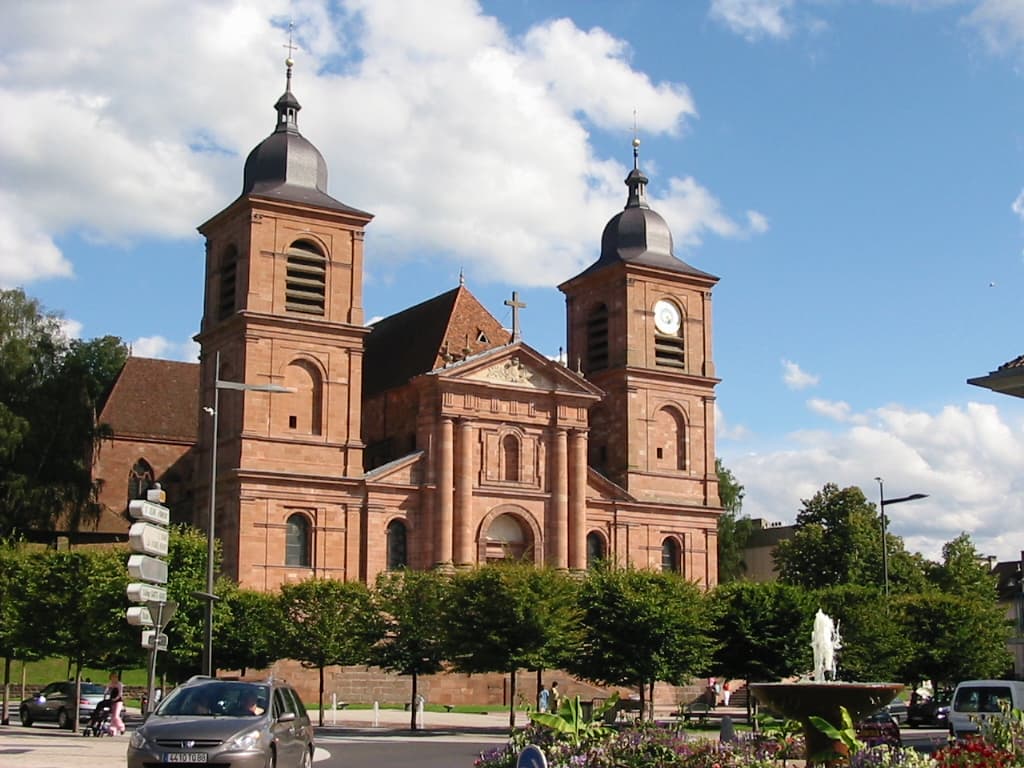 Christian Amet / CC BY 2.5, via Wikimedia Commons
Visite audio autoguidée de Saint-Dié-des-Vosges — parcours GPS à pied, lecture hors ligne, narration en 32 langues.
“Là où l'Ancien Monde a nommé le Nouveau.”
Pas les cartes postales. Les histoires que même les habitants ignorent — soufflées à l'oreille, là où elles se sont passées.
Chaque automne, Saint-Dié-des-Vosges accueille un festival qui attire des géographes du monde entier.
Une tour moderne saisissante au centre-ville porte une histoire inattendue, ayant autrefois trôné dans un célèbre jardin parisien.
Ce musée local contient plus que de l'histoire et de l'art régional.
Découvrez tous les secrets de Saint-Dié-des-Vosges
Chaque adresse, chaque révélation en entier — dans ton oreille, là où elle s'est passée.
Tu choisis tes lieux. Tu marches. La voix te révèle ce que les autres ignorent.


Votre visite audioguidée de Saint-Dié-des-Vosges vous attend — choisissez vos lieux, votre langue, et lancez-vous dès votre arrivée.
AcheterLume intègre un guide en réalité augmentée. Levez votre téléphone : sa caméra montre la rue devant vous, avec une flèche lumineuse posée sur l'image réelle qui pointe toujours vers votre prochain arrêt — aucune carte à déchiffrer, aucun mauvais virage. Comme tout dans Lume, ça fonctionne entièrement hors-ligne.
Saint-Dié-des-Vosges, ville du nord-est de la France, est nichée au cœur du massif des Vosges, offrant un mélange de paysages naturels et d'architecture remarquable. Située dans la région Grand Est, elle occupe une position stratégique dans la vallée de la Meurthe, entourée de sommets boisés comme l'Ormont, le Kemberg et la Madeleine, composés du grès rouge caractéristique des Vosges.
Souvent surnommée la « Marraine de l'Amérique », Saint-Dié-des-Vosges occupe une place singulière dans l'histoire mondiale. C'est ici, en 1507, qu'un groupe d'érudits connu sous le nom de « Gymnase Vosgien » a créé la première carte du monde à nommer le continent nouvellement découvert « America », en hommage à Amerigo Vespucci. Cet héritage intellectuel, combiné à un esprit de résilience après d'importantes destructions de guerre, a façonné une ville qui embrasse à la fois son passé profond et une vision contemporaine.
Le centre-ville, désigné « Architecture Contemporaine Remarquable », présente une fascinante évolution architecturale. Les visiteurs peuvent explorer un mélange harmonieux de styles médiéval, Renaissance, classique et moderne, souvent unifiés par le grès rose local. Saint-Dié-des-Vosges invite à l'exploration, de son complexe cathédral historique à ses structures modernes et à la beauté naturelle environnante.
Les origines de Saint-Dié-des-Vosges remontent au VIIe siècle, lorsque Saint Déodat (ou Dié), un moine irlandais, y établit un monastère. Cette communauté monastique, initialement dédiée à Saint Maurice, évolua en chapitre de chanoines au Xe siècle. La ville se développa autour de cette fondation religieuse, adoptant finalement le nom de Saint-Dié.
Tout au long de la période médiévale, la ville connut son lot de défis, notamment des incendies en 1065, 1155 et 1554 qui détruisirent partiellement le monastère et la ville. Malgré ces revers, Saint-Dié développa une industrie de l'imprimerie au XVIe siècle, témoignant de sa vitalité intellectuelle.
Un moment charnière de l'histoire mondiale se déroula à Saint-Dié-des-Vosges en 1507. Un cercle d'érudits, connu sous le nom de Gymnase Vosgien, comprenant les cartographes Martin Waldseemüller et Mathias Ringmann, fut chargé de mettre à jour la géographie de Ptolémée. Après avoir étudié les récits des voyages d'Amerigo Vespucci vers les nouvelles terres, ces savants produisirent la Cosmographiae Introductio, un pamphlet géographique, et une grande carte du monde. Cette carte fut la première à nommer le continent nouvellement découvert « America », en l'honneur de Vespucci, valant à Saint-Dié-des-Vosges son surnom de « Marraine de l'Amérique ».
L'histoire de la ville continua d'être marquée par des conflits, notamment la Guerre de Trente Ans au XVIIe siècle. Au milieu du XVIIIe siècle, un incendie majeur nécessita une reconstruction extensive du centre-ville, un projet supervisé par le duc Stanislas de Lorraine. Le diocèse de Saint-Dié fut établi en 1777, l'ancienne collégiale étant élevée au rang de cathédrale.
Le XXe siècle apporta de nouvelles destructions pendant la Seconde Guerre mondiale, lorsque les forces allemandes dynamitèrent la cathédrale en 1944, réduisant une grande partie de la ville en cendres. Cependant, l'esprit résilient de Saint-Dié-des-Vosges conduisit à sa reconstruction, la cathédrale étant reconsacrée en 1974. Cette reconstruction d'après-guerre, en particulier du centre-ville, lui a valu la reconnaissance de site « Architecture Contemporaine Remarquable », mettant en valeur les designs innovants des années 1950.
Commencez votre exploration par le Complexe Cathédral, le site le plus visité de Saint-Dié-des-Vosges. Cet ensemble architectural comprend la Cathédrale, l'Église Notre-Dame-de-Galilée et un cloître gothique, tous construits en grès rose distinctif des Vosges. La Cathédrale, reconstruite après sa destruction en 1944, mêle les styles roman, gothique, classique et contemporain, avec des vitraux modernes dépeignant des thèmes de « Mort et Résurrection ».
Découvrez le patrimoine architectural unique de la ville avec une visite de l'usine Claude et Duval, le seul bâtiment industriel conçu par le célèbre architecte Le Corbusier. Ce site classé au patrimoine mondial de l'UNESCO est un témoignage de l'architecture moderne. Un autre monument moderne frappant est la Tour de la Liberté, une structure originale en acier, câbles et verre commémorant le bicentenaire de la Révolution française, abritant désormais un espace d'exposition.
Pour une immersion plus profonde dans l'histoire et l'art local, le Musée Pierre-Noël propose des collections archéologiques, de l'art contemporain et un aperçu de la vie dans les Hautes-Vosges. Les passionnés de trains apprécieront Trainland, un musée dédié à l'histoire des trains avec une impressionnante collection de modèles miniatures et de réseaux animés. Envisagez une promenade le long du Circuit Street Art pour découvrir des fresques murales et des abstractions colorées qui transforment les rues de la ville en une galerie à ciel ouvert. Pour les amateurs de plein air, les montagnes des Vosges environnantes offrent de nombreux sentiers de randonnée et de VTT.
La période idéale pour visiter Saint-Dié-des-Vosges dépend de vos activités préférées. Pour les activités par temps chaud comme la randonnée et l'exploration, de fin juin à début septembre offre des températures confortables, en moyenne entre 13°C et 24°C (56°F et 76°F), et un ciel plus dégagé. Le printemps (mars à mai) offre une expérience plus calme avec des fleurs écloses et un temps agréable, idéal pour la randonnée avant la haute saison touristique. L'automne (septembre à novembre) apporte des températures douces et un changement de feuillage, parfait pour les promenades panoramiques. Bien que les hivers soient froids avec de la neige, ils offrent des opportunités pour les sports d'hiver dans la région plus large des Vosges.
Saint-Dié-des-Vosges est accessible en voiture via la route nationale N59, la reliant à des villes comme Sélestat/Strasbourg et Lunéville/Nancy. Depuis Épinal, la route départementale D420 mène à la ville. La ville est également accessible en train, avec des correspondances vers les grands centres comme Paris (à environ 2h30). Une fois en ville, un réseau de bus urbains appelé « Sylvia » dessert la région.
Les options d'hébergement incluent des hôtels comme l'Ibis Saint-Dié-Des-Vosges et le Logis Hôtel & Restaurant des Lacs. Pour la restauration, les restaurants locaux offrent un éventail de choix. L'Office de Tourisme local, situé Place Jules Ferry, fournit des cartes, des informations et des visites guidées, notamment en juillet et août. De nombreuses attractions, y compris le Complexe Cathédral et la Tour de la Liberté, sont idéalement situées en centre-ville ou près de la gare, ce qui les rend faciles à explorer à pied.
Saint-Dié-des-Vosges en coréen, en chinois ou en hébreu — et dans 29 autres langues, chaque étape narrée par une voix native. La plus large gamme de langues de tous les audioguides autoguidés.
Disponible en :