El Fuerte de Samaipata
La plus grande roche sculptée du monde parle un langage secret.
L'histoire complète se débloque dans le tour
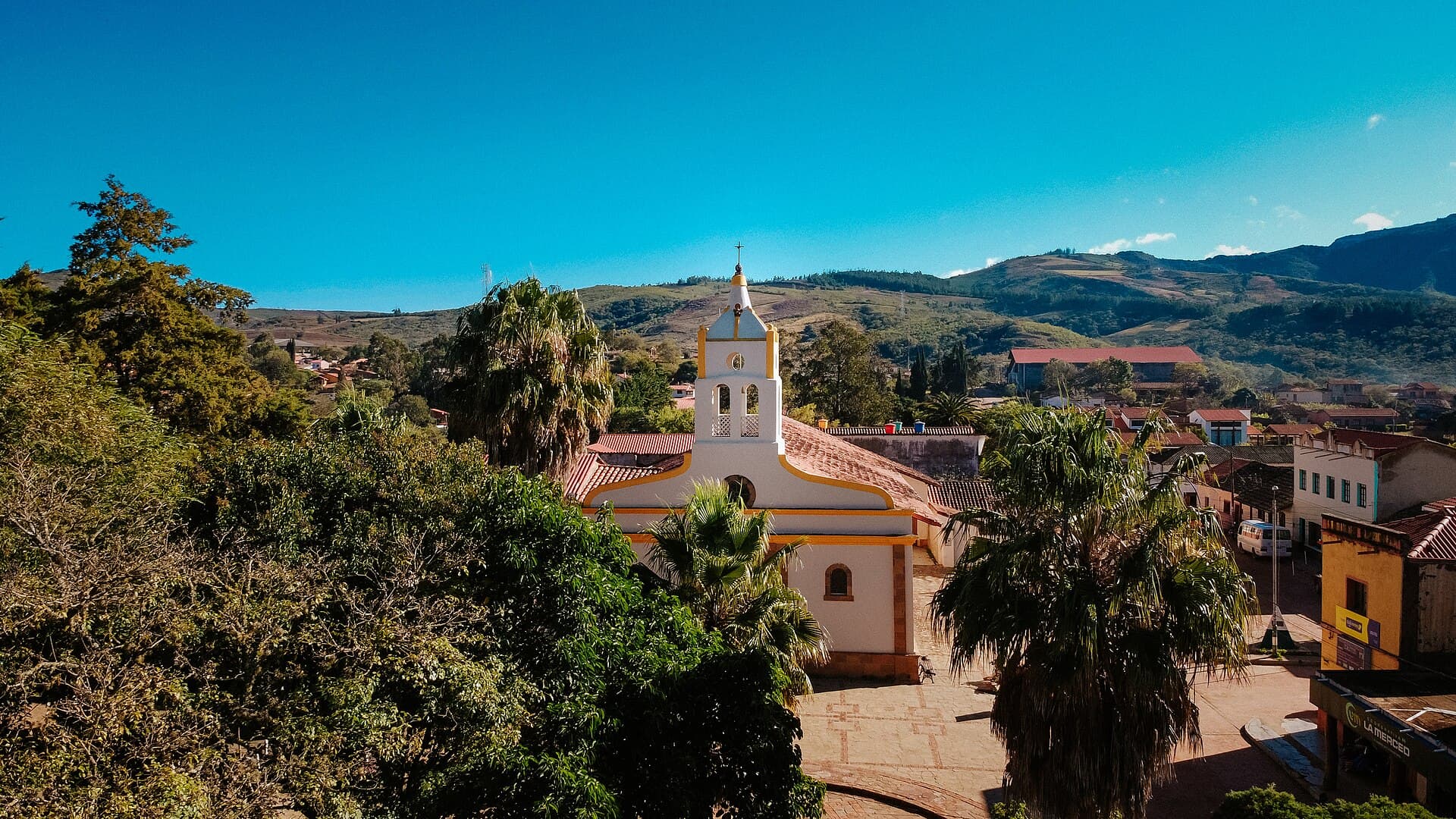 Gerardo Daniel Aguilar Hurtado / CC BY-SA 4.0, via Wikimedia Commons
Visite audio autoguidée de Samaipata — parcours GPS à pied, lecture hors ligne, narration en 32 langues.
“Là où les Andes rencontrent l'Amazonie, une douce révolution du repos se déploie.”
Pas les cartes postales. Les histoires que même les habitants ignorent — soufflées à l'oreille, là où elles se sont passées.
La plus grande roche sculptée du monde parle un langage secret.
Les samedis et dimanches matins, la place centrale offre bien plus que des produits frais.
Samaipata a joué un rôle inattendu dans la dernière campagne du Che Guevara.
Découvrez tous les secrets de Samaipata
Chaque adresse, chaque révélation en entier — dans ton oreille, là où elle s'est passée.
Tu choisis tes lieux. Tu marches. La voix te révèle ce que les autres ignorent.
Votre visite audioguidée de Samaipata vous attend — choisissez vos lieux, votre langue, et lancez-vous dès votre arrivée.
AcheterLume intègre un guide en réalité augmentée. Levez votre téléphone : sa caméra montre la rue devant vous, avec une flèche lumineuse posée sur l'image réelle qui pointe toujours vers votre prochain arrêt — aucune carte à déchiffrer, aucun mauvais virage. Comme tout dans Lume, ça fonctionne entièrement hors-ligne.
Samaipata, un nom qui se traduit du quechua par 'repos dans les hauteurs', est à la hauteur de sa désignation en tant que village serein situé dans les contreforts orientaux des Andes boliviennes. Situé à une altitude de 1 600 à 1 800 mètres, il offre un climat subtropical doux, un répit bienvenu par rapport aux basses terres plus chaudes de Santa Cruz. Cette petite ville, avec une population d'environ 5 000 habitants, présente un mélange singulier de culture bolivienne locale et d'une communauté établie de résidents allemands, néerlandais et autres internationaux, forgeant une atmosphère cosmopolite mais détendue.
Souvent décrite comme un endroit où les voyageurs arrivent avec l'intention de rester quelques jours mais se retrouvent à s'attarder plus longtemps, Samaipata est une porte d'entrée vers des paysages divers où les écosystèmes andins et amazoniens convergent. Des forêts de nuages et de fougères arborescentes aux cascades et aux vignobles, la région offre une variété d'attractions naturelles. Son rythme tranquille, ses rues piétonnes et sa scène culinaire en développement en font une étape enrichissante pour ceux qui recherchent une expérience plus calme en Bolivie.
L'histoire de Samaipata remonte à la Période Formative (2000 av. J.-C. – 400 ap. J.-C.), avec le peuple pré-inca Chané qui a établi la région comme un centre cérémoniel et administratif important. Les Chané, reconnus pour leurs pratiques agricoles, leurs céramiques et leurs motifs graphiques, furent les premiers sculpteurs de l'immense roche de grès d'El Fuerte, un site qui serait plus tard reconnu comme un site du patrimoine mondial de l'UNESCO. Leurs gravures zoomorphes et géométriques complexes sur cette roche servaient à des fins religieuses.
Vers la fin du XVe et le début du XVIe siècle, l'Empire Inca s'est étendu vers l'est dans les contreforts subtropicaux, incorporant la région de Samaipata. Les Incas ont établi un centre administratif, cérémoniel et religieux à Samaipata, qu'ils ont appelé « les hauteurs du repos ». Le site fonctionnait également comme une forteresse pour se protéger des invasions Guarani. Les Guarani, de féroces indigènes boliviens, ont finalement envahi la vallée, vainquant à la fois les Incas et les Chané et dominant la région jusque dans la période coloniale espagnole.
Pendant l'ère coloniale espagnole, une colonie a vu le jour à El Fuerte, présentant des styles architecturaux arabo-andalous. Cependant, les Espagnols ont ensuite abandonné ce site pour établir la ville actuelle de Samaipata dans une vallée voisine. Ce changement a marqué la genèse de la Samaipata moderne, une ville qui a depuis évolué en une intersection culturelle singulière.
El Fuerte de Samaipata, un site classé au patrimoine mondial de l'UNESCO, est l'attraction la plus importante de la région. Ce complexe archéologique présente la plus grande roche sculptée du monde, exposant des ruines pré-incas Chané, incas et espagnoles. Les visiteurs peuvent passer des heures à explorer les sculptures complexes et les vestiges d'anciennes civilisations.
Au-delà d'El Fuerte, Samaipata fonctionne comme l'entrée sud du Parc National Amboró, une étendue riche en biodiversité où les écosystèmes andins et amazoniens se rencontrent. Ici, vous pouvez faire de la randonnée à travers les forêts de nuages et découvrir la Forêt de Fougères Géantes, connue pour ses très hautes fougères arborescentes qui évoquent une atmosphère préhistorique. Les visites guidées sont fortement recommandées pour explorer Amboró.
Pour les amoureux de la nature, Las Cuevas offre trois cascades et des piscines naturelles parfaites pour une baignade rafraîchissante, bien que l'endroit puisse être très fréquenté le week-end. Les ornithologues peuvent chercher des condors des Andes dans les collines près de Samaipata, en particulier depuis le point de vue Mirador del Cóndor. Les vallées autour de Samaipata cultivent également des vignobles produisant des vins locaux et du singani, avec plusieurs caves proposant des dégustations.
Samaipata jouit d'un agréable climat subtropical grâce à son altitude, ce qui en fait une destination attrayante tout au long de l'année. Les températures varient généralement entre 10°C la nuit et 25°C le jour, bien que des vents forts puissent survenir pendant l'hiver austral (mai à août). Les mois les plus secs, d'avril à septembre, offrent un temps plus confortable pour les activités de plein air et sont considérés comme idéaux pour une visite. Les pluies sont plus fréquentes entre novembre et mars, ce qui peut rendre les sentiers boueux et entraîner d'éventuelles annulations de visites. Septembre peut également apporter de la fumée due aux incendies régionaux, affectant la qualité de l'air.
Samaipata est située à environ 120 kilomètres au sud-ouest de Santa Cruz de la Sierra. Le moyen le plus courant d'arriver à Samaipata est en minibus partagé (trufi) depuis Santa Cruz, un trajet d'environ 2,5 à 3,5 heures coûtant environ 30 BOB. Des taxis sont également disponibles. À Samaipata, le centre-ville est facilement explorable à pied. Pour les attractions en dehors de la ville, comme El Fuerte ou le Parc National Amboró, les taxis sont l'option pratique, et il est conseillé de convenir d'un prix à l'avance.
La monnaie locale est le Boliviano bolivien (BOB). Bien que l'argent liquide soit largement utilisé, les paiements par QR deviennent de plus en plus courants en Bolivie. Il est recommandé d'emporter suffisamment d'argent liquide depuis Santa Cruz, car le distributeur automatique local de Samaipata peut ne pas toujours être fiable pour les cartes internationales. Samaipata est généralement considérée comme sûre, avec un profil de risque modéré, bien que des vols à la tire puissent se produire dans les zones très fréquentées.
Samaipata en coréen, en chinois ou en hébreu — et dans 29 autres langues, chaque étape narrée par une voix native. La plus large gamme de langues de tous les audioguides autoguidés.
Disponible en :