Plaza General Enrique Peñaranda
La plaza central de Sorata guarda un parecido sorprendente, aunque inquietante.
La historia completa se desbloquea en el tour
 mark goble / CC BY 2.0, via Wikimedia Commons
Tour de audio autoguiado de Sorata — ruta GPS a pie, reproducción offline, narración en 32 idiomas.
“Donde los picos andinos se encuentran con los susurros amazónicos.”
No las postales. Las historias que ni los locales conocen — al oído, justo donde ocurrieron.
La plaza central de Sorata guarda un parecido sorprendente, aunque inquietante.
Más allá de los productos frescos, el mercado diario revela una peculiar costumbre local para la construcción.
El viaje en minibús a Sorata a menudo viene con una lista de pasajeros inesperada y, a veces, inusual.
Descubre todos los secretos de Sorata
Cada dirección, cada revelación al completo — a tu oído, justo donde ocurrió.
Eliges tus paradas. Caminas. La voz te revela lo que los demás ignoran.


Tu tour de audioguía por Sorata te espera — elige tus lugares, tu idioma y empieza al llegar.
ComprarLume incluye una guía de realidad aumentada. Levanta el móvil y su cámara muestra la calle que tienes delante, con una flecha luminosa sobre la imagen real que siempre apunta a tu próxima parada — sin mapas que descifrar, sin giros equivocados. Como todo en Lume, funciona completamente sin conexión.
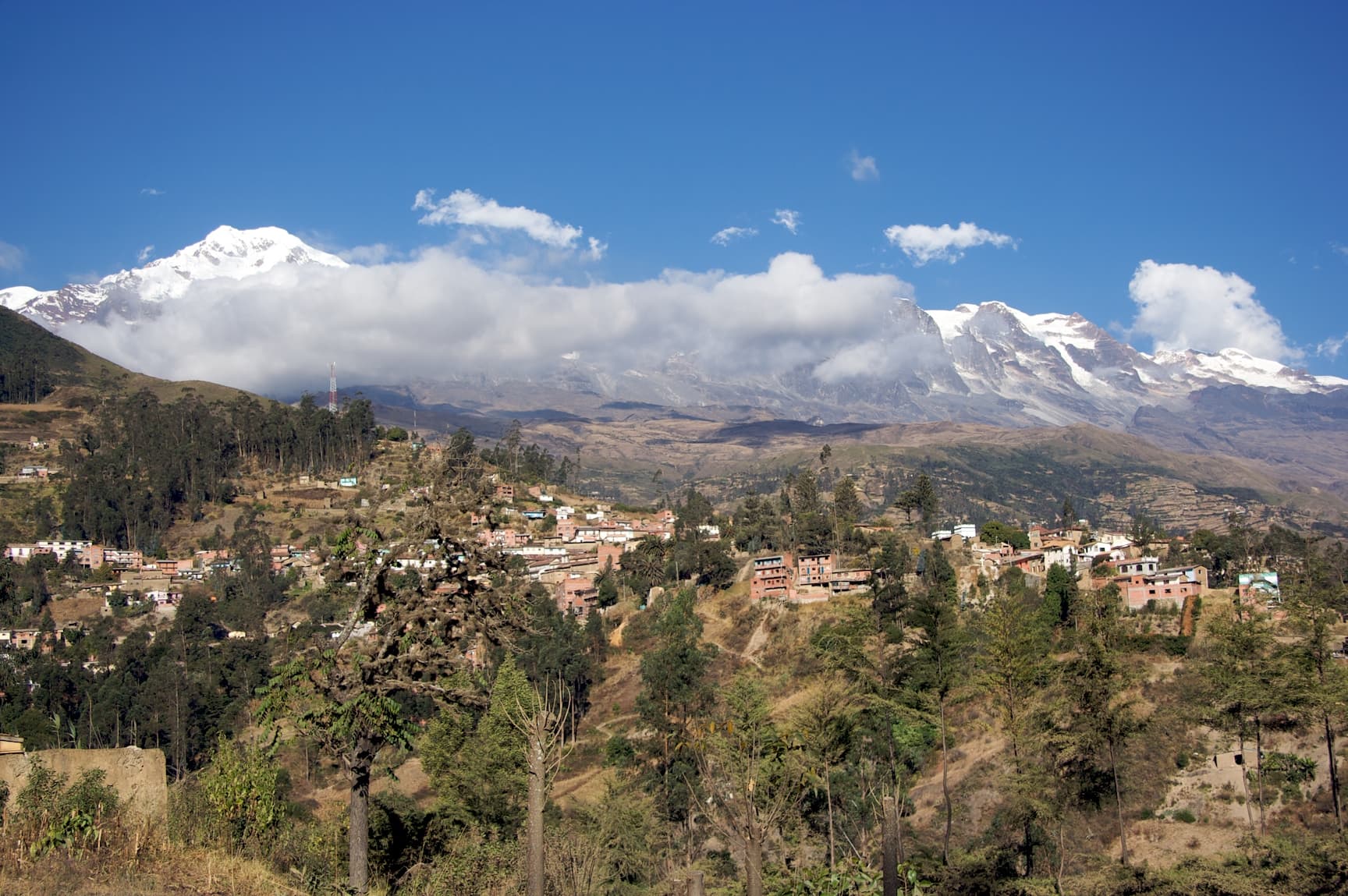
Sorata, un pueblo en el Departamento de La Paz de Bolivia, se encuentra aproximadamente a 150 km al noroeste de La Paz. Situado a una altitud de alrededor de 2.678 metros (8.786 pies), ofrece un escape tranquilo de la bulliciosa capital. El pueblo es una base popular para excursionistas y escaladores atraídos por las montañas circundantes, particularmente el macizo del Illampu. Su posición al pie de picos nevados y al borde de la cuenca de la selva amazónica proporciona un clima subtropical de tierras altas único y paisajes impresionantes.
A menudo descrita como una "puerta de entrada a la Cordillera Real", Sorata atrae a quienes buscan caminatas de varios días en terreno alpino salvaje. El pueblo en sí es un pequeño y atractivo pueblo boliviano con calles comerciales, ideal para explorar a pie. Con una población de alrededor de 4.000 residentes, Sorata mantiene un encanto tranquilo, ofreciendo un fuerte ambiente al aire libre durante todo el año. Es un lugar donde el aire lleva el aroma de eucalipto, hierbas silvestres y el silencio de la montaña, invitando a los visitantes a escuchar y conectarse con la tierra.
El nombre de Sorata, derivado del término aimara "Surat'a", significa "lugar de las soras" o "tierra de las soras", que se cree que se refiere a un tipo de ave o criatura mítica en la mitología aimara. Esta etimología refleja la profunda conexión de la región con su herencia indígena y su entorno natural.
La historia de Sorata está profundamente entrelazada con su ubicación estratégica, sirviendo como un vínculo crucial entre las tierras altas andinas y las tierras bajas ricas en recursos de la región del Alto Beni y la cuenca amazónica durante la era colonial española. A finales del siglo XVII, el descubrimiento de abundantes depósitos de oro de placer al este del lago Titicaca impulsó el rápido crecimiento del pueblo, atrayendo a colonos españoles, mineros y comerciantes que dependían de la mano de obra indígena para la extracción.
Uno de los eventos más dramáticos en el pasado de Sorata ocurrió en agosto de 1781 durante un levantamiento indígena. Andrés Tupac Amaru, sobrino del célebre Tupac Amaru, lideró un asedio al pueblo con 16.000 soldados. En una táctica poco ortodoxa, construyeron diques sobre Sorata para recolectar el deshielo del Monte Illampu. Cuando estos diques estuvieron llenos, se abrieron las compuertas y, según se informa, todo el pueblo fue arrasado por la inundación.
En la historia más reciente, Sorata experimentó conflictos durante la Guerra del Gas de Bolivia en 2003, durante la cual un hotel fue incendiado y los turistas quedaron atrapados en medio de enfrentamientos entre soldados y aldeanos. Este evento afectó negativamente la industria turística del pueblo.
Hoy en día, Sorata ya no es un importante centro comercial, ya que una ruta más directa a los Yungas desde La Paz ha disminuido su antiguo papel. Sin embargo, ha experimentado una revitalización a través del turismo en el siglo XXI, atrayendo a visitantes como base para hacer senderismo en la Cordillera Real. Permanecen edificios históricos notables, como Casa Günther, una extensa mansión construida en 1895 por los Richter, una familia comerciante de quinina, que ahora funciona como Residencial Sorata.
Sorata ofrece una mezcla de belleza natural y experiencias culturales. La Plaza General Enrique Peñaranda es el punto de encuentro central del pueblo, adornada con imponentes palmeras datileras y jardines bien cuidados, que ofrecen amplias vistas de los nevados circundantes (picos nevados). Cerca, la Casa Günther, una mansión histórica de 1895, muestra la arquitectura de la era republicana y ahora funciona como el hotel Residencial Sorata.
Para los entusiastas del aire libre, las Grutas de San Pedro son un destino popular, a unas 2,5 a 3,5 horas a pie de la plaza principal. Aunque ya no se permite nadar, las cuevas ofrecen un paseo intrigante. El área alrededor de Sorata es famosa por sus oportunidades de senderismo en la montaña, sirviendo como puerta de entrada a caminatas de varios días en la Cordillera Real. Las rutas populares incluyen la caminata a la Laguna Chillata, una caminata de 6-7 km que se puede realizar en aproximadamente 1,5 horas para excursionistas en buena forma física, con un ascenso de 300 metros. La caminata al Campamento Base del Illampu es otra opción exigente y nocturna para excursionistas experimentados. Para aquellos que buscan un tipo diferente de aventura, Sorata también ofrece posibilidades de ciclismo de montaña en descenso, con rutas que conducen a Rurrenabaque.
La mejor época para visitar Sorata para hacer senderismo y actividades al aire libre es durante la estación seca, que va de mayo a octubre. Durante estos meses, el clima es estable con cielos despejados, lo que lo hace ideal para explorar los Andes. Específicamente, de mayo a septiembre ofrece las condiciones más secas y claras para el senderismo. Si bien los días son soleados, las noches pueden ser frías, especialmente en altitudes más elevadas. La temporada de lluvias, de noviembre a marzo, trae fuertes lluvias que pueden hacer que los senderos estén embarrados y sean riesgosos.
Sorata está situada a una altitud de aproximadamente 2.678 metros (8.786 pies), lo que hace que el mal de altura sea una preocupación potencial para los visitantes. Los síntomas pueden incluir dolor de cabeza, náuseas, mareos y fatiga. Es aconsejable aclimatarse gradualmente, mantenerse hidratado, evitar el alcohol y tomárselo con calma durante los primeros días. El té de hojas de coca es un remedio tradicional que algunos encuentran útil.
Para llegar a Sorata, los minibuses compartidos (colectivos) salen de La Paz (zona del Cementerio) o El Alto (Río Seco) regularmente hasta las 3:00 PM, con un viaje que dura de 3 a 3,5 horas. También puede conectar desde Copacabana tomando un autobús con destino a La Paz hasta Huarina y luego haciendo transbordo a un autobús con destino a Sorata. Una vez en el pueblo, la mayoría de los puntos de interés están a poca distancia a pie. Hay taxis disponibles para excursiones fuera del centro del pueblo. Las asociaciones de guías locales, como la Asociación de Guías de Sorata, ofrecen servicios de trekking.
Sorata en coreano, en chino o en hebreo — y 29 idiomas más, cada parada narrada por una voz nativa. La mayor variedad de idiomas de cualquier audioguía autoguiada.
Disponible en: