Museo Espacial de Samara
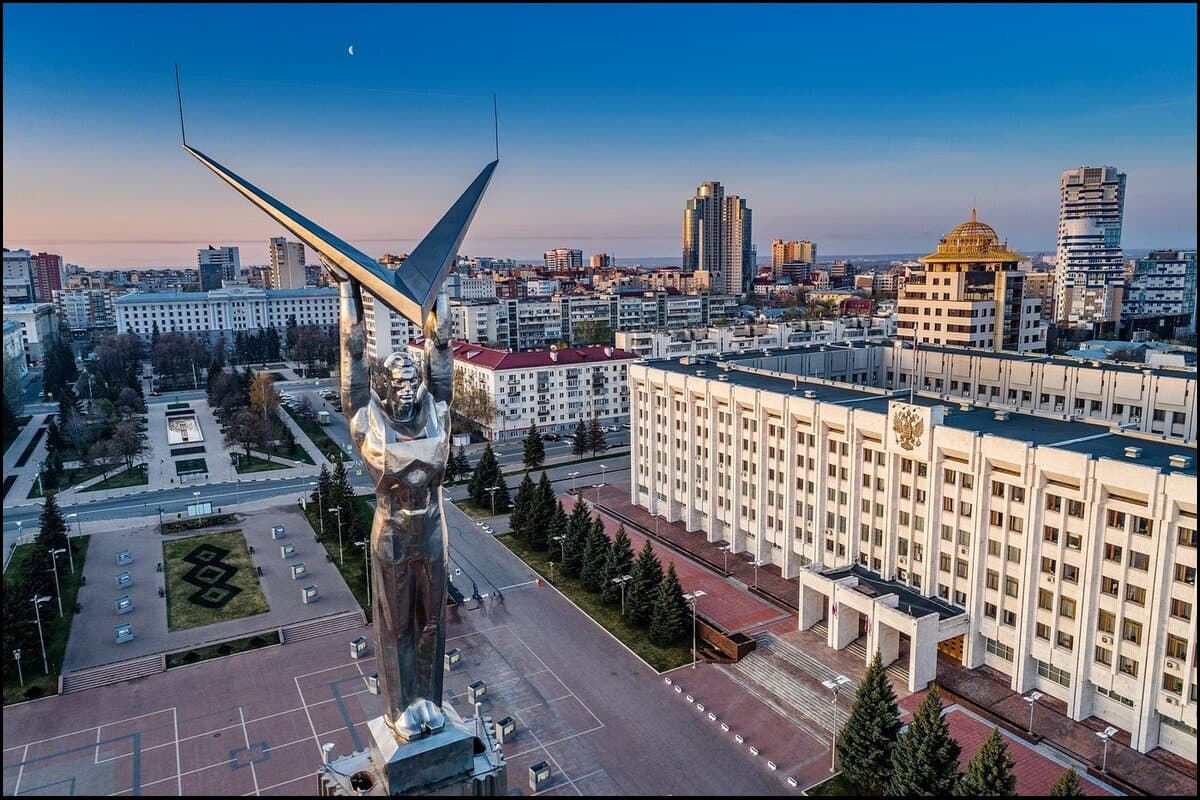
Un imponente monumento a la exploración espacial en Samara no es solo para exhibición; es un testimonio del papel de la ciudad en el viaje de la humanidad hacia las estrellas.
La historia completa se desbloquea en el tour
 Michael live / CC BY-SA 4.0, via Wikimedia Commons
Tour de audio autoguiado de Samara — ruta GPS a pie, reproducción offline, narración en 32 idiomas.
“Donde fluye el Volga, aguardan secretos del espacio y la guerra.”
No las postales. Las historias que ni los locales conocen — al oído, justo donde ocurrieron.
Un imponente monumento a la exploración espacial en Samara no es solo para exhibición; es un testimonio del papel de la ciudad en el viaje de la humanidad hacia las estrellas.
El secreto de una querida cerveza rusa, 'Zhigulyovskoye', reside en la cervecería más antigua de Samara, un lugar que ha resistido revoluciones y cambios de nombre.
Esta plaza central ostenta un récord, no solo por su tamaño, sino por una historia que la vio transformarse en un campo de desfile en tiempos de guerra.
Descubre todos los secretos de Samara
Cada dirección, cada revelación al completo — a tu oído, justo donde ocurrió.
Eliges tus paradas. Caminas. La voz te revela lo que los demás ignoran.


Tu tour de audioguía por Samara te espera — elige tus lugares, tu idioma y empieza al llegar.
ComprarSamara, una ciudad de considerable carácter en la orilla oriental del majestuoso río Volga, se erige como un testimonio de la diversa historia y el espíritu perdurable de Rusia. Con una población que supera los 1.1 millones, es una de las ciudades más grandes de Rusia y un importante centro industrial, económico y cultural. La ubicación estratégica de la ciudad en la confluencia de los ríos Volga y Samara ha moldeado su destino, desde una fortaleza fronteriza hasta una 'capital de reserva' durante la Segunda Guerra Mundial, y ahora un centro para la innovación aeroespacial.
Más allá de su destreza industrial, Samara ofrece una cautivadora mezcla de arquitectura histórica, vastos paisajes naturales y una animada atmósfera moderna. Su extenso malecón a lo largo del Volga es un popular lugar de reunión, mientras que sus museos profundizan tanto en la historia local como en el cosmos. Rodeada por las pintorescas Montañas Zhiguli y la singular Curva de Samara del Volga, la ciudad ofrece amplias oportunidades tanto para la exploración urbana como para la aventura al aire libre.
## De Puesto Fronterizo a Gigante Industrial La historia oficial de Samara se remonta a 1586, cuando se construyó una fortaleza en la confluencia de los ríos Volga y Samara. Este puesto fronterizo sirvió para proteger las fronteras orientales de Rusia de incursiones nómadas y para controlar rutas comerciales vitales. Sin embargo, se cree que los asentamientos en la zona existieron desde el siglo XIV, con algunos mapas incluso mencionando un muelle ya en 1367.
La ciudad creció constantemente, convirtiéndose en un centro de lazos diplomáticos y económicos entre Rusia y Oriente. En 1851, Samara se estableció como el centro de la Gobernación de Samara, un punto de inflexión que impulsó un significativo desarrollo económico, político y cultural. La construcción del ferrocarril de Oremburgo en 1877 consolidó aún más su papel como un importante centro comercial, particularmente para el grano, lo que le valió el título no oficial de 'Chicago ruso' debido a sus numerosos molinos y fábricas.
## La Capital de Guerra y la Era Espacial El siglo XX trajo transformaciones dramáticas. De 1935 a 1991, Samara fue renombrada Kuybyshev en honor a una prominente figura bolchevique. Durante la Segunda Guerra Mundial, la ciudad desempeñó un papel crítico, aunque en gran parte no revelado, como la 'capital de reserva' de la URSS. Muchas funciones gubernamentales, misiones diplomáticas y empresas industriales fueron evacuadas aquí cuando Moscú fue amenazada. Las fábricas de Samara fueron reconvertidas para la producción de aviones militares, produciendo notablemente más del 80% del legendario avión de ataque IL-2.
Después de la guerra, Kuybyshev mantuvo su estatus como un importante centro industrial, particularmente en ingeniería aeronáutica y fabricación de misiles. La ciudad se convirtió en una parte integral del innovador programa espacial de Rusia, produciendo los cohetes R-7 que lanzaron a los primeros humanos al espacio. Esta contribución crucial llevó a que la ciudad fuera una 'ciudad cerrada' para los extranjeros durante un largo período. En 1991, la ciudad volvió oficialmente a su nombre histórico, Samara, y continúa siendo un importante centro para las industrias aeroespacial, de refinación de petróleo y petroquímica.
Comienza tu exploración en el Malecón de Samara, el más largo de Rusia, que ofrece amplias vistas del río Volga, playas de arena y animadas zonas peatonales. Adéntrate en un pedazo de historia de guerra en el Búnker de Stalin, un complejo subterráneo clandestino construido durante la Segunda Guerra Mundial, ahora abierto para visitas. Para echar un vistazo a los logros espaciales pioneros de Rusia, visita el Museo Espacial de Samara, donde un cohete R-7 real se erige como un monumento a las contribuciones de la ciudad.
Explora la Plaza Kuibyshev, una de las plazas públicas más grandes de Europa, rodeada de importantes edificios históricos. Admira la belleza arquitectónica del Monasterio de Iver, en las escarpadas orillas del Volga, y la histórica Catedral de la Ascensión. No pierdas la oportunidad de visitar la Cervecería Zhiguli, una de las más antiguas de Rusia, y quizás probar su famosa cerveza. Para vistas panorámicas de la ciudad, asciende al mirador de la Estación de Tren de Samara, la más alta de Europa. Más allá de los límites de la ciudad, considera un viaje en barco a las Montañas Zhiguli y al Parque Nacional Curva de Samara para disfrutar de paisajes naturales y oportunidades de senderismo.
La época ideal para visitar Samara para actividades de clima cálido es de mediados de junio a finales de agosto. Durante estos meses de verano, las temperaturas promedio oscilan entre 20°C y 30°C (68°F y 86°F), perfectas para disfrutar de las playas del Volga y festivales al aire libre como el Volga Fest. Las temporadas intermedias de mayo y septiembre también ofrecen un clima agradable y más suave con menos multitudes y precios de alojamiento potencialmente más razonables. Los inviernos suelen ser fríos y helados, con temperaturas promedio en enero de alrededor de -10°C (14°F), lo que lo hace adecuado para deportes de invierno y explorar los mercados navideños.
Samara está bien conectada por aire, con el Aeropuerto Internacional Kurumoch que sirve vuelos nacionales e internacionales, a menudo requiriendo una escala en Moscú o San Petersburgo. La extensa red ferroviaria de Rusia también proporciona un cómodo acceso en tren desde Moscú y otras ciudades. Dentro de la ciudad, el transporte público está bien desarrollado, incluyendo metro, tranvías, trolebuses y autobuses. Los taxis también están fácilmente disponibles y generalmente son asequibles. Si bien el ruso es el idioma oficial, las generaciones más jóvenes y el personal universitario pueden tener cierta habilidad en inglés. La moneda local es el rublo ruso (RUB), y es aconsejable llevar dólares o euros para el cambio. Samara opera en la zona horaria UTC+4.
Samara en coreano, en chino o en hebreo — y 29 idiomas más, cada parada narrada por una voz nativa. La mayor variedad de idiomas de cualquier audioguía autoguiada.
Disponible en: