Chiesa di San Nicolò
Cette église a accueilli l'un des mariages les plus célèbres du cinéma. Au-delà de sa renommée à l'écran, quelle pratique inhabituelle avait lieu autrefois dans son cimetière ?
L'histoire complète se débloque dans le tour
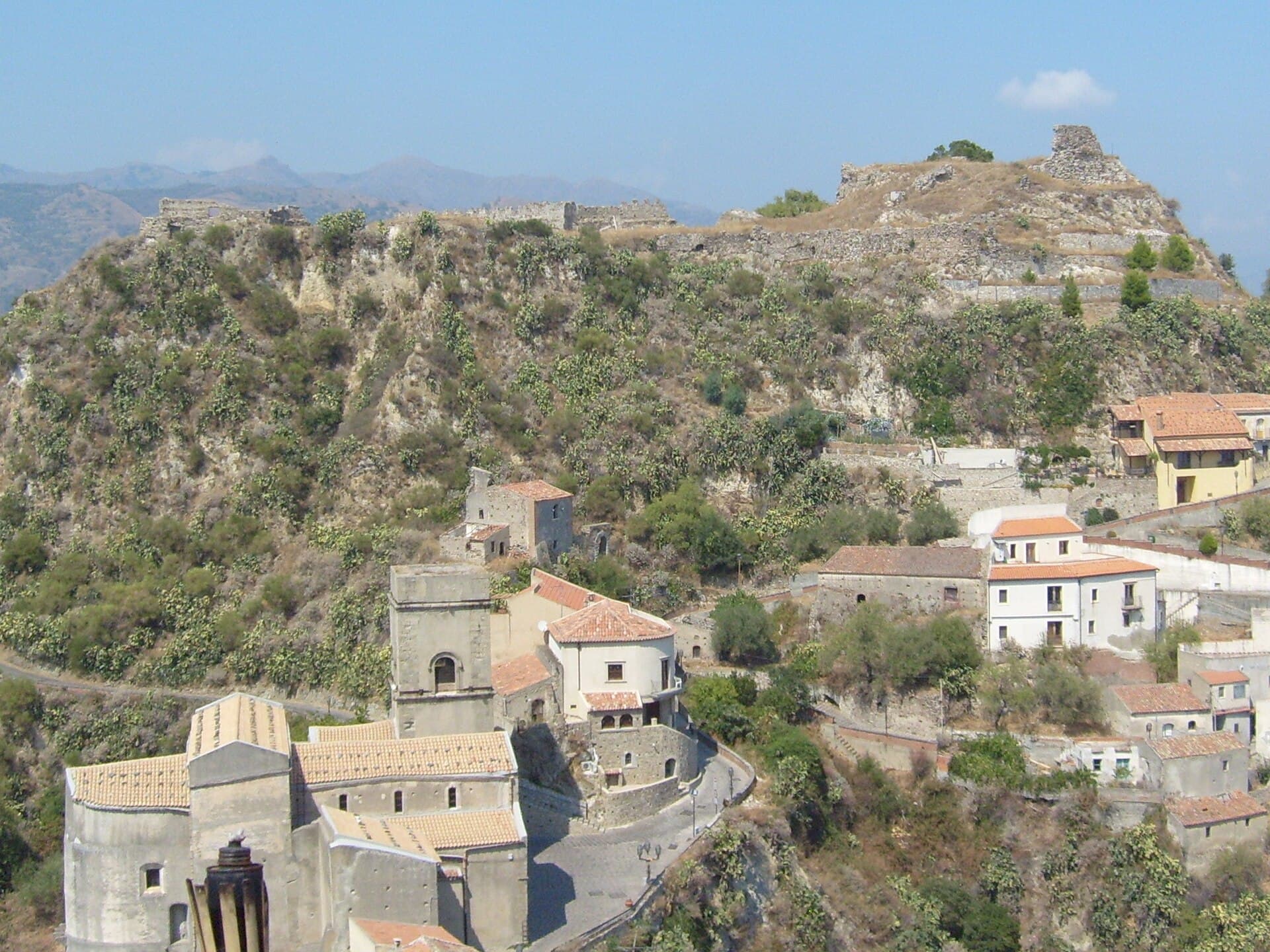 Eugenio Nicola Scarcella / Public domain, via Wikimedia Commons
Visite audio autoguidée de Savoca — parcours GPS à pied, lecture hors ligne, narration en 32 langues.
“Là où les pierres ancestrales murmurent des secrets cinématographiques et où des moines momifiés veillent en silence.”
Pas les cartes postales. Les histoires que même les habitants ignorent — soufflées à l'oreille, là où elles se sont passées.
Cette église a accueilli l'un des mariages les plus célèbres du cinéma. Au-delà de sa renommée à l'écran, quelle pratique inhabituelle avait lieu autrefois dans son cimetière ?
Savoca recèle un secret macabre : une crypte remplie de corps momifiés. Quel était le processus inhabituel, en plusieurs étapes, employé pour préserver ces individus ?
Le nom 'Savoca' n'est pas qu'un simple son agréable. Quelle plante commune a donné son nom distinctif au village ?
Découvrez tous les secrets de Savoca
Chaque adresse, chaque révélation en entier — dans ton oreille, là où elle s'est passée.
Tu choisis tes lieux. Tu marches. La voix te révèle ce que les autres ignorent.


Votre visite audioguidée de Savoca vous attend — choisissez vos lieux, votre langue, et lancez-vous dès votre arrivée.
AcheterLume intègre un guide en réalité augmentée. Levez votre téléphone : sa caméra montre la rue devant vous, avec une flèche lumineuse posée sur l'image réelle qui pointe toujours vers votre prochain arrêt — aucune carte à déchiffrer, aucun mauvais virage. Comme tout dans Lume, ça fonctionne entièrement hors-ligne.
Savoca, un petit village médiéval de la ville métropolitaine de Messine en Sicile, offre un voyage à travers des siècles d'histoire, de culture et de renommée cinématographique. Situé sur une colline rocheuse, il surplombe des vergers d'agrumes, des vignobles et la mer Ionienne. Bien que mondialement reconnu comme un lieu de tournage principal pour 'Le Parrain' de Francis Ford Coppola, Savoca est bien plus qu'un simple décor de film ; c'est un témoignage vivant du patrimoine sicilien, avec son architecture ancienne, ses chemins sinueux et un sentiment palpable d'intemporalité.
Souvent décrit comme un 'village figé dans le temps', Savoca invite les visiteurs à explorer ses couches d'histoire, de ses racines romaines à ses influences normandes. L'attrait du village réside dans son authenticité, un lieu où la vie locale se poursuit au milieu des échos du passé et de l'attrait d'Hollywood. Que vous soyez un cinéphile, un passionné d'histoire ou simplement à la recherche d'une expérience sicilienne hors des sentiers battus, Savoca promet une visite captivante et évocatrice.
## Racines Anciennes et Épanouissement Médiéval L'histoire de Savoca remonte à environ 2 000 ans, avec des preuves d'habitation avant l'an 1000 par une communauté connue sous le nom de 'Pentefur', qui a donné son nom à la zone où se trouvent aujourd'hui les ruines du château. La position stratégique du village sur une colline rocheuse, à environ 300-350 mètres au-dessus de la côte ionienne, en a fait un établissement important. À l'époque romaine, puis sous la domination byzantine et arabe, la vie agricole de Savoca, axée sur les olives, les raisins, les amandes et les agrumes, a commencé à définir son caractère.
Le tissu médiéval de Savoca, qui perdure en grande partie aujourd'hui, a pris forme sous l'influence normande, puis aragonaise. Le comte Roger II est crédité de la fondation du village moderne en 1134. Au Moyen Âge, Savoca fut fortifiée avec un château et des murailles, bien qu'une seule de ses deux portes de ville d'origine subsiste. Les XIVe et XVe siècles ont vu une croissance et un développement significatifs, avec l'établissement d'importantes communautés religieuses, y compris les Dominicains qui ont introduit le culte de Sainte Lucie, et une communauté juive avec sa synagogue située au centre du village.
## Déclin et Renaissance Cinématographique Le début du XIXe siècle a marqué une période de déclin pour Savoca, caractérisée par des affrontements politiques et une perte d'autonomie, qui ne fut retrouvée qu'en 1948 lorsqu'elle redevint une municipalité. Malgré cette période de difficultés, le village a conservé son âme médiévale et ses merveilles architecturales. C'est dans la seconde moitié du XXe siècle que Savoca a acquis une reconnaissance mondiale, non pas pour ses ruines antiques ou ses lignées nobles, mais pour son rôle au cinéma.
En 1971, le réalisateur Francis Ford Coppola a choisi Savoca comme principal lieu de tournage pour 'Le Parrain'. Cherchant des villages authentiques et intacts pour représenter la ville fictive de Corleone, Coppola a trouvé les pierres anciennes de Savoca, ses rues sinueuses et ses modestes établissements comme le Bar Vitelli comme toile de fond parfaite pour des scènes emblématiques. Cette exposition cinématographique a jeté une nouvelle lumière sur Savoca, attirant des visiteurs désireux de retracer les pas de Michael Corleone et de découvrir le mélange unique d'histoire et de glamour hollywoodien du village.
Commencez votre exploration au Bar Vitelli, logé dans le Palazzo Trimarchi du XVIIIe siècle. Ce café emblématique, célébré pour son rôle dans 'Le Parrain', offre un voyage dans le temps avec des souvenirs de film et la possibilité de déguster une granita traditionnelle sur sa terrasse couverte de vignes. Une courte promenade mène à la Chiesa di San Nicolò, l'église pittoresque où Michael Corleone et Apollonia se sont mariés dans le film. Son extérieur aux allures de forteresse et sa position dominante sont saisissants.
Pour une immersion plus profonde dans le passé de Savoca, visitez le Couvent et la Crypte des Moines Capucins. Ici, vous pourrez faire face aux corps momifiés conservés de nobles et de membres du clergé locaux, offrant un aperçu unique et quelque peu étrange des pratiques funéraires historiques. Ne manquez pas l'Église Mère (Chiesa Santa Maria in Cielo Assunta), un monument national datant de 1130, avec sa propre crypte souterraine intrigante. Explorez les ruines du Château de Pentefur pour des aperçus historiques et des vues imprenables. Promenez-vous dans les rues étroites et pavées pour découvrir des bâtiments médiévaux et de la Renaissance, des structures baroques et l'ancienne Porte de la Ville, un précieux vestige des fortifications normandes de la ville.
La période idéale pour visiter Savoca est le printemps (avril à juin) et l'automne (septembre à octobre). Pendant ces mois, le temps est agréable, avec des températures confortables allant de 18°C à 29°C, et les foules de touristes sont généralement moins nombreuses. L'été, de fin juin à début septembre, est propice aux activités par temps chaud, bien qu'il puisse être humide et plus fréquenté. Savoca connaît une saison sèche distincte de mai à août, juillet étant le mois le plus ensoleillé.
Savoca est située dans la ville métropolitaine de Messine, à environ 16 km au nord-est de Messine et à environ 20 km au nord de Taormine. Bien que Savoca n'ait pas son propre aéroport, vous pouvez atterrir à Reggio Calabria Tito Menniti (REG), à environ 30 km, ou à l'aéroport de Catane-Fontanarossa (CTA), qui est plus populaire pour les vols internationaux. Louer une voiture à Catane est une option courante pour se rendre à Savoca, qui est à environ 54 km. Des bus régionaux circulent également depuis Santa Teresa di Riva, bien que les horaires puissent varier selon les saisons. Le village lui-même est mieux exploré à pied, une promenade autour des principaux sites prenant environ 40 à 50 minutes. Sachez que Savoca est une ville perchée avec des chemins escarpés et inégaux, des chaussures confortables sont donc recommandées. Un parking est disponible, souvent près du haut du village, ce qui peut réduire les distances de marche.
Savoca en coréen, en chinois ou en hébreu — et dans 29 autres langues, chaque étape narrée par une voix native. La plus large gamme de langues de tous les audioguides autoguidés.
Disponible en :