Sicuani's Name Origin
The very name 'Sicuani' carries a secret, a linguistic echo of a prized Andean animal.
Full story unlocks in the tour
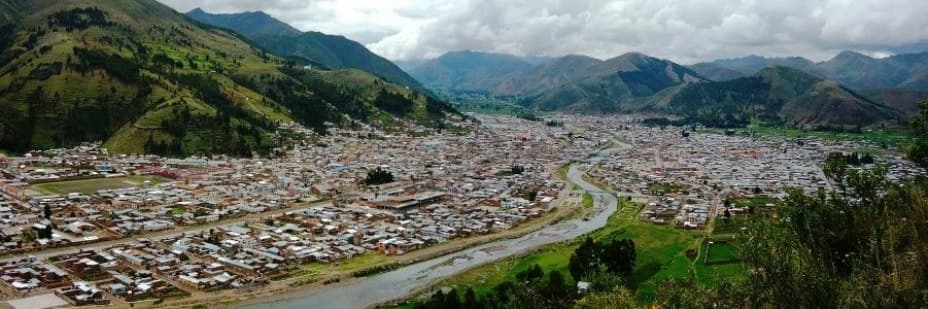 Ant.rios2013 / CC BY-SA 4.0, via Wikimedia Commons
Self-guided audio walking tour of Sicuani — GPS route, offline playback, story-driven narration in 32 languages.
“Where the Andes whisper ancient stories and the Urubamba begins its journey.”
Not the postcards. The stories even locals don't know — whispered in your ear, right where they happened.
The very name 'Sicuani' carries a secret, a linguistic echo of a prized Andean animal.
A monumental South American river, critical to Inca civilization and beyond, begins its epic journey right here.
Beyond the well-trodden paths, there's a local secret for relaxation and therapeutic waters.
Discover every secret of Sicuani
Every address, every reveal in full — in your ear, right where it happened.
You pick your stops. You walk. The voice reveals what the others miss.
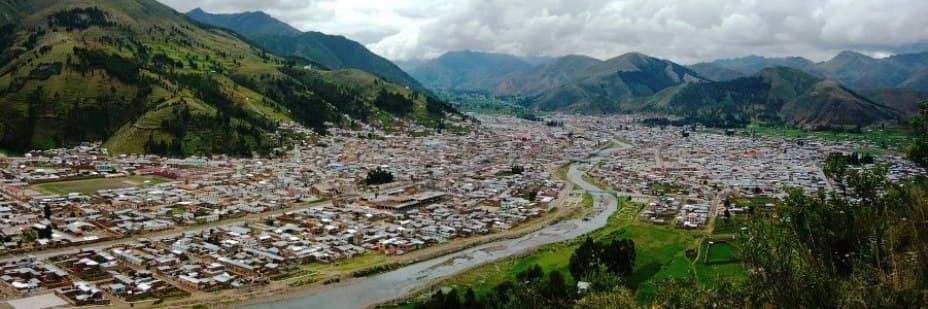
Your self-guided audio tour of Sicuani is ready — pick your landmarks, choose your language, and start the moment you arrive.
BuyLume has a built-in augmented-reality guide. Hold your phone up and its camera shows the street ahead of you, with a glowing arrow laid over the real view that always points to your next stop — no map to puzzle over, no wrong turns. Like everything in Lume, it works fully offline.
Sicuani, the capital of Canchis Province in Peru's Cusco Region, is an authentic Andean town resting at 3,500 meters above sea level. With an estimated population of over 54,000 inhabitants, it serves as a significant commercial and transportation hub in the southern Peruvian Andes. This is a place where the pulse of local life beats strongly, offering a genuine glimpse into Peruvian culture away from the more heavily traveled tourist routes.
The town is strategically located in a broad valley, embraced by impressive mountain scenery and agricultural landscapes. Sicuani is also notable as the starting point of the Urubamba River, a waterway of immense historical importance to the Inca Empire and the cultures that preceded it. For travelers seeking a deeper connection to the Andes, Sicuani provides a serene atmosphere and a profound cultural heritage to explore.
Sicuani's history is deeply intertwined with its strategic location in the southern Peruvian Andes. For centuries, it has served as an important stop on trade routes that connected the Peruvian coast with the Amazon basin. This made Sicuani a natural meeting point for diverse cultures and goods, fostering an exchange that continues to shape its identity today. The town's proximity to the Urubamba River, which begins its journey here, further cemented its importance, as this river was a vital artery for the ancient Inca Empire and earlier civilizations.
While specific early historical records for Sicuani itself are scarce, its position within the broader Cusco region links it to the powerful Inca Empire, which regarded Cusco as the 'navel of the world.' The Incas' influence would have extended to key hubs like Sicuani, facilitating the movement of resources and people across their vast empire. Following the Spanish conquest, Sicuani continued to be a significant point along colonial routes. The town also played a role in the indigenous rebellions against Spanish rule, notably the Túpac Amaru II rebellion in 1814, highlighting its place in Peru's struggle for independence.
Today, Sicuani stands as the capital of Canchis Province, a designation it has held since August 29, 1834. The enduring presence of its local markets, where indigenous communities gather to trade agricultural products, textiles, and handicrafts, is a living testament to its long history as a commercial and cultural crossroads.
Sicuani offers a blend of local culture and gateways to natural wonders. The Plaza de Armas de Sicuani is the heart of the town, a central gathering place where you can observe daily life. Nearby, the Current Church and the Old Cathedral hold historical artifacts from pre-Inca, Inca, Colonial, and Republican periods.
For a deeper dive into ancient history, seek out the Chullpas de Sicuani, pre-Inca burial towers that offer a glimpse into the region's earliest inhabitants. An hour from town, the thermal baths of Uyrumiri provide a relaxing escape with therapeutic waters.
Sicuani is also a practical base for exploring the Andean landscapes. Day trips can be arranged to the Temple of Wiracocha in Raqchi, an important Inca archaeological site. Humantay Lagoon, with its turquoise waters and surrounding snow-capped peaks, is another popular excursion for nature lovers. For those seeking geological formations, the Pallay Poncho Mountain, also known as Pallay Punchu, offers a unique rainbow-colored landscape. The town's local markets are a lively experience for traditional culture and finding unique crafts and agricultural products.
The best time to visit Sicuani for warm-weather activities and clear skies is during the dry season, which runs from May to September. During these months, you can expect pleasant weather, making it ideal for outdoor exploration. Daytime temperatures are moderate, though evenings can be cooler, so packing layers is advisable. The shoulder months of April and October also offer good weather with fewer crowds.
Sicuani is well-connected by road, making it accessible from Cusco by bus or taxi, a journey that typically takes 3-4 hours. While Spanish is the primary language, knowing some basic phrases can enhance your experience and help you connect with locals. The official currency is the Peruvian Sol (PEN), and it's advisable to carry small bills for local markets and smaller establishments, as cash is widely used. ATMs are available in the city center.
Accommodation options in Sicuani range from budget hostels to mid-range hotels, and booking in advance is recommended, especially during peak season. When packing, bring layers of clothing due to varying temperatures throughout the day, along with good walking shoes, a hat, sunscreen, and a rain jacket, especially if visiting during the wet season. While generally safe, standard travel precautions are always advised.
Sicuani in Korean, in Chinese or in Hebrew — and 29 more languages, every stop narrated by a native voice. The widest language range of any self-guided audio tour.
Available in: