The Urubamba Market
Beyond the lively displays of produce and textiles, a particular section offers a glimpse into a time-honored, yet surprising, culinary tradition.
Full story unlocks in the tour
 Alexey Komarov / CC BY-SA 4.0, via Wikimedia Commons
Self-guided audio walking tour of Urubamba — GPS route, offline playback, story-driven narration in 32 languages.
“Where ancient Inca ingenuity meets the rhythm of Andean life.”
Not the postcards. The stories even locals don't know — whispered in your ear, right where they happened.
Beyond the lively displays of produce and textiles, a particular section offers a glimpse into a time-honored, yet surprising, culinary tradition.
While many Inca sites are grand and imposing, this lesser-known palace in Urubamba holds a quiet secret about its former resident.
This sacred river, central to the Incas, has a name that, when translated, reveals a surprising connection to a seemingly unrelated creature.
Discover every secret of Urubamba
Every address, every reveal in full — in your ear, right where it happened.
You pick your stops. You walk. The voice reveals what the others miss.


Your self-guided audio tour of Urubamba is ready — pick your landmarks, choose your language, and start the moment you arrive.
BuyLume has a built-in augmented-reality guide. Hold your phone up and its camera shows the street ahead of you, with a glowing arrow laid over the real view that always points to your next stop — no map to puzzle over, no wrong turns. Like everything in Lume, it works fully offline.
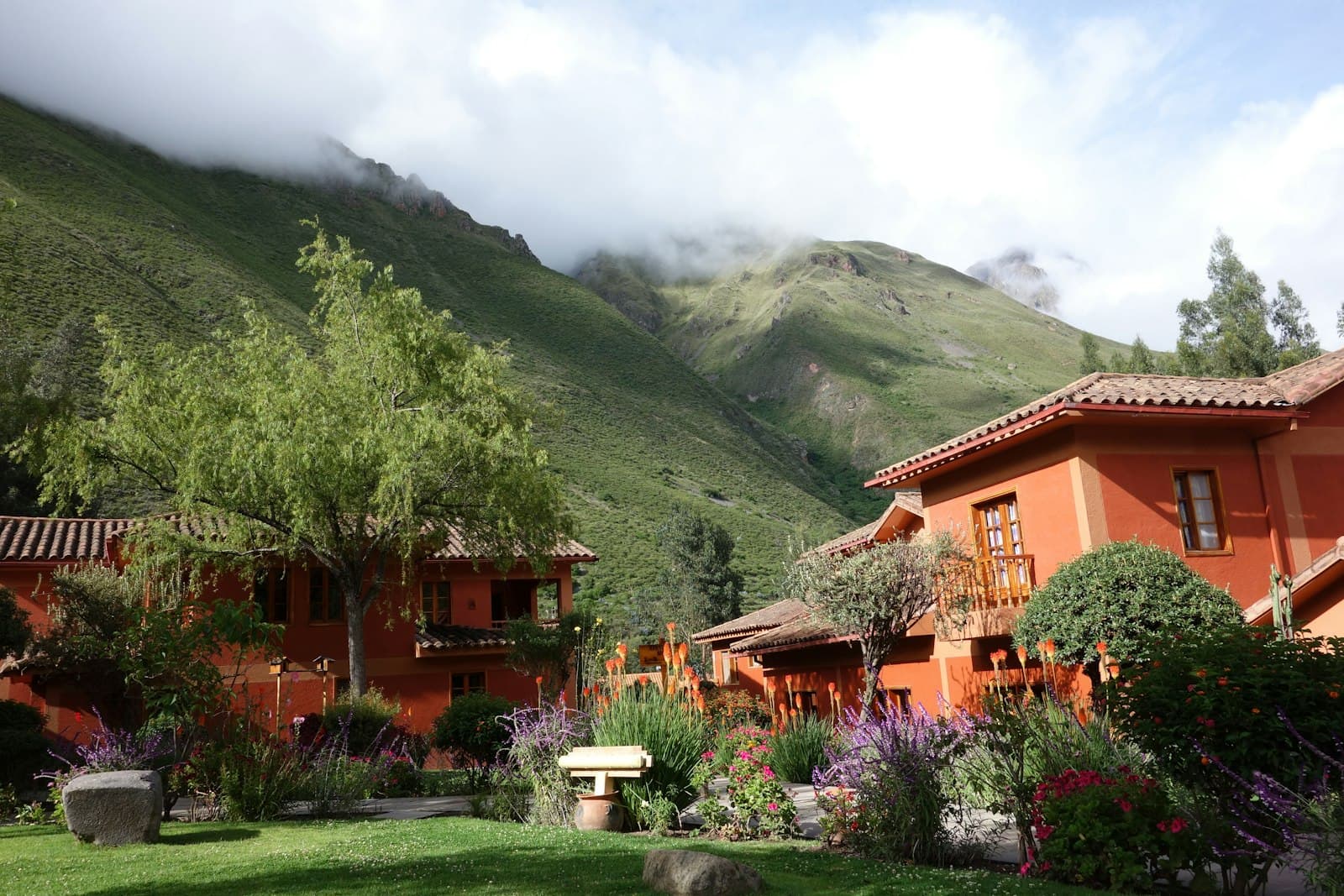
Urubamba, settled in the core of Peru's Sacred Valley, offers a quiet escape from the energetic city of Cusco. Surrounded by towering Andean mountains like Chicón and Pumahuanca, and bisected by the sacred Urubamba River, this town serves as a central point for exploring the region's long past and striking natural beauty. It is a place where the legacy of the Inca Empire is evident, from ancient agricultural terraces to the very name of the river that sustained them.
Often considered a more relaxed alternative to Cusco for acclimatization, Urubamba sits at a slightly lower elevation, providing a gentler introduction to the Andean highlands. The town offers a mix of authentic local life and modern amenities, making it an ideal base for longer stays and for those seeking a deeper immersion into Andean culture. From its lively local markets to its closeness to significant archaeological sites, Urubamba invites visitors to slow down and uncover the layers of its past and present.
Urubamba's story is deeply intertwined with the Inca Empire, which recognized the valley's fertile lands as a crucial agricultural center. During Inca times, the Urubamba River, known as Willkamayu or 'River of the Sun,' was considered sacred and vital for sustaining the empire's vast agricultural production. The region was particularly known for cultivating the finest white corn. Unlike other Sacred Valley towns like Pisac and Ollantaytambo, Urubamba was not primarily a site for major religious temples or outposts, but rather a key area for food production and a passageway to the jungle region of Antisuyo.
Following the Spanish conquest in 1531, the Inca Empire was overthrown. The town of Urubamba, like much of the Sacred Valley, saw the imposition of Spanish colonial rule. Evidence of this era can be seen in structures like the San Francisco Church, which was built upon Inca foundations in the main square. The Santiago Apostle Church, constructed in 1650, was declared a Cultural Patrimony of the Nation in 1972 and displays colonial art with Gothic and gold-leafed elements. The Martín Pío Concha House, once home to the last Spanish ruler of Cusco, now houses archaeological artifacts from Machu Picchu, returned by Yale University.
Throughout its existence, Urubamba has maintained its agricultural importance while gradually evolving into a significant commercial and administrative center within the Sacred Valley. Today, it serves as a testament to both its Inca heritage and its colonial past, offering visitors a unique blend of historical layers.
Urubamba offers a variety of experiences, from exploring ancient sites to immersing oneself in local culture. The Plaza de Armas is a central point, surrounded by shops and restaurants, providing a pleasant atmosphere for a stroll. The Urubamba Market, located a few blocks from the main square, provides an authentic look into local life, with vendors selling fresh produce, grains, and meats. Wednesdays, Fridays, and Sundays are particularly animated, with traveling vendors offering unique commodities.
For those interested in history and art, the Martín Pío Concha House displays archaeological pieces found at Machu Picchu. The Pablo Seminario Pottery Workshop showcases the work of a renowned local artisan. The Inkariy Museum offers insights into Peruvian cultures.
Beyond the town, Urubamba is an ideal base for visiting nearby attractions. The Maras Salt Mines (Salineras de Maras) are an iconic site with thousands of terraced salt basins in use since pre-Inca times. The Moray Ruins feature unique circular agricultural terraces, believed to have been an Inca agricultural laboratory for experimenting with different crops. Other nearby sites include the Perolniyoc Waterfalls and the Chullpas burial towers, which pre-date the Inca civilization. For adventure seekers, the Urubamba River offers opportunities for white-water rafting, while the surrounding mountains are suitable for mountain biking, rock climbing, and paragliding.
The dry season, from May to September, is generally considered the finest time to visit Urubamba. During these months, you can expect sunny days, clear skies, and minimal rainfall, creating ideal conditions for outdoor activities and exploring archaeological sites. Daytime temperatures typically range from 20-22°C (68-72°F), though nights can be cool, dropping to 2-5°C (36-41°F).
The shoulder seasons of April-May and September-October offer a good balance of pleasant weather, fewer crowds, and reasonable prices. While the wet season (November to March) brings more rain, it also transforms the landscape into a lush, green environment, and there are fewer tourists.
Urubamba is located approximately 53 kilometers from Cusco, a journey that takes about 1.5 hours by car or bus. From Cusco, you can take a local bus for around 10-20 Peruvian soles or arrange a private transfer. Colectivos (shared taxis) are also a common and affordable way to travel within Urubamba and the Sacred Valley.
The local currency is the Peruvian Sol (PEN). While some tourist areas may accept U.S. dollars, it is advisable to carry soles for most transactions, especially at local markets and smaller establishments. ATMs are available, but it is wise to use them strategically and be aware of potential fees. Voltage in Peru is 220v, so travelers from countries with 110v systems will need an adapter.
Urubamba is generally considered a secure destination, but it is always wise to be aware of your surroundings, secure valuables, and avoid displaying expensive items. Altitude sickness can occur, though it is usually milder than in Cusco due to Urubamba's slightly lower elevation of 2,870 meters (9,416 feet). It is recommended to take it easy on your first day, stay hydrated, and avoid alcohol to aid acclimatization.
Urubamba in Korean, in Chinese or in Hebrew — and 29 more languages, every stop narrated by a native voice. The widest language range of any self-guided audio tour.
Available in: