Le Musée de l'Ère du Hareng
Imaginez une époque où une petite ville islandaise approvisionnait un quart du hareng mondial. Mais qu'est-il advenu des femmes qui ont alimenté ce boom ?
L'histoire complète se débloque dans le tour
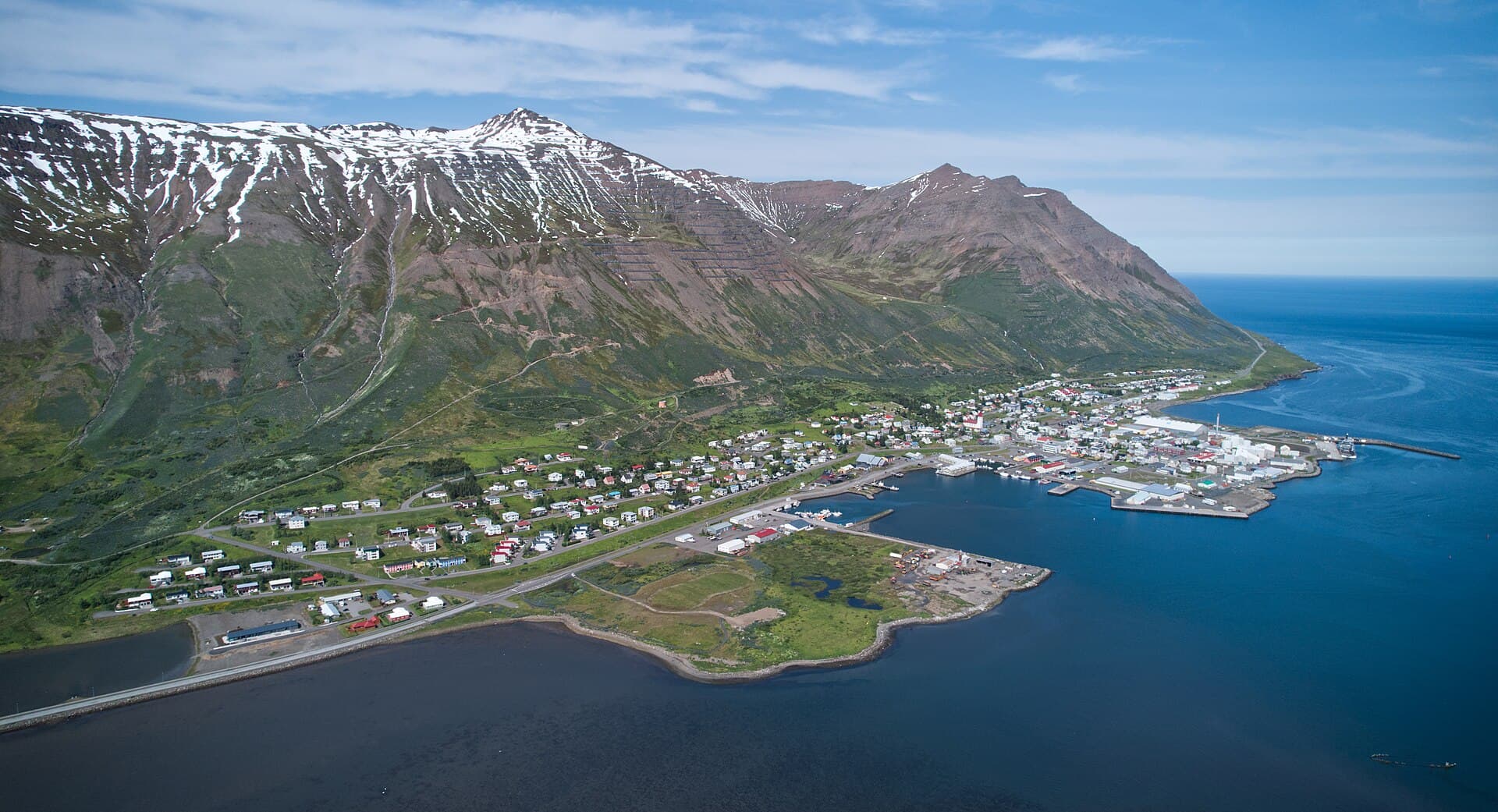 Steinninn / CC BY 4.0, via Wikimedia Commons
Visite audio autoguidée de Siglufjörður — parcours GPS à pied, lecture hors ligne, narration en 32 langues.
“Là où les montagnes embrassent la mer, et où résonnent encore les échos d'un âge d'or.”
Pas les cartes postales. Les histoires que même les habitants ignorent — soufflées à l'oreille, là où elles se sont passées.
Imaginez une époque où une petite ville islandaise approvisionnait un quart du hareng mondial. Mais qu'est-il advenu des femmes qui ont alimenté ce boom ?
Pendant des décennies, un spectaculaire passage montagneux fut la seule entrée vers Siglufjörður. Qu'est-ce qui a altéré son isolement, et quel secret se cache dans la nouvelle connexion ?
Cette ville apparemment tranquille fut autrefois un centre urbain animé, bien plus grand que sa taille actuelle. Qu'est-ce qui a causé un changement aussi spectaculaire dans sa population ?
Découvrez tous les secrets de Siglufjörður
Chaque adresse, chaque révélation en entier — dans ton oreille, là où elle s'est passée.
Tu choisis tes lieux. Tu marches. La voix te révèle ce que les autres ignorent.


Votre visite audioguidée de Siglufjörður vous attend — choisissez vos lieux, votre langue, et lancez-vous dès votre arrivée.
AcheterSiglufjörður, souvent affectueusement appelée Sigló, est la ville la plus septentrionale d'Islande, une modeste colonie de pêcheurs nichée entre des montagnes spectaculaires et un fjord serein. Anciennement un paisible village de pêcheurs de requins, elle s'est transformée en la « Capitale incontestée du Hareng de l'Atlantique » au début du XXe siècle, connaissant une expansion semblable à une ruée vers l'or qui a façonné son caractère unique et laissé une marque indélébile sur son identité.
Aujourd'hui, avec une population d'environ 1 164 habitants, Siglufjörður présente un mélange d'histoire fière et de vie culturelle active. Son architecture préservée, ses bâtiments portuaires colorés et ses fortes traditions locales créent une expérience islandaise authentique, invitant les voyageurs à explorer au-delà des itinéraires touristiques habituels. Le cadre isolé de la ville sur la péninsule de Tröllaskagi offre également une toile de fond saisissante pour les aventures en plein air, de la randonnée et du kayak aux sports d'hiver et à l'observation des aurores boréales.
Le parcours de Siglufjörður, d'une modeste colonie à une puissance économique active, témoigne du pouvoir transformateur de la mer. À la fin du XIXe et au début du XXe siècle, elle a commencé comme un petit village de pêcheurs de requins, avec des entrepreneurs norvégiens qui y ont établi certaines des premières entreprises de capture de requins. Cependant, le véritable tournant est arrivé avec la découverte d'importants bancs de hareng dans les eaux environnantes.
La ville est rapidement devenue le principal centre des opérations de hareng, déclenchant une expansion qui a vu sa population passer de seulement 146 habitants en 1901 à plus de 3 000 dans les années 1950. Cette ère, souvent appelée l'« Ère du Hareng », a transformé Siglufjörður en l'un des ports les plus fréquentés de l'Atlantique Nord et en la « Capitale mondiale du Hareng ». La ville bourdonnait d'activité, attirant des travailleurs de toute l'Islande et d'ailleurs, et son port grouillait de bateaux de pêche et d'usines de transformation. Le hareng représentait une part importante des recettes totales d'exportation de l'Islande, une grande partie transitant par Siglufjörður.
La prospérité de l'Ère du Hareng n'était cependant pas destinée à durer. Les stocks de hareng se sont effondrés de façon spectaculaire à la fin des années 1960, en grande partie à cause de la surpêche. Les usines de transformation ont fermé, les travailleurs sont partis et la population de la ville a rapidement diminué, étant réduite de moitié en une génération. Ce déclin soudain a eu un impact durable, mais l'héritage physique du boom – les bâtiments historiques, l'équipement et les souvenirs de ceux qui l'ont vécu – est resté.
Au cours des décennies suivantes, Siglufjörður s'est lancée dans un processus de réinvention. Le gouvernement islandais a activement promu le tourisme et amélioré les transports terrestres pour inverser le déclin démographique. Un développement significatif a été la fusion des municipalités d'Ólafsfjörður et de Siglufjörður en 2006 pour former Fjallabyggð, signifiant « Colonie de Montagne ». Cela a été encore amélioré par l'ouverture des tunnels de Héðinsfjörður en 2010, qui ont considérablement amélioré l'accès à la ville tout au long de l'année, la reliant plus étroitement au reste de l'Islande. Aujourd'hui, Siglufjörður a réussi à mêler son riche passé à un présent actif, embrassant son patrimoine tout en favorisant une scène culturelle florissante et une industrie touristique en pleine croissance.
Siglufjörður présente un éventail captivant de sites, dont beaucoup sont enracinés dans sa profonde histoire et son environnement naturel saisissant. Le Musée de l'Ère du Hareng est une destination principale, largement considéré comme l'une des plus belles attractions culturelles d'Islande. Réparti sur plusieurs bâtiments préservés près du port, il offre un aperçu immersif de l'âge d'or de la ville, avec d'anciens bateaux, des usines et des reconstitutions.
Une promenade le long du port est en soi une expérience délicieuse, avec des maisons aux couleurs vives, des cafés accueillants et des bateaux de pêche se balançant doucement dans l'eau, le tout encadré par des montagnes spectaculaires. Pour une exploration plus approfondie de la culture islandaise, le Centre de Musique Folklorique expose des chansons et des instruments folkloriques islandais traditionnels, souvent avec des représentations en direct.
Au-delà de la ville, la péninsule de Tröllaskagi offre d'innombrables opportunités d'activités de plein air. Les sentiers de randonnée sont nombreux, y compris les cols panoramiques de Holsskard et Hestsskard, qui offrent des vues imprenables. En hiver, la région se transforme en un centre pour le ski et d'autres sports de neige. Ne manquez pas la traversée du tunnel de Héðinsfjörður, qui mène à la sereine et inhabitée vallée de Héðinsfjörður, un endroit paisible idéal pour la contemplation tranquille et l'observation des oiseaux. Pour un avant-goût de l'artisanat local, visitez la brasserie Segull 67, installée dans une ancienne usine de transformation de poisson, proposant des visites et des dégustations.
Le meilleur moment pour visiter Siglufjörður dépend largement de vos intérêts. L'été (juin à août) est le plus prisé, offrant un temps doux, des sentiers de randonnée accessibles et le soleil de minuit magique, qui offre près de 24 heures de lumière du jour. C'est aussi à ce moment que la ville s'anime avec des festivals, y compris le célèbre Festival de Musique Folklorique en juillet et le Festival du Hareng en août.
L'hiver (décembre à février) apporte des paysages froids et enneigés et une lumière du jour limitée, mais c'est un moment idéal pour observer les aurores boréales et profiter des sports d'hiver comme le ski. Les saisons intermédiaires du printemps (avril à mai) et de l'automne (septembre à octobre) offrent moins de foules, une lumière du jour plus longue qu'en hiver et des paysages magnifiques, l'automne présentant des couleurs vives. Cependant, certaines attractions peuvent avoir des horaires limités en basse saison.
Siglufjörður, bien que reculée, est accessible toute l'année. L'accès principal se fait via la Route 76, l'itinéraire le plus facile impliquant souvent les tunnels de Héðinsfjörður qui la relient à Ólafsfjörður. Bien que la conduite autonome soit populaire et permette une flexibilité, la ville est également incluse dans de nombreux itinéraires de conduite autonome autour du nord de l'Islande. L'aéroport principal le plus proche est à Akureyri, à environ 1h30 de route.
Une fois à Siglufjörður, la ville est petite et facilement praticable à pied, surtout la zone du port. Les cafés et restaurants locaux proposent des fruits de mer frais et un avant-goût de la cuisine islandaise. Les options d'hébergement incluent le Sigló Hotel, qui propose des piscines géothermiques et des vues sur le fjord, et l'Hotel Siglunes, une option boutique avec un restaurant marocain. Pour ceux qui recherchent plus d'espace, les Brimnes Cabins à Ólafsfjörður, à proximité, proposent des chalets indépendants.
Siglufjörður en coréen, en chinois ou en hébreu — et dans 29 autres langues, chaque étape narrée par une voix native. La plus large gamme de langues de tous les audioguides autoguidés.
Disponible en :