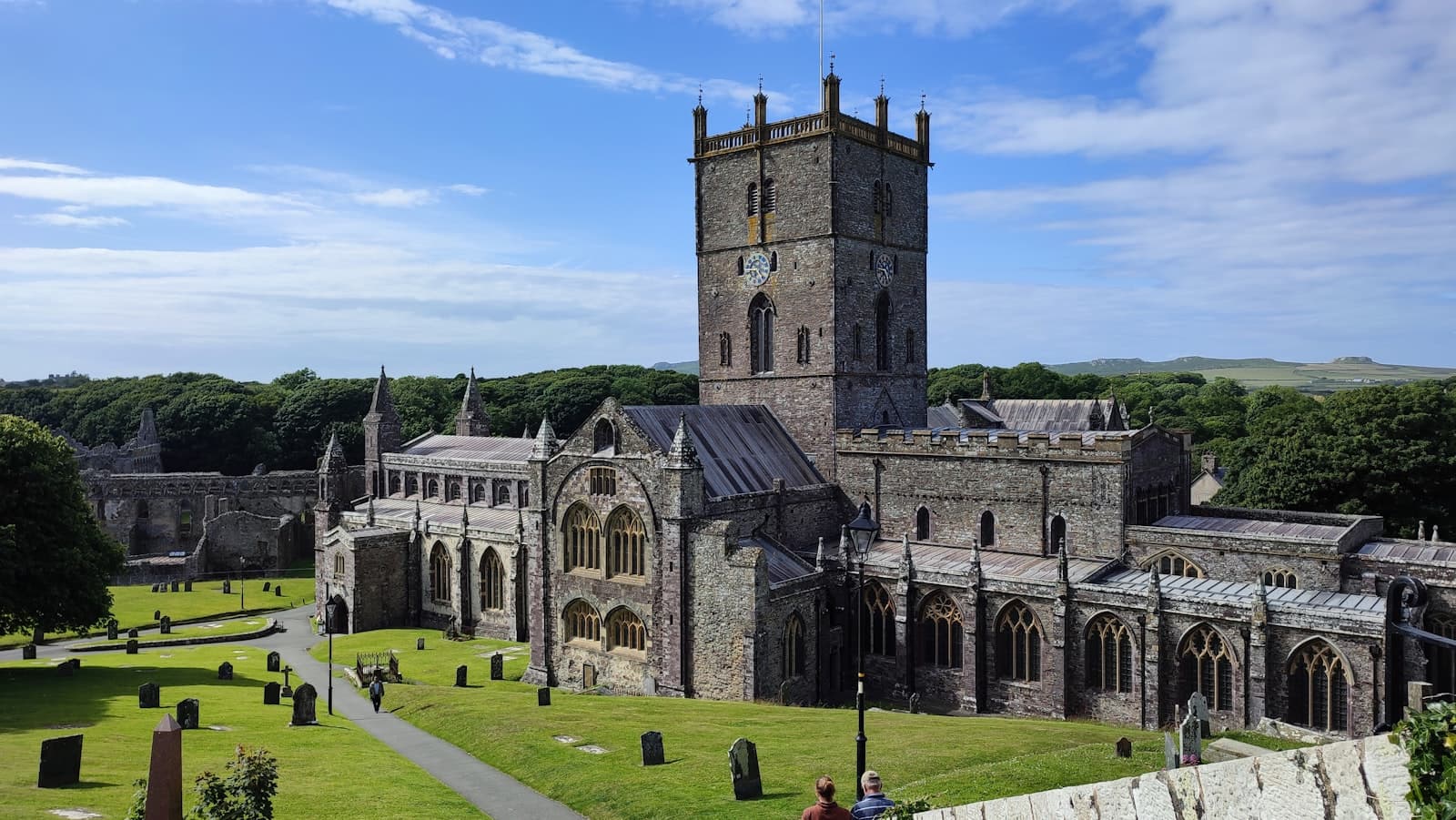
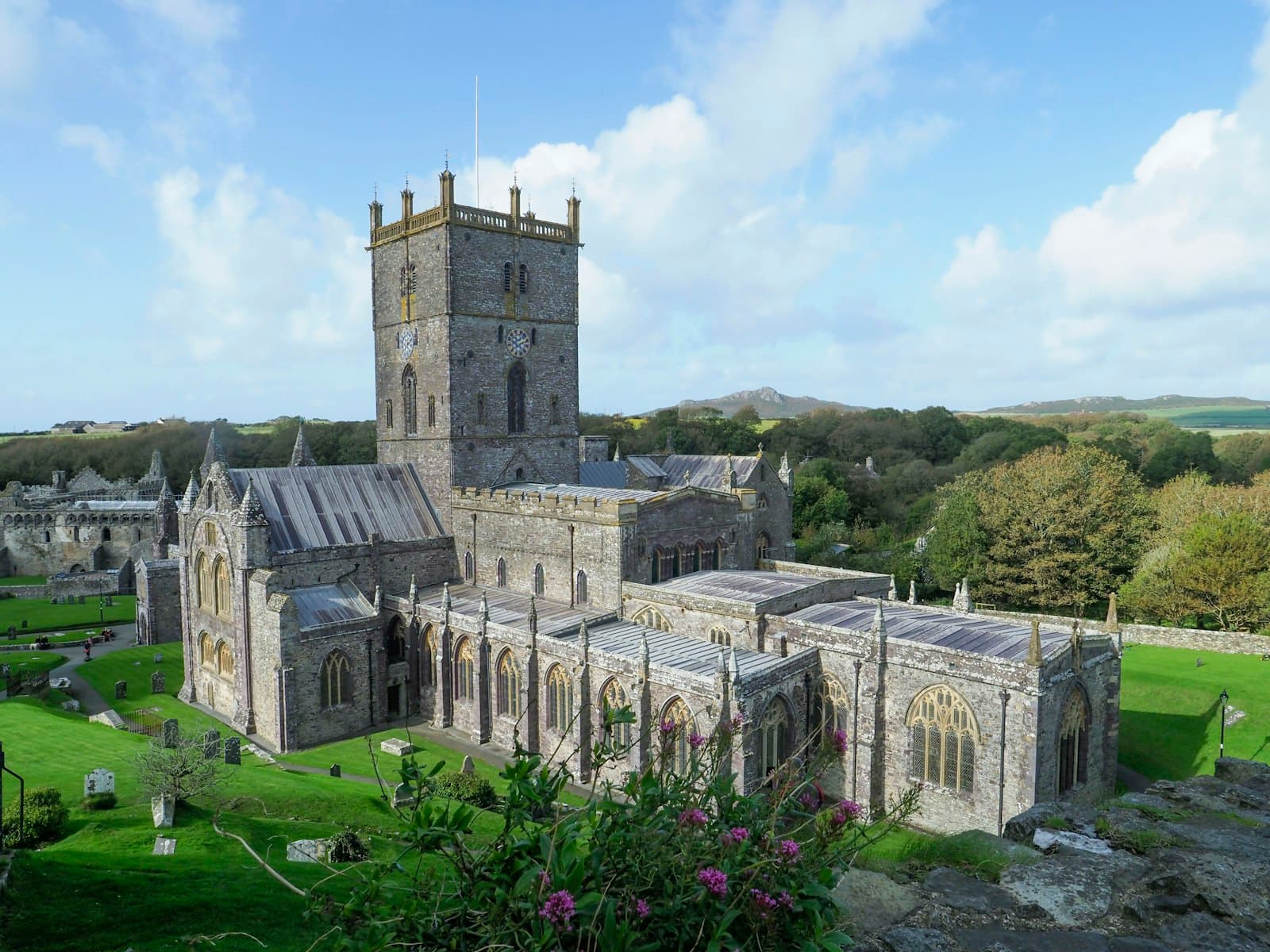
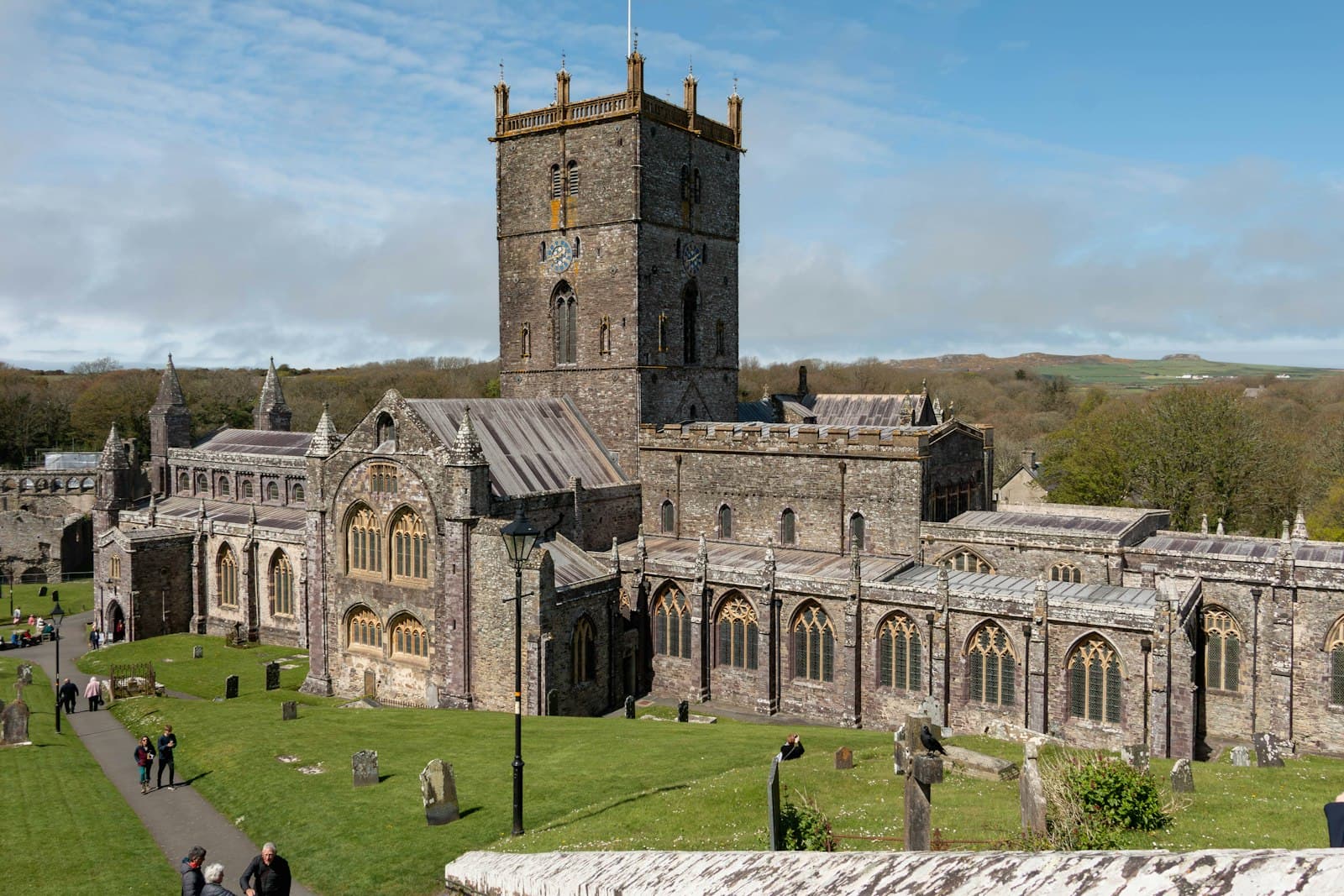
Cattedrale di St Davids
Il pavimento della cattedrale nasconde un segreto che potrebbe farti sentire un po' fuori asse.
La storia completa si sblocca nel tour
 presumably en:User:Chrisrivers / CC BY-SA 3.0, via Wikimedia Commons
Tour audio autoguidato di St Davids — percorso GPS a piedi, riproduzione offline, narrazione coinvolgente in 32 lingue.
“Dove antiche pietre incontrano mari selvaggi e la storia si diffonde nel vento.”
Non le cartoline. Le storie che nemmeno i locali conoscono — sussurrate nel tuo orecchio, proprio dove sono accadute.
Il pavimento della cattedrale nasconde un segreto che potrebbe farti sentire un po' fuori asse.
Il luogo di nascita del santo patrono del Galles è segnato da una cappella con un insolito allineamento e un pozzo con un passato curioso.
Le grandiose rovine del Palazzo Vescovile nascondono una storia di ambizione e l'approccio frugale di un vescovo alla magnificenza.
Scopri ogni segreto di St Davids
Ogni indirizzo, ogni rivelazione completa — nel tuo orecchio, proprio dove è accaduta.
Scegli le tue tappe. Cammini. La voce rivela ciò che gli altri perdono.
Il tuo tour audio autoguidato di St Davids è pronto — scegli i tuoi punti di interesse, seleziona la tua lingua e inizia nel momento in cui arrivi.
AcquistaLume include una guida in realtà aumentata. Alza il telefono: la fotocamera mostra la strada davanti a te, con una freccia luminosa sovrapposta all'immagine reale che punta sempre verso la tua prossima tappa — nessuna mappa da decifrare, nessuna svolta sbagliata. Come tutto in Lume, funziona completamente offline.
St Davids, o Tyddewi in gallese, detiene il primato di essere la città più piccola del Regno Unito, sia per popolazione che per area urbana. Nonostante le sue dimensioni compatte, questo insediamento costiero del Pembrokeshire, situato sulla costa più occidentale del Galles, porta il peso di secoli di significato spirituale e profonda storia. Prende il nome dal santo patrono del Galles, San Davide, che fondò un monastero qui nel VI secolo, la città è stata un importante sito di pellegrinaggio per oltre mille anni.
Il fascino della città risiede nella sua armoniosa fusione di patrimonio antico e la bellezza selvaggia della costa. Circondata dai paesaggi spettacolari del Parco Nazionale della Costa del Pembrokeshire, St Davids offre un'esperienza unica in cui i visitatori possono esplorare una magnifica cattedrale, passeggiare tra le rovine di un palazzo medievale e scoprire spiagge appartate e una fauna selvatica abbondante. Le sue stradine sono costellate di negozi indipendenti, gallerie e caffè, creando un'atmosfera accogliente che sembra più un villaggio unito che una città frenetica.
## L'Età dei Santi e le Incursioni dei Predoni La storia di St Davids inizia nel VI secolo con San Davide, il santo patrono del Galles. Fondò una comunità monastica in questo sito, allora conosciuto come Menevia o Mynyw, intorno al 560 d.C. Questo primo monastero divenne un rinomato centro intellettuale e religioso, attirando studiosi e monaci. Tuttavia, la sua importanza lo rese anche un bersaglio. Tra il 645 e il 1097, la comunità subì numerosi attacchi da parte di predoni, inclusi i Vichinghi, che saccheggiarono il santuario e assassinarono diversi vescovi.
## Influenza Normanna e Pellegrinaggio L'arrivo dei Normanni nell'XI secolo portò un certo grado di stabilità nella regione. Nel 1081, Guglielmo il Conquistatore visitò personalmente St Davids in pellegrinaggio, riconoscendone la santità. L'attuale Cattedrale di St Davids, costruita in arenaria viola scuro, fu iniziata nel 1181 dal vescovo normanno Peter de Leia, costruita sul presunto sito del monastero originale di San Davide. Nel 1123, Papa Callisto II dichiarò che due pellegrinaggi a St Davids equivalessero a uno a Roma, consolidando il suo status di importante sito di pellegrinaggio medievale. Questo decreto portò a un significativo sviluppo commerciale e amministrativo della città.
## La Grandezza del Palazzo Vescovile Adiacenti alla cattedrale si trovano le suggestive rovine del Palazzo Vescovile. Sebbene il sito risalga al VI secolo, gran parte della struttura visibile oggi fu costruita tra la fine del XIII e il XIV secolo. Il vescovo Thomas Bek iniziò importanti lavori di costruzione negli anni '80 del 1200, ma fu il vescovo Henry de Gower (1328-1347) a trasformarlo nel magnifico palazzo le cui rovine vediamo oggi. Il palazzo era un simbolo della ricchezza e del potere della chiesa medievale, sebbene il vescovo de Gower fosse noto per la sua visione architettonica e le sue oculate spese.
## Declino e Rinascita Il declino del palazzo iniziò nel XVI secolo durante la Riforma, quando il vescovo William Barlow smantellò il tetto, portando alla sua rovina. St Davids perse brevemente il suo status di città nel 1886, ma lo vide formalmente ripristinato dalla Regina Elisabetta II nel 1995, in gran parte grazie alla presenza della sua storica cattedrale.
Il fulcro di St Davids è la sua magnifica Cattedrale di St Davids, una struttura del XII secolo costruita in arenaria viola. Ospita il santuario di San Davide e San Giustiniano, e presenta un soffitto a navata in quercia finemente intagliato degli anni '30 del 1500, e stalli corali della fine del XV secolo con umoristici intagli misericordiali. Adiacenti alla cattedrale si trovano le suggestive rovine del Palazzo Vescovile, una residenza episcopale del XIV secolo che offre uno sfondo suggestivo per spettacoli all'aperto estivi.
A un miglio dal centro della città, affacciata sulla Baia di St Bride, si trovano le rovine della Cappella di St Non e il suo Pozzo Sacro, tradizionalmente ritenuti il luogo di nascita di San Davide. L'area intorno a St Davids è anche un punto di accesso al Sentiero Costiero del Pembrokeshire, che offre passeggiate costiere con viste su scogliere frastagliate e sul mare. Le spiagge vicine più popolari includono Whitesands Bay, nota per il surf e i sentieri escursionistici per St Davids Head, e Caerfai Bay, una baia tranquilla. Per gli amanti della fauna selvatica, le gite in barca da St Justinian's offrono opportunità per avvistare pulcinella di mare, foche, delfini e balene intorno alle isole al largo come Ramsey Island. La città stessa offre una selezione di negozi indipendenti, gallerie d'arte come Oriel y Parc e caffè.
St Davids è una destinazione che può essere apprezzata tutto l'anno, offrendo esperienze diverse in ogni stagione. La stagione calda, da inizio luglio a metà settembre, è ideale per attività all'aperto con clima mite, con temperature medie giornaliere massime superiori a 15°C e cieli più limpidi. Luglio vede anche le piogge medie più basse. L'autunno, in particolare settembre, è eccellente per l'avvistamento della fauna selvatica, con cuccioli di foca che appaiono nelle calette. La primavera, da maggio in poi, porta fioriture costiere e bel tempo per le passeggiate. Sebbene l'estate sia popolare, molti turisti si dirigono verso le spiagge, lasciando la città stessa un po' più tranquilla. L'inverno offre un'esperienza più tranquilla e riflessiva, con coste battute dal vento e caffè accoglienti.
St Davids si trova nel Pembrokeshire, Galles, a circa 140 km da Cardiff e 350 km da Londra. Sebbene sia la città più piccola del Regno Unito, è facilmente percorribile a piedi. Il parcheggio Merrivale (SA62 6RJ) si trova in una posizione comoda vicino alla Cattedrale e al Palazzo Vescovile, anche se può essere affollato nei periodi di punta. La città offre una gamma di alloggi, da B&B e hotel a campeggi e opzioni di self-catering. Le scelte gastronomiche includono pesce fresco, piatti tradizionali gallesi e opzioni vegetariane. Le attività commerciali locali spesso collaborano, offrendo tariffe speciali su vari prodotti e servizi. Per coloro che cercano avventura, coasteering, kayak e paddleboard sono attività popolari lungo la costa frastagliata.
St Davids — coreano, cinese, ebraico e altre 29 lingue, ogni tappa narrata da una voce madrelingua. La più ampia scelta di lingue tra i tour audio autoguidati.
Disponibile in: