Mine d'opale de Tequisquiapan
Au-delà des étals d'artisans colorés, le sol autour de Tequisquiapan recèle une pierre lumineuse, prisée depuis des générations.
L'histoire complète se débloque dans le tour
 Thelmadatter / CC BY-SA 3.0, via Wikimedia Commons
Visite audio autoguidée de Tequisquiapan — parcours GPS à pied, lecture hors ligne, narration en 32 langues.
“Une ville où la terre offre des opales, les vignes leurs fruits, et les façades coloniales reflètent des siècles de vie.”
Pas les cartes postales. Les histoires que même les habitants ignorent — soufflées à l'oreille, là où elles se sont passées.
Au-delà des étals d'artisans colorés, le sol autour de Tequisquiapan recèle une pierre lumineuse, prisée depuis des générations.
Un monument à Tequisquiapan le proclame 'centre géographique du pays', une désignation avec un passé fascinant, bien que débattu.
Ce parc serein, un espace verdoyant de la ville, conserve une structure datant de la première ère coloniale de Tequisquiapan, indiquant sa ressource essentielle.
Découvrez tous les secrets de Tequisquiapan
Chaque adresse, chaque révélation en entier — dans ton oreille, là où elle s'est passée.
Tu choisis tes lieux. Tu marches. La voix te révèle ce que les autres ignorent.

Votre visite audioguidée de Tequisquiapan vous attend — choisissez vos lieux, votre langue, et lancez-vous dès votre arrivée.
AcheterLume intègre un guide en réalité augmentée. Levez votre téléphone : sa caméra montre la rue devant vous, avec une flèche lumineuse posée sur l'image réelle qui pointe toujours vers votre prochain arrêt — aucune carte à déchiffrer, aucun mauvais virage. Comme tout dans Lume, ça fonctionne entièrement hors-ligne.
Tequisquiapan, affectueusement surnommée 'Tequis', détient la désignation de Pueblo Mágico dans l'État de Querétaro, une reconnaissance accordée aux villes célébrées pour leurs attributs culturels, historiques et naturels. À seulement deux heures de route de Mexico, cette ville coloniale attire les visiteurs avec ses rues pavées, son architecture colorée et une atmosphère tranquille qui invite à un rythme plus lent. Ici, les bougainvilliers dévalent les balcons en fer forgé, et l'arôme de la cuisine mexicaine traditionnelle se mêle au parfum subtil des vins locaux.
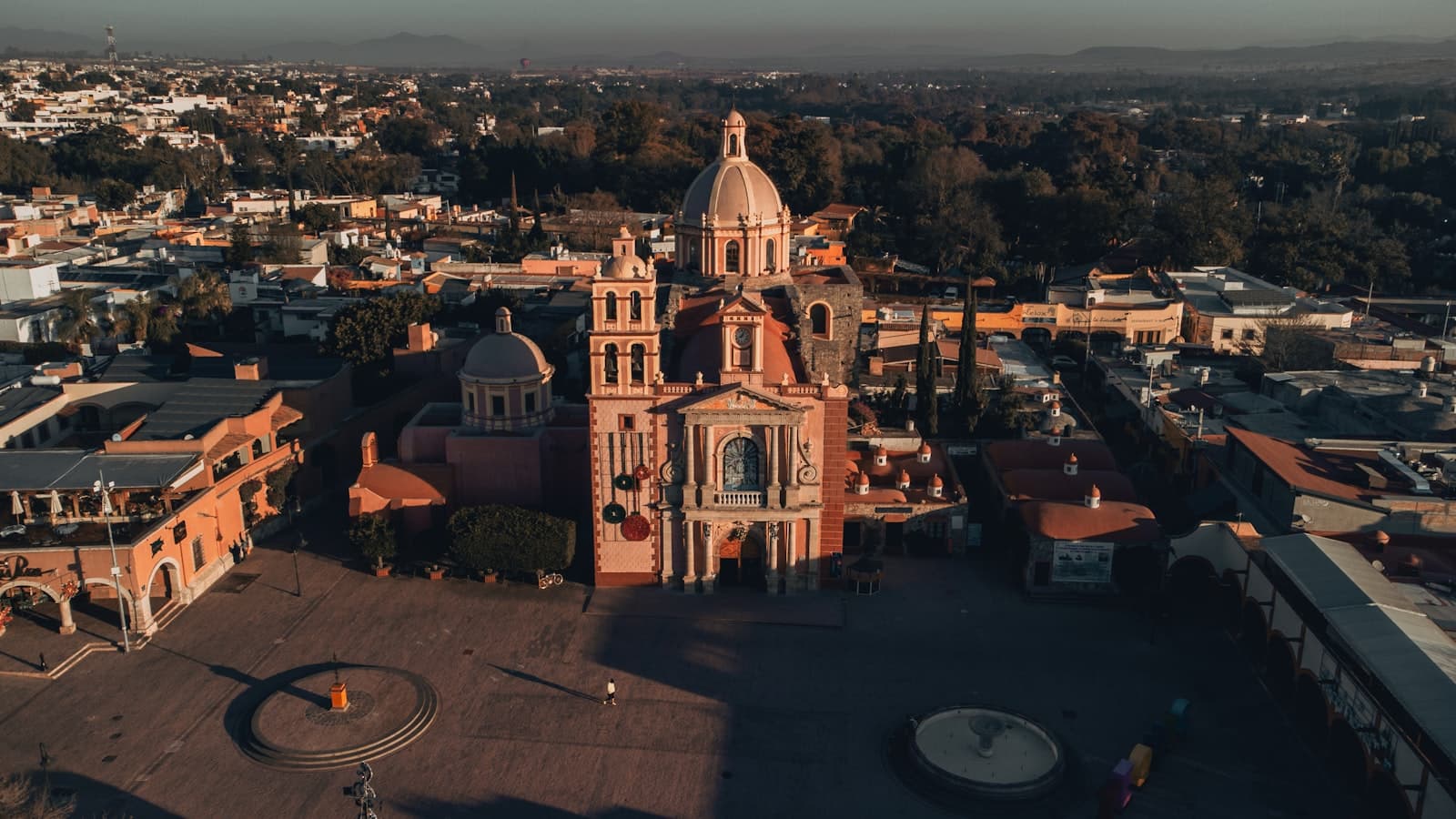
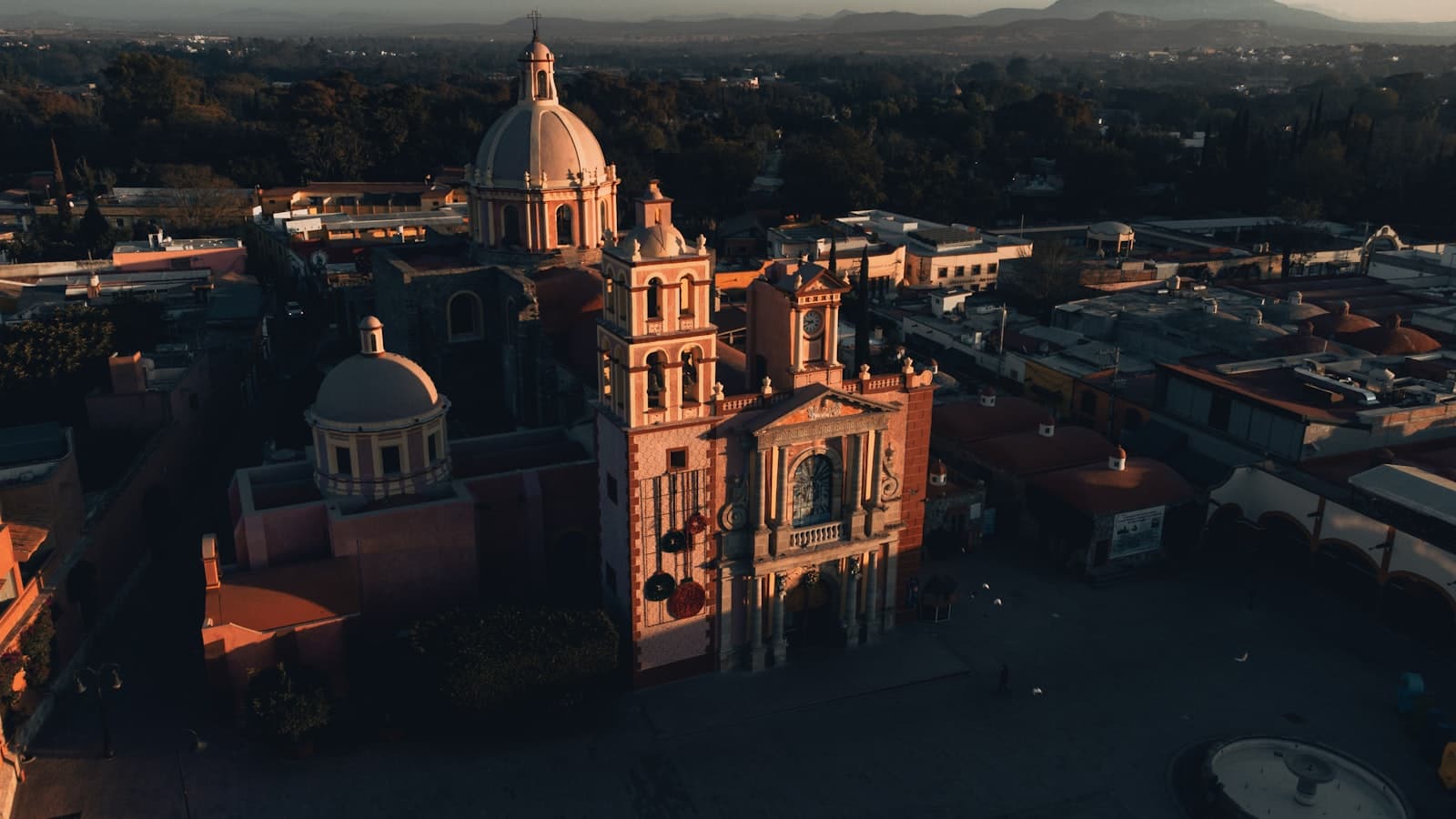
En son cœur se trouve la Plaza Miguel Hidalgo, une place principale animée encadrée par des arches en grès coloré et des structures coloniales. La façade rose saisissante de la Parroquia de Santa María de la Asunción se dresse comme un point central, surplombant des jardins et un kiosque à musique traditionnel. Tequisquiapan offre une destination qui combine gracieusement la détente avec des expériences culturelles distinctives, de l'exploration des marchés artisanaux à la dégustation du vin et du fromage célébrés de la région.
L'histoire de Tequisquiapan s'étend aux temps préhispaniques, bien avant son établissement colonial. La région était à l'origine habitée par les Otomis, un groupe indigène qui a laissé une empreinte culturelle significative. Le nom Nahuatl de la région, 'Tetzquixquitlapan', signifiant 'lieu des eaux et des pierres', témoigne de l'abondance des ressources naturelles, en particulier des sources thermales qui ont été une caractéristique déterminante depuis les temps anciens.
Avec l'arrivée des Espagnols au 16e siècle, Tequisquiapan a commencé sa transformation. En 1551, par décrets royaux de Charles V et signés par le vice-roi Don Luis de Velasco, la ville fut officiellement fondée sous le nom de Santa María de la Asunción et Aguas Calientes. Au cours de cette première période coloniale, Tequisquiapan fit partie de l'encomienda de San Juan del Río, son économie étant principalement axée sur l'agriculture et l'élevage. Fait intéressant, malgré des siècles d'influence espagnole, le tracé des rues de la ville a largement conservé son caractère sinueux et indigène plutôt que d'adopter le plan en grille espagnol typique, un témoignage de la présence durable de sa population autochtone.
Le 18e siècle a vu une croissance substantielle, marquée par la construction de la Parroquia de Santa María de la Asunción, un bâtiment de style baroque avec une impressionnante façade en pierre rose qui orne toujours la place principale aujourd'hui. Le 19e siècle a apporté la guerre d'indépendance mexicaine, laissant sa marque sur l'histoire de la ville, bien qu'aucune bataille majeure n'ait été menée directement dans la région. En 1861, elle fut officiellement déclarée ville sous le nom de Villa de Mateos Tequisquiapan.
Dans les années 1970, la région a commencé à être reconnue pour son développement agricole et viticole. La production de raisin, qui a débuté au début des années 1960, est devenue une industrie importante, à tel point qu'elle figure maintenant sur le sceau municipal de Tequisquiapan. Ce succès agricole, associé à son architecture coloniale préservée et à ses sources chaudes naturelles, a conduit à ce que Tequisquiapan soit officiellement nommée Pueblo Mágico en 2012, une distinction qui a encore renforcé son attrait touristique.
Commencez votre exploration à la Plaza Miguel Hidalgo, la place principale animée, où vous pourrez admirer la Parroquia de Santa María de la Asunción néoclassique avec son grès rose distinctif. Promenez-vous sous les arches en grès coloré qui encadrent la place, où se trouvent divers cafés et boutiques.
À quelques pâtés de maisons, découvrez le Parc La Pila, un espace vert tranquille abritant des arbres anciens et les vestiges d'un réservoir du XVIe siècle, un lien avec les sources d'eau historiques de la ville. Pour une compréhension plus approfondie de la culture locale, visitez le Mercado Artesanal de Tequisquiapan, où vous trouverez un large éventail d'artisanat, en particulier les paniers tressés réputés de la région, ainsi que des céramiques, des articles en cuir et des bijoux en opale.
Au-delà du centre-ville, embarquez pour une aventure à la Mine d'opale de Tequisquiapan (Mina de Ópalos La Carbonera), où vous pourrez découvrir l'histoire de l'extraction d'opale et même essayer de trouver vos propres pierres semi-précieuses. Tequisquiapan est également une étape clé de la Route du Vin et du Fromage de Querétaro. Envisagez une visite à Viñedos La Redonda, l'un des principaux producteurs de vin de la municipalité, pour des visites et des dégustations. Pour une perspective distinctive, envisagez un vol en montgolfière au-dessus des vignobles et des collines. Ne manquez pas le Musée Miniature México Me Encanta!, une collection fascinante représentant la vie mexicaine typique en figurines miniatures.
La période optimale pour visiter Tequisquiapan pour un temps agréable et des activités de plein air est pendant la saison sèche, de novembre à avril. Pendant ces mois, attendez-vous à des températures agréables, avec des maximales diurnes d'environ 25°C (77°F) et des soirées plus fraîches, ce qui est idéal pour explorer la ville et ses attractions environnantes. Le célèbre Festival National du Fromage et du Vin (Feria Nacional del Queso y el Vino) a généralement lieu fin mai ou début juin, un moment fort pour de nombreux visiteurs. Bien que les mois d'été (mai à octobre) apportent des pluies occasionnelles, ils offrent également des paysages verdoyants et des prix potentiellement plus bas, les sources thermales étant particulièrement invitantes pendant les périodes plus fraîches.
Tequisquiapan se découvre facilement à pied, de nombreuses attractions, boutiques et restaurants étant accessibles à pied depuis la place principale. Des taxis et des transports locaux sont également disponibles. Si vous prévoyez d'explorer au-delà du centre-ville, comme les vignobles ou les mines d'opale, la location d'une voiture est conseillée, car les options de transport en commun peuvent être limitées. La ville est généralement considérée comme sûre pour les touristes, avec une communauté locale accueillante et un faible taux de criminalité. Cependant, il est toujours prudent d'être conscient de votre environnement et d'observer les précautions de sécurité standard. La plupart des nationalités n'ont pas besoin de visa pour des séjours allant jusqu'à 180 jours. Des notions d'espagnol sont utiles pour les interactions en dehors des principales zones touristiques, car l'anglais n'est pas largement parlé.
Tequisquiapan en coréen, en chinois ou en hébreu — et dans 29 autres langues, chaque étape narrée par une voix native. La plus large gamme de langues de tous les audioguides autoguidés.
Disponible en :