The white houses of Thorn
The striking white facades of Thorn's buildings are more than just pretty; they recount a story of defiance against an unexpected tax.
Full story unlocks in the tour
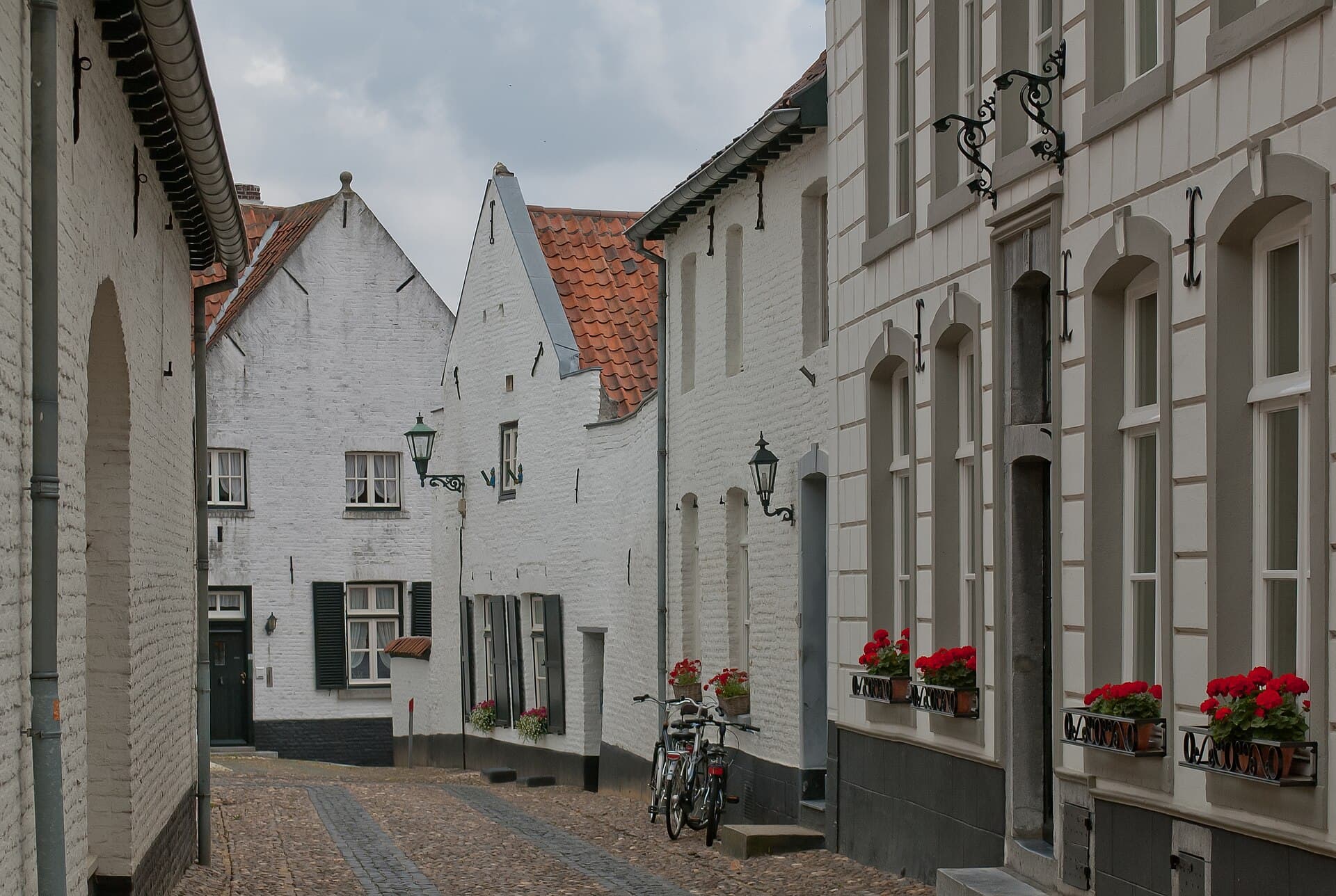 Alupus / CC BY-SA 3.0, via Wikimedia Commons
Self-guided audio walking tour of Thorn — GPS route, offline playback, story-driven narration in 32 languages.
“Walk through a whitewashed world where noblewomen once held sway over their own miniature state.”
Not the postcards. The stories even locals don't know — whispered in your ear, right where they happened.
The striking white facades of Thorn's buildings are more than just pretty; they recount a story of defiance against an unexpected tax.
This imposing church once served as the heart of a distinctive female-led principality, and its crypt holds a surprising, centuries-old puzzle.
Even in its fragments, an old gate in Thorn speaks of a time when the town offered a unique kind of protection.
Discover every secret of Thorn
Every address, every reveal in full — in your ear, right where it happened.
You pick your stops. You walk. The voice reveals what the others miss.


Your self-guided audio tour of Thorn is ready — pick your landmarks, choose your language, and start the moment you arrive.
BuyLume has a built-in augmented-reality guide. Hold your phone up and its camera shows the street ahead of you, with a glowing arrow laid over the real view that always points to your next stop — no map to puzzle over, no wrong turns. Like everything in Lume, it works fully offline.
Step into Thorn, a village in the Dutch province of Limburg, where time seems to slow, and every whitewashed facade recounts a remarkable past. Known affectionately as 'the white town' or 'Het Witte Stadje,' Thorn's unique aesthetic is instantly captivating, setting it apart from other Dutch villages.
This isn't merely a quaint village; it's a place with a thousand-year story that saw it transform from a swampy region into a powerful, independent principality. For over 800 years, Thorn was governed by a succession of influential princess-abbesses and noblewomen, creating a legacy of female rule that is rare in European history. As you wander its narrow, paved paths, you'll uncover layers of history, from its abbey origins to the unexpected reason behind its iconic white houses.
## From Swamp to Sovereign State Thorn's story begins around 975 AD, when the area, once a swamp near a Roman road, was drained. Bishop Ansfried of Utrecht and his wife founded a Benedictine nunnery here, reportedly for their daughter, who became its first abbess. This humble beginning quickly evolved. By the 12th century, the nunnery had transformed into a 'secular stift' or convent, shifting its focus from strictly religious duties to secular governance.
What emerged was truly extraordinary: Thorn became a sovereign miniature principality within the Holy Roman Empire, a self-governing state with its own jurisdiction and even its own currency. For over eight centuries, Thorn was ruled by a succession of 33 princess-abbesses, assisted by a chapter of noblewomen. These women, often from the highest aristocracy, wielded significant power, managing vast land holdings across what is now the Netherlands, Belgium, and Germany. This period of female rule fostered a unique blend of European architecture and culture, distinct from other parts of the Netherlands.
## The French Invasion and the White Transformation The principality's independence came to an abrupt end with the arrival of the French in 1794. The ruling noblewomen fled, and poorer inhabitants moved into their former residences. The French introduced a new tax system, notoriously levying property taxes based on the size of a house's windows. To reduce their tax bills, many residents bricked up windows, creating visible alterations to their homes. To conceal these 'scars of poverty' and the mismatched brickwork, they began whitewashing their houses. This practical solution inadvertently created Thorn's most iconic feature, a tradition that continues to this day, making the historic center a protected monument since 1974.
## Modern Thorn After the French occupation, Thorn became part of the United Kingdom of the Netherlands in 1815. While it remained a municipality until 2007, it was then merged into the larger municipality of Maasgouw. Today, Thorn, with its approximately 2,500 inhabitants, continues to draw visitors with its unique history, charming white houses, and tranquil atmosphere.
The heart of Thorn's appeal lies in its historic center, a protected cityscape best explored on foot. Wander the picturesque paved paths, lined with the iconic whitewashed houses that give the village its distinctive character.
Dominating the skyline is the Abbey Church of St. Michael (Sint-Michaëlskerk), a Gothic cross basilica with Romanesque westwork dating back to the 10th century. Its baroque interior, with an imposing high altar and the raised 'Regentess' Choir,' offers a glimpse into the lives of the noblewomen who once governed Thorn. Do not miss the crypt, which holds a curious historical puzzle.
For a deeper dive into Thorn's past, visit Museum Het Land van Thorn. Located in the same building as the local tourist information office, the museum showcases archaeology, the history of the abbesses, and features a remarkable 1:100 scale model of the town. Just outside the center, you'll find the serene Kapel onder de Linden (Chapel under the Lindens), a small, white chapel with a centuries-old devotional history.
Beyond the village itself, Thorn is situated within the RivierPark Maasvallei nature reserve, offering scenic walking and cycling routes along the Maas River, through meadows, and past nature reserves like Koningssteen, where Galloway cattle and Konik horses graze. You can also explore remnants of the old abbey complex, including former gate buildings and the site of the abbey kitchens along Hofstraat.
The most comfortable time to visit Thorn is from late spring through early autumn, specifically May to September. During these months, the weather is mild, with average highs ranging from 18°C to 25°C (64°F to 77°F), making it ideal for strolling the white streets and enjoying the surrounding nature. Summers offer up to 16 hours of daylight, perfect for extended exploration. While summer (June to August) attracts more visitors, Thorn remains a relatively quiet village. Spring and early autumn provide pleasant conditions with fewer crowds and beautiful light for photography.
Thorn's historic center is largely car-free, so if arriving by car, you'll need to park in designated paid parking lots on the outskirts of the village. Options include P1, P2, and Meers. For those relying on public transport, Thorn doesn't have its own train station. The nearest stations are in Roermond and Weert, both connected to Thorn by bus line 73, which runs hourly. The bus journey from Roermond takes approximately 24 minutes, and from Weert, about 27 minutes.
Once in Thorn, the village center is easily explored on foot, though the paved paths might be challenging for those with impaired mobility. Bicycles are an excellent way to explore the wider area, with rentals available locally. The VVV Thorn (Tourist Information) is located in the Museum Thorn building and can provide maps, walking and cycling routes, and information on local events and boat trips on the Maasplassen. Free WiFi is generally available in cafes and hotels. Uber is also an option for getting around Thorn.
Thorn in Korean, in Chinese or in Hebrew — and 29 more languages, every stop narrated by a native voice. The widest language range of any self-guided audio tour.
Available in: