Plaza de Armas, Tumbes
Observe el intrincado mosaico en la plaza central de Tumbes. Narra una saga mucho más antigua que la llegada española, insinuando una feroz resistencia local.
La historia completa se desbloquea en el tour
 Pol eck / CC BY-SA 2.0, via Wikimedia Commons
Tour de audio autoguiado de Tumbes — ruta GPS a pie, reproducción offline, narración en 32 idiomas.
“Donde el desierto abraza el mar y los ecos ancestrales resuenan entre los manglares.”
No las postales. Las historias que ni los locales conocen — al oído, justo donde ocurrieron.
Observe el intrincado mosaico en la plaza central de Tumbes. Narra una saga mucho más antigua que la llegada española, insinuando una feroz resistencia local.
Se cree que las preciadas conchas negras, un manjar local, poseen un vigor particular.
El nombre de este pueblo de playa tiene un origen peculiar, vinculado a una industria inesperada en el pasado de Perú.
Descubre todos los secretos de Tumbes
Cada dirección, cada revelación al completo — a tu oído, justo donde ocurrió.
Eliges tus paradas. Caminas. La voz te revela lo que los demás ignoran.


Tu tour de audioguía por Tumbes te espera — elige tus lugares, tu idioma y empieza al llegar.
ComprarLume incluye una guía de realidad aumentada. Levanta el móvil y su cámara muestra la calle que tienes delante, con una flecha luminosa sobre la imagen real que siempre apunta a tu próxima parada — sin mapas que descifrar, sin giros equivocados. Como todo en Lume, funciona completamente sin conexión.
Tumbes, una ciudad vibrante en el noroeste de Perú, ofrece un punto de entrada atractivo a una región donde la costa del Pacífico se encuentra con exuberantes bosques secos tropicales y ecosistemas de manglares únicos. Conocida como 'La Ciudad del Eterno Verano' debido a su clima constantemente cálido, Tumbes presenta una fusión de esplendor natural, historia cautivadora y un distintivo estilo de vida costero.
Ubicada cerca de la frontera con Ecuador, Tumbes funciona como un centro dinámico con una población de aproximadamente 110,000 habitantes, brindando una visión auténtica de la existencia costera peruana. Desde sus playas vírgenes como Punta Sal y Zorritos hasta los intrincados canales del Santuario Nacional Los Manglares de Tumbes, la ciudad es un destino principal para quienes buscan tanto el reposo como la aventura.
Más allá de sus maravillas naturales, Tumbes posee una historia cautivadora que precede al Imperio Inca y desempeñó un papel fundamental en la conquista española de Perú. Su paisaje culinario, profundamente moldeado por la abundancia de mariscos frescos y los ingredientes únicos obtenidos de sus manglares, ofrece sabores distintos de otras partes de la costa peruana.
La narrativa de Tumbes se remonta a épocas preincaicas, mucho antes de la llegada de los exploradores europeos. La región estuvo habitada originalmente por el pueblo Tumpis, célebres navegantes y comerciantes que prosperaron gracias a la riqueza del mar y al fértil delta del río. Su economía se vio significativamente impulsada por la recolección de conchas de Spondylus, que tenían un significado sagrado y servían como moneda y objetos rituales en toda la región andina.
Alrededor del año 1400, el Imperio Inca, bajo el dominio del Inca Pachacuti, extendió su alcance para incluir Tumbes, transformándola en una importante fortaleza política y militar. Más tarde, el emperador Huayna Cápac desarrolló aún más la ciudad, encargando la construcción de caminos, viviendas y palacios, consolidando el papel de Tumbes como un centro administrativo y militar clave que supervisaba las fronteras del norte del imperio.
Tumbes ocupa un lugar significativo en la historia europea como la ciudad peruana inicial encontrada por el conquistador español Francisco Pizarro. Su primera visita en 1528 le dio un vistazo a la riqueza del Imperio Inca, lo que lo impulsó a regresar en 1532. Durante esta segunda expedición, Pizarro enfrentó la resistencia del cacique local Chilimasa en lo que se conoció como la Batalla de los Manglares.
Las primeras crónicas españolas describieron Tumbes como una ciudad próspera y bien organizada con impresionantes estructuras de piedra y una fortaleza. Tras el eventual triunfo de Pizarro, se dice que se colocó una cruz en el territorio invadido, simbolizando la victoria hispana.
Durante el período colonial, Tumbes experimentó una fase de relativo abandono, sirviendo principalmente como punto de tránsito entre Trujillo y Guayaquil. Sin embargo, su estratégica ubicación fronteriza continuó siendo un punto de intercambio y tensión ocasional con Ecuador. Tumbes recuperó importancia en el siglo XX, particularmente después del conflicto peruano-ecuatoriano de 1941, cuando se convirtió oficialmente en un departamento (región) independiente de Perú en 1942.
Hoy en día, Tumbes sigue siendo una ciudad fronteriza vital, valorada por su entorno natural único, incluido el Santuario Nacional Los Manglares de Tumbes, establecido en 1988 para salvaguardar sus distintivos bosques de manglares.
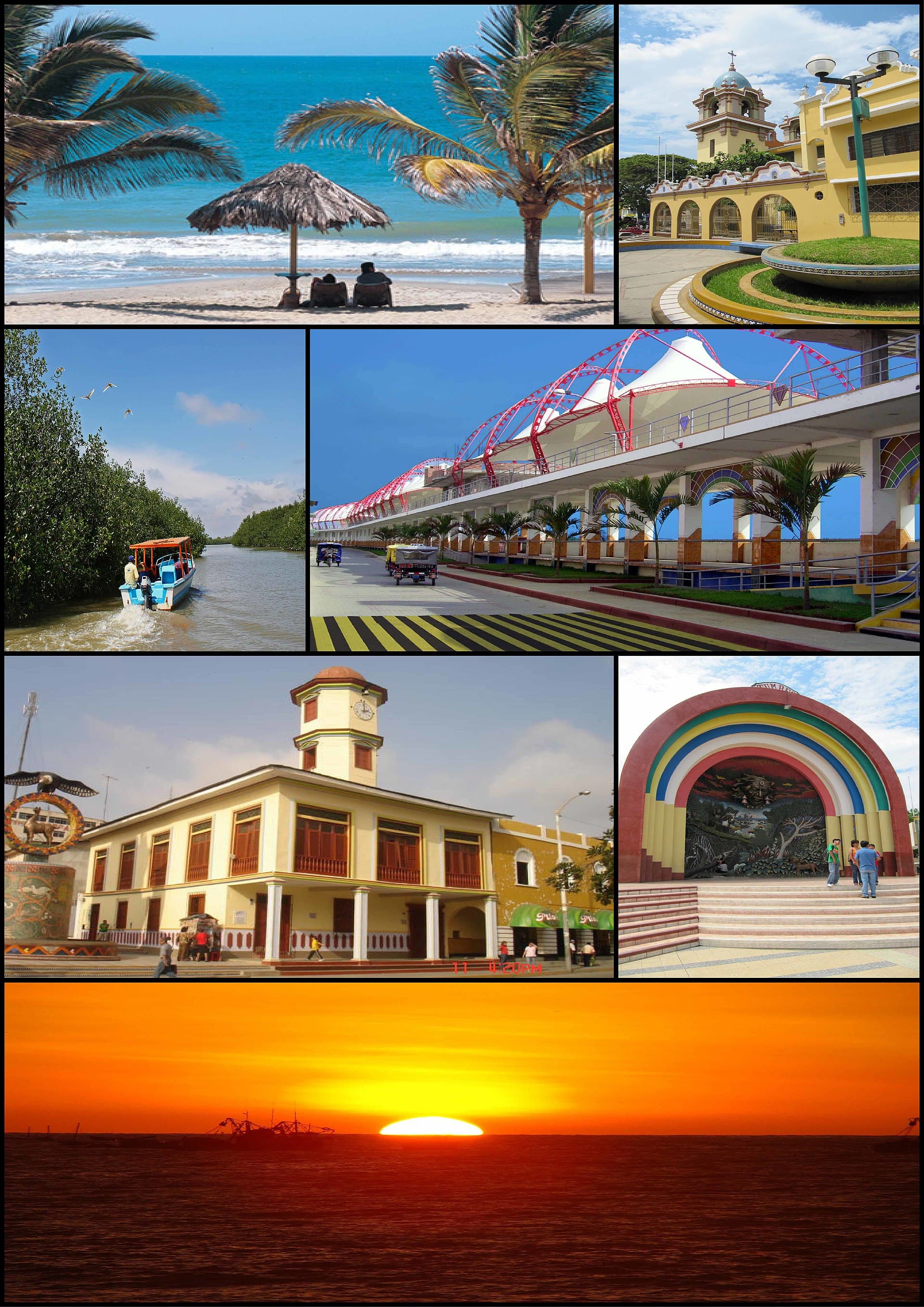
Comience su viaje en la Plaza de Armas, el corazón de Tumbes, donde la llamativa 'Concha Acústica' presenta un evocador mosaico que representa el encuentro histórico entre los españoles y el cacique local Chilimasa. Adyacente a la plaza se encuentra la Iglesia Matriz de San Nicolás de Tolentino, un santuario de estilo barroco erigido por sacerdotes agustinos, que alberga intrincadas imágenes y vidrieras.
Para probar la vida local, pasee por los mercados locales, donde podrá encontrar productos frescos y especialidades regionales. A poca distancia de la ciudad se encuentra Puerto Pizarro, la entrada al Santuario Nacional Los Manglares de Tumbes. Aquí, los paseos en bote navegan por intrincados canales de manglares, ofreciendo oportunidades para observar diversas especies de aves, iguanas e incluso cocodrilos americanos. Desde Puerto Pizarro, también puede visitar encantadoras islitas como la Isla del Amor y la Isla Hueso de Ballena.
Más allá de los manglares, Tumbes ofrece maravillosas playas. Punta Sal es conocida por sus aguas cálidas y tranquilas, ideales para nadar y relajarse, mientras que Zorritos ofrece tranquilos tramos de arena perfectos para descansar. Para los interesados en la historia, la Zona Arqueológica Cabeza de Vaca ofrece una ventana a las culturas preincaicas e incas con sus estructuras de adobe y piedra.
Los entusiastas de la naturaleza también deben considerar una excursión al Parque Nacional Cerros de Amotape, que protege uno de los últimos bosques secos tropicales de Perú, ofreciendo senderos a través de colinas y quebradas donde se pueden encontrar venados de cola blanca y monos aulladores.
Tumbes disfruta de un clima cálido y tropical durante todo el año, con temperaturas promedio que oscilan entre 24°C y 32°C. La época más favorable para visitar y disfrutar de un clima agradable y actividades al aire libre es durante la estación seca, que generalmente se extiende de mayo a noviembre. Durante estos meses, experimentará temperaturas agradables y mínimas precipitaciones, perfecto para explorar playas, manglares y parques nacionales.
La estación húmeda ocurre de enero a abril, trayendo condiciones más cálidas y húmedas y mayores precipitaciones, particularmente en febrero y marzo. Si bien el mar permanece cálido durante este período, coincide con las multitudes de la temporada alta de verano peruana en las playas y una mayor actividad de mosquitos, por lo que el repelente de insectos es esencial.
La moneda oficial en Tumbes, y en todo Perú, es el Nuevo Sol Peruano (PEN). Si bien los dólares estadounidenses son aceptados en algunos establecimientos más grandes, es aconsejable llevar soles para las transacciones diarias, especialmente en mercados locales y para compras más pequeñas. Los cajeros automáticos están ampliamente disponibles y las casas de cambio ofrecen tarifas competitivas.
Para llegar a Tumbes, la opción más rápida es un vuelo de 1.5 a 2 horas desde el Aeropuerto Internacional Jorge Chávez (LIM) de Lima al Aeropuerto Capitán FAP Pedro Canga Rodríguez (TBP). Viajar en autobús desde Lima es una alternativa más económica pero mucho más larga, con una duración de 18 a 20 horas. Una vez en Tumbes, los mototaxis son una forma común y asequible de moverse por la ciudad para distancias cortas; siempre acuerde la tarifa de antemano.
En cuanto a la seguridad, Tumbes se considera generalmente segura para los turistas, pero es aconsejable tomar precauciones, especialmente por la noche, y estar atento a su entorno en áreas concurridas. Se recomienda usar repelente de mosquitos, beber agua embotellada y llevar un botiquín básico.
Tumbes en coreano, en chino o en hebreo — y 29 idiomas más, cada parada narrada por una voz nativa. La mayor variedad de idiomas de cualquier audioguía autoguiada.
Disponible en: