Valga-Valka Central Square
One can genuinely occupy two countries at once.
Full story unlocks in the tour
 Sten153 / CC BY-SA 4.0, via Wikimedia Commons
Self-guided audio walking tour of Valga — GPS route, offline playback, story-driven narration in 32 languages.
“Where two nations converge, a single narrative unfolds.”
Not the postcards. The stories even locals don't know — whispered in your ear, right where they happened.
One can genuinely occupy two countries at once.
The distinctive form of this church is more than mere design; it echoes a historical period.
Step into a recreated bunker and encounter a piece of history that is both absorbing and powerful.
Discover every secret of Valga
Every address, every reveal in full — in your ear, right where it happened.
You pick your stops. You walk. The voice reveals what the others miss.
Your self-guided audio tour of Valga is ready — pick your landmarks, choose your language, and start the moment you arrive.
BuyLume has a built-in augmented-reality guide. Hold your phone up and its camera shows the street ahead of you, with a glowing arrow laid over the real view that always points to your next stop — no map to puzzle over, no wrong turns. Like everything in Lume, it works fully offline.
Valga, a town in southern Estonia, shares more than just a boundary with its Latvian counterpart, Valka; they are, in essence, one urban area divided by an invisible line. This distinctive cross-border identity shapes its character, presenting a fusion of Estonian and Latvian cultures, languages, and histories. What was once a singular town, known as Walk, was formally separated in 1920, a resolution to competing claims following World War I. Today, the Schengen Agreement renders the border seamless, permitting effortless movement between the two halves.
Beyond its particular dual nationality, Valga is a calm destination with a quiet allure. Its avenues reveal a mix of historical brick architecture and verdant expanses, offering a peaceful respite. The town functions as a regional nexus and a convenient point from which to explore the scenic vistas of both southern Estonia and northern Latvia. Valga's narrative is one of resilience and adaptation, a location where historical divisions have matured into a contemporary, integrated community.
## From Livonian Center to Divided City Valga's beginnings trace back to 1286, when it first appeared under its German designation, "Walk." For centuries, it functioned as a significant hub in Old Livonia, home to Estonians, Latvians, Germans, and Russians. The town's strategic placement at a confluence of roads and railways established it as a vital crossing point, a role that remained significant into the early 20th century.
Valga's standing as a unified entity transformed dramatically after World War I. Both newly independent Estonia and Latvia asserted claims to the town. In 1920, British envoy Colonel S. G. Tallents was charged with resolving the disagreement. His solution involved dividing the city, with the boundary tracing the Pedeli River. The Estonian portion became Valga, and the Latvian portion became Valka. This separation led to the establishment of border posts and customs services, creating a tangible division within what was once a single community.
## Soviet Era and Re-unification During the Soviet occupation of both Estonia and Latvia, commencing in 1940, the boundary between Valga and Valka became primarily administrative and virtually absent. However, with the restoration of independence for both countries in 1991, the boundary reappeared, once again creating a physical and administrative separation. Border checks persisted until 2007, when both Estonia and Latvia joined the Schengen Agreement. This marked a profound moment, as systematic border controls were removed, effectively bringing the twin towns together in a practical sense. Today, Valga and Valka operate with close cross-border cooperation, sharing a common motto: "1 City, 2 States."
Begin your exploration at the Valga-Valka Central Square, a contemporary public space that physically embodies the twin city's distinctive cross-border identity. Here, one can stand with one foot in Estonia and the other in Latvia, or even swing across the international boundary on a specially designed swing.
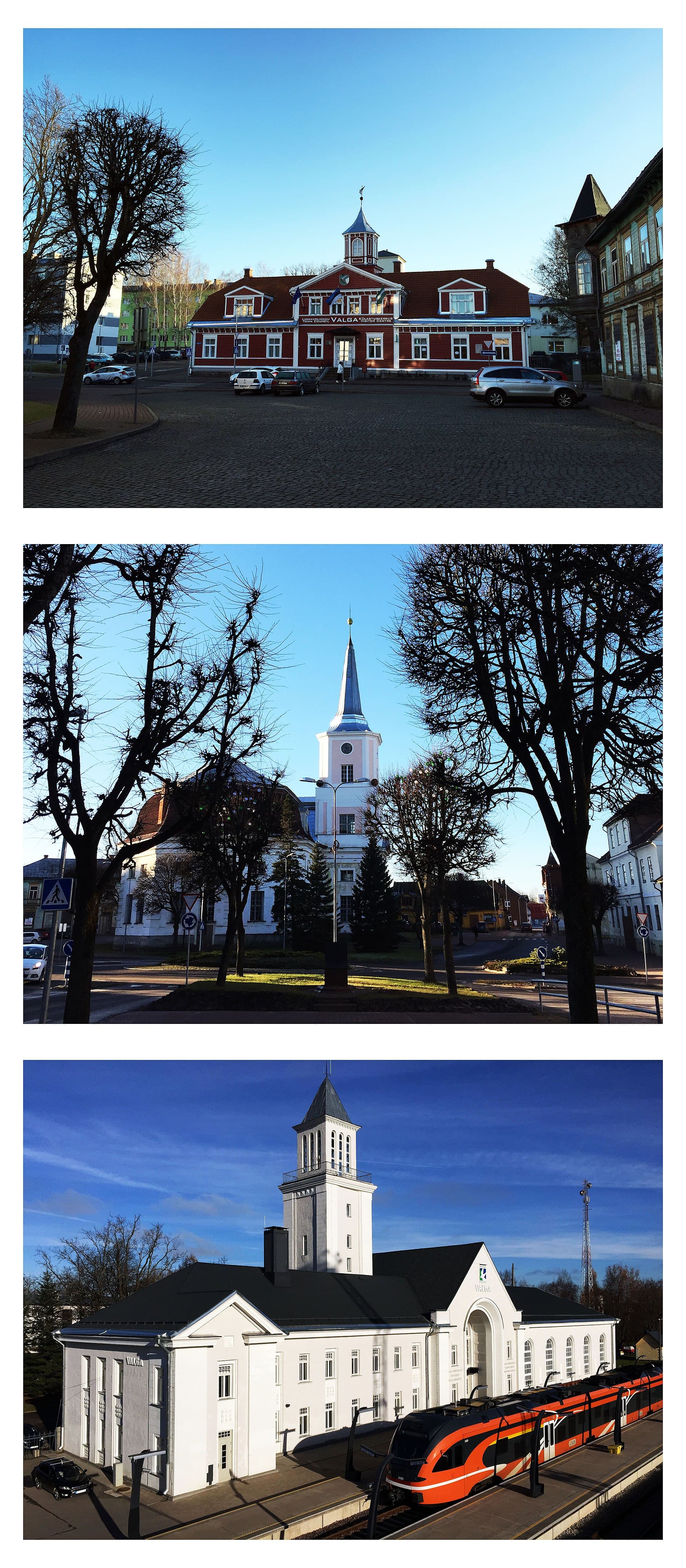
Delve into local history at the Valga Museum, which spans topics from archaeology to Estonia's re-independence. For a more focused examination of military history, the Valga Military Theme Park offers insights into Estonia's national defense, including military vehicles, a tank, and a recreated bunker of the Forest Brothers. The Valga Town Hall, constructed in 1865, stands as Valga's oldest wooden building and is a notable example of historical wooden architecture. Nearby, St. John's Church, with its distinctive oval ground plan and a unique organ, is a significant architectural and historical landmark. For those seeking natural splendor, the Pedeli River Nature Trail provides opportunities for walking, cycling, and rollerblading along the river, with playgrounds and a beach available during summer. Further afield, Sangaste Castle, a neo-Gothic masterwork, is considered one of the most important examples of its architectural style in the Baltic States.
The ideal time to visit Valga for warm-weather pursuits is from late June to mid-August, when average daily high temperatures exceed 64°F (18°C) and skies are clearest. July is typically the warmest month, with an average high of 72°F (22°C). For those who prefer milder temperatures and fewer crowds, the transitional seasons of May and September also offer pleasant conditions. Winters, from November to March, are cold, snowy, and windy, with temperatures seldom rising above 36°F (2°C), yet can be enchanting for winter activities such as skiing.
Valga is a relatively small and quiet town, well-suited for a brief visit or a peaceful stopover. While the boundary with Valka is open, it is advisable for non-EU citizens to carry a valid ID or passport. The town functions as a transportation center, with the Valga railway station providing connections to Tartu, Tallinn, and Riga. Public bus transport also links Valga and Valka. Within Valga, tap water is safe for consumption. Card payments are widely accepted in most supermarkets, restaurants, and shops, so cash is rarely necessary. For dining, traditional Estonian and some Latvian dishes are common, with limited international and vegan selections. Tipping is courteous but optional, with 5-10% appreciated in restaurants for good service.
Valga in Korean, in Chinese or in Hebrew — and 29 more languages, every stop narrated by a native voice. The widest language range of any self-guided audio tour.
Available in: