Viljandi Castle Ruins
The remnants of Viljandi Castle conceal a past grandeur few imagine today.
Full story unlocks in the tour
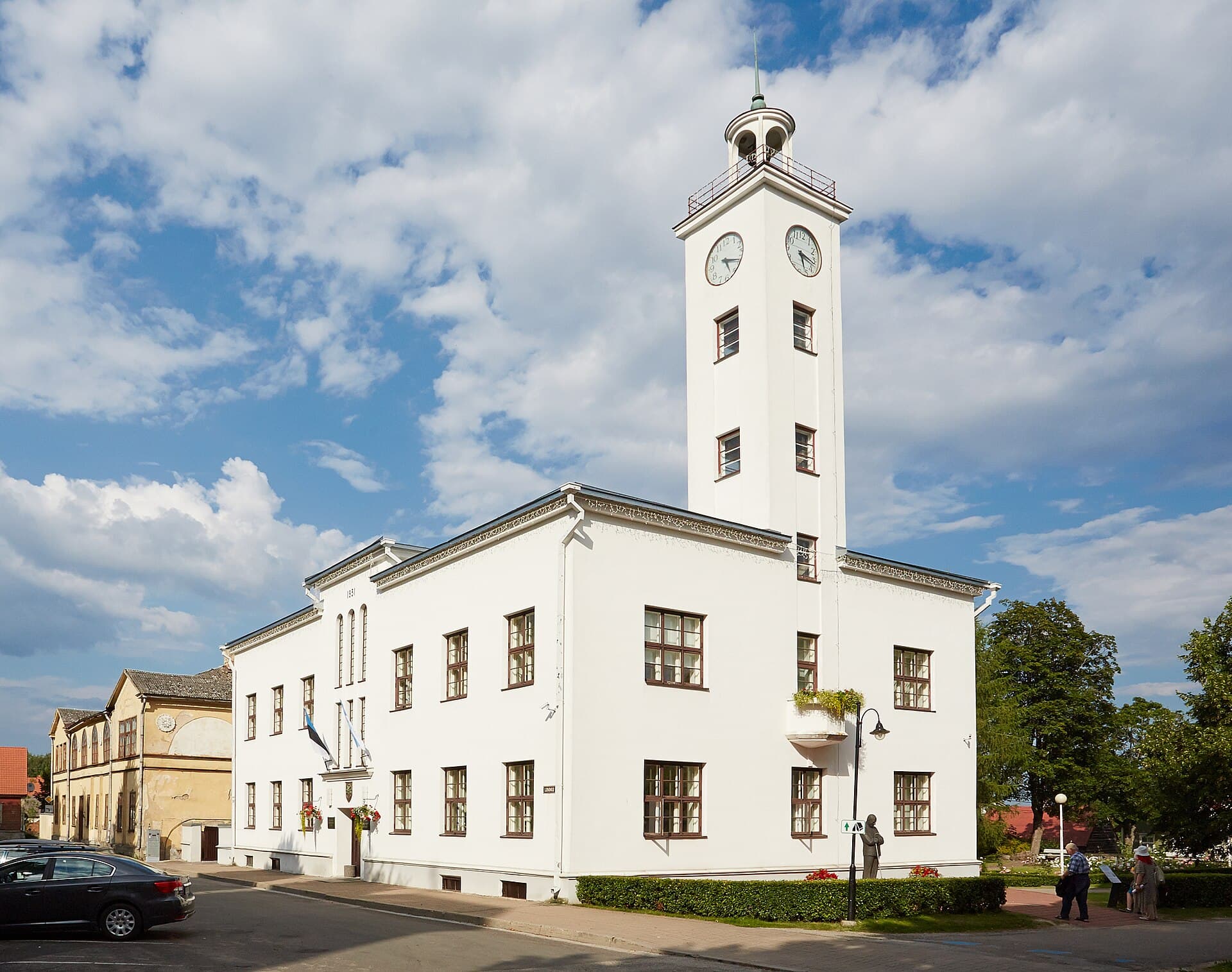 Vaido Otsar / CC BY-SA 4.0, via Wikimedia Commons
Self-guided audio walking tour of Viljandi — GPS route, offline playback, story-driven narration in 32 languages.
“Where medieval echoes meet an artistic pulse.”
Not the postcards. The stories even locals don't know — whispered in your ear, right where they happened.
The remnants of Viljandi Castle conceal a past grandeur few imagine today.
The calm waters of Lake Viljandi are said to carry an enduring yearning.
Wander through Viljandi, and you will encounter an unexpected, delightful motif scattered throughout the city center.
Discover every secret of Viljandi
Every address, every reveal in full — in your ear, right where it happened.
You pick your stops. You walk. The voice reveals what the others miss.


Your self-guided audio tour of Viljandi is ready — pick your landmarks, choose your language, and start the moment you arrive.
BuyLume has a built-in augmented-reality guide. Hold your phone up and its camera shows the street ahead of you, with a glowing arrow laid over the real view that always points to your next stop — no map to puzzle over, no wrong turns. Like everything in Lume, it works fully offline.
Viljandi, a city in southern Estonia, offers a blend of medieval history, creative culture, and peaceful lakeside scenery. Often called Estonia's cultural capital, it provides a slower, more authentic Estonian experience. With its castle ruins overlooking rolling landscapes, a lively music scene, and an Old Town filled with wooden architecture, Viljandi feels both historic and alive.
Unlike larger urban centers, Viljandi invites visitors to slow down and connect with local traditions, nature, and art. It is particularly known for its folk music heritage, annual festivals, and a welcoming community, making it a favorite among culture-focused travelers. Whether you are walking along Lake Viljandi, exploring medieval ruins, or enjoying a quiet café in the Old Town, Viljandi rewards curiosity and encourages a relaxed pace.
The first records of civilization in the Viljandi area date back to the 5th millennium B.C. By the 12th century, a permanent settlement and an earthen stronghold had emerged, becoming the economic center of the ancient Sakala district. The first written record of the Viljandi stronghold appeared in 1154 in al-Idrisi's world atlas, Geography.
In 1211, a joint army of Germans, Latvians, and Livonians besieged the Estonian hillfort in Viljandi. The Livonian Sword Brethren captured the hillfort in 1223, and construction of a powerful stone order center began in 1224, led by Grand Master Volquin. Viljandi Castle became one of the largest in the Baltic region, serving as a major fortification of the Livonian Order for the next 300 years.
Viljandi was granted its town charter in 1283 by Wilhelm von Endorpe. In the early 14th century, the town joined the Hanseatic League, becoming an important stop for merchants traveling to and from Russia. The town council even participated in peace negotiations between Denmark and the Hanseatic League in 1365.
The decline of Viljandi began during the Livonian War. In 1560, Muscovite Russian forces seized and demolished both the town and the stronghold. Further destruction occurred during the Polish–Russian War in the early 17th century. Under Swedish rule in the 17th century, Viljandi's town bylaws were canceled. The town stagnated, with only 43 houses and 55 families recorded in 1682.
After the Great Northern War, Estonia came under Russian control. Viljandi's town privileges were restored in 1783 by Empress Catherine II, and it became an administrative center, leading to renewed growth. The first politically active Estonian-language newspaper, Sakala, was founded in Viljandi in 1878, becoming popular among Estonians.
Today, Viljandi is sometimes called the cultural capital of Estonia, partly due to the Viljandi Culture Academy. It is home to the Ugala Theatre, which has been staging plays since 1920, and the Estonian Traditional Music Centre. Viljandi joined the UNESCO Creative Cities Network in 2019 as a City of Crafts and Folk Art.
Begin your exploration at the Viljandi Castle Ruins, the remains of a 13th-century Livonian Order fortress that offers sweeping views of Lake Viljandi and the surrounding landscape. A suspension bridge, built in 1931, connects the town to the castle hills over a 13-meter deep trench, providing a unique crossing experience.
Stroll through Viljandi's Old Town, characterized by historic wooden houses, winding lanes, and inviting cafés. Pikk Street is particularly notable for its architectural character. The Kondas Centre of Naïve Art is dedicated to Estonian naive artist Paul Kondas and hosts exhibitions of naïvism. The Estonian Traditional Music Centre, located in a restored building within the castle ruins, is a hub for folk music. For more vistas and pre-war photos of the city, visit the Viljandi Old Water Tower. For a moment of spiritual reflection or architectural appreciation, visit St. John's Church or St. Paul's Church.
The warmer months, from late spring to early autumn (May to September), are ideal for visiting Viljandi. During this period, Lake Viljandi is popular for swimming and sunbathing, and hiking trails are enjoyable. The renowned Viljandi Folk Music Festival takes place annually in July, drawing many visitors. While winter brings snow and can be cold, the snowy landscape can be picturesque, and activities like ice skating on the lake are possible.
Viljandi is a compact city easily explored on foot. For regional travel, a basic public transportation system of buses connects the town center with the train station and surrounding areas. Buses run regularly from Tallinn, Tartu, and Pärnu. Trains also connect Viljandi to Tallinn several times a day. If driving, Viljandi is on route 92, about 160 km from Tallinn, 81 km from Tartu, and 97 km from Pärnu. Viljandi is generally considered a safe town with low crime. The emergency number throughout Estonia is 112.
Viljandi in Korean, in Chinese or in Hebrew — and 29 more languages, every stop narrated by a native voice. The widest language range of any self-guided audio tour.
Available in: