Plaza de Armas
Look closely at the statue of Gabriela Mistral in the main square.
Full story unlocks in the tour
 Samuel Norero / CC BY-SA 3.0, via Wikimedia Commons
Self-guided audio walking tour of Vicuña — GPS route, offline playback, story-driven narration in 32 languages.
“Where the cosmos meets the poet's soul, under Chile's clearest skies.”
Not the postcards. The stories even locals don't know — whispered in your ear, right where they happened.
Look closely at the statue of Gabriela Mistral in the main square.
The region is renowned for its pisco production, but there's a legend of an even older, more potent spirit.
This popular observatory offers incredible stargazing, but it wasn't always accessible to the public.
Discover every secret of Vicuña
Every address, every reveal in full — in your ear, right where it happened.
You pick your stops. You walk. The voice reveals what the others miss.


Your self-guided audio tour of Vicuña is ready — pick your landmarks, choose your language, and start the moment you arrive.
BuyLume has a built-in augmented-reality guide. Hold your phone up and its camera shows the street ahead of you, with a glowing arrow laid over the real view that always points to your next stop — no map to puzzle over, no wrong turns. Like everything in Lume, it works fully offline.
Vicuña, the heart of Chile's Elqui Valley, offers a unique blend of celestial wonder and cultural depth. With over 300 days of sunshine each year, its dry air and moderate altitude create some of the clearest skies on Earth, earning it the title of 'capital of astronomy.' This authentic Chilean town, with a population of around 25,000, maintains a rustic ambiance with many adobe buildings.
The town is also the birthplace of Gabriela Mistral, the Nobel Prize-winning poet, whose legacy is woven into the fabric of Vicuña. Beyond its astronomical and literary connections, Vicuña serves as a gateway to the fertile Elqui Valley, where vineyards produce grapes for wine and the famed Chilean pisco. It's a destination that invites visitors to look up at the stars, delve into poetry, and savor local flavors, all within a tranquil, unhurried setting.
The Elqui Valley, where Vicuña is situated, has a history stretching back at least 14,000 years, with evidence of pre-Columbian cultures inhabiting the area. These indigenous peoples, believed to have entered from the high Andean plateaus, left behind tools and paintings that speak to a developed culture.
Spanish colonization brought significant changes to the region. The area, known as the Near North, was among the first to be pacified and colonized. The fertile valleys, including Elqui, were deemed suitable for vineyards, leading to the establishment of wine production. This activity relied on indigenous labor, and it was during this period that the production of eau-de-vie, later known as pisco, began to flourish, with commercialization centered in La Serena.
Vicuña was officially founded on February 22, 1821, by Colonel Joaquín Vicuña Larraín, the first intendant of Coquimbo Province, under orders from Bernardo O'Higgins. Initially named Villa de San Isidro de Vicuña, its name was shortened in 1872 to simply Vicuña, honoring its founder. The town's establishment was part of a broader effort to assert Chilean sovereignty over the Elqui Valley.
Throughout its history, Vicuña has maintained an authentic Chilean character, not initially developed for tourism or founded by European settlers. The town's architecture, featuring many adobe buildings, reflects this rustic heritage. Economic activities historically centered on agriculture, particularly the cultivation of grapes, fruits, cereals, and vegetables, alongside sheep ranching and mining.
A pivotal moment in Vicuña's cultural history was the birth of Lucila Godoy Alcayaga in 1889, who would later become globally renowned as Gabriela Mistral. Mistral, a poet, educator, and diplomat, became the first Latin American woman to win the Nobel Prize in Literature in 1945. Her connection to the Elqui Valley deeply influenced her work, and Vicuña proudly honors her legacy with a dedicated museum.
In more recent history, Vicuña has gained international recognition as a prime location for astronomical observation due to its exceptionally clear skies. This natural advantage led to the establishment of several observatories, including Mamalluca, which became the country's first amateur observatory open to tourists in 1994. Today, Vicuña continues to draw visitors eager to explore both its earthly charms and the wonders of the cosmos.
Begin your exploration in the Plaza de Armas, a lively central square adorned with ancient trees and sculptures, including a somber stone replica of Gabriela Mistral's death mask. Nearby, the Gabriela Mistral Museum offers an expansive tribute to the Nobel laureate, showcasing her personal artifacts, handwritten letters, and a collection of her books, many with her own annotations. The museum is closed on Mondays.
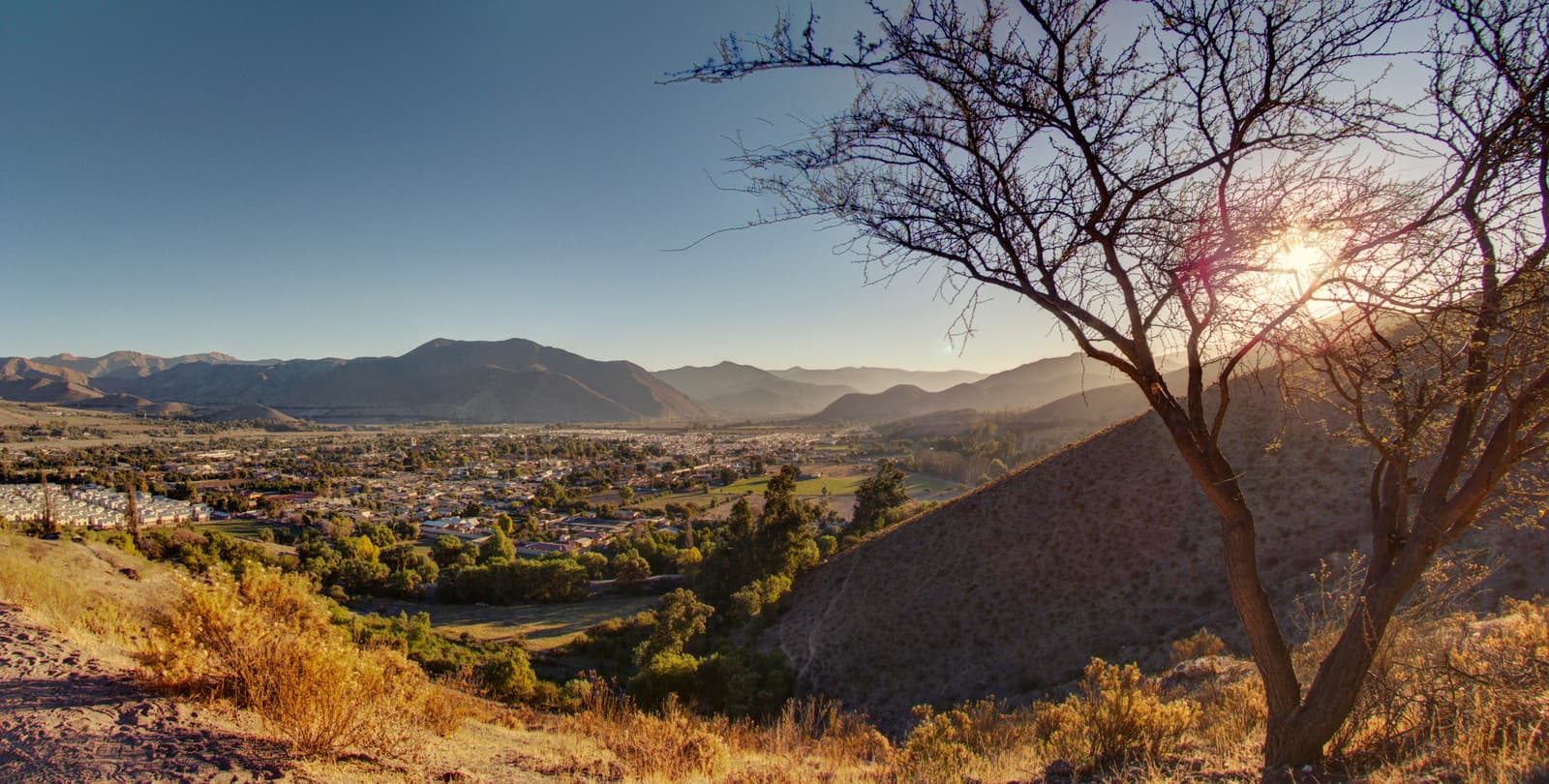
For a sweeping view of Vicuña and the Elqui Valley, ascend the Cerro de la Virgen (Hill of the Virgin Mary). It's a 2-kilometer hike north of the city, offering grand vistas, especially at sunset when the surrounding hills are bathed in deep reds and oranges.
Vicuña is a hub for astrotourism. The Mamalluca Observatory, located about 9 kilometers northeast of Vicuña, is a pioneering tourist observatory where you can gaze through powerful telescopes at planets, galaxies, and exploding stars, often with explanations in multiple languages. Booking in advance is essential, especially during peak season. Other notable observatories in the area include Alfa Aldea and Pangue Observatory, which also offer stargazing tours.
No visit to Vicuña is complete without exploring its pisco heritage. Several pisco distilleries, such as Capel and Aba Pisco Distillery, offer tours that include walks through vineyards, explanations of the production process, and tastings.
Consider a day trip to nearby villages like Pisco Elqui, known for its particular character and additional pisco distilleries, or Diaguitas, recognized for its pottery.
Vicuña enjoys a semi-arid climate with over 300 clear days and nights annually, making it a year-round destination. For warm-weather activities and optimal stargazing, the best time to visit is from late November to late March. January is the hottest month, with average highs around 77°F (25°C). The clearest skies are typically in February. While winters are mild, offering comfortable sightseeing, the cooler season runs from late May to late August. To avoid larger crowds and experience a more authentic atmosphere, consider visiting during the off-season.
Vicuña is approximately 60 kilometers from La Serena. You can reach Vicuña by flying to La Florida Airport (LSC) in La Serena, then taking an intercity bus or renting a car for the one-hour drive along Route 41. Buses and colectivos (shared minibuses) also provide regular service from La Serena.
Within Vicuña, the town is best explored on foot, but renting a car offers flexibility for visiting surrounding attractions in the Elqui Valley. When planning observatory visits, it is crucial to book in advance, as spots are limited and tours are popular. The desert climate means significant temperature fluctuations between day and night, so pack warm clothing for evening excursions, especially stargazing tours.
Local cuisine features specialties like pisco, a grape brandy produced in the region. You'll find a variety of local products, including papayas and stone crafts, at artisan fairs. Tourist information is available at the northwest corner of the Plaza de Armas.
Vicuña in Korean, in Chinese or in Hebrew — and 29 more languages, every stop narrated by a native voice. The widest language range of any self-guided audio tour.
Available in: