Playa del Amor
This secluded cove carries a name hinting at romance, but its early history is far more somber.
Full story unlocks in the tour
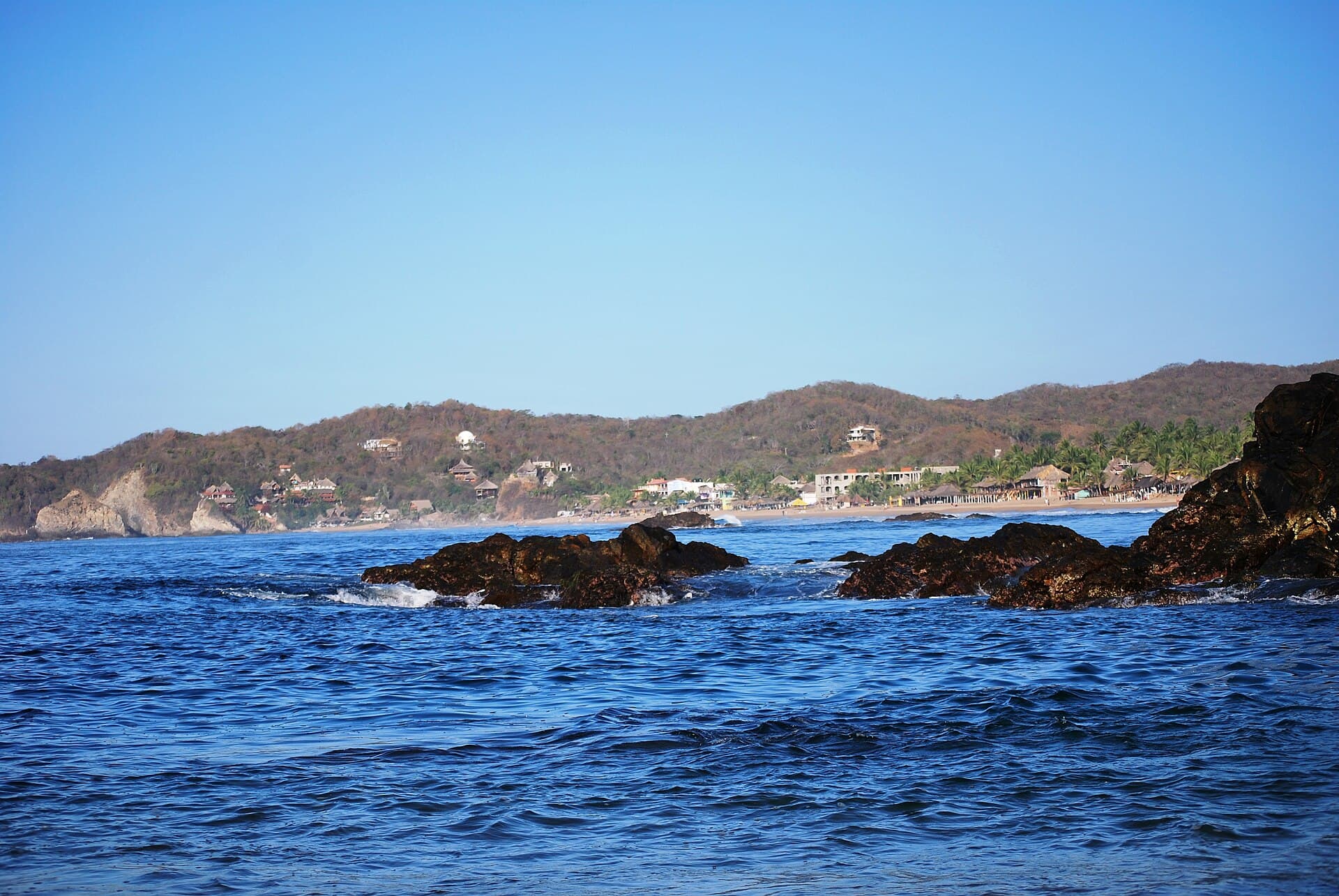 AlejandroLinaresGarcia / CC BY-SA 4.0, via Wikimedia Commons
Self-guided audio walking tour of Zipolite — GPS route, offline playback, story-driven narration in 32 languages.
“Where the Pacific whispers secrets and the soul finds its own rhythm.”
Not the postcards. The stories even locals don't know — whispered in your ear, right where they happened.
This secluded cove carries a name hinting at romance, but its early history is far more somber.
The very name of this relaxed beach town carries a surprising, even ominous, translation.
A celestial event played a pivotal role in transforming Zipolite from a quiet fishing village into a haven for free spirits.
Discover every secret of Zipolite
Every address, every reveal in full — in your ear, right where it happened.
You pick your stops. You walk. The voice reveals what the others miss.


Your self-guided audio tour of Zipolite is ready — pick your landmarks, choose your language, and start the moment you arrive.
BuyLume has a built-in augmented-reality guide. Hold your phone up and its camera shows the street ahead of you, with a glowing arrow laid over the real view that always points to your next stop — no map to puzzle over, no wrong turns. Like everything in Lume, it works fully offline.
Zipolite, on Oaxaca's Pacific coast, is a destination that marches to the beat of its own drum. Known as Mexico's only officially sanctioned nude beach, it's a place where free spirits, backpackers, and curious travelers converge to embrace a laid-back, bohemian lifestyle. The golden sands stretch for two kilometers, framed by rocky outcrops, inviting long walks and moments of quiet contemplation.
Beyond its clothing-optional shores, Zipolite offers a refreshingly unpretentious atmosphere. There are no high-rise resorts or bustling boardwalks here; instead, you'll find rustic cabanas, palapas, and a scattering of low-key lodgings. The town's main street, the Adoquin, comes alive in the evenings, transforming into a pedestrian-only market filled with local crafts, delicious food, and a palpable sense of community. It's a place where the pace of life slows, encouraging visitors to unwind, connect with nature, and simply be.
Zipolite's unique blend of natural beauty, counterculture history, and welcoming spirit makes it an intriguing escape. Whether you're drawn by the allure of naturism, the consistent surf, or simply the desire for an authentic Mexican beach experience away from the mainstream, Zipolite offers a distinctive charm that often leads visitors to extend their stay far beyond their initial plans.
The history of Zipolite stretches back further than its modern reputation suggests. Archaeological findings at the eastern end of the beach indicate a long indigenous presence in the area. For centuries, the region was inhabited by complex indigenous civilizations, primarily the Zapotecs and Mixtecs, with smaller dominions dotting the Pacific coast. These communities maintained rich cultural traditions and a harmonious relationship with their environment.
For the first half of the 20th century, Zipolite remained largely uninhabited, with only a single family residing on its shores until around 1955. The name 'Zipolite' itself, meaning 'Beach of the Dead' in the Zapotec language, hints at a deeper, more somber past, possibly referencing the dangerous ocean currents or a historical practice of offering the deceased to the sea.
The turning point for Zipolite arrived in March 1970 with a total solar eclipse. This celestial event drew a wave of new visitors, particularly those embracing the burgeoning counterculture movement. These 'hippies' were captivated by the beach's isolated nature and laid-back atmosphere, establishing Zipolite as a haven for free spirits and alternative lifestyles. In the 1970s and 80s, it gained a reputation as a free-love paradise, a stark contrast to more traditional Mexican destinations.
Initially, public nudity was tolerated rather than officially sanctioned. However, in 2016, Playa Zipolite and Playa del Amor were officially designated as legal nude beaches, making Zipolite unique in Mexico. Over the years, the town has evolved from a few beachfront cabanas to include more permanent, though still rustic, structures. The area known as Colonia Roca Blanca, with its informal main street, the Adoquin, has become the town's central meeting point. Despite its growth and increasing popularity with a diverse crowd of international and Mexican tourists, Zipolite has largely retained its bohemian charm and open-minded ethos.
Zipolite's main attraction is, without a doubt, its expansive golden beach. Stretching approximately two kilometers, it's perfect for long walks, sunbathing, and simply soaking in the relaxed atmosphere. Seek out Playa del Amor, a smaller, secluded cove on the east side, renowned for its spectacular sunsets.
For those seeking more active pursuits, Zipolite is a popular surfing spot, particularly during the winter months. You can rent boards from shops on the west side of the beach or even from the lifeguards on the east side. Yoga classes are also readily available, with Pura Yoga at Hotel El Alquimista being a popular choice. From November to March, consider an ocean boat tour to spot magnificent marine wildlife like whales, dolphins, and turtles, often including stops for snorkeling.
Evenings in Zipolite revolve around the Adoquin, the main street that transforms into a lively pedestrian market. Here, you can browse local handicrafts, enjoy street food, and experience the town's social scene. For a change of scenery, nearby towns like Mazunte and Puerto Angel are easily accessible by colectivo (shared taxi). Mazunte is known for its turtle sanctuary and the scenic Punta Cometa, a fantastic spot for both sunrise and sunset views.
The ideal time to visit Zipolite is during the dry season, from November to May. During these months, you can expect warm, dry weather, clear skies, and average temperatures ranging from 25-30°C. This is also the high season for tourism, with all hotels, bars, and restaurants typically open.
Peak periods, with higher prices and more crowds, occur around Christmas, Easter, and during the annual Festival Nudista, usually held in February. If you prefer fewer crowds and lower prices, consider visiting in April, July, or September. The summer months, from June to September, bring hot and humid weather with occasional showers and tropical storms, and the ocean can be rougher.
Getting to Zipolite typically involves flying into either Huatulco (HUX) or Puerto Escondido (PXM) airports, with Huatulco often being more convenient for international connections. From there, you can take an airport taxi, a local taxi, or public transport. If you're already in Mexico, long-distance buses are an option, though routes can be winding.
Once in Zipolite, the town is small enough to explore on foot, as the main beach is only about 2 kilometers long. Cash is essential here, with many establishments, especially smaller ones, requiring payment in Mexican pesos. While there are a couple of ATMs, they are known to be unreliable, so it's wise to stock up on cash at the airport or in larger towns like Pochutla. While generally safe, petty theft can occur, so keep valuables secure. The ocean can have strong currents, so always heed lifeguard instructions and watch for red flags.
Zipolite in Korean, in Chinese or in Hebrew — and 29 more languages, every stop narrated by a native voice. The widest language range of any self-guided audio tour.
Available in: