Librije (Chained Library) in St. Walburgis Church
Imagine a library where every book is bound by a chain. It wasn't to keep readers in, but the precious texts themselves.
Full story unlocks in the tour
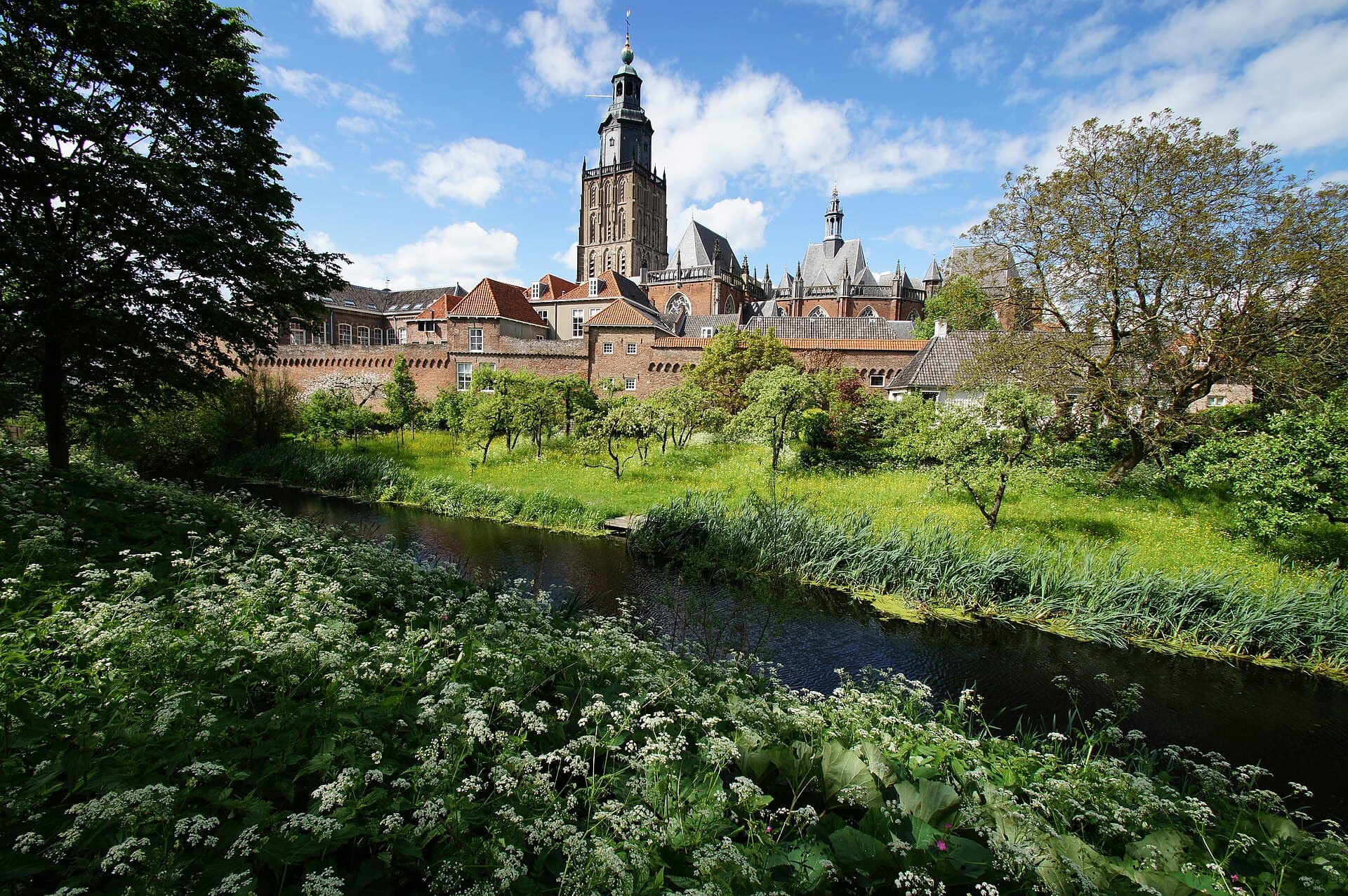 Reinoudkleijberg / CC BY-SA 3.0, via Wikimedia Commons
Self-guided audio walking tour of Zutphen — GPS route, offline playback, story-driven narration in 32 languages.
“Where medieval chains once guarded knowledge, and towers still echo with stories.”
Not the postcards. The stories even locals don't know — whispered in your ear, right where they happened.
Imagine a library where every book is bound by a chain. It wasn't to keep readers in, but the precious texts themselves.
Examine the floor of the Librije closely, and you might discern a peculiar set of footprints.
This formidable medieval tower bears the name of a figure remembered for his distinctive habits.
Discover every secret of Zutphen
Every address, every reveal in full — in your ear, right where it happened.
You pick your stops. You walk. The voice reveals what the others miss.


Your self-guided audio tour of Zutphen is ready — pick your landmarks, choose your language, and start the moment you arrive.
BuyLume has a built-in augmented-reality guide. Hold your phone up and its camera shows the street ahead of you, with a glowing arrow laid over the real view that always points to your next stop — no map to puzzle over, no wrong turns. Like everything in Lume, it works fully offline.
Zutphen, affectionately known as the 'Torenstad' or 'City of Towers,' is a compelling destination in the east-central Netherlands, where the rivers IJssel and Berkel converge. As one of the country's most ancient cities, its narrative extends back over 1,700 years, offering a remarkably preserved medieval center that feels like a journey through time. With nearly 400 national monuments and over 500 local monuments, Zutphen invites exploration of its narrow lanes, venerable buildings, and charming courtyards.
Beyond its architectural grandeur, Zutphen is a city that harmonizes its profound past with a lively present. Visitors can wander through the Hanseatic Quarter, reflecting its prosperous trading origins, or enjoy contemporary shops and appealing cafés in the main square. The city's relaxed ambiance, free from the overwhelming crowds of larger tourist destinations, offers an authentic Dutch experience. Whether you are drawn to history, admire architecture, or simply seek a delightful place to unwind, Zutphen provides a singular and enriching escape.
Zutphen's origins trace back to a Germanic settlement around 300 AD, established on a complex of low river dunes at the strategic confluence of the IJssel and Berkel rivers. Unlike many other settlements of its kind, Zutphen endured into the early Middle Ages. In 882, the town suffered a devastating raid by Vikings, prompting the construction of a circular fortress with earthen ramparts and a deep moat to protect against future attacks. This fortified site, along with a count's court and a parish church, laid the groundwork for the future city.
In the 11th century, Zutphen served as a royal residence, with a pfalz (imperial palace) and a large chapter church, the predecessor of the current St. Walburgis Church. The Counts of Zutphen gained significant power, and after their line became extinct in the 12th century, the county became permanently aligned with the County of Guelders. Zutphen was granted town rights between 1191 and 1196, making it one of the oldest cities in the Netherlands to self-govern and establish a judicial court. It subsequently became a 'mother town' to several other cities in Guelders, including Arnhem and Doetinchem.
During the 13th to 17th centuries, Zutphen thrived as a vital member of the Hanseatic League, a powerful trading alliance that significantly shaped Northern Europe's economic and cultural landscape. The city was an important center for the trade of textiles, and its strategic location along major trade routes made it a crucial hub. However, its strategic importance also made it a target. Zutphen withstood several sieges, particularly during the Eighty Years' War, and was sacked by the Spanish in 1572. The city's fortifications were eventually dismantled in 1874. In World War II, Zutphen was bombed by Allied forces due to the critical IJssel bridge, but most of its historic center remarkably survived, preserving its medieval charm.
Zutphen's compact city center is a trove of historical sights, easily explored on foot. Begin at the St. Walburgis Church, a magnificent Gothic structure housing the renowned Librije, a 16th-century chained library where ancient tomes remain fastened to their reading desks. Nearby, the Wijnhuistoren (Wine House Tower) offers expansive views of the city from its carillon, which still plays regular concerts.
Walk to the Berkelpoort (Berkel Gate), a scenic 14th-century water gate that once formed part of the city's medieval defenses, providing excellent photo opportunities. Be sure to see the Drogenapstoren, another medieval tower with an intriguing history linked to a 16th-century town musician. Explore the serene hofjes, concealed courtyards that once provided housing for the elderly and poor, such as the lovely Bornhof. The Broederenkerk, a former Dominican monastery, now serves as the public library, merging historical architecture with contemporary use. For a deeper understanding of Zutphen's past, visit the Musea Zutphen, located in the 17th-century Hof van Heeckeren palace, which includes the Stedelijk Museum and Museum Henriette Polak.
The most agreeable time to visit Zutphen for warm-weather activities and comfortable sightseeing extends from late June to early September. During these summer months, temperatures are pleasant, with average highs around 72-75°F (22-24°C), and skies are generally clearer. Spring mornings and autumn evenings also offer pleasant weather and fewer crowds, with golden light enhancing the historic buildings. While winters are quite cold and largely overcast, Zutphen's allure can still be appreciated, though some outdoor activities might be less inviting.
Zutphen is readily accessible by train, with direct connections to major Dutch cities. If driving, consider parking outside the immediate city center and exploring on foot, as the historic core is best experienced this way. The city is relatively compact, making walking the ideal mode of transport for sightseeing. Guided walking tours, often departing from the local VVV (tourist information center) in the main square, are highly recommended for insightful historical context. Many locals speak English, and German is also widely understood. For accommodation, options range from boutique hotels in historic buildings, such as the Hampshire Hotel – 's Gravenhof Zutphen, to charming B&Bs. The city offers a variety of cafés and restaurants, with local specialties like Zutphense Brok, a traditional gingerbread biscuit. For medical needs, Gelre Ziekenhuizen Zutphen is the local hospital with a 24/7 Emergency Department.
Zutphen in Korean, in Chinese or in Hebrew — and 29 more languages, every stop narrated by a native voice. The widest language range of any self-guided audio tour.
Available in: