Plaza de Bolívar fountain
The ornate fountain in Aguadas' main square has a surprising origin story that spans continents.
Full story unlocks in the tour
 Milenioscuro / CC BY-SA 3.0, via Wikimedia Commons
Self-guided audio walking tour of Aguadas — GPS route, offline playback, story-driven narration in 32 languages.
“Where the mist meets tradition, and every hat tells a story.”
Not the postcards. The stories even locals don't know — whispered in your ear, right where they happened.
The ornate fountain in Aguadas' main square has a surprising origin story that spans continents.
This cultural hub, dedicated to a local literary figure, isn't always open to visitors, making a successful entry feel like a small triumph.
These iconic straw hats, often mistaken for another famous style, have a unique local distinction that sets them apart.
Discover every secret of Aguadas
Every address, every reveal in full — in your ear, right where it happened.
You pick your stops. You walk. The voice reveals what the others miss.


Your self-guided audio tour of Aguadas is ready — pick your landmarks, choose your language, and start the moment you arrive.
BuyLume has a built-in augmented-reality guide. Hold your phone up and its camera shows the street ahead of you, with a glowing arrow laid over the real view that always points to your next stop — no map to puzzle over, no wrong turns. Like everything in Lume, it works fully offline.
Aguadas, a distinguished Pueblo Patrimonio (Heritage Town) of Colombia, offers a journey into the heart of Caldas's coffee-growing region. Situated at an elevation of 2,177 meters (7,141.93 feet) above sea level, this appealing municipality is known for its colonial architecture, lively cultural traditions, and the surrounding mountainous landscapes. The town's historic center, with its stone-paved thoroughfares and whitewashed houses adorned with wooden balconies, was declared a national monument in 1982, preserving a tangible link to its past.
Known as the "City of Mists" (Ciudad de las Brumas) due to the frequent clouds that envelop it, Aguadas is also celebrated as the "Capital of the Colombian Pasillo" for its annual National Festival of the Colombian Pasillo, a traditional dance and music style. Beyond its cultural accolades, Aguadas is a significant part of the UNESCO World Heritage-listed Coffee Cultural Landscape, underscoring its importance in coffee cultivation.
The land where Aguadas now stands was originally inhabited by the Coucuyes Indians, whom Spanish explorers referred to as "Armados" (armed), likely due to their attire. Marshal Jorge Robledo, one of the first Spaniards to arrive, was instructed by Sebastián de Belalcázar to establish a military fort. This led to the founding of Santiago de Arma in 1542. The discovery of gold in the area attracted many families, but as the gold reserves dwindled, the region saw a decline in population. Authorities eventually ordered the relocation of Arma to Rionegro, but many villagers, deeply attached to their home, refused to leave.
In 1808, a significant influx of settlers from Antioquia arrived, leading the remaining villagers to found Aguadas. Thus, Aguadas is considered the modern iteration of the historic Spanish town of Santiago de Arma. Over time, the town has been known by various names, including Ciudad de Ebejico and La Aguada, before finally settling on Aguadas, a name that likely refers to the abundant water sources in the region. In 2012, Aguadas was officially recognized as a Pueblo Patrimonio of Colombia, a testament to its preserved heritage and cultural significance.
The foundation of Aguadas by José Narciso Estrada in 1808 marked the beginning of its cultural and economic importance. The town's historic center, with its colonial architecture, was declared a national monument in 1982, reflecting its enduring splendor. Aguadas is particularly known for its traditional artisanal straw hats, known as sombreros aguadeños, which are often compared to the famous Panama hats. This craft is a cornerstone of the local economy and cultural identity, with a dedicated Hat Museum showcasing the intricate process of their creation. The Monument to the Weaver in the town center further honors the women artisans who have kept this tradition alive through generations.
Beyond its hats, Aguadas is celebrated for its musical heritage as the "Capital of the Colombian Pasillo." The annual National Festival of the Colombian Pasillo highlights this traditional dance and music style, drawing visitors to experience its lively rhythms. The town also offers a glimpse into 19th-century Antioquian life at Pueblito Viejo, a recreated village with wattle and daub houses, plazas, and chapels. This rich array of history, artisanship, and cultural celebration makes Aguadas a distinctive destination within Colombia's coffee region.
Begin in the historic center, a national monument since 1982, where stone-paved thoroughfares wind past colonial houses with wooden balconies. Visit the Plaza de Bolívar, the main square, and observe its New York-manufactured fountain, brought to Aguadas by mules and oxen in 1891. Explore the Church of the Immaculate Conception, a central architectural feature. The Hat Museum details the process of crafting the celebrated sombrero aguadeño from iraca palm straw and displays a collection of both traditional and contemporary hats. Nearby, the Monument to the Weaver pays tribute to the women artisans who preserve this craft. Stroll along the Street of Lanterns, particularly enchanting at dusk when its charming lights create a magical atmosphere. For a step back in time, visit Pueblito Viejo, a recreated 19th-century Antioquian village that offers insight into the region's historical customs. The Casa de la Cultura Francisco Giraldo houses museums offering guided tours, though its opening hours can be variable.
The ideal time to visit Aguadas, and Colombia generally, is during the dry seasons: December to March and July to August. These months offer clear skies and warmer temperatures, perfect for exploring the town and its surrounding coffee landscapes. While December and January are popular with tourists, leading to higher prices and larger crowds, February and early March offer pleasant weather with fewer visitors. The town experiences a mild climate, with an average annual temperature of 25°C (78°F). Even during the rainy season, showers are often short, making Aguadas a year-round destination.
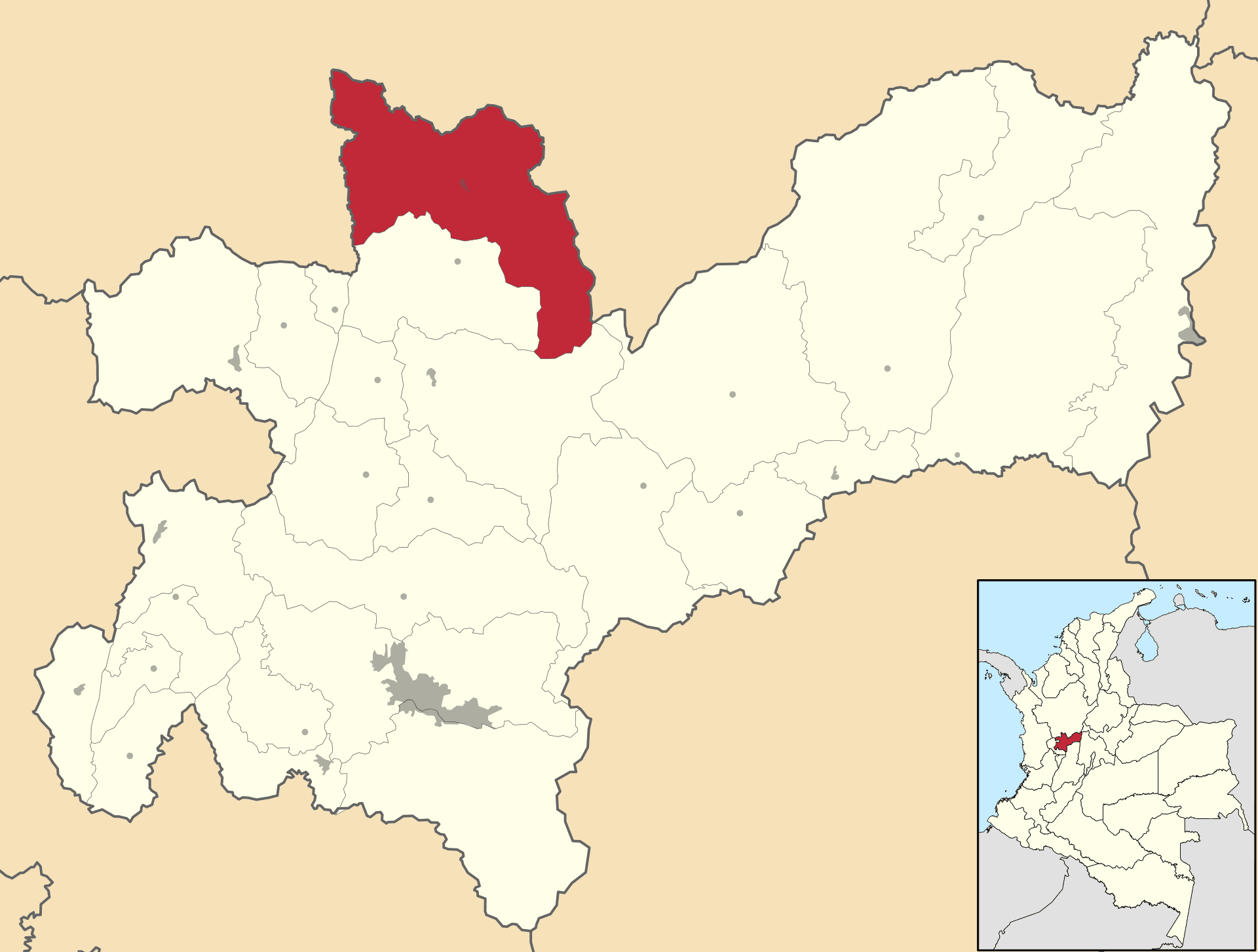
Aguadas is located 126 km north of Manizales in the Caldas department. The town's elevation is 2,177 meters (7,141.93 feet) above sea level, contributing to its temperate climate. While public transportation options like buses are available from larger cities, local transport within Aguadas typically involves walking or local taxis. The official currency is the Colombian Peso (COP). Spanish is the official language. It's advisable to carry some cash, as not all smaller establishments may accept card payments. For those interested in the coffee culture, visiting a local farm to learn about the cultivation and processing of coffee beans is a rewarding experience. The town is generally safe for travelers, but standard precautions apply.
Aguadas in Korean, in Chinese or in Hebrew — and 29 more languages, every stop narrated by a native voice. The widest language range of any self-guided audio tour.
Available in: