Zahir Mosque
One of Malaysia's most beautiful mosques holds a secret beneath its foundations.
Full story unlocks in the tour
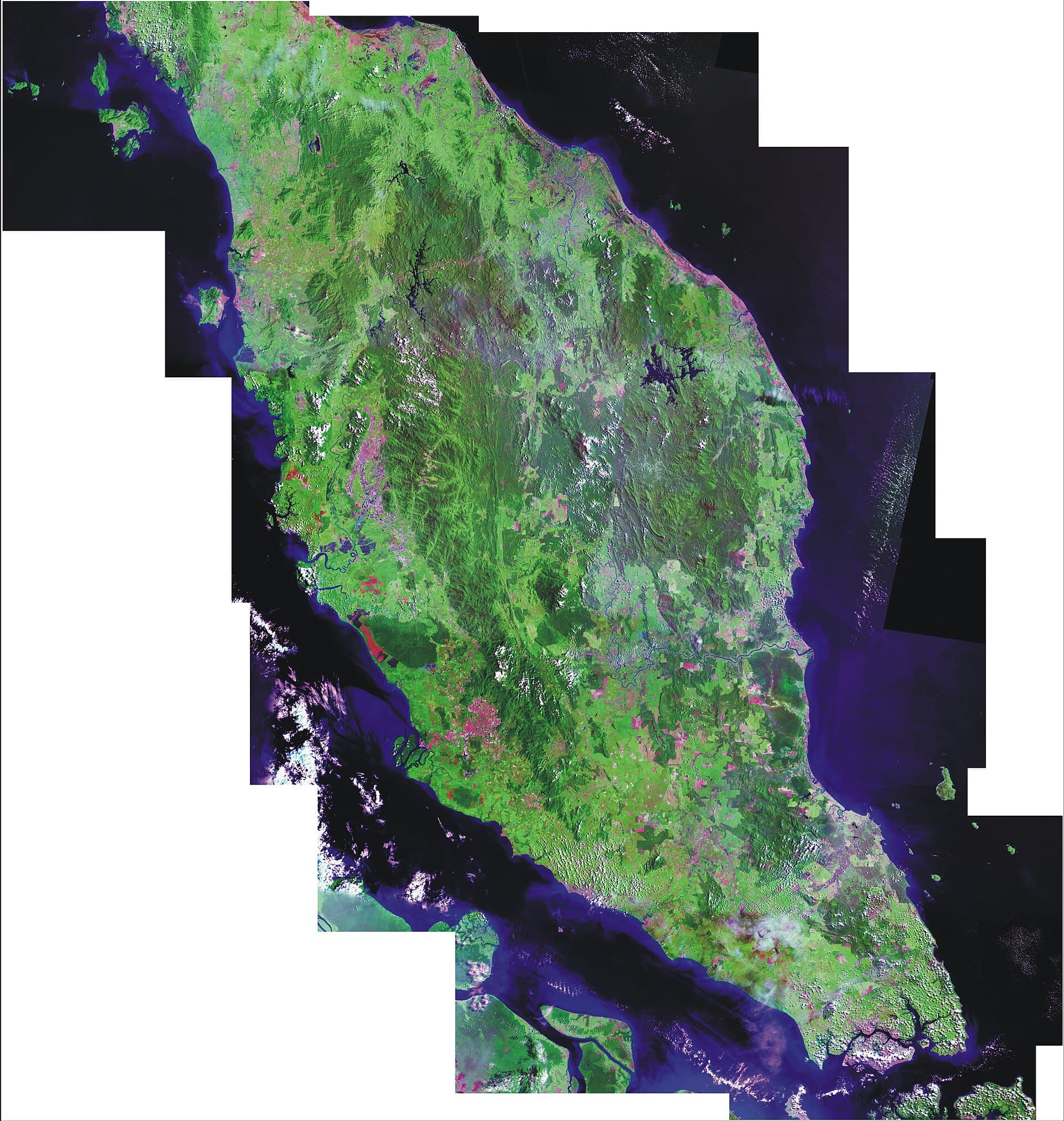 NASA Landsat / public domain, via Wikimedia Commons
Self-guided audio walking tour of Alor Setar — GPS route, offline playback, story-driven narration in 32 languages.
“Where royal heritage meets the rice bowl of Malaysia.”
Not the postcards. The stories even locals don't know — whispered in your ear, right where they happened.
One of Malaysia's most beautiful mosques holds a secret beneath its foundations.
This unique octagonal tower guards a royal secret you can't see inside.
This grand 19th-century building was once a royal residence, but it also played an unexpected role during wartime.
Discover every secret of Alor Setar
Every address, every reveal in full — in your ear, right where it happened.
You pick your stops. You walk. The voice reveals what the others miss.


Your self-guided audio tour of Alor Setar is ready — pick your landmarks, choose your language, and start the moment you arrive.
BuyLume has a built-in augmented-reality guide. Hold your phone up and its camera shows the street ahead of you, with a glowing arrow laid over the real view that always points to your next stop — no map to puzzle over, no wrong turns. Like everything in Lume, it works fully offline.
Alor Setar, the capital of Kedah, offers a journey into Malaysia's heritage, often bypassed by travelers heading to more prominent destinations. This city, one of the oldest in the region, is a cultural and historical treasure, providing a glimpse into traditional Malay charm amidst its urban development.
Known as the "Rice Bowl of Malaysia" due to its expansive paddy fields, Alor Setar's landscape blends vital river systems with lush greenery. It's a city where royal legacy, Islamic architecture, and deeply rooted local traditions converge, making it an accessible and rewarding starting point for exploring northern Malaysia.
Beyond its historical sites, Alor Setar is a central hub, serving as the birthplace of two of Malaysia's Prime Ministers: Tunku Abdul Rahman, the "Father of Independence," and Tun Dr. Mahathir Mohamad, the country's longest-serving Prime Minister. This connection to national leadership, combined with its unique cultural fabric, makes Alor Setar a compelling destination for those seeking an authentic Malaysian experience.
## Founding and Early Development Alor Setar was officially founded on December 31, 1735, by Sultan Muhammad Jiwa Zainal Adilin II, the 19th ruler of Kedah. It became the eighth administrative center of the Kedah Sultanate, which had been established in 1136. The city's strategic location near the Kedah River and the Strait of Malacca allowed it to flourish as a vital transport and trade hub, particularly for rice, attracting merchants from various communities including Malay, Chinese, Indian, and Thai.
## Colonial Influences and Conflicts The 19th century brought significant turmoil to Alor Setar. In 1821, the Siamese invaded Kedah, leading to two decades of direct Siamese administration over Alor Setar. The city's historical structures, like the Balai Besar, suffered damage during conflicts with both the Bugis armada in 1770 and the Siamese invasion. Following the Anglo-Siamese Treaty of 1909, Kedah, including Alor Setar, transitioned from Siamese influence to a British protectorate. During World War II, Alor Setar fell under Japanese occupation in December 1941 and was subsequently annexed by the Siamese until 1946.
## Path to Independence and Modernity Alor Setar played a pivotal role in Malaysia's journey to independence. It is the birthplace of Tunku Abdul Rahman Putra Al-Haj, Malaysia's first Prime Minister, and Tun Dr. Mahathir Mohamad, who served as Prime Minister for 24 years. Kedah, with Alor Setar as its capital, became part of the independent Federation of Malaya on August 31, 1957. The city continued its development into the 21st century, officially gaining city status on December 21, 2003. A significant modern landmark, the Menara Alor Setar (Alor Setar Tower), a telecommunications and tourism symbol, was officially opened on August 14, 1997.
Alor Setar offers a range of sights that reflect its royal history and agricultural identity. The Zahir Mosque (Masjid Zahir) is a prominent landmark, regarded as one of Malaysia's most beautiful mosques with its distinctive black domes and Moorish-influenced architecture. Nearby, the Alor Setar Tower (Menara Alor Setar), the third-tallest tower in Malaysia, provides expansive views of the city and surrounding paddy fields from its observation deck. You can even spot Langkawi on a clear day.
Delve into the region's agricultural heart at the Kedah Paddy Museum (Muzium Padi), a unique museum shaped like bundles of rice stalks, offering insights into rice cultivation with a 360-degree mural. For a glimpse into royal life, visit the Kedah Royal Museum (Muzium Diraja Kedah), housed in a 19th-century building that was once a palace for Sultan Abdul Hamid Halim Shah. The Balai Nobat (Hall of Drums) is another significant royal structure, an octagonal tower housing ceremonial instruments. The Balai Besar (Grand Audience Hall), with its blend of Malay and Thai architectural elements, is part of the larger Kota Setar Palace complex.
Explore local culture and commerce at the Pekan Rabu Complex, a bustling market offering traditional Malay items, local snacks, and handicrafts. For art enthusiasts, the Kedah State Art Gallery (Balai Seni Negeri) showcases traditional and contemporary Malaysian artworks in a colonial-era building. History buffs might also appreciate the Mahathir Mohamad's Birthplace and the Tunku Abdul Rahman Putra Al-Haj Memorial, offering insights into the lives of Malaysia's influential prime ministers.
Alor Setar experiences a tropical climate, remaining warm throughout the year with average temperatures between 27°C and 33°C. The dry season, from December to April, is generally considered the best time to visit, with January to March offering clear skies ideal for sightseeing and exploring the paddy fields. February is typically the driest month. While June to August offers comfortable high temperatures, September through November sees a balance of humidity and wind with increased rainfall. The wet season generally prevails from May to November, with October being the wettest month.
Alor Setar is accessible by air, train, and bus. Sultan Abdul Halim Airport (AOR) is located about 13 kilometers from the city center, offering domestic flights primarily from Kuala Lumpur. For international visitors, Penang International Airport (PEN) is approximately 92 km away. The city is also part of the KTM (Keretapi Tanah Melayu) rail network, with train services connecting to Kuala Lumpur, Butterworth (Penang), and southern Thailand. Express bus services link Alor Setar to major cities like Kuala Lumpur, Penang, and Ipoh, with a journey from Kuala Lumpur taking about 5-7 hours. Once in Alor Setar, key attractions in the city center are often within walking distance, and ride-hailing services like Grab are readily available for convenient transportation.
Accommodation options range from modern hotels to more traditional stays. General shopping can be done around the city, with Pekan Rabu Complex being a popular spot for local goods and souvenirs.
Alor Setar in Korean, in Chinese or in Hebrew — and 29 more languages, every stop narrated by a native voice. The widest language range of any self-guided audio tour.
Available in: