Sultan Abdul Aziz Royal Gallery
This grand colonial structure safeguards more than just regal artifacts.
Full story unlocks in the tour
 Hafiz343 / CC BY-SA 4.0, via Wikimedia Commons
Self-guided audio walking tour of Klang — GPS route, offline playback, story-driven narration in 32 languages.
“Beyond the city's pulse, a royal past resonates through Klang's avenues.”
Not the postcards. The stories even locals don't know — whispered in your ear, right where they happened.
This grand colonial structure safeguards more than just regal artifacts.
A Victorian-era building once served a dual purpose.
Selangor's inaugural railway line began at an unexpected point, not quite reaching its intended destination immediately.
Discover every secret of Klang
Every address, every reveal in full — in your ear, right where it happened.
You pick your stops. You walk. The voice reveals what the others miss.


Your self-guided audio tour of Klang is ready — pick your landmarks, choose your language, and start the moment you arrive.
BuyLume has a built-in augmented-reality guide. Hold your phone up and its camera shows the street ahead of you, with a glowing arrow laid over the real view that always points to your next stop — no map to puzzle over, no wrong turns. Like everything in Lume, it works fully offline.
Klang, also known as Kelang, is a royal town on the west coast of Peninsular Malaysia, bisected by the Klang River from which it takes its name. This city, older than Kuala Lumpur and once the capital of Selangor, holds a distinct atmosphere, deeply rooted in its heritage. While often overshadowed by its more modern neighbors, Klang offers a slower, more traditional experience, where history, culture, and culinary delights intersect.
From its prehistoric origins, evidenced by Bronze Age artifacts, to its pivotal role in the tin trade and the subsequent Klang War, the town's past is etched into its architecture and diverse communities. Today, Klang remains the official residence of the Sultan of Selangor, a testament to its enduring royal significance. Visitors can explore colonial-era buildings, active cultural enclaves like Little India, and savor local specialties, making Klang a compelling destination for those seeking to uncover Malaysia's enduring historical layers.
Klang's history extends to prehistoric times, with archaeological finds like Bronze Age drums, axes, and a 2nd-century BC bronze bell attesting to early human settlement. Its strategic location on the Klang River made it an important trading post, mentioned in historical chronicles as early as the 11th century and in the 14th-century Majapahit Empire literary work, Nagarakretagama. The Klang River itself was even marked on Chinese Admiral Cheng Ho's maritime charts in the 15th century.
In the 15th century, Klang came under the control of the Malacca Sultanate, with the celebrated Tun Perak, Malacca's greatest Bendahara, hailing from Klang and serving as its territorial chief. After the fall of Malacca to the Portuguese in 1511, Klang remained in Malay hands, controlled by the Sultan of Johor-Riau. The 17th century saw Bugis people settling in the coastal region, leading to the establishment of the Selangor Sultanate in 1766, which then governed Klang.
The 19th century marked a period of rapid transformation for Klang, driven by the discovery of abundant tin deposits in the Klang Valley. This "tin rush" fueled economic growth and even sparked the Klang War (1866-1874), a civil conflict for control over the lucrative mines. The British intervened in Selangor's administration in 1875, appointing a Resident in Klang, and the town briefly served as the capital of British colonial administration for Selangor until 1880, when the capital moved to Kuala Lumpur due to its own tin-mining growth.
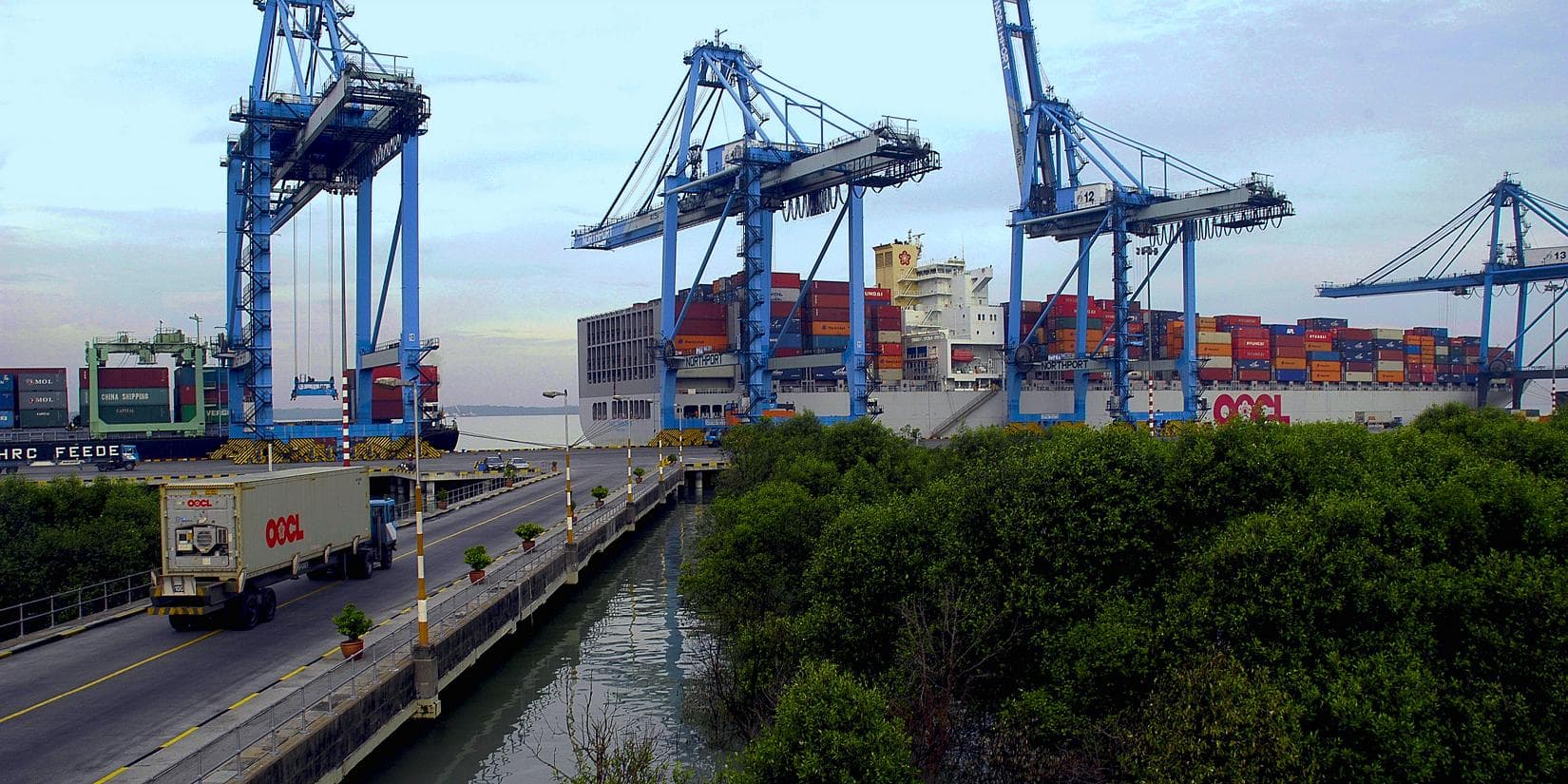
To facilitate the export of tin and rubber, the British constructed Selangor's first railway line in 1886, connecting Kuala Lumpur to Bukit Kuda, near Klang. This line was later extended to Klang and then to Port Swettenham (now Port Klang), which officially opened in 1901 as a strategic replacement for the older river port. Port Klang rapidly grew into an active commercial center, attracting workers and traders from China and India, contributing to Klang's unique multicultural environment.
Klang's royal heritage was further solidified with the completion of Istana Mahkota Puri in 1902, where the Sultan of Selangor began residing in 1903. The inauguration of the Sultan Suleiman Royal Mosque in 1933 symbolically affirmed Klang's status as a Royal Town. While the state capital eventually moved to Shah Alam in 1977, Klang maintained its prestigious title. In a significant development, Klang was officially granted the status of Royal City in November 2023, making it the first Malay Royal City in the world. Today, Klang continues to be an important administrative and cultural center, with its history reflected in its diverse religious structures, colonial architecture, and active local life.
Begin your exploration at the Sultan Abdul Aziz Royal Gallery, housed in a grand colonial building from 1909. This museum offers a deep dive into the history and heritage of the Selangor Sultanate, showcasing over 2,000 artifacts and memorabilia. Just a short walk away, you'll find the distinctive Sultan Suleiman Royal Mosque, an iconic religious landmark with a striking blue dome that blends Islamic and colonial architectural styles.
Immerse yourself in the active atmosphere of Little India Klang along Jalan Tengku Kelana. This lively district is a sensory experience with colorful shopfronts, traditional music, and the aroma of spices. Explore shops selling sarees, jewelry, and textiles, and sample authentic Indian street food. Nearby, the Indian Muslim Mosque Tengku Kelana stands as a massive and visually striking edifice, showcasing a blend of Andalusian, Egyptian, and Southern Indian design, with contributions from Uzbek artisans.
Do not miss the charming Klang Fire Station, a working Victorian-era building dating back to 1890, which once also served as the local police station. For a glimpse into colonial social life, the Royal Klang Club, established in 1901, is a notable stop. The Church of Our Lady of Lourdes, a beautiful Gothic-style Catholic church built in 1928, also features in the Klang Heritage Walk and is a significant historical landmark. Finally, take a stroll across the Jambatan Kota (Kota Bridge), Klang's iconic double-decker bridge, for unique views of the Klang River.
Klang experiences a tropical monsoon climate, meaning it is generally hot and humid year-round with tropical rain showers. The best time to visit Klang, particularly for warm-weather activities, is from mid-June to late September and from mid-December to mid-March. During these periods, the weather is more comfortable with less precipitation. While the west coast (where Klang is located) generally experiences its wetter season from April to October, afternoon thunderstorms are usually brief and can offer a welcome respite from the humidity.
Klang is easily accessible by public transportation, including buses and the KTM Komuter train service, which connects it to Kuala Lumpur and other parts of the Klang Valley. The Port Klang Line, the oldest operational railway line in the country, offers a direct link. If driving, Klang is approximately 45 minutes from Kuala Lumpur. The city is divided into North and South Klang by the Klang River, with North Klang historically being the main commercial center.
Consider joining a guided heritage walk to explore Klang's historic sites, often departing from the Royal Gallery. These walks typically cover key landmarks and provide insightful commentary. Many attractions are within walking distance of each other in the city center. While exploring, be sure to sample the local cuisine, especially Klang's famous Bak Kut Teh. Accommodations range from budget-friendly options to more comfortable hotels.
Klang in Korean, in Chinese or in Hebrew — and 29 more languages, every stop narrated by a native voice. The widest language range of any self-guided audio tour.
Available in: