Alvito Castle
This imposing castle was not always a fortress built for conflict.
Full story unlocks in the tour
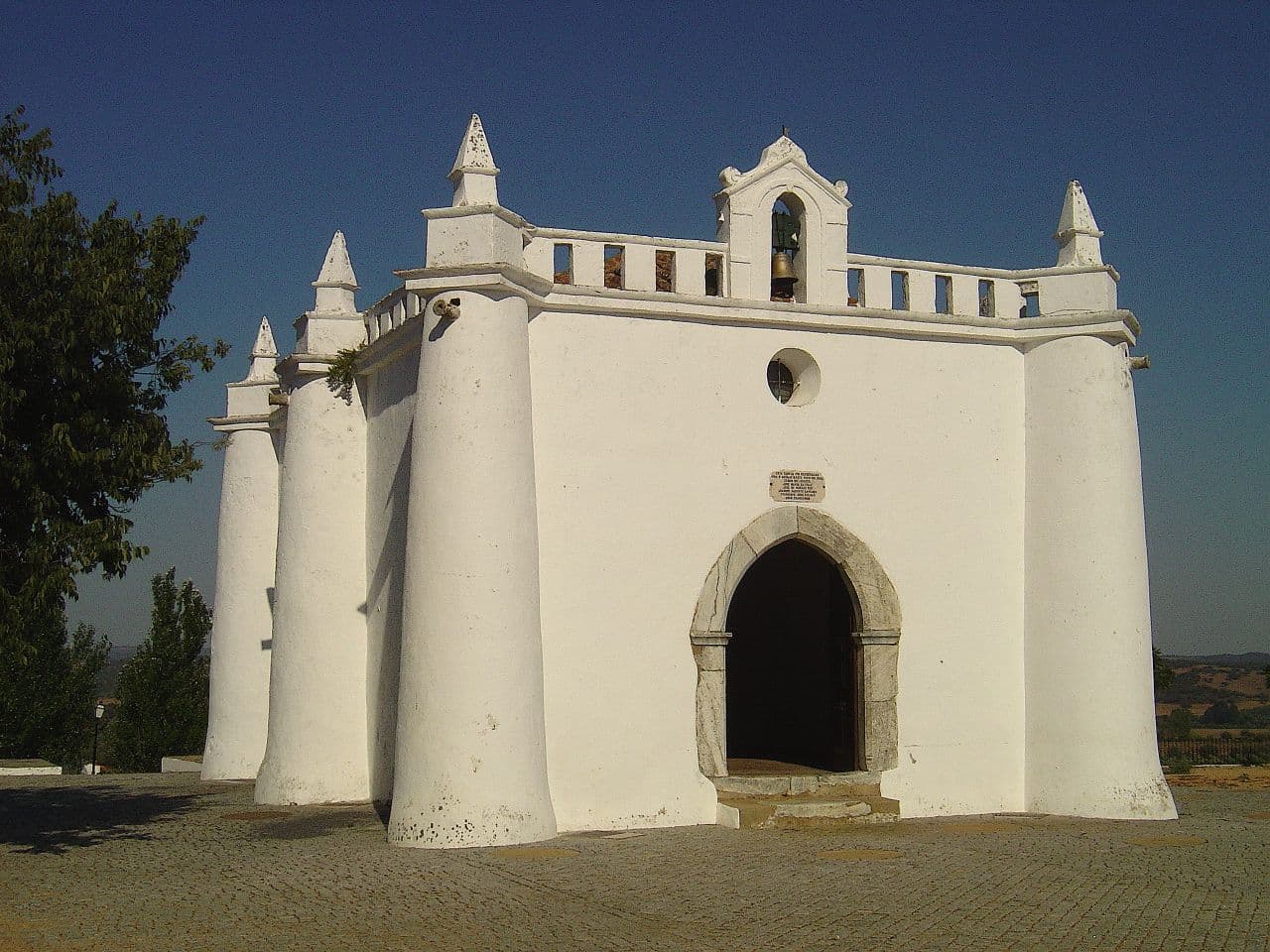 Vitor Oliveira from Torres Vedras, PORTUGAL / CC BY 2.0, via Wikimedia Commons
Self-guided audio walking tour of Alvito — GPS route, offline playback, story-driven narration in 32 languages.
“Where ancient stones breathe stories of barons and Moorish artistry.”
Not the postcards. The stories even locals don't know — whispered in your ear, right where they happened.
This imposing castle was not always a fortress built for conflict.
Observe the church's exterior for an unexpected architectural blend.
Enter this small chapel and direct your gaze upward to discover a surprising celestial scene.
Discover every secret of Alvito
Every address, every reveal in full — in your ear, right where it happened.
You pick your stops. You walk. The voice reveals what the others miss.


Your self-guided audio tour of Alvito is ready — pick your landmarks, choose your language, and start the moment you arrive.
BuyLume has a built-in augmented-reality guide. Hold your phone up and its camera shows the street ahead of you, with a glowing arrow laid over the real view that always points to your next stop — no map to puzzle over, no wrong turns. Like everything in Lume, it works fully offline.
Alvito, a tranquil village in the sun-warmed heart of Portugal's Alentejo region, offers a glimpse into a slower pace of life, where tradition and hospitality intertwine. Situated in the Beja district, it is a place often overlooked by those rushing to the coast, yet it rewards visitors with authentic rural character. The village's rhythm mirrors the surrounding olive groves, cork forests, and ancient lanes, inviting exploration at a human pace.
Alvito is more than just a dot on the map; it is a living example of a community that honors its agricultural roots while warmly welcoming travelers. The landscape is a testament to centuries of history, with old roads, stone bridges, and churches tracing the passage of generations. Here, whitewashed facades, red-tiled roofs, and shaded plazas create a vivid sense of place, where daily routines are shaped by the seasons and local markets offer handmade goods and seasonal produce.
The village's architectural heritage is particularly notable, showcasing a fascinating blend of Manueline, Gothic, and Mudéjar styles. This unique combination reflects the diverse cultural influences that have shaped Alvito over time. From its palatial castle, now a luxury hotel, to its parish churches and humble chapels, Alvito offers a wealth of history and culture for those who seek to explore thoughtfully.
The history of Alvito stretches back to the Neolithic period, with evidence of human presence throughout the Copper, Bronze, and Iron Ages. The region experienced intense occupation during Roman domination, leaving behind several villae that were later inhabited by Visigoths and Moors.
Alvito was conquered by the Portuguese in 1234. In 1251, King Afonso III donated the village to Estêvão Anes, the kingdom's chancellor, who then initiated efforts to repopulate the area. The village received its first foral (charter of feudal rights) in 1280, a document confirmed by King Dinis I in 1283. The establishment of an annual fair in 1296 underscored the region's rapid development.
In 1387, King John I granted Alvito to knight Diogo Lobo in recognition of his service in the Battle of Aljubarrota. This marked the beginning of Alvito's strong ties to the Lobo family. A significant turning point came on April 27, 1475, when João Fernandes da Silveira and his wife, D. Maria de Sousa Lobo, were granted the title of Baron of Alvito, making it the site of the first barony established in Portugal.
The 15th and 16th centuries were a period of considerable economic and population growth for Alvito. The impressive Alvito Castle was rebuilt between 1494 and 1504, showcasing an intriguing fusion of Manueline (Portuguese Late Gothic) and Mudéjar (Arab-influenced) architectural styles, characteristic of the Alentejo region. The main church, Igreja Matriz de Nossa Senhora da Assunção, also dates from the early 16th century, exhibiting a blend of Manueline and early Renaissance designs.
Following the 18th century, Alvito experienced economic stagnation that persisted into the 20th century. However, the village has since embraced its tourism potential, with the castle being transformed into a luxury hotel under the Pousadas de Portugal brand in 1993. This shift reflects a modern identity that balances the preservation of old traditions with a welcoming approach to visitors.
Alvito's compact size conceals a wealth of architectural and cultural treasures. The most prominent landmark is the Alvito Castle, a striking 15th-century fortified palace that now operates as a luxury pousada. Its architecture is a captivating blend of Manueline, Gothic, and Mudéjar styles, with round towers and high walls that are distinctive for the region. While primarily a hotel for guests, its exterior and grounds offer a strong sense of its historical past.
The Igreja Matriz de Nossa Senhora da Assunção (Parish Church of Our Lady of the Assumption) is another key site, dating from the early 16th century. It features a mix of Manueline and early Renaissance styles, with notable Mudéjar decorative elements on its exterior. Inside, the walls are adorned with beautiful 17th-century azulejo panels in blue and yellow, and the upper choir presents a large carved and gilded altarpiece. Nearby, the Ermida de São Sebastião (Hermitage of Saint Sebastian), a 16th-century fortified chapel, is remarkable for its vaulted Gothic ceiling painted with frescoes of musical angels.
Beyond these major monuments, Alvito's character lies in its details. Wander the narrow streets to discover numerous houses with Manueline-style arched doorways and windows. The Pelourinho (pillory) in Republic Square is a national monument, symbolizing the town's historical administrative autonomy. For a deeper cultural immersion, explore the Route of Fresco, a journey through Baroque monuments adorned with frescoes and tiles.
The best times to visit Alvito are spring (March to May) and autumn (September to November). During these seasons, temperatures are pleasant, ranging from 19°C to 30°C, making it ideal for exploring the village and surrounding countryside on foot or by bicycle. While there can be some rainfall during these periods, it is generally moderate. Summer (June to early September) brings hot, dry weather with average daytime temperatures reaching up to 33°C in August, which can be intense for outdoor activities. Winters (December to February) are mild but wetter, with average highs around 16°C and cooler evenings.
Alvito is located in the Beja District of southern Portugal, in the Alentejo region. It is approximately 38 kilometers north of Beja and 37 kilometers southeast of Évora. The most flexible way to reach Alvito and explore the surrounding area is by car, as the village is well-connected by regional roads. Renting a car also allows for easy access to scenic byways, viewpoints, and nearby historic centers. If relying on public transport, it is advisable to plan ahead, as services in rural areas can be less frequent.
The local currency is the Euro (€). While larger establishments might accept credit cards, it is always wise to carry some cash for smaller shops, cafes, or markets. Alvito is a small village with a population of around 2,500 inhabitants. The official language is Portuguese. A tourist information office can be found at Rua dos Lobos 13.
Alvito in Korean, in Chinese or in Hebrew — and 29 more languages, every stop narrated by a native voice. The widest language range of any self-guided audio tour.
Available in: